REVIEW · DUBLIN
Private Walking Tour in Dublin
Book on Viator →Operated by Francesca D'Angelo · Bookable on Viator
Dublin history walks like a story. This private walking tour strings together the city’s biggest landmarks in a smart 2 to 3 hours, with stops that connect university life, rebellion, and medieval Dublin. I especially like how it pairs iconic views with specific details you can picture later, from the Trinity alumni trail to the battle marks on the GPO building.
I also like the human side of the experience. Guides linked to this tour include names like Francesca D’Angelo, Sinead, John, and Yvonne, and the common thread is follow-up that feels personal, including clear answers and course-correction when you want more of one theme. A possible drawback: several major sites have admission tickets not included, so your total budget depends on how many you choose to go inside.
In This Review
- Key Highlights You’ll Appreciate on This Private Walk
- Starting at Trinity College Dublin: Where Dublin Feels Like a Campus City
- The GPO Museum and the Easter Rising: Freedom, British Rule, and Bullet Marks
- The Spire (Monument of Light) and Ha’penny Bridge: Small Stops, Big Dublin Clarity
- Temple Bar Area: A Pub-and-Food Snapshot You Can Actually Use
- Wood Quay Amphitheatre: Viking Dublin You Can Feel in the Ground
- Christ Church Cathedral: The Medieval Center of Dublin Stories
- Saint Patrick’s Cathedral: Gothic Beauty With Names Tied to Literature
- Dublin Castle: The Record Tower and 700 Years of English Rule
- George’s Street Arcade and Molly Malone: Shopping Craft and Dublin Song Lore
- Price and Value: What $90.11 Buys You in Dublin
- Logistics That Matter: Meeting Point, Pace, and Weather
- Who This Private Walking Tour Fits Best
- Should You Book This Private Walking Tour?
- FAQ
- How long is the private walking tour in Dublin?
- Where does the tour start and end?
- Is this a private tour or a group tour?
- What language is the tour offered in?
- Do I need to buy admission tickets for the stops?
- Is a mobile ticket provided?
- Is the tour suitable for most people and families?
- What happens if the weather is bad or I need to cancel?
Key Highlights You’ll Appreciate on This Private Walk
- Trinity College Dublin as a fast “city within a city” orientation, with famous alumni to help the place click
- The GPO Museum and Easter Rising details, including visible bullet marks
- Quick-hit landmarks like the Spire and Ha’penny Bridge, perfect for photos and orientation
- Temple Bar area stroll for Dublin’s pub-and-food personality (without needing a full night out)
- Viking Dublin context at Wood Quay Amphitheatre, a different side of the city’s origins
- Two cathedral stops plus Dublin Castle, giving you a strong medieval-to-empire timeline
Starting at Trinity College Dublin: Where Dublin Feels Like a Campus City
You’ll begin at Trinity College Dublin near College Green, and that’s a great place to start because Trinity isn’t just a stop. It’s a lens.
Trinity College was founded in 1592 under Queen Elizabeth I, and the vibe is part academic, part historic monument, part living neighborhood. With more than 20,000 people working and studying there, it really does feel like a small city inside Dublin—easy to grasp in just 20 minutes.
The tour’s most useful trick here is connecting the university to the writers and thinkers you already know, like Oscar Wilde, Bram Stoker, and Jonathan Swift. Even if you’re not a “school” person, it helps you understand why Dublin’s creative reputation is so long-lasting.
One practical note: Trinity’s admission ticket isn’t included, so if you want interiors and exhibits, you’ll need to plan for a paid entry. If you’re short on time or budget, you can still get a strong sense of the place just from the key exterior moments and the guide’s context.
You can also read our reviews of more walking tours in Dublin



The GPO Museum and the Easter Rising: Freedom, British Rule, and Bullet Marks
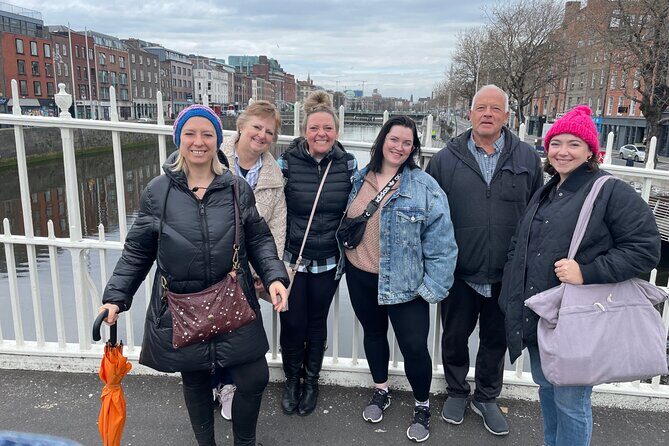
Next up is the GPO Museum in a Georgian building that functioned as a major stage for the Easter Rising in 1916. The building is presented as a symbol of Ireland’s fight for freedom from the British Empire—and the story is not abstract.
Here’s what makes this stop feel real: bullet marks from the conflict can still be seen on the front pillars. That kind of detail is exactly why a guided walk beats reading a poster. You’re not just hearing that something happened—you can point to where the impact is still visible.
If you’re the type who likes to understand causes, outcomes, and why people made the choices they made, this stop works well because it frames the rising as action inside a specific location, not a distant event. Ticket entry isn’t included, so decide ahead of time whether you want the museum time and pay for it, or if you’d rather keep moving and use the guide’s explanation as your main take.
The Spire (Monument of Light) and Ha’penny Bridge: Small Stops, Big Dublin Clarity
After the heavier history, the tour turns lighter and quicker with two landmark breaks.
First is the Spire, officially called the Monument of Light. It’s a modern monument, 120 metres tall, and about 3 metres in diameter at the base. It was built to celebrate the new millennium, which is a nice reminder that Dublin doesn’t only trade in centuries-old stories. It also updates its skyline with meaning you can read.
Even though the stop is short, it serves a purpose: you get a mental “line” to orient yourself around central Dublin. It’s one of those spots that makes the city feel easier to navigate as your walk continues.
Then comes Ha’penny Bridge—officially the Liffey Bridge—but everyone calls it Ha’penny. It’s the first pedestrian bridge in Dublin, built in 1816. The name comes from the idea of a half-penny toll, reflecting how money and movement intersected in everyday Dublin life.
This is a good pair with the Spire because it covers both modern Dublin identity and classic city infrastructure. And both stops are listed as free—ideal when you want landmarks without adding more entry fees.
Temple Bar Area: A Pub-and-Food Snapshot You Can Actually Use

Temple Bar is Dublin’s most famous cultural and nightlife district, and the tour handles it in a practical way: you’re not asked to commit to a full night out. Instead, you get a guided walk through the old neighborhood with an eye for how locals experience the area—especially through pubs and music.
You’ll see the kind of pubs where traditional Irish music is played every night, and you’ll also get a feel for where people go for traditional Irish food. That matters because Temple Bar can be a trap zone for first-time visitors if you show up without any map.
The guide approach here is what you’re paying for. With a strong guide, Temple Bar turns into a menu of options: what to do if you want music, what to do if you want a calmer bite, and what streets you should treat like “curiosity points” rather than your only plan.
This stop is free, and the time is short enough to keep your pace. If you want more food or music later, this is a great moment for the guide to point you toward where you should go next.
Wood Quay Amphitheatre: Viking Dublin You Can Feel in the Ground
Next is Wood Quay Amphitheatre, near the hill culminating with Christchurch. This stop adds a layer people often miss: Dublin didn’t start as medieval stone and cathedrals. There were Vikings here, and the tour connects that origin to what archaeologists found.
The big takeaway: archaeologists discovered the biggest Viking settlements outside Scandinavia at this site. The Vikings were described as marauders and traders at first, and then as people who permanently settled in Dublin in 841 AD.
That 841 date is the kind of anchor that makes the rest of your walk click. When you later stand in older religious sites, you start to recognize how often Dublin’s layers overlap—Viking foundations under later medieval buildings.
This is also a quick but meaningful stop, and it’s listed as free. It’s one of the best places on the route to get a different story than the usual “painted pub and castle” version of Dublin.
You can also read our reviews of more private tours in Dublin




Christ Church Cathedral: The Medieval Center of Dublin Stories
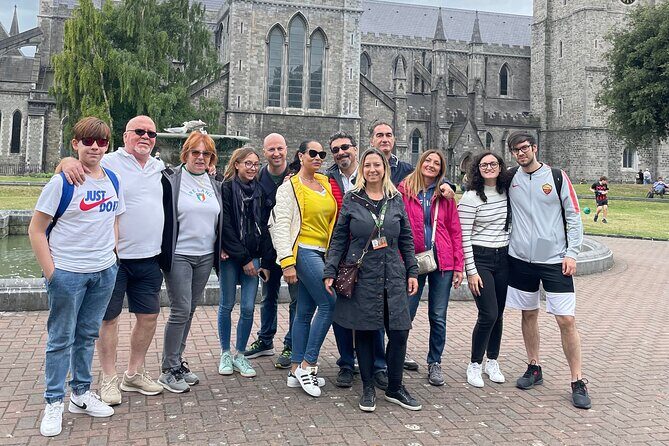
Christ Church Cathedral is in the heart of Dublin’s medieval district, and the tour frames it as a site with near-1000-year presence, including the detail that it was originally a Viking church. That’s a great continuity point from Wood Quay: the early Dublin footprint becomes spiritual and architectural.
In the tour description, you also get a sense that the cathedral has hidden treasures around every corner. It’s not presented as one big “look up” moment. Instead, it’s about little discoveries—like Strongbow’s tomb and even a copy of the Magna Carta.
If you’re someone who likes tangible links between Ireland’s local history and wider European history, this is a strong stop. It also gives you a chance to pick your style: if you want to spend more time inside, you’ll likely pay admission (ticket not included). If you don’t, you can still take in enough to understand why this cathedral mattered.
Time-wise, the listed stop is about 15 minutes. That’s enough for orientation and a couple of key points, but not for a long, unhurried cathedral wander. So decide before you start whether you’re a quick “highlights only” visitor or a slower “I want to read everything” type.
Saint Patrick’s Cathedral: Gothic Beauty With Names Tied to Literature
Saint Patrick’s Cathedral sits in the heart of the Liberties, and the key dates are specific: the building was completed between 1225 and 1270. That’s a massive span to think about—centuries where Dublin’s identity kept changing around the same sacred space.
You’ll also hear that St. Patrick baptized Irish Gaelic people here, tying the cathedral to the conversion story and early Christian Ireland. Then there’s the literary connection: the tour notes Jonathan Swift’s tomb among the treasures.
The cathedral’s “Gothic jewel” feel is part of the pitch, but the real value for you is the way it becomes a story of who’s remembered and why. Swift is one of those names that keeps coming back for anyone with an interest in Dublin’s writers, and linking him here helps the city’s themes stay consistent.
Like Christ Church, admission is not included. If you want to step inside fully, budget for tickets and expect the stop to take longer once you begin exploring.
Dublin Castle: The Record Tower and 700 Years of English Rule
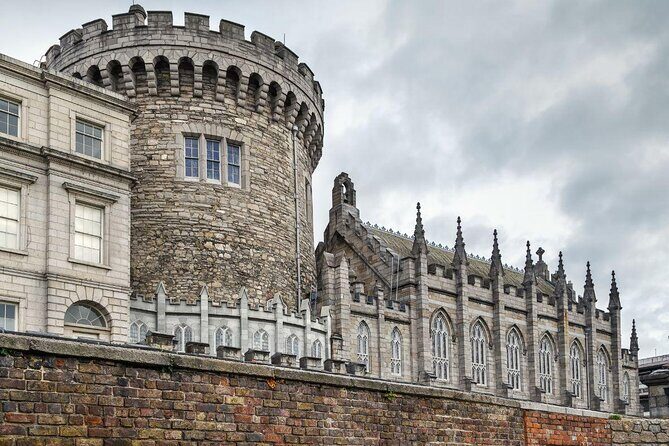
Dublin Castle is a big site, and the tour gives you the main idea without getting lost in paperwork. The castle served as the seat of the viceroy—essentially the English monarch’s representative—and England ruled Ireland from this power center for more than 700 years.
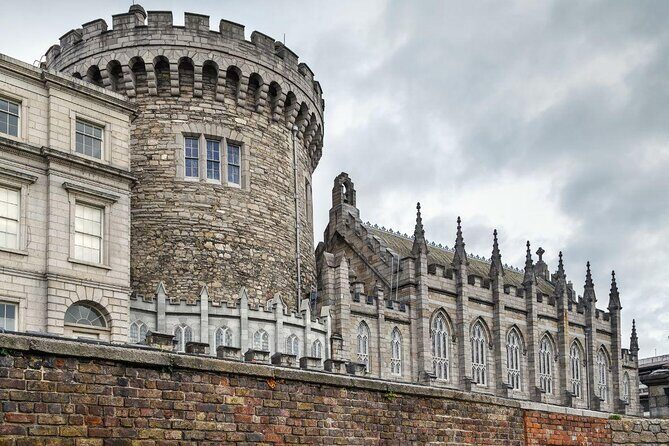
The tour also points out the Record tower as the only remaining piece of the original medieval castle structure. The rest of what you’ll see later is tied to the State Apartments built in the 18th century.
That’s a helpful distinction. When you know which parts are genuinely medieval survivors (like the tower), you’re less likely to misread the building as one single historical era. You’ll understand Dublin Castle as a layered political machine.
Ticket entry isn’t included here either, so your experience depends on how much interior time you want. If you prefer to keep costs down, you can still get a strong sense of the castle’s function from the exterior emphasis and the guide’s explanations.
George’s Street Arcade and Molly Malone: Shopping Craft and Dublin Song Lore
The last stretch shifts from power and faith to everyday city life.
George’s Street Arcade is described as Dublin’s oldest shopping centre and a fine example of Victorian-era architecture. It’s been connected to the South city market buildings and has been open for almost 140 years. That’s a cool detail because it turns “shopping” into a historic indoor passage—something you can appreciate even if you’re not buying anything.
Then you’ll finish near the Molly Malone statue. Molly Malone was unveiled in 1988 to celebrate Dublin’s first millennium, and she inspired the famous song Molly Malone—an unofficial Dublin anthem.
The tour also gives you the origin question that keeps the story interesting: we don’t know if Molly ever existed, but one theory says the character may be based on a real woman who died in Dublin in 1699. That’s the kind of detail that makes a statue feel less like a random photo and more like a cultural puzzle.
Ending at Molly Malone is smart because it’s an easy reference point for your next plan—dinner, a museum, or just wandering toward wherever the evening is pulling you.
Price and Value: What $90.11 Buys You in Dublin
At about $90.11 per person for a 2 to 3 hour private walk, this is the kind of price you pay for focus and flexibility—not just a list of stops.
What you’re really buying is:
- a private experience (your group only)
- English-speaking guidance
- short stops that still connect the dots across big eras
- practical suggestions that help you decide what to do after the tour
Because several key sites require separate tickets (Trinity College, GPO Museum, Christ Church Cathedral, Saint Patrick’s Cathedral, and Dublin Castle), the best “value math” depends on you. If you plan to enter most paid sites, you’ll spend more overall—but you’ll also have a clearer plan for what’s worth your time once you’re inside.
If you plan to keep admissions light and focus on exterior context plus what you can see during free segments, you’ll likely feel the price more strongly as a guiding service rather than an all-in attraction bundle.
Logistics That Matter: Meeting Point, Pace, and Weather
The tour starts at Trinity College Dublin on College Green and ends in front of the Molly Malone statue on Suffolk Street. It’s near public transportation, which helps if you’re mixing this with other stops in the same day.
The pace is set for a 2 to 3 hour window with multiple short segments. That works well if you like highlights and context, but it’s not the style for a slow “stand and stare for an hour” museum day.
Also, this experience requires good weather. If conditions are poor, you might need to reschedule, so keep your calendar flexible if you can.
Who This Private Walking Tour Fits Best
This tour is a strong match if you want:
- an organized way to see Dublin’s core sights in one go
- history explained in plain, connected pieces (not a lecture)
- a guide who can answer questions and adjust to your interests
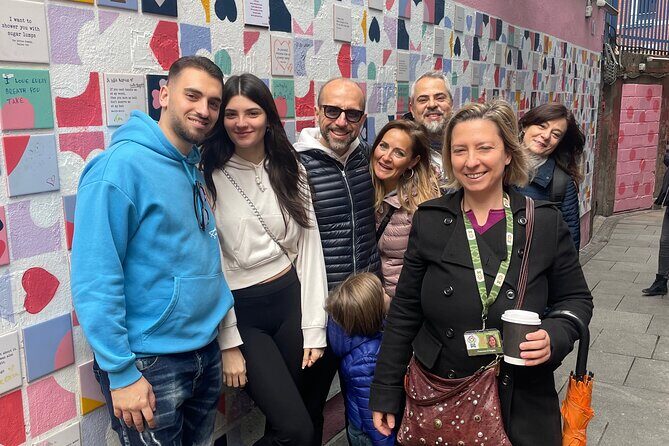
It can also work well for families since the tour has shown accommodation for kids (for example, a past group included children ages 6 and 8). You’ll still want comfy shoes and a realistic expectation: younger visitors usually need short, frequent breaks, and this route is built with that kind of structure in mind.
If you’re traveling solo and want a break from solo wandering, the private format is a real comfort. If you’re traveling with friends or family, it’s also easier to coordinate priorities than with a fixed group bus tour.
Should You Book This Private Walking Tour?
I’d book it if you want your first Dublin day to feel guided, coherent, and useful. The route covers major landmarks—Trinity, the GPO, cathedrals, Dublin Castle, plus the lighter stops like the Spire, Ha’penny Bridge, and Temple Bar—and the guide’s job is to make those stops tell one story instead of ten separate photos.
Skip or rethink it if you’re trying to do Dublin mostly on your own with zero paid entries. Because tickets for several big sites aren’t included, you’ll want to know what you plan to enter versus just see from outside.
If your goal is to get your bearings fast and leave with a clear idea of what you want to do next—this is exactly the kind of first-walk tour that pays off.
FAQ
How long is the private walking tour in Dublin?
It runs about 2 to 3 hours (approx.).
Where does the tour start and end?
The tour starts at Trinity College Dublin, College Green, Dublin 2 and ends in front of the Molly Malone statue at Suffolk St, Dublin 2 (D02 KX03).
Is this a private tour or a group tour?
It’s a private tour/activity. Only your group will participate.
What language is the tour offered in?
The tour is offered in English.
Do I need to buy admission tickets for the stops?
Some admission tickets are not included. Trinity College Dublin, GPO Museum, Christ Church Cathedral, Saint Patrick’s Cathedral, and Dublin Castle list admission ticket not included, while several other stops are free.
Is a mobile ticket provided?
Yes, the tour includes a mobile ticket.
Is the tour suitable for most people and families?
It’s listed as Most travelers can participate, and service animals are allowed.
What happens if the weather is bad or I need to cancel?
The experience requires good weather. If it’s canceled due to poor weather, you’ll be offered a different date or a full refund. Free cancellation is available up to 24 hours in advance for a full refund.