REVIEW · DUBLIN
2-Hour Historical Walking Tour from Dublin
Book on Viator →Operated by Historical Walking Tours of Dublin · Bookable on Viator
Dublin has layers, and this walk puts them in order fast. You start by Trinity College’s Grattan statue and get a clear timeline from medieval power to modern politics, with history-postgraduate guides doing the explaining. Two things I really like: the route hits big landmarks you’d otherwise miss, and the free stops keep the day from turning into an add-on ticket hunt.
One heads-up: this tour leans into history and politics, and it can feel dense if you want mostly casual stories and sightseeing.
In This Review
- Key Highlights You’ll Care About
- Why This 2-Hour Dublin Walk Is Such a Smart First Pick
- Starting at the Henry Grattan Monument and Getting Oriented at Trinity College
- Bank of Ireland and Temple Bar: Power, Then Repurposing
- Wood Quay Amphitheatre: Viking Dublin Leaves Evidence
- Four Courts: Law and the Start of a Civil War
- Christ Church Cathedral and City Hall: Old Power and a Political Turning Point
- Dublin Castle: British Administration and the Name of Dublin
- The Guide Factor: What to Expect From a History Postgraduate
- Walking Pace and What to Wear (So the Two Hours Feel Comfortable)
- Price and Value: What $22.98 Really Buys You
- How to Use This Tour for the Rest of Your Dublin Day
- Should You Book This Dublin Historical Walking Tour?
- FAQ
- How long is the tour?
- How much does it cost?
- Where do I meet the guide, and where does the tour end?
- Which stops will we see?
- Is admission to the Book of Kells included?
- Is the tour offered in English, and how large is the group?
- Can I cancel and get a refund?
Key Highlights You’ll Care About
- Small group size (max 25) keeps questions possible and makes the pace easier to follow
- History-postgraduate guides focus on stories with context, not random dates
- Eight major sights in about two hours means you get orientation and momentum early
- Most admissions are free; only Book of Kells entry is not included
- Clear meeting point at the Grattan statue opposite Trinity College front gate
- A strong “start your trip” format: the rest of your day stays open for exploring
Why This 2-Hour Dublin Walk Is Such a Smart First Pick
This is one of those tours that works even if you have only a small window. You walk through central Dublin and come out with a framework for how the city (and Ireland) got shaped—religion, law, empire, rebellion, and reinvention.
I also like the practical pacing. It’s set up so you spend enough time at each stop to understand why it matters, then you’re back out on your own for pubs, museums, or just wandering Temple Bar without feeling lost.
You can also read our reviews of more walking tours in Dublin



Starting at the Henry Grattan Monument and Getting Oriented at Trinity College
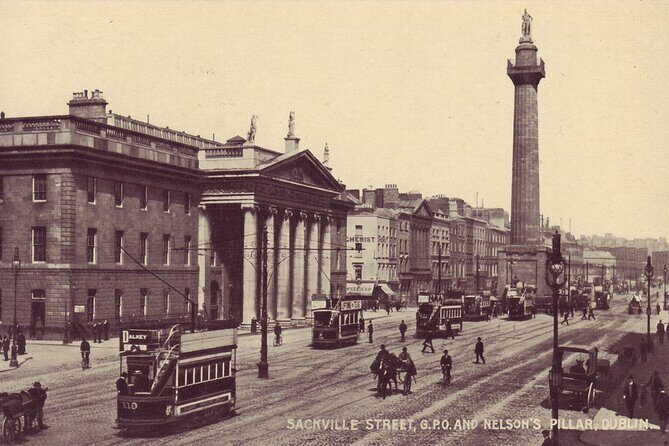
Your tour kicks off at the Henry Grattan Monument on College Green, directly opposite Trinity College Dublin’s front gate. It’s an easy place to find, and it instantly gives you context because Trinity is tied to Ireland’s long-running story of learning, power, and identity.
At Trinity College Dublin, you spend around 20 minutes on its role as Ireland’s oldest university (founded in 1592). The big draw is the Book of Kells, an 8th-century Latin manuscript of the four Gospels. You’ll learn what makes it so important—and how it fits into the wider sweep of Irish history—but note that entry to the Book of Kells is not included in this tour.
What to watch for: Trinity’s atmosphere changes as soon as you understand that this isn’t just a beautiful campus. It’s an institution that helped shape cultural authority for centuries, and the guide’s framing helps you read the place instead of just passing it.
Bank of Ireland and Temple Bar: Power, Then Repurposing
Next you head to the Bank of Ireland, where the building’s history is a big part of the message. You’ll spend about 10 minutes here, learning that the site originally served as Ireland’s colonial parliament, built in 1729. It was abolished by the Act of Union in 1800, and it became a symbol of the period often called Protestant Ascendancy, along with the era’s neo-classical architecture.
If you’re curious why Dublin looks the way it does, stops like this explain it. The guide doesn’t just tell you what the building is; they tie it to who held power and how that power showed up in stone and institutions.
Then you move to Temple Bar for about 10 minutes. This area was originally earmarked for demolition, but in the 1990s it was repurposed as Dublin’s cultural quarter. That “built to be replaced, then saved by a new identity” idea is a theme across the route.
A practical takeaway: Temple Bar gets busy, but with the tour’s background, it’s easier to see it as a story of change—not just a nightlife district.
Wood Quay Amphitheatre: Viking Dublin Leaves Evidence
At Wood Quay Amphitheatre, you spend around 10 minutes at a site shaped by discoveries from the 1980s archaeological excavations. This is where you connect with the fact that Dublin’s story isn’t only medieval and British-era. The Viking city was founded around AD 840, and Wood Quay is part of how we know.
Why this stop matters: it interrupts the usual “Ireland starts here” timeline many visitors expect. The guide’s job here is to link the Viking layer to later Dublin, so you understand the city as something built over time.
If you like when history becomes visible, this is a good moment on the walk. You don’t have to be an archaeology expert to follow it—just bring curiosity.
Four Courts: Law and the Start of a Civil War
Four Courts is one of the most intense stops on the route, and it gets about 20 minutes. You’ll learn that the building is Ireland’s legal headquarters and that in June 1922 a civil war began here between supporters and opponents of the Treaty of December 1921, which had ended the War of Independence (1919–21).
This is where the “politics and history” angle becomes real. If you came for a quick sightseeing loop, this part might feel heavier than you planned—but if you want to understand modern Ireland, it’s essential.
How to make it work for you: don’t try to memorize every date. Focus on the cause-and-effect the guide emphasizes: treaties, divisions, and how buildings become stages for national turning points.
You can also read our reviews of more historical tours in Dublin





Christ Church Cathedral and City Hall: Old Power and a Political Turning Point
You’ll visit Christ Church Cathedral next, spending about 10 minutes. The cathedral dates back to around 1030, with major rebuilding in stone in the 1170s, connected to Strongbow and the English invasion of the 1170s.
This stop is a reminder that religious sites in Dublin often sit at intersections of conquest, governance, and community life. Even if you’re not into cathedrals, the guide’s context makes it feel like a historical document you can walk through.
Then it’s on to City Hall for about 10 minutes, where you’ll look at a statue of Daniel O’Connell. O’Connell was Dublin’s first Catholic Lord Mayor (1840) and led a campaign for Catholic Emancipation in 1829, which helped end anti-Catholic laws. His nickname is The Liberator, and the stop’s purpose is to connect that political change to what it meant for Catholics in Dublin and beyond.
This is one of the stops that tends to stick with people because the story is easy to follow: a figure, a movement, a legal shift, and a new sense of possibility.
Dublin Castle: British Administration and the Name of Dublin
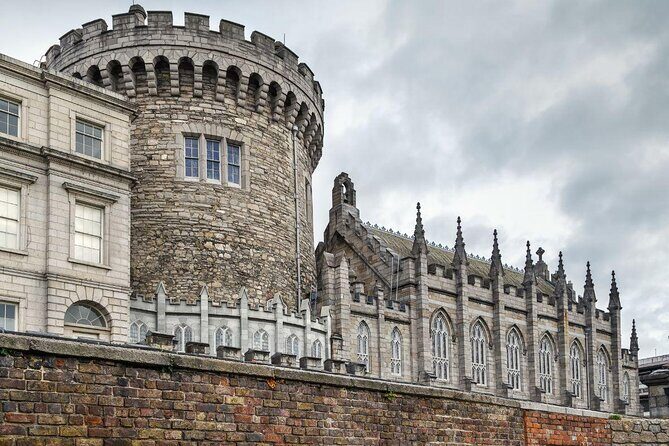
Your tour finishes near Christchurch Pl / Wood Quay (the end point is listed at Christ Church Cathedral), but the last landmark on the walk is Dublin Castle, with about 10 minutes here.
You’ll learn it was originally built by King John in 1204 and served as the seat of British administration until 1922. You’ll also get the origin story tied to Dubh Linn (Black Pool), which is connected to how Dublin got its name.
This is a strong closing stop because it ties the earlier power themes together. The guide’s framing helps you see Dublin Castle not as a tourist photo backdrop, but as an administrative machine that influenced daily life for centuries.
The Guide Factor: What to Expect From a History Postgraduate
One of the best parts of this tour is that the guides are described as history postgraduates, and the storytelling approach shows up in the way each stop is connected. I like that you’re not just collecting facts. You’re getting an explanation for why these places mattered.
From the guide styles that have been seen on this route, you can expect a mix of humor and structure. Names that have come up include Eoin, Jody, John D., Jodie, Daragh, Caolan Maher, and Colm. In particular, Eoin’s approach has been described as starting with a quick overview that spans thousands of years and then adding detail at each stop. That kind of “big picture first” method helps you stay oriented even when the content gets dense.
Also, the voices are built for outdoor listening. Even on windy, cold mornings, people reported that the guide was easy to hear and made the time pass.
Walking Pace and What to Wear (So the Two Hours Feel Comfortable)
The tour lasts about two hours, and the route is in central Dublin. You’ll do a decent amount of walking during that window, so wear comfortable shoes. If it’s cold or rainy, bring layers—Dublin weather can change fast, and the tour keeps moving.
In terms of fitness, expect moderate physical fitness. This is not a slow crawl, but it also isn’t extreme. The stops are short and purposeful, so you’ll want to be ready to stand and listen without long breaks.
One more practical note: while it’s designed for roughly two hours, it’s possible the tour runs a bit longer if the guide is wrapping up a point. If you have dinner reservations immediately after, give yourself a buffer.
Price and Value: What $22.98 Really Buys You
At $22.98 per person for a two-hour walk, the value comes from two places: interpretation and access to context.
You’re paying for a guide who can connect Trinity, government buildings, court history, cathedrals, and castle administration into one narrative. That kind of framing is hard to recreate on your own, even if you love reading.
Also, most of the stops list free admission ticketing for the stop itself, so you’re not constantly paying extra just to stand in the right spot. The only clear exception is Book of Kells entry, which is not included.
So the deal is simple: you spend money once, then you get an organized, guided route through major landmarks. Afterward, you keep the rest of your day free for whatever you want next.
How to Use This Tour for the Rest of Your Dublin Day
I recommend booking this early in your trip for one reason: it makes everything else easier. After you’ve heard why Trinity exists, why parliament mattered, and why civil conflict erupted around legal authority, Dublin’s street-level details feel less random.
A good strategy is to take this walk and then immediately return to any site that grabbed you. If Trinity’s story or Dublin Castle’s role sounded most relevant, plan time later for your own slow look. If politics grabbed you, you’ll find it easier to connect the dots when you read signs, museum panels, or local history exhibits the rest of the day.
Should You Book This Dublin Historical Walking Tour?
Book it if you want a structured introduction to Dublin’s history with a guide who can explain the political and religious context without turning it into a lecture you can’t follow. It’s especially worth it if you like when stories connect across centuries and you plan to explore more of the city afterward.
Skip or adjust your expectations if you prefer light, culture-first sightseeing with minimal political detail. This walk is built for history lovers, and it’s okay if that’s not your mood that day.
FAQ
How long is the tour?
It runs for about two hours.
How much does it cost?
The price is $22.98 per person.
Where do I meet the guide, and where does the tour end?
Meet at the Henry Grattan Monument, College Green, Dublin. The tour ends at Christ Church Cathedral, Christchurch Pl, Wood Quay, Dublin (D08 TF98).
Which stops will we see?
You’ll pass Trinity College Dublin, Bank of Ireland, Temple Bar, Wood Quay Amphitheatre, Four Courts, Christ Church Cathedral, City Hall, and Dublin Castle.
Is admission to the Book of Kells included?
No. Entry to the Book of Kells is not included.
Is the tour offered in English, and how large is the group?
The tour is offered in English, and it has a maximum of 25 travelers.
Can I cancel and get a refund?
Yes. You can cancel for a full refund up to 24 hours before the experience starts.