REVIEW · DUBLIN
1916 Rebellion Walking Tour
Book on Viator →Operated by 1916 Rebellion Walking Tour · Bookable on Viator
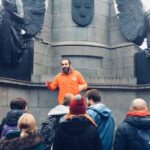
1916 comes alive on Dublin streets. This 1916 Rebellion Walking Tour strings together the events from the Great Hunger to Easter Week 1916, then walks you past the places where the rebellion’s story actually unfolded. I especially like starting at the International Bar with early context and having Lorcan Collins (who has run the 1916 Tour since 1996) set the tone with clear, human storytelling.
My one practical caution: the tour is listed at about 2 hours, but with questions, singing, and a full group (up to 30), it can feel closer to a longer sit-by-the-stories experience. If you’re on a tight schedule, give yourself breathing room.
In This Review
- Key Highlights You’ll Feel in Real Time
- Walking the 1916 Trail Without Getting Lost in Dates
- Meeting at the International Bar: Where the Tour Actually Starts
- The Story Arc: Great Hunger to Easter Week 1916
- City Hall During Easter Week: Occupation as a Turning Point
- Dublin Castle: Seeing the British Administration Up Close
- Four Courts and the River Liffey: Why You Don’t Need to Climb
- O’Connell Monument Bullet Holes: History You Can See
- Jim Larkin Statue: Labor and Revolution in the Same Frame
- The GPO and Moore Street: Where the Proclamation Lands
- Bank of Ireland (Old Parliament) and Trinity College Neighbors
- How Long It Really Takes and How to Prepare
- Value for Money: Why $27.81 Can Feel Like a Bargain
- Who This Tour Suits Best (and Who Might Skip It)
- Should You Book This 1916 Rebellion Walking Tour?
- FAQ
- How long is the 1916 Rebellion Walking Tour?
- How much does the tour cost?
- Where do I meet the guide?
- Is the tour in English?
- Are alcohol drinks included?
- Do I need to buy admission tickets for the stops?
- What’s the group size?
- Is the tour suitable for kids?
- Is there a weather requirement?
- Can I get a refund if my plans change?
Key Highlights You’ll Feel in Real Time

- Start at the International Bar at 23 Wicklow St, where the tour begins with background and time to settle in
- A story that runs from the 1840s famine to 1916 so the Rising makes sense, not just the dates
- Up-close stops at power centers like Dublin Castle and the GPO, plus memorials with visible reminders
- Often includes songs or poetry when the guide feels like it fits the moment (varies by guide/day)
- Free admission at major stops keeps the day focused on walking and learning rather than ticket lines
Walking the 1916 Trail Without Getting Lost in Dates
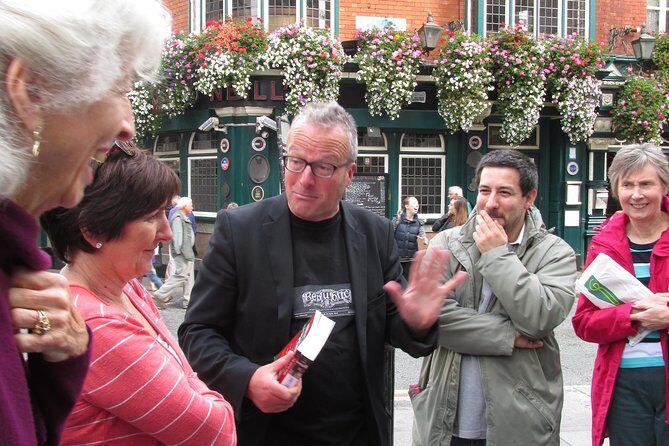
This is the kind of walking tour that doesn’t ask you to already know Ireland’s political history. Instead, it gives you the big cause-and-effect thread first, then lets you see how the people involved moved through Dublin. That order matters. When you understand the build-up, the sights feel connected, not like random landmarks.
The format is also built for conversation. You’ll get chances to ask questions and steer your curiosity, rather than just sit through a lecture with stop-and-go map points. If you like history that has drama and consequences—still grounded in facts—this works well.
You can also read our reviews of more walking tours in Dublin


Meeting at the International Bar: Where the Tour Actually Starts
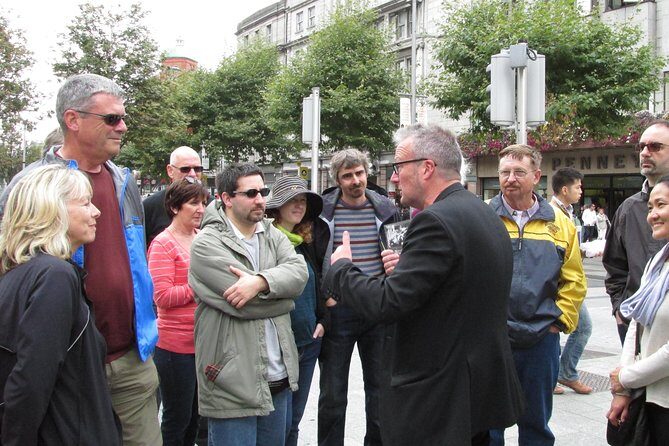
You begin at 23 Wicklow St in Dublin, at the famous International Bar, and you can arrive earlier to grab a drink and read the introductory material your guide provides. That early buffer is more useful than it sounds. It helps you settle in, get oriented, and let the guide know your interests before you start walking.
The tour is led in English, and the group size stays small enough to feel personal (maximum 30). You’ll also get a mobile ticket, which means less fuss at the start. And yes—alcoholic drinks are available for purchase, but they’re optional.
If you’re wondering about guide energy, the names that have shown up in past runs include Lorcan Collins as well as guides like Liz, Fallon, Phelan, Adam, Phalim, Donal, and Elaina. Any of them can shape the tone, but the consistent theme is storytelling with room for questions.
The Story Arc: Great Hunger to Easter Week 1916

Before you even reach the first major stop, the tour sets the timeline in a way that makes the Rising easier to understand. It starts with the Great Hunger in the 1840s, then moves forward toward the revolutionary period that culminates in the 1916 Rising.
I like this approach because it answers a question you might not think to ask at first: why did this rebellion happen when it did? Once you have the lead-up explained, the later scenes—proclamations, occupations, and clashes—feel like chapters in one evolving story, not isolated events.
A bonus here is the pacing. You’re not thrown into a long walk immediately. You get a short intro, a chance to ask questions, and a preview of what route you’ll take. That helps the whole experience land.
City Hall During Easter Week: Occupation as a Turning Point
One of the first stops is Dublin City Hall, where the Irish Citizen Army occupied the building during Easter Week 1916. This is a key moment because it shows how the rebellion wasn’t just about speeches—it involved taking physical places of authority.
You’ll spend about 15 minutes here, which is enough time to hear why the occupation mattered and how it fit into the larger week. A small drawback: like many city-center stops, you’re learning while standing in a public space. Keep your expectations realistic about comfort and noise.
Still, the payoff is that this stop adds structure. It helps you picture the Rising not as a single day, but as coordinated actions in Dublin.
Dublin Castle: Seeing the British Administration Up Close
Next is Dublin Castle, the seat of British administration in Ireland, and a major stage in both the 1916 Rising and the War of Independence. If you recognize it from popular culture, that’s normal. The tour’s value is turning that familiarity into understanding.
This stop also helps connect two time periods. You’re not only learning what happened in 1916—you’re seeing why the site mattered again later. That continuity is one reason the tour works for history buffs and first-timers alike.
The practical tip: take a moment before the guide starts to look at the building’s presence in the city. Even without memorizing every detail, you’ll understand what kind of power it represented once the explanation clicks.




Four Courts and the River Liffey: Why You Don’t Need to Climb
The Four Courts is another big stop, tied to the revolutionaries in 1916 and again during events leading toward the Irish Civil War in 1922. Here’s a detail I appreciate: you don’t rush up to the building. Instead, you view it from a bridge over the River Liffey, which keeps the focus on the strategic geography.
Expect discussion on the role of the Four Courts in both 1916 and 1922, plus how the Irish Civil War grew from earlier tensions. That context matters because the Civil War can feel confusing if you treat 1916 as an isolated uprising.
A small consideration: views from bridges depend on pedestrian flow. You’ll still get the explanations, but if you hate standing still with crowds, mentally plan for a short, busy-city moment.
O’Connell Monument Bullet Holes: History You Can See
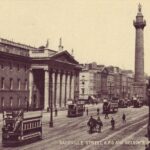
At O’Connell Monument, you’ll stop to look at bullet holes from the Rising and hear how positions differed between British and Irish forces in 1916. This is one of those rare moments where history stops being abstract and becomes physical.
The emotional impact is real, even if you’re trying to stay analytical. You’ll likely find it’s the kind of stop that makes you slow down and read carefully—not because you have to, but because your brain naturally registers what you’re looking at.
I also like that the guide frames the bullet holes as part of the story, not just shock value. You get explanation for what you’re seeing and why those marks still exist in the city fabric.
Jim Larkin Statue: Labor and Revolution in the Same Frame
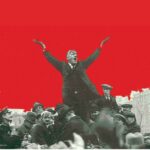
You also visit the Jim Larkin statue, connected to Big Jim Larkin, a union man from Liverpool who was a close comrade of James Connolly and a friend to Dublin’s working class. This stop adds a layer that many tours skip: the social networks behind political change.
If you’ve heard mostly about leaders, politics, and proclamations, this is a helpful counterweight. It reminds you that revolutions are built with people who organize daily life, not only with speeches.
Expect a 15-minute stop, which means the guide will keep it tight. If you want more, this is also a good moment to ask questions and request extra context.
The GPO and Moore Street: Where the Proclamation Lands
The General Post Office (GPO) is a core anchor of the tour, and it’s easy to see why. It served as HQ for the revolutionaries in Dublin during Easter 1916, and it’s the place where P.H. Pearse read the Proclamation. This stop carries a lot of symbolic weight, and the guide uses that to walk you through the unfolding of Easter Week.
You spend about 30 minutes here, which is a generous window for a walking tour stop. You’re not only looking at an important building; you’re hearing the events arranged like a story scene by scene, with the guide pointing out why this location became central to the national psyche.
From there, you may also visit Moore Street to see where the GPO garrison made its last stand in Easter Week. This part can vary with time, but it tends to land well because it turns the GPO from a single famous place into a wider route of action.
If you’re the type who likes details that make history feel lived-in, this is your area of the tour.
Bank of Ireland (Old Parliament) and Trinity College Neighbors
Depending on the route your guide chooses, you may stop at the Bank of Ireland, also known as the Old Parliament. The tour frames it as part of Ireland’s political story, and it also talks about how it sits near Trinity College.
This stop helps you zoom out from 1916 without losing the thread. It connects the rebellion to the bigger landscape of governance, institutions, and evolving political identity. It’s a useful reminder that streets and buildings aren’t just backdrops; they’re pieces on the chessboard.
One thing to know: the exact route can shift so the walk doesn’t become stale. That’s good for repeat visitors, and it also means you might get a slightly different emphasis depending on timing.
How Long It Really Takes and How to Prepare
The tour is listed at about 2 hours, and most people can participate. But plan with flexibility. Reviews have pointed out that the time can run longer than the estimate, especially when the guide is answering questions and when the group moves as one.
Practical preparation is simple:
- Wear comfortable shoes. You’ll be walking through central Dublin streets.
- Bring a phone for your mobile ticket.
- If you like photography, give yourself a few seconds at each stop because some moments (like visible bullet holes) are worth capturing thoughtfully.
Weather matters here too. The experience requires good weather, and if conditions aren’t right, you’ll be offered a different date or a full refund.
Value for Money: Why $27.81 Can Feel Like a Bargain
At $27.81 per person, this tour is priced in a way that makes sense for what you get: a professional guide, a focused walking route, and major Dublin sites tied directly to Easter Week 1916 and the broader revolutionary period. A big value point is that the tour includes admission tickets noted as free at the major stops, so you’re not getting nickel-and-dimed on entry fees.
You also get a dense education in a short window. Some guides bring in extra creative elements—songs or poetry have been mentioned in past experiences—which can make the story stick longer than a standard facts-only walkthrough.
If you’re doing multiple Dublin activities, I think this is a smart one to anchor your trip. It sets your mental map of 19th-century causes and 20th-century consequences, so other sites around the city won’t feel random.
Who This Tour Suits Best (and Who Might Skip It)
This walking tour fits best if you want:
- A structured explanation of why the rebellion happened
- Landmarks you can see up close, including places tied to the Proclamation and visible marks from the Rising
- A guide who tells stories and takes questions, not a fast lecture with no interaction
It may be less ideal if you hate walking in a group, or if you’re scheduling your day down to the minute and can’t handle possible timing drift. Also, if you only want casual, light sightseeing with minimal political context, you might find the subject matter heavier than you expected.
Should You Book This 1916 Rebellion Walking Tour?
Book it if you want the 1916 Rising explained in plain language, with real Dublin locations and a guide who clearly cares about connecting the dots. The meeting point at the International Bar, the multi-stop route through major sites like Dublin Castle and the GPO, and the optional add-ons like songs/personal storytelling make it feel like more than a checklist.
Skip it only if your schedule can’t flex beyond a strict two-hour block or if you prefer history that stays strictly surface-level. If you’re even slightly curious about Ireland’s revolutionary chain of events, this one is an easy “yes” for your Dublin itinerary.
FAQ
How long is the 1916 Rebellion Walking Tour?
It runs for about 2 hours (approx.).
How much does the tour cost?
The price is $27.81 per person.
Where do I meet the guide?
You meet at 23 Wicklow St, Dublin, D02 VH59, Ireland, at the start location, and the tour ends back at the same meeting point.
Is the tour in English?
Yes, it is offered in English.
Are alcohol drinks included?
Alcoholic drinks are not included, but they are available to purchase.
Do I need to buy admission tickets for the stops?
Admission is listed as ticket free at the stops included on the route.
What’s the group size?
The maximum group size is 30 travelers.
Is the tour suitable for kids?
Children must be accompanied by an adult.
Is there a weather requirement?
Yes. The experience requires good weather. If it’s canceled due to poor weather, you’ll be offered a different date or a full refund.
Can I get a refund if my plans change?
You can cancel for a full refund if you cancel up to 24 hours in advance. If you cancel less than 24 hours before the start time, the amount paid is not refunded.