REVIEW · DUBLIN
Dublin to Belfast Black Cab, Dunluce Castle and Giant’s Causeway
Book on Viator →Operated by Wild Rover Tours · Bookable on Viator
Black cabs in Belfast make history personal. This full-day Northern Ireland sweep works because you get local black cab storytelling in the city and then switch gears to big nature at Dunluce Castle and the Giant’s Causeway. One thing to weigh up: it’s a long day with an early start, and there’s no restroom stop built into the coach.
I like that the Belfast part isn’t just a drive-by. You’ll see the wall-size murals on the Shankill and Falls roads area, and the Peace Wall gets explained in a grounded, practical way that helps you understand what those streets felt like during The Troubles.
I also appreciate the logistics. Entrance fees and round-trip transport are baked in, so you’re not scrambling between sites. Still, you’ll want good walking shoes and rain gear; the coast and the Causeway can be wet, windy, and uneven.
In This Review
- Key Highlights You’ll Notice Fast
- The Shape of This Day: Early Dublin Pickup, Late Return
- Dublin Morning: Where to Meet and How to Start Smooth
- Belfast by Black Cab: Murals, Bobby Sands, and Real-Life Context
- The Peace Wall Stop: Why It Exists and How It Changed
- Titanic Belfast Break: Quick Stops, Optional Tickets, Food If You Want It
- Grand Antrim Coastal Drive: Sea Views and Glens on the Move
- Dunluce Castle: Included Entry to a Cliff-Edge Ruin
- Giant’s Causeway: Basalt Columns, Wishing Chair, and How to Work the Walking
- Price and Value: Why This Costs What It Costs
- Who Should Book This (and Who Might Think Twice)
- Should You Book It?
- FAQ
- How long is the Dublin to Belfast, Dunluce Castle, and Giant’s Causeway tour?
- What time does the tour start in Dublin?
- Where do you meet and where are you dropped off?
- Is the tour offered in English?
- Do you get a black cab tour in Belfast?
- Which Belfast areas are included?
- Are entrance tickets included?
- Is lunch included?
- Is there a restroom break during the day?
- What should I wear or bring for the day?
Key Highlights You’ll Notice Fast
- Black cab time in Belfast with small groups, usually around 5 people for the cab portion, so the guide can answer questions.
- Shankill, Falls Road murals, and the Bobby Sands mural, making the city’s political art easier to read than just photos.
- A clear explanation of the Peace Wall, including why the lines were built and why they changed after the Good Friday Agreement.
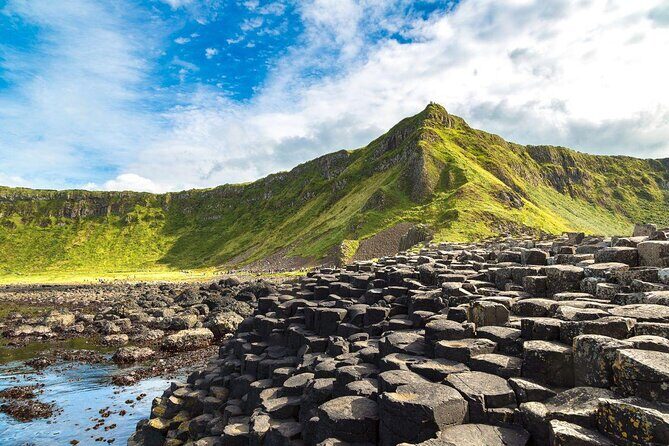
- UNESCO Giant’s Causeway in about 2 hours, with the famous Giant’s Boot area, Wishing Chair, and cliff-top views.
- Dunluce Castle cliff-edge ruins with included entry, plus Game of Thrones connections for pop-culture fans.
- A day that mixes modern Belfast with ancient Antrim, without you needing to plan routes or tickets.
The Shape of This Day: Early Dublin Pickup, Late Return
This tour is built like a long, well-paced day trip from Dublin. You start at 7:00 am from central meeting points (including 1 College Green and 59 O’Connell Street), and you’re back near D’Olier Street / O’Connell Bridge with a typical return around 8:00 pm.
That early start matters. It gives you enough daylight to cover Belfast in the morning and still reach the Antrim coast before evening sets in. The flip side is fatigue: you’re in transit for a good chunk of the day, and you won’t have much room for detours unless the guide can fit it in.
The tour also stays small enough to feel personal. The maximum group size is 63, but the Belfast black cab portion tends to run in tiny clusters, which is a big deal when the topic is political history and you want context, not just headlines.
One more practical note: you’ll be moving between sites on foot, and you won’t have a restroom on board the coach, so plan for breaks.
You can also read our reviews of more tours and experiences in Dublin.

Dublin Morning: Where to Meet and How to Start Smooth
Dublin pickup is straightforward, but you do need to be on time. The tour asks you to arrive at least 10 to 15 minutes early so the group can load quickly and keep the schedule intact.
Two common pickup points are listed:
- Starbucks Café on 1 College Green at 7:00 am
- Dublin Bus Office on 59 O’Connell Street at 7:05 am
I like this setup because it gives you options depending on where you’re staying. It also reduces stress: you’re not hunting for a single obscure corner.
You’ll also be starting in daylight, which helps you get your bearings before the day turns into a history-and-coast marathon.
Belfast by Black Cab: Murals, Bobby Sands, and Real-Life Context
The Belfast portion is the heart of the tour. In the city, you switch to traditional black cab guided by a local driver/guide, and the focus is the neighborhoods that have carried a lot of tension for decades.
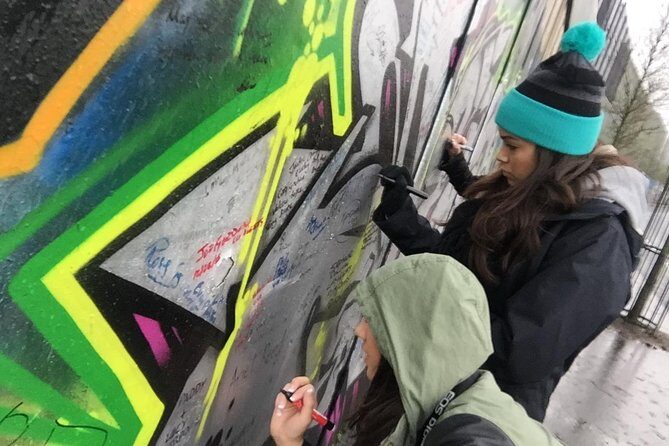
In the Shankill Road area, you’ll see the huge murals that act like an outdoor news wall. This neighborhood became a center for loyalist paramilitary activity during The Troubles, and the murals reflect that identity and memory. The practical value here is clarity: instead of trying to interpret murals on your own, you get the story behind what you’re looking at.
Next, you move into west Belfast territory linked with the Falls Road and its history. You’ll focus on the Bobby Sands mural and also hear about other politically themed mural areas such as the International Wall and the Peace Wall area. The cab guide’s role is huge: the best part is the lived-experience context—how people described daily life, fear, and routines during the conflict.
If you end up with a guide known for telling the story with emotion and structure—names like Una, Stephen, or Daithi and JP show up in the kinds of experiences people report—that can turn the cab ride into more than sightseeing.
One caution: this is not a neutral postcard. It’s political, personal, and sometimes heavy. If you prefer cheerful history only, this part may feel intense. If you want to understand how the city got shaped, it’s hard to beat.
The Peace Wall Stop: Why It Exists and How It Changed
The Peace Wall portion is short but meaningful. You’ll be shown what the Peace Wall is and why it was built. The tour explains that the walls split Roman Catholic communities from Protestant communities and that the lines began around 1969, after civil unrest.
You’ll also hear how the walls evolved. They started as temporary structures, then became permanent because they were effective at limiting sectarian violence. After the Good Friday Agreement (1998), the lines were not removed; the walls were widened, lengthened, and increased in number.
You don’t need to memorize the percentages to get the point. You’ll grasp how segregation can become physical infrastructure, and how it can persist even when formal agreements change. If you’re trying to understand modern Belfast, this is one of those stops where the explanation does most of the work.
Titanic Belfast Break: Quick Stops, Optional Tickets, Food If You Want It
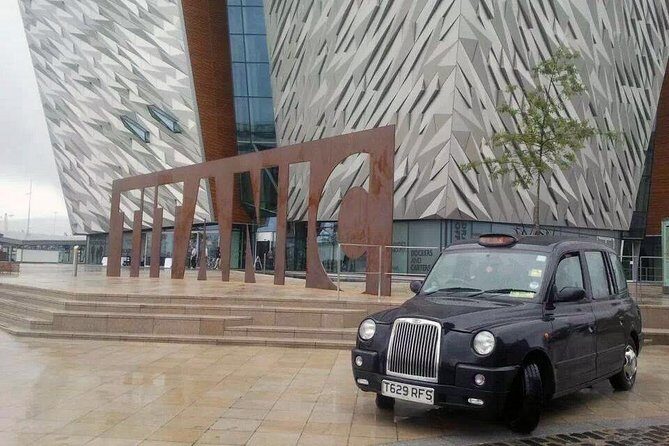
Between the cab portion and the coast drive, the tour includes a short break near Titanic Belfast. The stop is timed for practical reasons: restroom use, a quick coffee, and a reset before the long drive toward Antrim.
Entry to Titanic Belfast itself is not included. But you can still use the location to stretch your legs and grab food. One of the most common practical tips is to plan for a fast meal if you do eat there, since the stop is limited. If you want the full Titanic museum experience, you’d need to buy that separately and likely on a different day.
This break is useful even if you’re not doing the museum. It buys you a breather in the middle of an otherwise nonstop day.
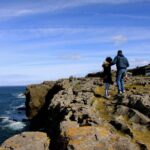


Grand Antrim Coastal Drive: Sea Views and Glens on the Move
After Belfast, you head along the Grand Antrim Coastal Drive by coach. This part is all about scenery, because the coastline and glens do the storytelling for you.
You’ll travel past rocky sea edges with dramatic views over the North Atlantic. On clear days, you can even see Scotland’s west coast from the north coast. That’s a fun detail to keep in mind while you’re looking out of the window: you’re standing on the edge of water that has always mattered for travel, trade, and separation.
This is also where the coach time helps. If you tried to do this as a DIY day trip from Dublin, you’d lose hours just getting from A to B. Here, the route is set, the drive is handled, and you get guided context along the way.
Still, it’s also where you’ll feel the long day. The coach ride is part of the bargain. If you hate sitting for long stretches, you’ll feel it most right after lunch time.
Dunluce Castle: Included Entry to a Cliff-Edge Ruin
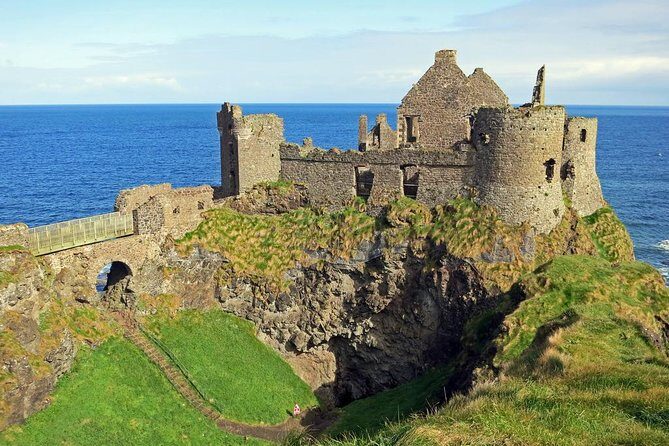
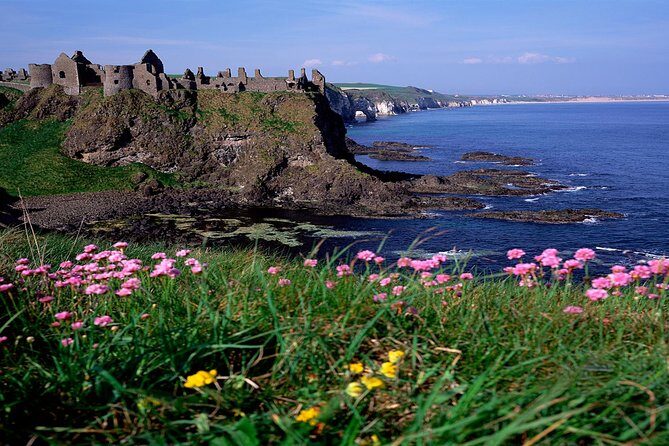
Dunluce Castle is one of those stops that looks unreal even when the weather is bad. The ruins date back over 500 years, and the setting is dramatic: perched on the north Atlantic cliff edge.
Entry is included, and you’ll typically get around 30 minutes inside and around the grounds. The Game of Thrones link is part of why some people come, since the castle has been used as a filming location associated with House Greyjoy, but even if you’re not a fan, the cliff setting still lands.
A practical tip: on windy or wet days, you’ll feel it on the head and shoulders. Plan for gusts and sudden gusty rain. If you’re a photographer, the light can change fast over the water, so you’ll want to stay flexible rather than locking in one angle.
If access conditions happen to shift due to local road issues, you might get more “outside-coastline” viewing than the full walk. In general, though, the main ruins experience is still the core of this stop.
Giant’s Causeway: Basalt Columns, Wishing Chair, and How to Work the Walking
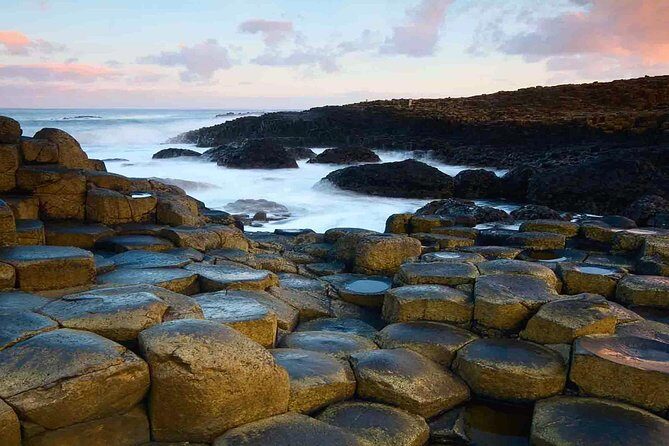
You reach Giant’s Causeway around 2:30 pm, with time to explore for about 2 hours. Admission here is free, and that’s a big value point because it lets you spend your money on the rest of the day’s sights.
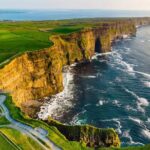
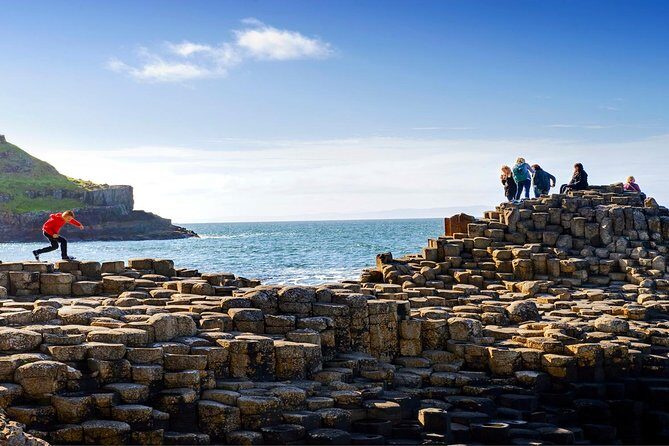
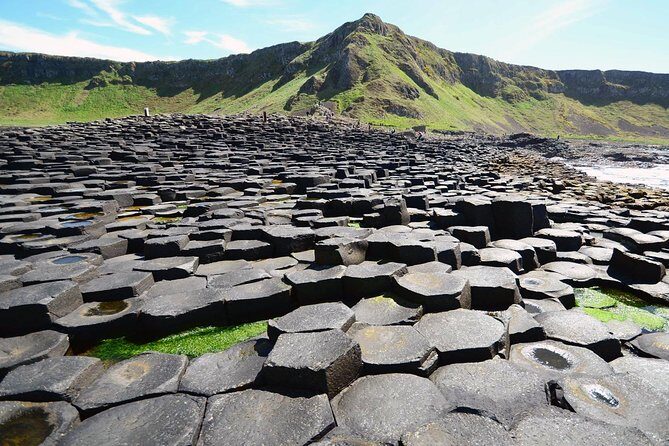
This is where the tour switches into pure natural wonder. The Causeway was formed about 60 million years ago from volcanic eruptions that created around 40,000 interlocking basalt columns. The guide also connects the place to Irish mythology, which helps the geology feel more human than scientific.
On the ground, you can follow the trail toward the Giant’s Boot area and stop at the famous Wishing Chair, described as a natural throne shaped from perfectly formed basalt columns. You’ll also hear about the Camel rock formation, formed from cooling lava pushed through layers of rock.
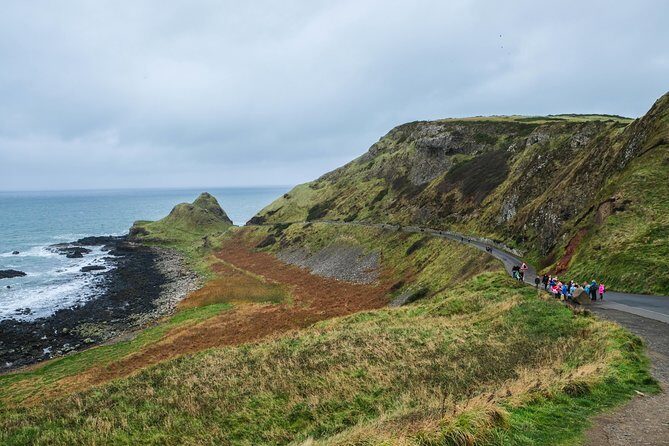
The walking can feel like a hill day. You’re on cliff edges, and the ground isn’t always flat. The good news is that there’s a free train running up and down between the visitor center and the coast area. That matters if you don’t want the steepest climb near the end of a long day.
Weather is the wildcard. Wet wind can turn the clifftop into a slippery walk, so I’d treat rain gear as non-negotiable. And yes, you might get a full-on moody North Atlantic experience, which is not always comfortable but is often unforgettable.
If you’re trying to balance nature and myths, this stop nails both.
Price and Value: Why This Costs What It Costs
The tour price is $96.74 per person for about a 13-hour day. That’s not “cheap,” but it’s also not just transport and two photos.
For the money, you get:
- a coach day between Dublin, Belfast, and Antrim
- a black cab political tour in Belfast with a local driver/guide
- entrance fees and taxes covered for key stops (with Titanic Belfast entry not included)
- a set schedule that prevents you from losing daylight and money to planning
When I think about value, I compare it to the usual DIY reality. A Belfast day plus a Northern Ireland coast day typically means separate ticket purchases, time lost to logistics, and the risk that buses and timetables don’t match your ideal pace. Here, you’re paying for someone else to handle routing and timing.
The long-day format does mean you’re buying efficiency, not leisure. But for many people, that’s exactly why this is a favorite style of day trip.
Who Should Book This (and Who Might Think Twice)
This works best if you want both sides of Northern Ireland in one day: modern Belfast and ancient coastal wonder.
Book it if:
- you like your sightseeing with context, not just views
- you want the mural reading and Peace Wall explanation without guessing
- you want a full day that covers Belfast + Dunluce + Giant’s Causeway without extra planning
Think twice if:
- you dislike heavy political history topics
- you hate long coach days and short sightseeing windows
- you’re not comfortable walking around ruins and coastal trails on uneven ground
It’s also a solid choice for solo travelers, because the black cab portion runs small and the guides keep the group moving through each stop.
Should You Book It?
If you’re deciding between piecing together Belfast and the coast on your own, I’d lean toward booking. This tour saves you time, handles the key logistics, and gives you context where context matters most—especially in Belfast’s mural neighborhoods and at the Peace Wall.
If you can handle a long, early start and you’re willing to walk on wet or windy ground, this is the kind of day trip that leaves you with clear images and clear explanations.
If you want a calmer pace or you’re sure you don’t want political discussions at all, then a different Northern Ireland day might suit you better.
FAQ
How long is the Dublin to Belfast, Dunluce Castle, and Giant’s Causeway tour?
It runs for about 13 hours.
What time does the tour start in Dublin?
The pickup starts at 7:00 am. One option is Starbucks Café on 1 College Green at 7:00 am, and another is Dublin Bus Office at 59 O’Connell Street at 7:05 am.
Where do you meet and where are you dropped off?
Pickup is in central Dublin at the listed meeting points. The tour ends back at D’Olier Street near O’Connell Bridge.
Is the tour offered in English?
Yes, the tour is offered in English.
Do you get a black cab tour in Belfast?
Yes. The Belfast portion includes a political tour by black taxi with a local driver/guide.
Which Belfast areas are included?
The stops include the Shankill Road area, the Bobby Sands mural area, and the Peace Wall, plus a short stop outside Titanic Belfast.
Are entrance tickets included?
All fees and taxes are included. Admission is included for stops like the Shankill Road, Bobby Sands mural area, Peace Wall, and Dunluce Castle. Titanic Belfast entry is not included. Giant’s Causeway admission is free.
Is lunch included?
No. Food and drinks are not included, though lunch options are available at Giant’s Causeway.
Is there a restroom break during the day?
There is a break in Belfast with bathroom facilities/refreshments. The tour does not include a restroom on board the coach.
What should I wear or bring for the day?
Wear good walking shoes and bring all-weather clothing, since you’ll be outdoors for multiple stops. The Giant’s Causeway has a free train up and down from the centre to the coast.