REVIEW · DUBLIN
2 Hour Walking Tour of Dublin’s City Centre
Book on Viator →Operated by Dublin Walking Tours · Bookable on Viator
Dublin in two hours beats the map. This 2-hour walking tour gives you an easy way to connect the landmarks with the stories, starting at the Gaiety Theatre on King Street South and ending at St Stephen’s Green. You’ll get a real sense of how the city grew, without burning time on navigation.
What I like most is the two-hour sweep: you see the big sights quickly, then you know what details matter when you come back for a longer look. One thing to watch: entry isn’t included for St Patrick’s Cathedral, Dublin Castle, and Christ Church Cathedral, so if you want inside time you’ll need to budget extra.
In This Review
- Key highlights you’ll feel fast
- A tight route that makes Dublin click in your first few hours
- Starting at Gaiety Theatre: where the tour becomes effortless
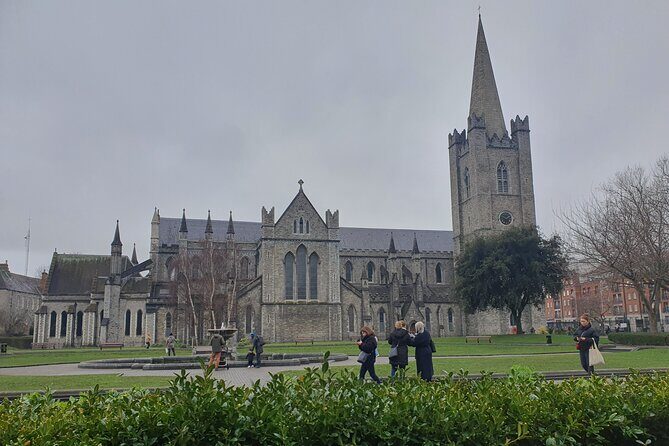
- St Patrick’s Cathedral: from St Patrick’s link to centuries of change
- Dublin Castle: power, prison, and a jewel-heist storyline
- Christ Church Cathedral: Vikings, Gothic flourishes, and a whiskey-funded restoration
- Temple Bar: learning how a rough past became a nightlife magnet
- Trinity College Dublin: Book of Kells fame, plus campus context
- Bank of Ireland: Old Parliament House and the Act of Union story
- St Stephen’s Green: from elite private space to public park
- Price and value: why about $29 can be a bargain
- Who this tour fits best (and who should pick a different style)
- Practical tips so you enjoy every 15-minute stop
- Should you book this Dublin city-centre walking tour?
- FAQ
- How long is the Dublin city-centre walking tour?
- Where does the tour start and end?
- Is admission included for all stops?
- How big is the group?
- What language is the tour offered in?
- Is there free cancellation?
Key highlights you’ll feel fast
- Small group, max 10 people: easier questions, more conversation, less waiting around.
- A guide who keeps it moving: 15-minute stops that fit a short first-day schedule.
- Outside views plus context: you learn what you’re seeing before you decide what to visit longer.
- Interactive touches: I’ve seen games/quizzes used to keep families engaged.
- Smart finish near transit: you end by the Fusiliers Arch entrance to St Stephen’s Green, close to the Luas.
A tight route that makes Dublin click in your first few hours
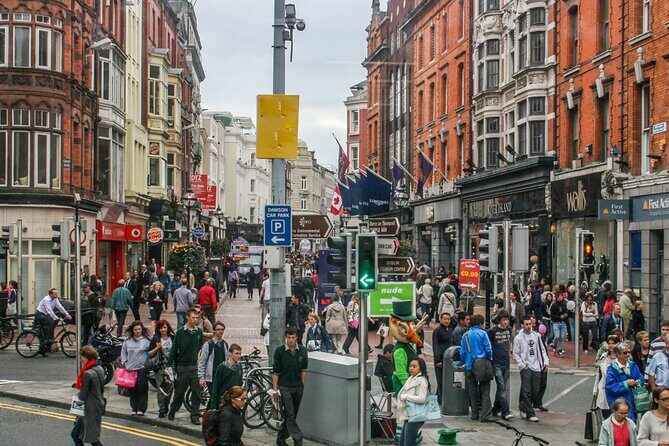
If you want a fast “get my bearings” plan, this works. The format is simple: a guided walk through Dublin’s core landmarks, with brief stops that keep the momentum. Each stop runs about 15 minutes, which sounds short until you realize the goal is orientation, not an all-day museum marathon.
You also get a choice of start times—morning or afternoon—so you can fit it into your day. If you’re jet-lagged, starting earlier can help. If you like a slow morning, the afternoon version still gets you the full highlight loop.
Group size matters here. With a maximum of 10 people, you’re not stuck listening to a headset guide while everyone files past. In the experiences I read about, guides like Alin/Alan (and even Leonore in one case) were praised for being engaging and interactive, with questions and little moments that keep people paying attention. If you travel with kids, that can be huge: one family said games along the way kept their 11, 13, and 15-year-olds involved.
You can also read our reviews of more walking tours in Dublin



Starting at Gaiety Theatre: where the tour becomes effortless
You meet at the Gaiety Theatre on King Street South (Dublin 2). This is one of those “thank you for choosing a clear landmark” meeting points. It’s in the city centre and easy to spot, so you’re not wandering for 20 minutes while everyone’s already gathered.
From there, the guide sets the tone: not just facts, but what to notice as you walk. That’s where a short tour becomes more valuable—you leave with a framework for the rest of your stay.
St Patrick’s Cathedral: from St Patrick’s link to centuries of change

Next is St Patrick’s Cathedral. This stop is about understanding layers. The cathedral is tied to St Patrick himself, but the story isn’t static. You hear how the building connects to Anglo-Norman times, later suffering near ruin, and then being rescued—plus, the Guinness family connection enters the narrative.
What you’ll do in the time you have:
- Take in the cathedral setting as you learn what changed over time.
- Get the key timeline points so later, if you go inside, the place feels less like random stone.
What to consider:
- Entry isn’t included. So treat this as your “set-up stop.” If you want to go in, plan for extra time and tickets on your own.
Dublin Castle: power, prison, and a jewel-heist storyline
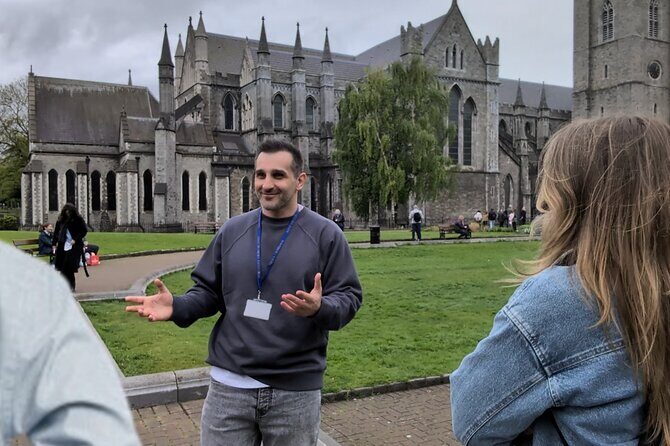
Then you’re at Dublin Castle, with an Anglo-Norman origin story that evolves from a simple tower into a grand complex. Even if you only get a short window here, the guide’s job is to connect the dots: what Dublin Castle was used for across centuries—seat of power, prison—and the fact that it even overlaps with a daring jewel heist.
Why this works in a walking tour:
- Dublin Castle is one of those places people recognize instantly, but the “why it matters” often gets missed.
- A quick guide explanation turns a photogenic building into a story you can remember.
What to consider:
- Again, entry isn’t included. If you want inside time, decide ahead of your stop so you’re not rushing later.
Christ Church Cathedral: Vikings, Gothic flourishes, and a whiskey-funded restoration
You’ll visit Christ Church Cathedral, and you’ll hear a timeline that goes way back. The big headline is Viking involvement around 1030, followed by centuries of architectural shifts as different rulers left their marks. Anglo-Normans added Gothic style, and in the 19th century there was a restoration funded by whiskey—an odd detail that’s exactly the kind of thing you’ll be glad you learned when you look at the building later.
What makes this stop special in practice:
- The cathedral is a visual “text” of history. A guide helps you read it in minutes.
- If you end up visiting more churches in Dublin, this gives you a vocabulary for what you’re seeing.
What to consider:
- Entry isn’t included, so your time may be mostly spent outside/around the cathedral. If you’re cathedral-obsessed (respect), you’ll likely want a separate ticket later.
You can also read our reviews of more city tours in Dublin






Temple Bar: learning how a rough past became a nightlife magnet
Then it’s Temple Bar. This is one of the stops where the explanation changes how you experience the area. The theme: how it used to be a maze-like neighborhood with a notorious reputation and how it shifted into today’s tourist hub—full of pubs, art galleries, and lively nightlife.
You can treat Temple Bar two ways:
- As a photo and people-watching pause, where you already understand its reputation and transformation.
- As a jumping-off point for your own evening plans. The guide can also point you toward what’s worth your time (one review mentioned restaurant and pub suggestions that weren’t limited to the main tourist belt).
What to consider:
- It’s a popular area. If you’re sensitive to crowds, you’ll want to keep your expectations realistic for a short walk-through stop.
Trinity College Dublin: Book of Kells fame, plus campus context

Next comes Trinity College Dublin. The big lure here is the Book of Kells, but this stop is also about the campus feel and why Trinity matters as a learning center—even with a turbulent past. Time on this stop is free (no admission ticket required for this tour stop), which makes it a smart use of your limited 2 hours.
In practical terms, what you’ll get:
- A sense of Trinity as a living institution, not just a name on a brochure.
- The “why” behind the Book of Kells attention, so when you choose whether to do the exhibit later, you know what you’re looking for.
What to consider:
- If you specifically want ticketed interior experiences (like the Book of Kells exhibit), this tour may not replace that. Think of this as the orientation stop that helps you decide.
Bank of Ireland: Old Parliament House and the Act of Union story
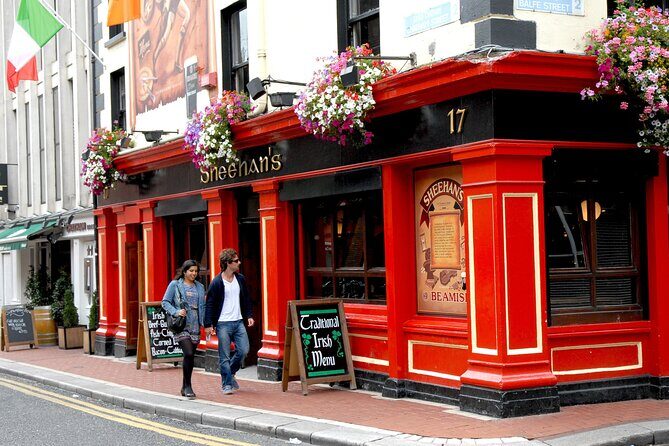
Your route continues to the Bank of Ireland, which is tied to an older political identity as the Old Parliament House. This is one of those stops where the building feels important even if you don’t know why at first.
The storyline you’ll hear:
- It functioned as a center of Irish politics.
- It has architectural influence that inspired later grand buildings.
- It connects to major political change, including the Act of Union.
Why this matters on a walking tour:
- Dublin’s politics aren’t just in books. They’re in streets and stone.
- A short stop here makes the city feel more connected, not random.
St Stephen’s Green: from elite private space to public park
Finally, you reach St Stephen’s Green. This is your “slow down and breathe” finale. The guide shares a fascinating past: it was once an exclusive green space for Dublin’s elite, and the Guinness family connection is part of how it evolved. Today it’s a public park enjoyed by everyone.
Since you end at the main entrance—the Fusiliers Arch on Grafton Street area—this stop also works as a practical landing zone. You’re right near the Luas tram stop, so you can keep moving without hunting for a ride.
What to consider:
- It’s a park finish. If the weather is bad, you may want a quick plan for where to go next since the tour ends outdoors.
Price and value: why about $29 can be a bargain
This tour costs $28.96 per person for roughly 2 hours with a live guide. On paper, that sounds like a small investment. In reality, you’re paying for three things you’d otherwise have to piece together yourself:
- A tight walking route through Dublin’s core
- Guided explanations that help you understand what you’re looking at
- Time saved on planning—especially your first day
Also, because it’s small-group, you’re getting that guide time in a way that’s harder with big bus tours. Many people book well ahead (the average booking window is about 33 days), and that’s usually a sign the experience sells out during busy stretches.
One more value point: some stops are free to access as tour stops, while others list entry as not included (so you won’t be paying ticket fees for every stop just to get the basic experience). If you later decide to go inside St Patrick’s Cathedral or Dublin Castle, you can choose your own pace and add those separately.
Who this tour fits best (and who should pick a different style)
This is a great match if you:
- Want a first-day orientation in the city centre
- Like history told with stories rather than reading plaques alone
- Travel with kids who benefit from games and interaction
- Prefer a small group and a guide who answers questions
It may not be the best choice if you:
- Want long, sit-down time inside multiple ticketed attractions during the same visit
- Hate any walking in city streets, even if the overall pace is described as moderate
The tour is listed as suitable for moderate physical fitness, so you’re walking enough to feel the city, but it’s not an extreme hike.
Practical tips so you enjoy every 15-minute stop
Here’s how to get the most out of a short, guided loop:
- Wear comfortable shoes. Dublin sidewalks add up fast when you’re trying to cover 8 landmarks in 2 hours.
- Bring a camera, but don’t let photo stops eat your time. The guide’s schedule is tight for a reason.
- Decide early if you care about going inside St Patrick’s Cathedral, Dublin Castle, and Christ Church Cathedral. Because entry isn’t included, you’ll need separate tickets if you want that.
- If you like food stops, ask your guide what to try nearby after the tour. Some guides are known for pointing people toward local eats and pubs that aren’t just the most famous names.
Should you book this Dublin city-centre walking tour?
Yes—if your goal is a fast, high-impact Dublin overview, this is a strong option. The small group size, the easy start at the Gaiety Theatre, and the “short stop with meaning” structure make it a smart first outing. You’ll get enough context at places like St Patrick’s Cathedral, Dublin Castle, Christ Church Cathedral, Trinity College, and the Old Parliament House/Banks area that later visits feel more purposeful.
I’d book it sooner rather than later if you’re traveling during a busy time, since people tend to plan ahead. And if you love interaction—questions, quick games, even old-photo storytelling—there’s a good chance your guide will deliver that style.
If your idea of the perfect Dublin day is long indoor visits, then you might pair this with ticketed time on a second day. But for a 2-hour orientation that helps you plan the rest of your trip, it’s a solid use of time.
FAQ
How long is the Dublin city-centre walking tour?
The tour runs about 2 hours.
Where does the tour start and end?
It starts at the Gaiety Theatre on King St S, Dublin 2, and ends at 3 St Stephen’s Green near the Fusiliers Arch.
Is admission included for all stops?
No. Entry isn’t included for St Patrick’s Cathedral, Dublin Castle, and Christ Church Cathedral. Other stops are marked as free for the tour.
How big is the group?
The tour has a maximum of 10 people.
What language is the tour offered in?
The tour is offered in English, and you’ll receive confirmation at booking.
Is there free cancellation?
Yes. You can cancel for a full refund up to 24 hours before the experience’s start time.