REVIEW · DUBLIN
Dublin Traditional Irish Music Walking Tour with Live Performance
Book on Viator →Operated by Original Dublin · Bookable on Viator
Dublin’s narrow lanes start singing fast. This traditional Irish music walking tour turns landmark-hopping into a story you hear in real time, with your guide performing folk ballads and songs tied to each spot. I love the small-group feel (up to 20) because it keeps the performance personal, and I also love the mix of music plus history that links streets like Fishamble Street and Christ Church Cathedral to what Dublin was like long before the modern city got loud.
One thing to consider: Temple Bar is a busy meeting area, and if there are multiple similar tours running at the same time, you’ll want to confirm you’ve joined the right group early so you don’t miss the music start.
In This Review
- Key things to know before you go
- Temple Bar Meets the Music: Why This Walking Tour Works
- Meeting at 3 Crown Alley (1:00 pm) and How the Timing Fits
- From Smock Alley Theatre to Grattan Bridge: Stories You Can Photograph
- Stop 1: Smock Alley Theatre (1662)
- Stop 2: Grattan Bridge
- Fishamble Street and Handel’s Messiah: When Old Dublin Punchlines Land in Song
- Stop 3: Fishamble Street
- Christ Church Cathedral and the Castle Steps: Medieval Dublin with a Darker Side
- Stop 4: Christ Church Cathedral
- Stop 5: Dublin Castle (Ship Street Gate area)
- Saint Patrick’s Cathedral Finish: A Music-Driven Send-Off
- Stop 6: Saint Patrick’s Cathedral and St Patrick’s Park
- The Live Guide Factor: What to Expect from the Performance Style
- Price and Value: Why $27.81 Can Be a Good Deal Here
- Who Should Book This Tour (and Who Should Skip It)
- Should You Book This Dublin Traditional Irish Music Walking Tour?
- FAQ
- Where does the tour meet and what time does it start?
- Where does the tour end?
- How long is the Dublin traditional Irish music walking tour?
- How much does it cost?
- Are tickets mobile?
- Is there a group size limit?
- Are the stop entries free?
- Is the tour refundable if plans change?
- Is the tour suitable for most people and are service animals allowed?
Key things to know before you go
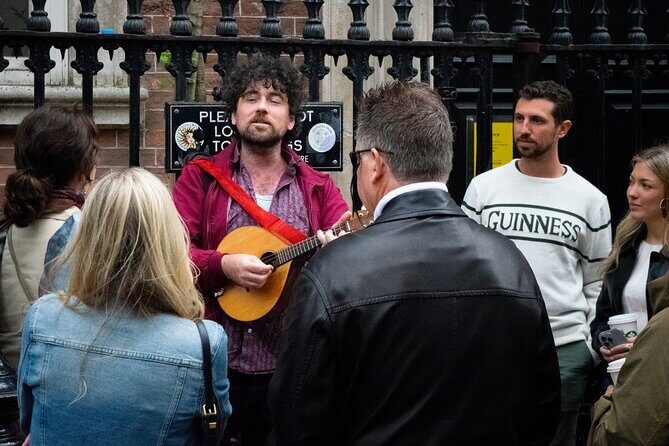
- Live performance at multiple landmarks, not just one show at the end
- Temple Bar meeting point with a clear starting location at 3 Crown Alley
- Medieval Dublin stops including Christ Church Cathedral and the Castle area
- Free-entry windows at key sites along the route (as listed on the itinerary)
- Sing-along and interactive moments are part of the fun, depending on your guide and the group
- Short, efficient pacing with brief time at each stop for photos and stories
Temple Bar Meets the Music: Why This Walking Tour Works
If you’ve ever walked past a famous building in Dublin and thought, I get it, but I don’t know what to listen for—this tour answers that. It’s built around a simple idea: the best way to understand old streets is through the songs and stories people used to carry along with them.
What makes this experience different is the performance format. You’re not stuck listening to a guide recite dates. You hear folk ballads and traditional pieces that match the location you’re standing in. That matters in Dublin, because the city’s history isn’t only in plaques—it’s in language, rhythm, humor, and the way people tell stories when they want a point to land.
I also like how the route hits the core of central Dublin without turning into a long slog. In about two hours, you see a cluster of major sights—Temple Bar, the River Liffey crossings nearby, medieval church buildings, and the Castle area—while still spending enough time to hear what connects them.
The other strong point: the tour feels made for people who want both photo stops and a human voice. One review called out the guide blending music lyrics with social and political context, and that’s exactly the kind of connection you’ll appreciate if you like your history with a pulse.
You can also read our reviews of more walking tours in Dublin



Meeting at 3 Crown Alley (1:00 pm) and How the Timing Fits
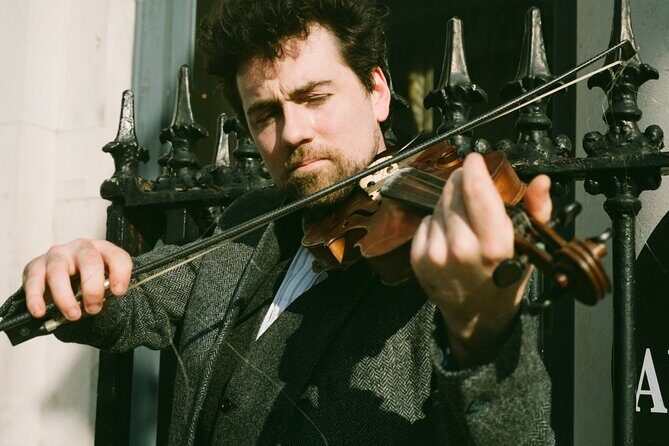
The walk starts at 3 Crown Alley, Temple Bar, with a 1:00 pm departure time. The finish is at St Patrick’s Cathedral, St Patrick’s Close. That end point is handy. You get a graceful closing without needing to backtrack to Temple Bar.
The pacing is built on quick arrivals and short stays—each main stop is listed at about 10 minutes. That’s ideal for two reasons:
- You don’t lose the group to long lines or slow loading times.
- You’re encouraged to keep moving, which helps the music theme stay fresh instead of turning into a lecture.
In practice, arrive a few minutes early. Temple Bar is full of signs, street performers, and other groups. The one lower rating in the set specifically flagged confusion about arriving late and a case where two similar tours were meeting at the same area. You can prevent that with a quick check: look for the guide or tour group signal, and confirm you’re with the right Dublin traditional Irish music walk before the route gets going.
Also, the tour is capped at 20 travelers, which generally means you can hear the guide better than on bigger city tours. Still, Dublin streets have real noise—so don’t stand too far from the guide if you can help it.
From Smock Alley Theatre to Grattan Bridge: Stories You Can Photograph
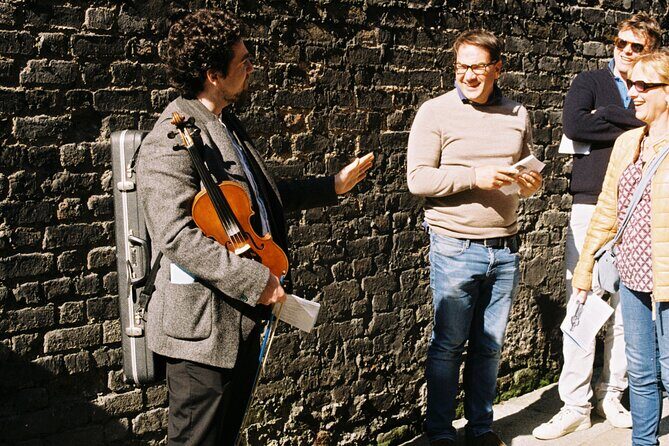
The itinerary begins right in Temple Bar, which is smart. You’re starting where visitors tend to gather, but you’re not stuck there. The early stops set the tone: history in close-up, with music as the bridge.
Stop 1: Smock Alley Theatre (1662)
Smock Alley Theatre is listed as Ireland’s oldest theatre, located right in the Temple Bar heart. Even if you don’t go inside for a full visit, it’s a great opening because it immediately frames Dublin as a city of performance—stage to street, storytelling to song.
This first stop tends to work well because it helps you tune your ear. Folk music in Irish traditions often carries references to places like this, and your guide can use the theatre setting to explain how entertainment, community, and identity got tangled together over centuries.
The itinerary indicates the admission ticket here is free, so you’re not paying extra to make the moment feel real.
Stop 2: Grattan Bridge
Next comes Grattan Bridge, known for its connection across the River Liffey. The tour notes the bridge is decorated with seahorse lanterns, which makes it a very “camera ready” pause.
Why this stop matters in a music walk: bridges are transit points. They’re where people moved for work, markets, and gatherings. Your guide uses that idea to connect the physical layout of Dublin with the way songs spread through communities.
You’ll likely enjoy this stop even if you’re tired. It’s short, scenic, and it gives your feet a break while the guide keeps the story thread going.






Fishamble Street and Handel’s Messiah: When Old Dublin Punchlines Land in Song
Then you move to one of the most fascinating street-history combinations in central Dublin.
Stop 3: Fishamble Street
Fishamble Street is often described as Dublin’s oldest street, and the tour’s notes include two standout claims: it was home to a major Viking settlement found outside Scandinavia, and it’s also famed as the site of the first ever performance of Handel’s Messiah.
That pairing—Vikings and Messiah—might sound like a jolt, but that’s the point. Dublin’s story isn’t one era. It’s layered. A walking tour like this helps you feel how quickly the city can jump from one chapter to another, while the guide keeps the experience coherent by tying it back to music.
This is also where you’ll probably feel the emotional tone change. Music traditions in Ireland often carry humor and hardship side by side, and Fishamble Street is a perfect place to show that contrast through song or verse.
The itinerary lists the stop as free admission ticket, so you can focus on the story without counting extra costs.
Christ Church Cathedral and the Castle Steps: Medieval Dublin with a Darker Side
After the streets, you hit the heavy hitters.
Stop 4: Christ Church Cathedral
Christ Church Cathedral is presented as the heart of medieval Dublin, and the tour highlights something important: you’ll hear about the cathedral’s darker side through song.
That wording isn’t just dramatic marketing. It signals the guide won’t treat the cathedral like a postcard. They’ll talk about the human side of power—how institutions shaped everyday life, and how stories survived even when they were uncomfortable.
This stop also lets you understand why live performance works so well here. In a quiet museum, history is passive. In front of a cathedral, the music adds texture. The sound carries, and the setting makes the stories feel less tidy.
A practical tip: cathedrals often have uneven stone surfaces around the edges. Watch your step and keep your camera in hand only when you’re standing still.
Stop 5: Dublin Castle (Ship Street Gate area)
Then you swing by the Ship Street gate of Dublin Castle, including famous steps in the area.
Even if you’ve seen photos of Dublin Castle before, seeing it as part of a music-themed route gives it a different role. It becomes part of the same story as the cathedral—authority, ceremony, and the public life of the city. The guide can link that to how songs were used as social commentary over time.
This is a quick stop, so be strategic: take your photo, note one fact the guide repeats (they usually emphasize the best one), and keep moving so you don’t miss the final crescendo.
Saint Patrick’s Cathedral Finish: A Music-Driven Send-Off
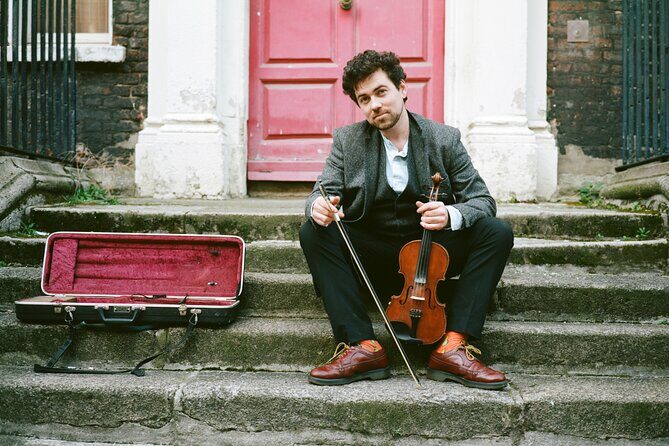
Stop 6: Saint Patrick’s Cathedral and St Patrick’s Park
The tour ends at Saint Patrick’s Cathedral, in the St Patrick’s Park area, right next to the cathedral.
This ending makes sense emotionally. After hearing darker or heavier themes at Christ Church, you finish with a place that feels like it has always been central to Dublin identity. The cathedral setting also gives space for the guide to close with song, and it’s a natural location for the sing-along moments that show up in the reviews.
In several notes, the guide’s interaction level stood out: some groups mention people being encouraged to sing along, and a few mention dancing. If you feel shy, you can still enjoy it by just clapping along. If you want to join in, the tour seems designed to make that feel normal rather than awkward.
Either way, by the time you reach the end point, you’re not just “done with a tour.” You’re holding a set of sounds and phrases in your head that help Dublin’s buildings make sense.
The Live Guide Factor: What to Expect from the Performance Style
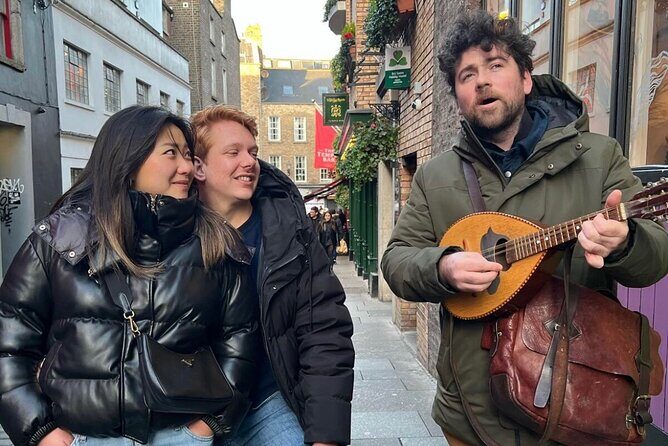
A big part of the reputation here comes down to the musician-guide. Names like Ciarán, Dylan, Sean, and Shaun appear in the feedback, and the praise is consistent: the guides mix history, humor, and song choice so each stop connects.
What this usually looks like on the walk:
- Short storytelling segments tied to the building or street
- A performed ballad or song that relates to the theme
- Sometimes poems or verse, depending on the guide
- A willingness to make it interactive, when the group is ready for it
One negative point in the reviews mentioned low energy and a late arrival. That’s worth noting for your expectations: you’re trusting a performer’s schedule. If the guide runs behind, the start can feel rushed. The best workaround is simple—arrive early, stay alert for tour identification, and give the route a few minutes after scheduled start to settle into rhythm.
Price and Value: Why $27.81 Can Be a Good Deal Here
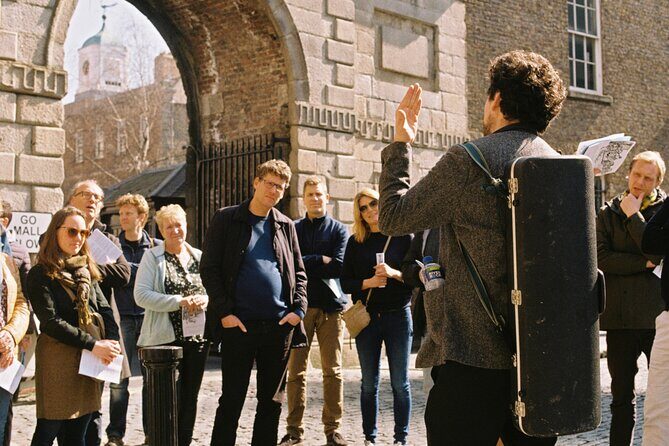
At $27.81 per person, this is priced like a mid-range walking tour. What makes it feel like a better value than many “standard” walks is that you’re buying live music plus a route that stacks multiple major sights in a tight time window.
You also get free-entry tickets listed at the key stops, including Smock Alley Theatre and the cathedral-related locations described in the itinerary. Even if you don’t go deep into every interior space, those stops turn into real experiences rather than just photo pauses.
Most of all, you’re not paying for someone to read you facts off a page. You’re paying for a musician to create recall. Songs stick. That’s the real bargain here.
Who Should Book This Tour (and Who Should Skip It)
This tour fits best if you like:
- Folk music and want to hear it where it’s connected to place
- Short walks with frequent story beats
- A guide who performs, not just narrates
- People who enjoy a little audience participation, even if it’s optional
You might want to choose a different style of tour if:
- You’re the kind of person who needs total quiet to enjoy history facts
- You’re sensitive to street noise and don’t like walking right next to active city sounds
- You dislike interaction at all, since sing-along and light dancing show up for some groups
The key is to match your travel mood. If you want to leave Dublin with sights plus sounds, this delivers that.
Should You Book This Dublin Traditional Irish Music Walking Tour?
I’d book it if you’re doing Dublin for the first time and want a tour that doesn’t treat music as an add-on. Starting at Temple Bar and ending at Saint Patrick’s Cathedral creates a classic route spine, while the songs keep it from feeling like the same old “look at this church” routine.
It’s also a good pick if you appreciate guides who can explain what buildings meant to people, not just what year they were built. The promise of medieval Dublin at Christ Church Cathedral, plus the Castle steps and the Fishamble Street music-and-history connection, gives you plenty to take home.
Just go in with one practical mindset: arrive early at 3 Crown Alley, confirm you’re with the correct group, and be ready for short stops where the guide’s performance sets the pace. If you do that, you’re very likely to walk away with Dublin in your ears, not just on your camera roll.
FAQ
Where does the tour meet and what time does it start?
The tour meets at 3 Crown Alley, Temple Bar, Dublin. The start time is 1:00 pm.
Where does the tour end?
The tour finishes at Saint Patrick’s Cathedral, at St Patrick’s Close, Dublin.
How long is the Dublin traditional Irish music walking tour?
The duration is listed as about 2 hours.
How much does it cost?
The price is $27.81 per person.
Are tickets mobile?
Yes, the tour uses a mobile ticket.
Is there a group size limit?
Yes. The tour lists a maximum of 20 travelers.
Are the stop entries free?
The itinerary lists free admission tickets for the listed stops, including Smock Alley Theatre 1662, Grattan Bridge, Fishamble Street, Christ Church Cathedral, Dublin Castle area, and Saint Patrick’s Cathedral.
Is the tour refundable if plans change?
Yes. There is free cancellation. You can cancel up to 24 hours in advance for a full refund; within 24 hours, the amount paid is not refunded.
Is the tour suitable for most people and are service animals allowed?
The tour notes that most travelers can participate and that service animals are allowed. It is also listed as near public transportation.