REVIEW · DUBLIN
Dublin: Trinity College Campus Guided Walking Tour
Book on GetYourGuide →Operated by Trinity Brand Commercial Services Limited · Bookable on GetYourGuide
One campus, dozens of famous minds. This 45-minute, student-led walk through Trinity College Dublin starts at the Bell Tower and turns architecture into stories you can actually picture.
I love how you get special access to the Museum building without adding a second major attraction to your day. I also love the practical campus focus, from native plants and nesting birds in the leafy squares to what student life feels like right now.
One thing to plan around: the tour does not include Book of Kells or the Old Library, so the big manuscript hall is for other tickets.
In This Review
- Key things I’d prioritize on this tour
- Trinity College Dublin’s Bell Tower start: a fast, satisfying campus loop
- What Museum Building access really means (and why it’s worth your ticket)
- Following Oscar Wilde, Samuel Beckett, and Bram Stoker without losing the plot
- Dining Hall energy and student societies: the campus isn’t just buildings
- Leafy squares, birds, and bees: why conservation belongs on a city tour
- Student guides set the tone: fun, clear, and fast to follow
- Price and value: why $18 works for a 45-minute Trinity hit
- Accessibility and weather: know what you’re signing up for
- Who should book this Trinity walking tour?
- Should you book? My straight answer
- FAQ
- How long is the Trinity College Campus guided walking tour?
- Where do I meet the guide?
- Is the tour in English?
- Do I get access to the Museum building?
- Does the tour include the Book of Kells or the Old Library?
- Does the tour run in the rain?
- Is this tour wheelchair accessible?
- How much does it cost?
- Can I cancel for a refund?
- Can I reserve now and pay later?
Key things I’d prioritize on this tour
- Bell Tower, Front Square start: you begin at the classic Trinity landmark and get oriented fast
- Museum building access: you see a set piece people often associate with major film stories
- Student guides: you might get guides like Sinead, Hazel, Harry, or Ethan and the pace stays lively
- Alumni walk-through stories: Oscar Wilde, Samuel Beckett, Bram Stoker come up in context
- Leafy squares + biodiversity: you look for nesting birds and learn how Trinity protects bees, too
- No Old Library or Book of Kells: it’s a campus walk, not a manuscript ticket
Trinity College Dublin’s Bell Tower start: a fast, satisfying campus loop

Trinity College is a big-name stop in Dublin, but this tour keeps it focused. You meet at the bell tower in Front Square, and the whole experience runs about 45 minutes on accessible routes across the grounds. That short timing matters. If you’ve got one tight window in your day, this is the kind of outing that adds context without swallowing your schedule.
The vibe is also right for first-timers. Instead of treating Trinity like a museum floor-plan, the guide steers you through courtyards and key buildings, linking them to people and traditions you’ll recognize from literature and theatre. Even if you don’t care about universities in general, you’ll still come away with a clearer sense of why Trinity looks the way it does and how it functions.
A practical note: the tour is outdoors, and it still runs in the rain. That’s not a dealbreaker, but it does change what you wear. Plan for walking on campus paths, and keep an eye on footing. If you’re using a wheelchair, the tour follows accessible walkways, but the route can have occasional spots that aren’t fully suitable, which may mean a slight delay.
You can also read our reviews of more walking tours in Dublin



What Museum Building access really means (and why it’s worth your ticket)

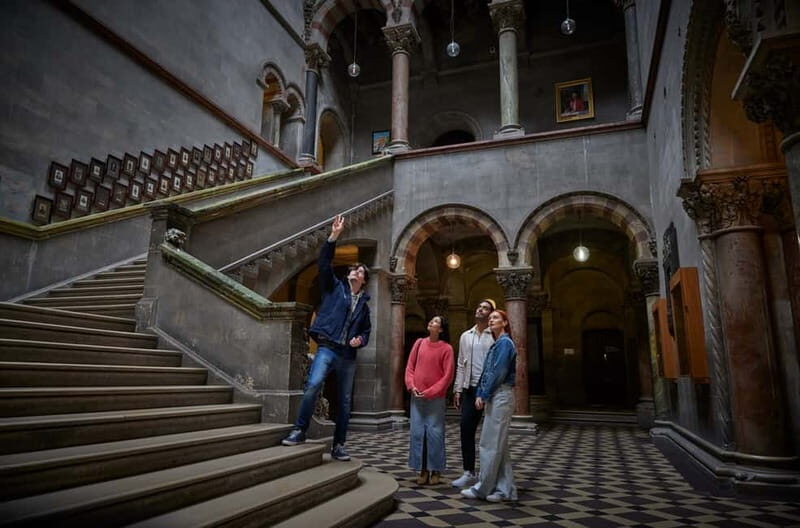
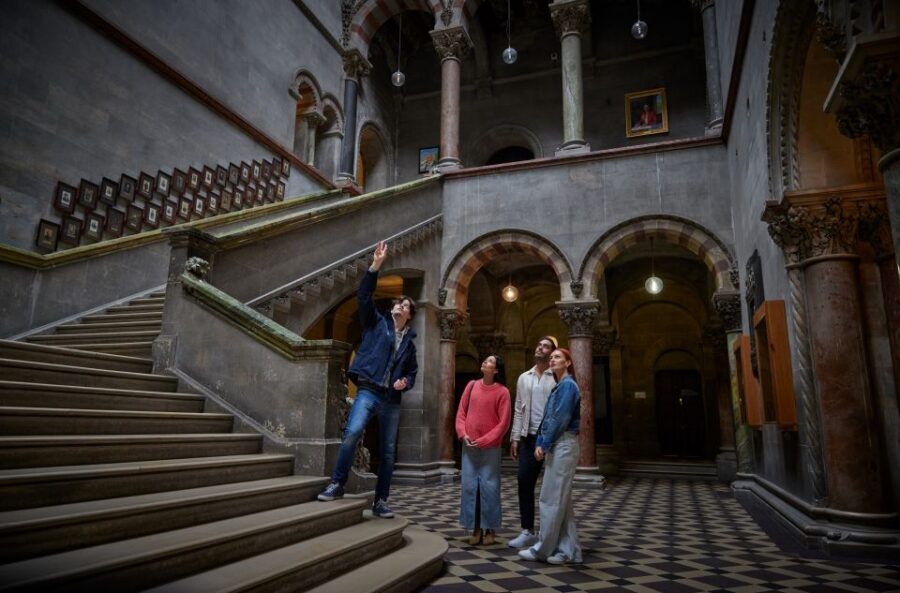
One of the main reasons this tour works as a “quick win” is special access to the Museum building. You’re not only viewing exterior walls; you’re getting inside, which is where Trinity’s architecture becomes more than postcard material. Your guide points out details along the way, and the building’s cinematic reputation tends to make people pay closer attention once they’re there.
If you’ve seen the Museum building on screen before, you’ll likely understand why it gets referenced so often. But even without that pop-culture connection, the building is a strong example of how Trinity blends history and learning space into a cohesive campus look. It also breaks up the walk nicely, giving you a change of pace from open courtyards.
Just manage expectations on the big-ticket manuscript rooms. This experience does not include access to the Book of Kells or the Old Library. So if your top priority is seeing those specific displays, plan to pair this with a separate ticket or a different entry timed for your day.
Following Oscar Wilde, Samuel Beckett, and Bram Stoker without losing the plot

Trinity is famous for names, but what makes the stories useful is the context your guide builds around them. Expect the tour to include alumni tales tied to the campus itself—people like Oscar Wilde, Samuel Beckett, and Bram Stoker. The best part is that they’re not tossed in as trivia. They connect to buildings, traditions, and campus culture, which helps the facts actually stick.
This matters if your memory is more street-level than textbook-level. I like that you’re walking while the stories land. A guide can point to an area and explain how it fits into the university’s long timeline, so you’re not just memorizing dates. You’re building a mental map of Trinity as a place where ideas have been formed for centuries.
Also, your guide isn’t only passing along facts. Several guides named in past tour feedback, including Sinead, Jack, and James, are singled out for bringing a sense of humor and keeping questions welcome. That style helps, because campus history can go heavy fast if it’s delivered like a lecture. Here, the tone is aimed at keeping you oriented and listening.
Dining Hall energy and student societies: the campus isn’t just buildings
After the more famous building moments, the tour turns to the lived-in side of Trinity. You’ll pass the Dining Hall area and hear about student life themes—how the university works in practice, not just how it looks on posters.
You’ll also encounter the home of some of the oldest student societies. Past members tied to famous writers include names like Bram Stoker and Jonathan Swift, and there’s also reference to modern literary figures such as Sally Rooney. I like when a walking tour links older traditions to newer voices. It makes Trinity feel current rather than stuck in the past.
This stop is also a good reminder that universities are communities with rituals and networks. Even if your day in Dublin is built around pubs and sightseeing, you can learn a lot from understanding how a campus creates identity. For you, that might mean noticing how courtyards function as social spaces or how architecture supports student routine.
One small drawback you should consider: some interior access and student-only spaces may not be available. The tour emphasizes outdoor campus routes and specific special access (like the Museum building), so if you’re expecting to roam everywhere, you’ll want to keep expectations aligned with what’s actually included.
Leafy squares, birds, and bees: why conservation belongs on a city tour
Not every Dublin tour includes nature. This one does, and it’s not random. Trinity’s grounds cover 47 acres, and your guide points out native plant life and the kind of habitat that supports nesting birds and bees. Even when you only get a short walk, that viewpoint changes how you see the campus. It becomes a living place, not just a stone backdrop.
The best way to enjoy this part is to slow down for a minute. When your guide tells you to look closely—flowers, leaves, movement, nests—it’s easy to miss if you’re speed-walking for the next photo. Give the guide a chance to guide your eyes. You’ll likely find it more memorable than another stop with a single statue and a quick snap.
If you like travel that balances culture with environment, this is a real plus. It also helps you understand why Trinity invests in protecting habitats. The campus is both historic and actively maintained, and the biodiversity angle is a window into how conservation can fit inside a major education institution.
You can also read our reviews of more guided tours in Dublin






Student guides set the tone: fun, clear, and fast to follow
This is a student-guided tour. That sounds simple, but it affects everything about the experience. Student guides often speak with practical clarity: they know what’s easy to miss and what details are worth your attention. It also means the storytelling style tends to be energetic.
From guide names shared in feedback—people like Johann, Mathew, Katie, Tess, Hazel, Luca, Jeremiah, and Emily—you can see the pattern: guides are often praised for humor, pacing, and answering questions. A few highlights from the guide style you can reasonably expect:
- Stories with context, not just dates
- A pace that fits a short 45-minute format
- Willingness to answer questions as you go
If you get a guide like Harry or Ethan, you might notice a heavier emphasis on making history feel entertaining rather than overwhelming. Others—like Katie or Emily—are described as energetic and attentive, which usually means you won’t feel lost even if your interests are scattered.
And because the tour is in English, this is also a good choice if you want something straightforward without language friction. The tour is easy to drop into on a day when you’re also juggling the Guinness Storehouse, museums, and general city walking.
Price and value: why $18 works for a 45-minute Trinity hit
At $18 per person for about 45 minutes, you’re paying for a guided campus circuit with targeted access. The money isn’t going toward a full museum ticket experience. Instead, it’s going toward expert interpretation plus the Museum building access that most self-guided wandering wouldn’t include in a structured way.
Here’s how I judge value on a tour like this:
- You get a guided route that helps you see more than you would on your own in the same time
- You get inside a key building (Museum access), not just exterior viewing
- The time is short enough that it won’t wreck your day if you’re also doing other Dublin classics
If you’re in Dublin for a short visit—say, a couple days—you usually have to choose. This is a strong “first Trinity” stop because it gives you context, then you can decide later if you want to add extra paid highlights like the Book of Kells via separate entry.
Accessibility and weather: know what you’re signing up for
The tour is wheelchair accessible, and it follows accessible walkways across Trinity’s campus. That said, the provided route guidance notes that from time to time, an area may not be entirely suitable, which could cause a slight delay on route. If you use a chair, it’s smart to plan for a little extra time and keep an upbeat attitude.
Weather-wise, rain doesn’t stop it. You can dress for it. A light rain jacket and grippy shoes go a long way. Trinity’s campus is outdoor walking with courtyards, so slipping isn’t a joke—good footwear helps.
Also, it’s in English. If you’re comfortable in English but your group isn’t perfect, this is still a good pick because the tour is designed to be straightforward and easy to follow at walking speed.
Who should book this Trinity walking tour?
This tour is a great match if you want:
- A short, structured introduction to Trinity College Dublin
- Student-led storytelling with humor and pacing
- A campus walk that includes the Museum building without extra research
It’s also a solid choice for culture-hunters who like your history tied to real people. If Wilde, Beckett, or Stoker are part of your reading list, you’ll likely enjoy how the tour connects their presence to the campus story.
If you’re the type who wants the deepest possible dive into every landmark and interior hall, you might feel limited because the experience is short and doesn’t include the Book of Kells or the Old Library. In that case, treat this as a warm-up. Get the campus context first, then add the manuscript visit when you’re ready.
Should you book? My straight answer
Yes—if you want a 45-minute, English-language walk that gives you real orientation, smart stories, and Museum building access for a reasonable price. It’s especially worth booking if Trinity is on your list but your schedule is tight, because this tour adds meaning fast.
Skip it (or plan differently) if the Book of Kells or the Old Library are your must-see items. This tour doesn’t include them, so you’d need separate arrangements to hit those highlights.
FAQ
How long is the Trinity College Campus guided walking tour?
The tour lasts about 45 minutes.
Where do I meet the guide?
You meet your tour guide at the bell tower in Front Square.
Is the tour in English?
Yes, the tour is offered in English.
Do I get access to the Museum building?
Yes. The tour includes special access to the Museum building.
Does the tour include the Book of Kells or the Old Library?
No. Ticket access to the Book of Kells and the Old Library is not included.
Does the tour run in the rain?
Yes. The tour takes place even if it is raining.
Is this tour wheelchair accessible?
It is listed as wheelchair accessible, and it follows accessible walkways. There may be times when a route area isn’t fully suitable, and you could experience a slight delay.
How much does it cost?
The price is $18 per person.
Can I cancel for a refund?
Yes. Free cancellation is available up to 24 hours in advance for a full refund.
Can I reserve now and pay later?
Yes. You can reserve your spot and pay later, with nothing due today.