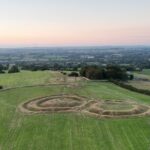
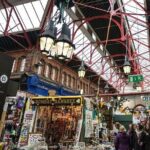
Dublin’s best stories start on a sidewalk. This 3-hour private walking tour connects major sights with the political and cultural forces that shaped Dublin, from medieval power at Dublin Castle to the ideas behind the 1916 Rising. I especially liked how the guide keeps things moving at a human pace, with just enough time to look up, listen, and take photos.
I also love the 100% private setup. You get a qualified guide, plus personal attention for questions, detours, and small moments you might otherwise miss. One drawback to plan for: this walk focuses mostly on exterior views and free stops, so if you want lots of inside-ticket attractions, you’ll need to add those on your own.
In This Review
- Quick hits before you go
- Start at Molly Malone, then get your bearings fast
- Dublin Castle: the medieval seat of British administration, viewed from outside
- Molly Malone, Temple Bar, and Ha’penny Bridge: Dublin by song, streets, and views
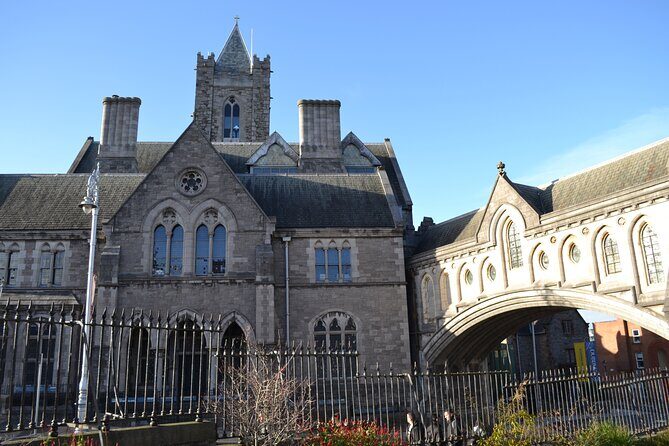
- Trinity College Dublin and College Green: where architecture and power share space
- Powerscourt Townhouse Centre: an 18th-century social world in plain sight
- St Stephen’s Green and Dubh Linn Gardens: take a breath without leaving the city center
- Edward Delaney’s Famine Memorial: a hard stop that teaches the stakes
- Parliament House (House of Lords area), Wolfe Tone, and Dame Lane’s Proclamation copy
- Value and price: what $144.03 per person buys you
- The guide experience: songs, photos, and extra time (when it fits)
- What’s included, and how to use the PDF recommendations
- Who this tour suits best
- Should you book this 3-hour Dublin private walking tour?
- FAQ
- How long is the Dublin private walking tour?
- Where does the tour start and where does it end?
- Is this tour private?
- Is pickup available?
- What is included in the price?
- Are ticketed attractions included?
- Is the tour suitable for children and are service animals allowed?
Quick hits before you go

- Private, licensed guide for a focused route and room to ask questions
- Free, mostly outside stops that let you spend your time walking and learning
- Strong culture mix: landmarks, monuments, the Music Wall of Fame, and Dublin’s pub-and-song lore
- Green-space breaks in the middle of the city, including St Stephen’s Green and Dubh Linn Gardens
- Follow-up support: a digital PDF with cafe, restaurant, pub, and traditional-music venue ideas
Start at Molly Malone, then get your bearings fast
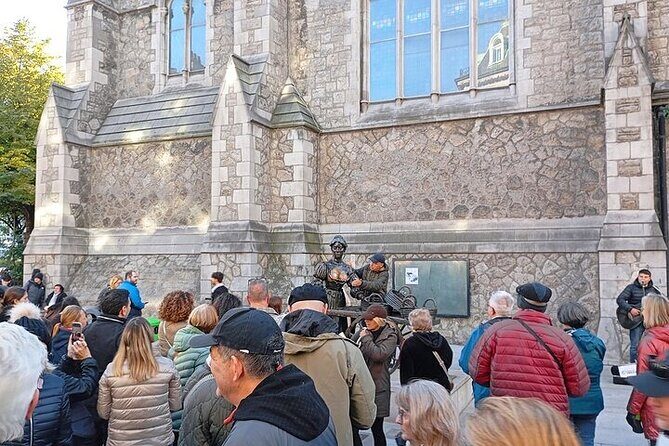
You meet at the Molly Malone Statue on Suffolk St in Dublin 2 (D02 KX03). It’s a great anchor point because it’s central, recognizable, and it puts you right into the Dublin “story” vibe almost immediately. From there, you’ll start ticking off highlights and practical orientation in a tight loop.
Even if you’ve been to Dublin before, this kind of route helps you understand how the city is laid out. You’ll get ideas about where to head next for food, where the music happens, and how to move around without constantly second-guessing yourself.
And yes, the tour is truly private: only your group goes along. That matters. You can ask for clarification, request a slower moment by a specific monument, or get advice tailored to where you’re staying.
You can also read our reviews of more walking tours in Dublin



Dublin Castle: the medieval seat of British administration, viewed from outside
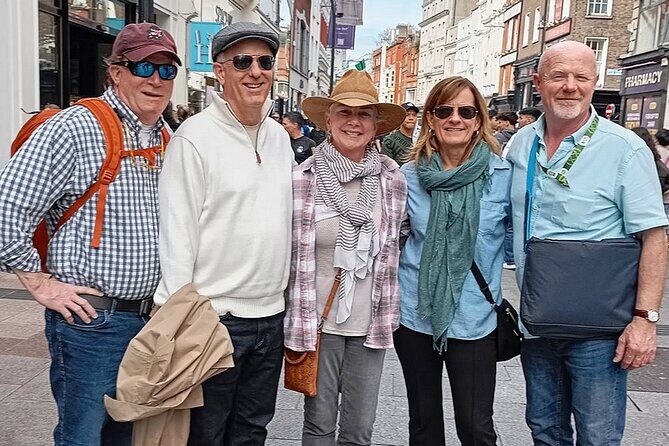
The walk begins (or quickly moves) toward Dublin Castle, where British rule and administration took root in Ireland. The guide frames it in time, starting from medieval foundations—stone laid in 1204—and then bringing it forward to explain why this place mattered for centuries.
The tour is described as an external tour of the castle, so you’re not relying on a ticketed visit here. That’s useful if you want context without losing time waiting around for entries. The focus is on what you can see, plus the meaning behind the stones and architecture you’re looking at.
What to watch for: how the castle sits in the city’s layout, and how that positioning connects to nearby political sites you’ll visit later. This is one of those stops that feels more valuable once you connect it to the rest of the route.
Molly Malone, Temple Bar, and Ha’penny Bridge: Dublin by song, streets, and views
You’ll spend time at the Molly Malone Statue, tied to Dublin’s unofficial singing anthem. The statue is not just a photo opportunity; it’s a character people identify with, the kind of local myth that becomes part of everyday Dublin identity. It’s also one reason this stop is so often photographed.
Next comes Temple Bar, not only as a pub name but as a wider area—about 28 acres—known for traditional music and lots of small lanes and side streets. The point here isn’t to treat it like a checklist. It’s to understand why this quarter became a cultural magnet, and how the streets themselves shape the atmosphere.
Then you reach Ha’penny Bridge, Dublin’s oldest foot bridge, with wrought iron history that stretches back more than 200 years. The best moment is the standing still part: you pause to take in views both east and west, and the bridge becomes a simple way to “read” the city’s direction.
Possible drawback in this section: Temple Bar areas can be busy on some days. Since you’re on a private walk, you can still keep the experience comfortable, but if you want pure quiet, plan your time and pacing with your guide.
Trinity College Dublin and College Green: where architecture and power share space
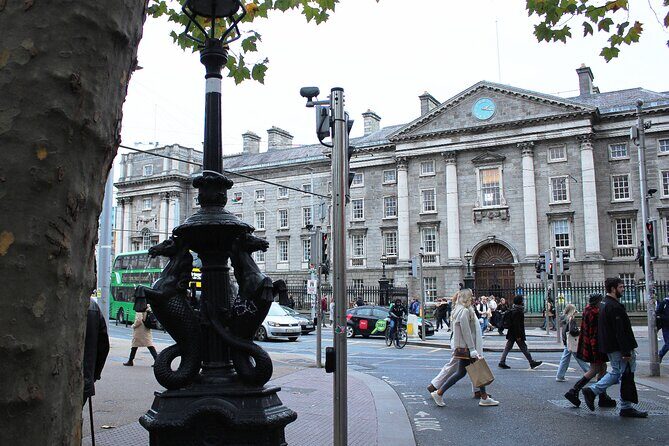
Trinity College Dublin is Ireland’s oldest university and was founded in 1592 by Queen Elizabeth I. You’ll do an external walk through the grounds, enough to appreciate the campus atmosphere and historical architecture without needing paid entry. Forbes has named Trinity’s campus among the most beautiful places to visit, so even if you’re not a student history nerd, you’ll feel the visual pull.
From there, you move to College Green, a central three-sided plaza where several “Dublin map points” converge. On one side is the Bank of Ireland building, originally linked to Ireland’s Parliament House, and close by is Trinity. College Green also has monuments dedicated to Irish history plus Georgian and Victorian architecture.
This stop works because it ties the personal and the political together. You see how learning institutions, finance power, and national identity all sit within a short walking radius. And it’s a great spot for a breather in the middle of your loop.
Powerscourt Townhouse Centre: an 18th-century social world in plain sight
Not every visitor stops here, and that’s exactly why it’s worth your time. The Powerscourt Townhouse Centre began as an 18th-century residence for Richard Wingfield, the 2nd Viscount Powerscourt, and his wife, Lady Elizabeth. It functioned as a social center for Dublin’s elite—part of the story of how “who lived where” shaped Dublin society.
Today, it’s easier to approach as a calm visual pause in the middle of a busy city walk. It’s also a reminder that Dublin’s big stories aren’t always in the biggest buildings. Sometimes it’s the quiet, tucked-in spaces that explain class and daily life over time.
If you’re the type who loves architecture and wants a few minutes that aren’t just “look and go,” you’ll likely enjoy this stop.
You can also read our reviews of more private tours in Dublin



St Stephen’s Green and Dubh Linn Gardens: take a breath without leaving the city center

Dublin has green pockets that feel like a reward for doing the work of walking. St Stephen’s Green is one of them, roughly 22 acres with gardens, flower beds, lakes, and a variety of wildlife and exotic plants. You’ll also find sculptures and monuments that reflect Irish history, which means it’s not only a scenic break—it’s a historical one too.
Then there’s Dubh Linn Gardens, another quieter pause located in the heart of Dublin. It’s described as a place often missed, with unique brickwork and Celtic patterns and its own separate history. The value here is simple: you get a change of pace after monuments and stone façades, without having to go far out of your route.
Practical tip: use this section to slow down. Let your eyes adjust. If you’re taking photos, this is where the light and texture tend to look best compared with street-level stone and signage.
Edward Delaney’s Famine Memorial: a hard stop that teaches the stakes
The route includes Edward Delaney’s Famine Memorial, which honors over one million victims of the Great Irish Famine of 1845. The memorial features haunting sculptures of emaciated figures, meant to represent suffering from starvation and displacement—and the ripple effects that helped shape the large Irish diaspora worldwide.
This isn’t a “quick photo” moment. It’s a reflective stop, and it matters that it appears in the middle of a day focused on Dublin’s identity. You’ll leave with a sharper understanding that modern Dublin culture grew alongside tragedy and migration.
The practical consideration: it can feel heavy, especially if you’re tired from walking. If you know you want a lighter day, talk to your guide about pacing your time here so the emotional weight doesn’t overwhelm the rest of the route.
Parliament House (House of Lords area), Wolfe Tone, and Dame Lane’s Proclamation copy

History and politics take center stage again with a cluster of stops focused on Ireland’s struggle for autonomy and the documents that shaped modern national identity.
You’ll visit Parliament House, tied to Dublin’s old Parliament and the original House of Lords (now associated with the Bank of Ireland). The building is early 18th century, and entry—when available—is described as subject to opening and timing. Even if you don’t go inside, the architecture and context are useful for understanding how power was housed.
Next is the Wall of Fame, a tribute to legendary Irish bands and singers who shaped Irish and world music. It’s a quick stop, but it works because it balances the heavier political themes with cultural identity.
Then you’ll see the Theobald Wolfe Tone Statue, linked to one of Ireland’s influential figures in the quest for greater autonomy and independence from British rule. The guide connects Tone to the 1798 rebellion and his reputation as a father of Irish nationalism.
Finally comes Dame Lane, where you view a copy of the original Irish Proclamation (the Proclamation of the Irish Republic). Issued April 24, 1916 during the Easter Rising, it declared an independent republic and outlined rights, including equal citizenship and respect for people’s rights. This stop is one of the route’s most instructive moments because the guide can translate a document’s meaning into what it changed for people.
Small consideration: because entry and timing can affect what you see inside certain spots, your guide’s timing choices matter. On a private walk, you’re not stuck watching everyone rush the same way.
Value and price: what $144.03 per person buys you
At $144.03 per person for about 3 hours, the math makes sense only if you truly want the guide component. You’re not just paying for movement between landmarks. You’re paying for a licensed professional who adds context, connects dots between monuments, and gives you follow-up planning help.
This becomes better value if:
- you’re traveling as a couple or small group (private attention matters more),
- you like history with clear explanations and humor,
- you want practical next steps for food and music after the tour.
It’s also encouraging that the tour is booked, on average, about 61 days in advance. That usually means the format is popular and the guide calendar stays full when planning matters.
One more value point: the route emphasizes free admission stops and exterior views. Your spend stays mostly tied to the tour itself rather than stacking separate attraction tickets at every stop. That said, ticketed attractions are not included, so if you’re dreaming of inside highlights, build those into your day planning separately.
The guide experience: songs, photos, and extra time (when it fits)
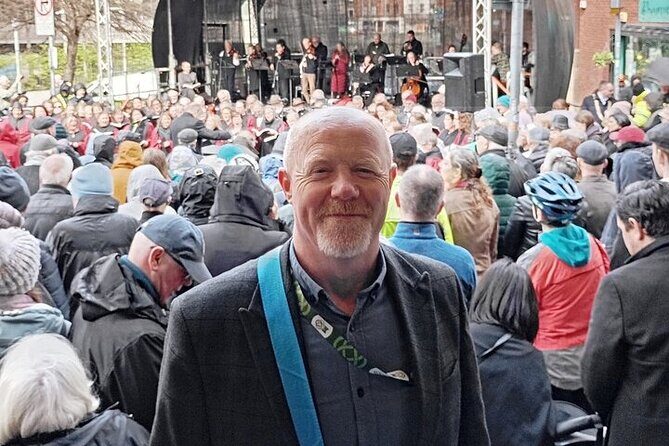
Your guide is the heart of this tour. The reviews for the experience put a lot of weight on a specific kind of performance: high energy, storytelling with dates and details, and humor. One theme that shows up repeatedly is that guides like David bring a personal touch beyond “facts on a map.”
That can look like:
- extra context in the moment,
- songs during the walk,
- extra photos or items in a portfolio carried for reference,
- and even small adjustments to give you time where it matters.
That “adjust when needed” approach is part of why a private tour feels different than a group bus ride. If you’re the type who likes to ask one good question and keep going, you’ll get rewarded.
What’s included, and how to use the PDF recommendations
You get a certified 3-hour private tour led by a qualified, licensed, experienced professional guide. The included materials also help you keep the momentum after you finish walking.
You’ll receive:
- an expert historical overview that connects Dublin’s medieval roots to modern-day Ireland,
- dublin orientation tips for navigating the city and using transport,
- and a digital PDF with recommendations for best cafes, restaurants, pubs, and Irish traditional music venues.
My advice: treat that PDF like a shortlist. Pick one food spot, one pub for music, and one “backup” option for weather. Then you’ll avoid the classic Dublin problem: every place you pass looks great until you sit down and realize you’ve got choices you can’t quickly narrow.
Also, the tour includes a mobile ticket and confirmation at booking, which helps keep you from dealing with paper when you’re already juggling a travel schedule.
Who this tour suits best
This is a good match if you:
- want a private, guided walkthrough rather than browsing alone,
- like connecting architecture and monuments to what happened politically and culturally,
- appreciate a mix of heavier moments and lighter Dublin street life,
- and want practical planning help for food and traditional music after the walk.
It’s likely less ideal if you’re only interested in inside attractions that require paid entry, since this route emphasizes exterior views and free stops. If you travel with very young kids, note that it’s not recommended for babies or children under age 5.
Service animals are allowed, which is helpful for people who need them.
Should you book this 3-hour Dublin private walking tour?
If you want to understand Dublin instead of just stand in front of it, I think this is a strong booking. The price is fair for a licensed private guide, and the mix of sites—castle, college grounds, bridges, parks, famine remembrance, and the Irish Proclamation context—gives you a “full Dublin” view without feeling like you’re sprinting through ticket lines.
Book it especially if you’re planning a short trip or you want one smart day to set the rest of your itinerary. If inside attractions are your main goal, consider pairing this with one or two paid visits on your own so you get the best of both worlds.
FAQ
How long is the Dublin private walking tour?
It runs for about 3 hours.
Where does the tour start and where does it end?
It starts at the Molly Malone Statue on Suffolk St, Dublin 2, and it generally ends at College Green. The end point can be adjusted to fit a different itinerary.
Is this tour private?
Yes. It’s a 100% private experience, meaning only your group participates.
Is pickup available?
Pickup is offered. You can meet at hotels listed for pickup or at the central meeting point at the Molly Malone Statue.
What is included in the price?
You get a certified licensed guide for the 3-hour walk, an expert historical overview, personal attention for your group, a digital PDF with recommendations (cafes, restaurants, pubs, and Irish traditional music venues), and orientation advice for navigating Dublin.
Are ticketed attractions included?
No paid attractions or ticketed entrances are included. Stops are mostly free/exterior, though entry to certain places can depend on opening times.
Is the tour suitable for children and are service animals allowed?
Service animals are allowed. It is not recommended for babies or children under age 5.