REVIEW · DUBLIN
Dublin: Medieval History Walking Tour
Book on GetYourGuide →Operated by Guydeez Travel SL · Bookable on GetYourGuide
Medieval Dublin becomes clear fast. I like how this 3-hour guided walk connects Viking origins and medieval power to the exact places you’re standing in, especially around Dublin Castle and St. Patrick’s Cathedral. I also love the human side: guides such as Paula are known for being friendly, flexible with pacing, and tailoring what you do next based on your interests.
One thing to keep in mind: it’s a walking tour, so you’ll want comfortable shoes and a bit of stamina. Also, while you’ll see major sites up close, entry fees and food or drinks aren’t included, so budget a little extra if you plan to go inside ticketed areas.
In This Review
- Key Highlights You’ll Actually Feel on the Streets
- Why This Dublin Medieval Walk Makes Sense
- Price and What You Get for $62
- Getting Your Bearings at 5 Crampton Quay
- Dubh Linn Gardens and Dublin Castle’s Medieval Tower Story
- Chester Beatty Library: A Smart Indoor Detour
- St. Patrick’s Cathedral and Christ Church Cathedral Close Together
- St. Audoen’s Church, Cook Street, and the Bells of History
- Isolde’s Tower: Ending on an Iconic Medieval Note
- Who This Tour Is Best For (And Who Might Want Something Different)
- A Note on Guides, Pacing, and Personal Interests
- Practical Tips to Make Your Tour Feel Easy
- Should You Book This Medieval Dublin Walking Tour?
- FAQ
- How long is the Dublin Medieval History Walking Tour?
- Where do I meet for the tour?
- Where does the tour end?
- Is this tour private or shared?
- What are some of the main sights included?
- Is there a live guide?
- What languages are offered?
- Are entry fees and food or drinks included?
- Is free cancellation available?
Key Highlights You’ll Actually Feel on the Streets
- Viking-to-medieval storytelling tied to real Dublin landmarks
- Dubh Linn Gardens & Dublin Castle views plus the fortress story
- St. Patrick’s Cathedral and Christ Church Cathedral in one city-center route
- Chester Beatty Library stop for a memorable indoor change of pace
- St. Audoen’s Church bells & Cook Street remnants for the gritty medieval feel
- Isolde’s Tower as a strong, cinematic ending point
Why This Dublin Medieval Walk Makes Sense
Dublin can feel like a collage: pubs, Georgian facades, modern traffic. This tour stitches the pieces together by focusing on the city’s medieval spine. You walk through the center and learn how the early settlement grew, what Vikings pushed and pulled, and how power was enforced through walls, towers, and churches.
What makes it work is the pacing. You’re not just looking at monuments from the sidewalk. You’ll get guided context as you move between landmarks, which helps everything click—especially when the same medieval story shows up in different forms: a cathedral’s authority, a church’s bells, a castle’s tower, and a city street that still carries the medieval trace.
You can also read our reviews of more walking tours in Dublin



Price and What You Get for $62
At $62 per person for a roughly 3-hour walking tour, the value comes from two things: a live guide and a route that hits key medieval anchors in the center. You’re paying for interpretation, not just admission. That matters in Dublin, where many important sites are close together but only make full sense once someone explains the why and the when.
You can choose between a shared group and a private walking tour. If you’re traveling with a group that wants a consistent pace and direct questions, private can feel worth it. If you’re solo or prefer meeting other people, shared keeps costs lower while still giving you a guide.
One practical note: entry fees and food/drinks aren’t included. Many stops are things you can enjoy from outside, but if you want to go inside places that charge, you’ll pay that separately. I’d treat the $62 as the guided experience cost, then add a modest buffer for anything ticketed.
Getting Your Bearings at 5 Crampton Quay

The tour starts outside Forbidden Planet comic book store at 5 Crampton Quay, in the heart of the city center. I like this kind of meeting point. It’s easy to spot, and it gets you to the medieval part of the map without a long transit shuffle.
From the beginning, the guide sets the tone: origins, early conquests, and why these landmarks were placed where they were. That context helps you avoid the common mistake of admiring buildings without understanding what role they played.
Dubh Linn Gardens and Dublin Castle’s Medieval Tower Story
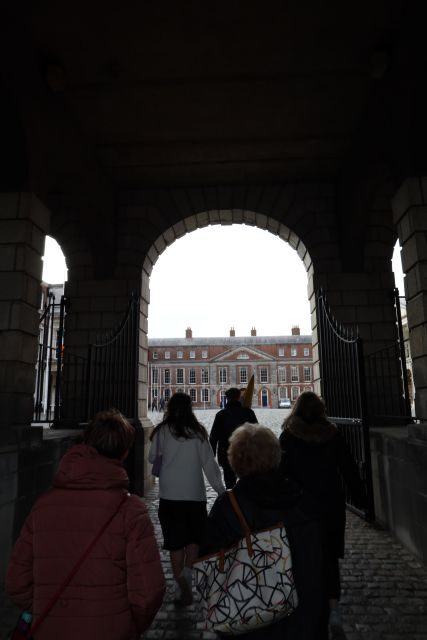
Your first major stop area is Dubh Linn Gardens behind Dublin Castle. This is one of those places where the surroundings help the story. You get the feeling of being near old defenses, not just tourist backdrops.
Dublin Castle’s fortress roots go back to the 13th century, and the medieval tower is a key visual cue for how power looked and worked in those days. As you listen, you’ll connect the modern castle complex to the earlier idea of control: stronghold, authority, and administration.
What I’d watch for here is how the guide frames the castle within the larger Viking-to-medieval arc. Vikings aren’t just a distant label in Ireland’s past; they shaped early Dublin’s rise. When you understand that, the later Christian and royal institutions you’ll see next feel like the next chapter, not a separate theme.
Chester Beatty Library: A Smart Indoor Detour
Next comes Chester Beatty Library, where you’ll walk through the library’s halls and hear about the collection of Alfred Chester Beatty. It’s a nice break from pure exterior sightseeing, and it gives you a different angle on history.
Why this stop adds value: medieval Dublin wasn’t only cathedrals and towers. It also connected to books, manuscripts, and artifacts that carried meaning across centuries. The library stop helps the tour feel less like a checklist and more like a guided understanding of how culture survives.
Also, if you have questions about how Dublin’s medieval world connects to later scholarship and religious life, indoor time with a guide is a good moment to ask. I found this kind of pause makes the cathedral stops land better afterward.
You can also read our reviews of more historical tours in Dublin






St. Patrick’s Cathedral and Christ Church Cathedral Close Together
You’ll then visit St. Patrick’s Cathedral, a major tribute to Ireland’s patron saint. The cathedral experience here isn’t only about the building itself—it’s about how religious authority shapes the city’s identity. The gardens and façade give you strong visual anchors, and the guide’s narration helps you understand why this place mattered so much.
From there, you move to Christ Church Cathedral nearby. This is a classic Dublin contrast: two great churches, different vibes, and a chance to see how medieval Dublin’s spiritual landscape influenced day-to-day life and city prominence.
A practical consideration: cathedrals are working spaces. Even when you’re focusing on exterior and interpretive aspects, you’ll likely want to keep your voice down and follow any on-site guidance. If you’re sensitive to crowds, go with a calm attitude and lean into the guide’s pacing.
St. Audoen’s Church, Cook Street, and the Bells of History
One of the more memorable stops is St. Audoen’s Church. This site connects both Catholic and Protestant heritage, which makes it more than just another old church photo. You’ll also hear about Ireland’s oldest bells, which is the kind of detail that turns a building into an actual time machine.
Then you’ll trace the medieval feel further along Cook Street, where you can glimpse remnants of medieval fortifications. This is the part of the tour that feels grounded. It’s not only grand structures—it’s the physical evidence of how the city defended itself and how Viking influence lingered in the urban layout.
If you like history that comes with textures—stone, street lines, and the sense that a city grew around defenses—this segment is where the tour really pays off. And if you don’t usually care about fortifications, the guide’s framing can make it make sense quickly.
Isolde’s Tower: Ending on an Iconic Medieval Note
The tour concludes at Isolde’s Tower, an iconic medieval building tied to Dublin lore. This ending works because it’s symbolic. After you’ve learned about origins, conquest, churches, and fortifications, you finish with a story-shaped landmark.
In my view, that’s a great way to close a walking tour: you leave with a strong image plus a sense of how the medieval world became part of Dublin’s storytelling tradition.
Who This Tour Is Best For (And Who Might Want Something Different)
This experience is a good fit if you:
- Want a guided, city-center route that links medieval Dublin’s main landmarks together
- Prefer learning on foot rather than reading your way through a museum
- Like walking with a guide who can explain how places fit into a timeline
- Want flexibility, including a private group option
It can be less ideal if you:
- Expect a tour that heavily depends on inside-ticket experiences
- Don’t like walking for about 3 hours
- Need lots of downtime away from crowds
A Note on Guides, Pacing, and Personal Interests
One of the best things about this tour format is that it’s not one-size-fits-all. In real experience with guides linked to this tour style, I saw how people appreciated guidance that adapts to their group. For example, Paula was described as accommodating when there was a two-year-old and a stroller, and she helped the group plan their day with care.
That matters because medieval Dublin is dense. If you have kids, limited mobility (beyond the tour being wheelchair accessible), or you’re simply tired after a morning activity, a flexible guide can prevent the tour from becoming stressful.
There’s also a strong pattern of interest-based recommendations. In one case, the guide encouraged adding the Book of Kells exhibit at Trinity College after learning about the group’s interests and backgrounds. That’s a perfect example of how you can use the tour as your starting point, then shape what you do next.
Practical Tips to Make Your Tour Feel Easy
- Wear comfortable shoes. This is a walking route through busy city streets and major landmark areas.
- Bring a small bottle of water. Drinks aren’t included, and you’ll appreciate it after a couple of stops.
- Ask questions early. If you’re curious about Viking Dublin or how the churches fit the timeline, the first half is when it clicks.
- If you have a plan for later in the day, tell your guide at the start. Flexible route pacing can help you avoid running out of time.
- If you want indoor experiences, be ready for the fact that entry fees aren’t included, so check what you’d like to add.
Should You Book This Medieval Dublin Walking Tour?
I think this is a smart booking when your goal is medieval Dublin with context. For $62, you’re buying a guided, concentrated route that hits the major story landmarks: Dublin Castle area, St. Patrick’s Cathedral, Christ Church Cathedral, St. Audoen’s Church and its bells, Cook Street’s fortification traces, and the dramatic finish at Isolde’s Tower.
Book it if you like understanding cities through the places that shaped them. If you’re mainly hunting for photo ops and don’t care about timeline or why things matter, you might feel the value is lower. But if you want the city to make sense as you walk, this one delivers.
FAQ
How long is the Dublin Medieval History Walking Tour?
It lasts about 3 hours.
Where do I meet for the tour?
Meet outside the Forbidden Planet comic book store at 5 Crampton Quay.
Where does the tour end?
The tour ends back at the meeting point.
Is this tour private or shared?
Both are available: you can choose a shared group or book a private walking tour.
What are some of the main sights included?
You’ll visit places such as Dubh Linn Gardens behind Dublin Castle, Chester Beatty Library, St. Patrick’s Cathedral, Christ Church Cathedral, St. Audoen’s Church, Cook Street fortification remnants, and Isolde’s Tower.
Is there a live guide?
Yes. The tour includes a live guide.
What languages are offered?
The live guide is available in English, French, Spanish, and Italian.
Are entry fees and food or drinks included?
No. Entry fees and food or drinks are not included.
Is free cancellation available?
Yes, you can cancel up to 24 hours in advance for a full refund.