REVIEW · DUBLIN
Dublin: Macabre History Walking Tour
Book on GetYourGuide →Operated by Yellow Umbrella Tours Ltd · Bookable on GetYourGuide
Death is on the menu in Dublin. This 2-hour walk through the old city turns gruesome legends into easy-to-follow storytelling, led by guides like Peter (and also Rob) who know how to keep the pace light. I also liked the small-group feel when the crowd is tiny, which makes it feel almost personal. One note: if you’re looking for nonstop gore, this tour may feel more spooky-dark than blood-on-the-street.
You meet beside the Spire in the middle of O’Connell Street, and you’ll want to spot the yellow umbrella fast. The route takes you across and around the old center and ends back near where you started, with a final set-piece moment near the cathedral.
This is for adults (it’s not suitable for anyone under 18), and it’s in English. If you enjoy real-world history with creepy characters—plus a few laughs along the way—you’ll probably have a great time.
In This Review
- Key Points You’ll Care About
- Meeting the Spire: Getting Oriented Before the Dark Stories
- Two Hours of Dublin’s Dark Side: What the Walk Feels Like
- Cuchulainn, Ravens, and Grave Robbing: The Stories That Anchor the Tour
- Medieval Quarantines and Public Executions: How Dublin Managed Fear
- Close to the Old City Walls: Mummified Corpses and the Dark Alley Feel
- The Riverside Side: Rats, Crime, and Why These Legends Persist
- Statues, Signs, and the Cuchulainn Link: How the Tour Uses Dublin’s Landmarks
- The Ending Moment Near the Cathedral: Dublin’s Brothel Keeper and the Fire at the Stake
- Price and Value: Is This $19 Ticket a Good Deal?
- Who Should Book This Tour (and Who Might Skip It)?
- Booking Smart: Practical Tips for a Smooth Start
- Should You Book Dublin’s Macabre History Walking Tour?
- FAQ
- Where do I meet for the tour?
- How long is the Dublin Macabre History Walking Tour?
- Is hotel pickup included?
- Is the tour wheelchair accessible?
- Is it suitable for children?
- Is there free cancellation?
Key Points You’ll Care About

- Meet at the Spire, follow the yellow umbrella for an easy start right in the heart of O’Connell Street
- Two hours that stay moving through the old city center and along the riverside areas
- Big stories, clear delivery with guides who answer questions and act out key moments
- Macabre topics across eras including executions, medieval quarantines, and grave robbing
- A dark final stop near the cathedral tied to Dublin’s most famous brothel keeper
Meeting the Spire: Getting Oriented Before the Dark Stories

The tour starts beside the Spire in the middle of O’Connell Street. That’s a good thing for first-timers. You don’t need to hunt down an obscure side street or decode a transit map—you can find the needle, then scan for the guide’s yellow umbrella.
Here’s the practical catch: there may be more than one yellow umbrella around the meeting point. Plan to arrive a few minutes early, stand where you can see foot traffic, and make sure you’re matching the right group before you set off. Once you spot the correct umbrella, everything else is straightforward.
The tour ends back at the meeting point. So you’re not stuck trying to get home from some far-flung alley. You get a compact evening activity that leaves you with the rest of Dublin still open.
And yes, it’s a walking tour. That means you’ll want comfortable shoes. Even though the route stays in central areas, Dublin’s streets can be uneven, and the tour packs a lot into 2 hours.
You can also read our reviews of more walking tours in Dublin



Two Hours of Dublin’s Dark Side: What the Walk Feels Like
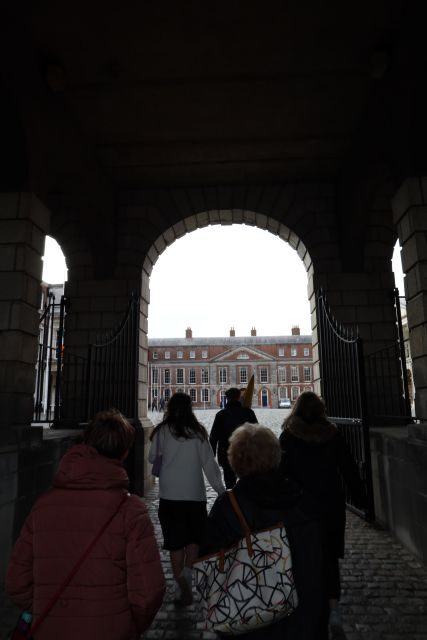
This isn’t a sit-down lecture. It’s a guided wander where the guide ties together story bits as you move between points. Expect short stops, brisk walking segments, and a strong sense of forward motion. One review highlighted that the guide keeps things moving while still taking time for questions. That’s exactly what you want on a 2-hour experience—enough time for the best stories, without dragging.
You’ll cover the old city center and spend time around areas linked to the city’s riverside. The emphasis is on both sides of the river, which helps explain how Dublin’s neighborhoods grew and how crime, poverty, and public health mattered in the real world.
Also, this is built for adults. It touches on murder, executions, and other grim themes. It’s handled as history and folklore, not as shock theater. Still, if you’re sensitive to dark subject matter, it’s worth knowing up front.
One more small detail that can change the whole mood: group size. A review mentioned a group of only three people that felt VIP and not awkward even when it was small. If you end up in a tiny group, you’ll likely get more back-and-forth and a more conversational feel.
Cuchulainn, Ravens, and Grave Robbing: The Stories That Anchor the Tour

Early on, the tour hits a famous myth tied to Dublin: the Death of Cuchulainn. You’ll hear the tale of the mighty warrior whose eyes were pecked out by a raven on his shoulder. Myth has a way of turning darkness into something memorable, and this story works as a strong opening hook because it’s vivid even before you reach the more grounded, real-life horrors.
Then the tour pivots toward the 19th-century grimness of grave robbing. The guide explains how there was a thriving trade tied to the city mortuary area. That’s one of the themes I like in this kind of tour: it’s not just “something bad happened.” It connects fear, business, and institutions—so the macabre feels part of society, not just a random set of spooky scenes.
If you enjoy learning how cities actually function—who benefited, who paid the price—this section delivers. And it’s a reminder that modern ideas about medicine, bodies, and dignity didn’t always work the way we expect today.
Medieval Quarantines and Public Executions: How Dublin Managed Fear
A standout part of the tour is the way it covers public executions and medieval quarantines. These topics are grim, but they’re also practical history. When a city is dealing with disease or unrest, you can feel the tension in everyday decisions: who gets controlled, who gets blamed, and how fear spreads fast.
The guide uses these examples to show how Dublin handled threats using law and public spectacle. Public executions weren’t just punishment—they were theater, warning, and community messaging all at once. Quarantines show the other side: isolation as survival strategy when no one has the same medical tools we do now.
The best tours in this category do one key thing: they help you understand why people believed what they believed. Here, the stories land best when you let them connect to the reality of living in a crowded city with limited options.
Also, delivery matters. Several reviews praised guides like Peter for mixing humor with the dark material and keeping the storytelling clear. That blend can make heavy topics easier to process without turning them silly.
Close to the Old City Walls: Mummified Corpses and the Dark Alley Feel
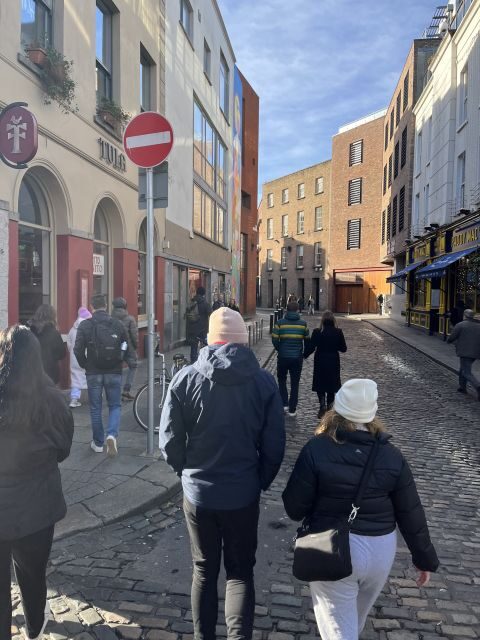
As the walk continues, you get close to the old city wall areas and the tour leans into the “you’d miss this alone” side of Dublin. The guides point out places and angles that most people wouldn’t notice on a normal stroll.
You’ll hear about mummified corpses, plus other chilling figures from Dublin’s reputation: the legless serial killer and man-eating rats. That’s a lot of darkness to fit into 2 hours, and the tour’s success depends on how the guide structures it. When the storytelling is handled well, you don’t feel like you’re collecting random scary facts. You feel like you’re building a picture of a city that had real fear baked into daily life.
One review mentioned the guide acted out stories, with humor and drama in the delivery. That kind of performance can make the eerie details feel like narrative instead of a list. If you’re the type who enjoys a guide who can bring a scene to life—without losing the thread—you’ll likely enjoy this portion a lot.
You can also read our reviews of more historical tours in Dublin





The Riverside Side: Rats, Crime, and Why These Legends Persist
The riverside areas add texture to the tour. Dublin’s waterways were always important—trade, movement, waste, and power all connect back to the river. In a macabre-history walk, the riverside setting gives the stories weight. It makes the danger feel less abstract.
This is where the tour leans harder into legends like man-eating rats and the grim rumor-mill of the city. I like this approach because it shows something real: scary stories don’t stay buried. People repeat them, reshape them, and use them to explain what they can’t control.
In a good guide-led format, those legends become a way to talk about housing conditions, sanitation concerns, and the human need for explanations during hard times. The tour doesn’t just say something horrible happened. It helps you see why that kind of fear could thrive.
And again, the guide’s tone is important. Reviews praised both Peter and Rob for being personable and for making the experience fun without losing clarity. That balance matters here because too much grimness without structure can feel exhausting. With a strong storyteller, it becomes a lively walking chapter instead.
Statues, Signs, and the Cuchulainn Link: How the Tour Uses Dublin’s Landmarks
The tour highlights a specific landmark: the Statue of Cuchulainn’s Death. Even if you’re not the type who stops for statues, having a known point like this helps the tour feel anchored in place. You’re not just walking from one vague story to the next.
Landmarks also help you remember what you learned. When the guide connects the myth and the city’s reputation for the macabre to something you can point at, the whole tour sticks better after you leave. That’s a real value: you get stories you can recall later, not just a blur of dark trivia.
One small detail to keep in mind: because the meeting is right on a busy street, you may want to keep an eye on your bearings. Dublin has plenty of yellow umbrellas floating around for other events, so you’ll want to confirm your guide before you set off.
The Ending Moment Near the Cathedral: Dublin’s Brothel Keeper and the Fire at the Stake

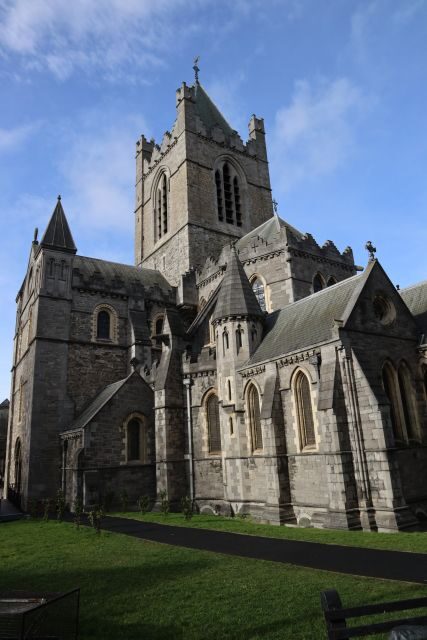
Near the end, the tour finishes beside the cathedral. This is where the story takes a sharp historical turn toward Dublin’s infamous brothel keeper and her untimely demise by fire at the stake.
This final stop matters for two reasons. First, it gives the tour a clear narrative crescendo. You’ve moved from myth (Cuchulainn), to medical-era crime (grave robbing), to public punishment and fear (executions and quarantines), and now you’re closing with a notorious character tied to an infamous fate.
Second, it reminds you that Dublin’s “dark” reputation isn’t only about violent events. It’s also about the people society chose to punish and the stories that kept spreading afterward.
If you like history that reads like a crime novel but stays grounded in real places and real eras, this ending tends to land well.
Price and Value: Is This $19 Ticket a Good Deal?
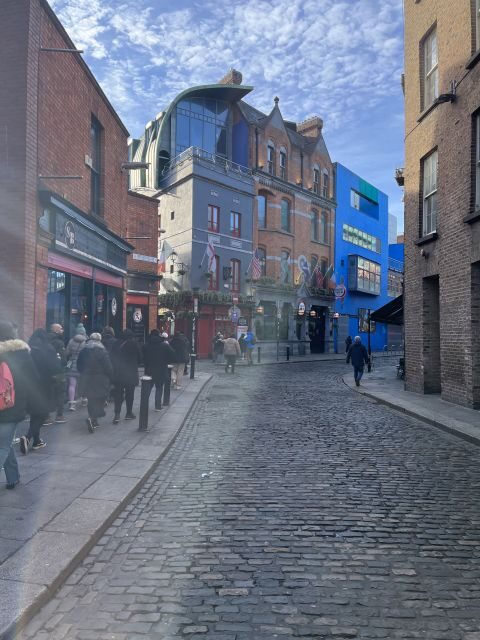
At $19 per person for a 2-hour guided walking tour, this is priced in a very sensible range for what you get. You’re paying for two things: a guide and a structured experience. Without a guide, it would be easy to walk past most of what you hear—especially the back-street feeling and the connections between myth, crime, and public institutions.
The reviews highlight guide quality as the main driver of value. Multiple people praised Peter (and Rob) for being funny, clear, and passionate. One review also called out acting out stories and mixing probably-fact/definitely-fun information. That kind of delivery can turn a standard walking route into a real experience you’ll talk about later.
So for value, think like this:
- If you enjoy guided storytelling on foot, $19 is a fair spend.
- If you only want well-lit landmarks and general city facts, you might prefer a different style of tour.
Who Should Book This Tour (and Who Might Skip It)?
I’d strongly consider this tour if you:
- like historical stories with real settings, not just facts on a page
- enjoy guides who bring characters to life with humor
- want something different from the usual Dublin highlights
It may not be ideal if you:
- want a very graphic, nonstop gore style
- are bringing a minor (it’s not suitable for under 18)
- get uncomfortable with themes like executions and grave robbing
One review mentioned a slight mismatch in expectations on how macabre or bloody it felt. That matters because “macabre” can mean different things to different people. If your personal definition is heavy on graphic violence, you should calibrate. The tour is dark and eerie, but it’s guided history first, not a horror movie.
Booking Smart: Practical Tips for a Smooth Start
A few small habits will make your experience better:
- Arrive a few minutes early so you can confirm which yellow umbrella is yours.
- Wear shoes you can walk in for 2 hours.
- If you have questions, ask. Guides like Peter and Rob were praised for being happy to answer and for slowing down when needed.
Also, it helps to go in with the right mindset. This is a walking story. You’ll get the most out of it if you let the guide connect scenes and eras instead of treating each stop as a separate trivia flash.
Should You Book Dublin’s Macabre History Walking Tour?
If you want Dublin in a darker key—complete with executions, quarantines, grave robbing, rats, and the mythic bite of Cuchulainn—this tour is an easy yes. The biggest strength is the guide-led storytelling, and the best reviews point again and again to Peter and Rob’s ability to make heavy material clear, funny, and memorable.
Book it if you like off-the-beaten-path corners, you don’t mind adult-only themes, and you enjoy learning through narrative. Consider skipping or choosing a different style if your idea of macabre is mostly about graphic gore.
If you do book, plan your day so you’re not rushing afterward. It’s a 2-hour walk, and once the stories start, you’ll want time to process them.
FAQ
Where do I meet for the tour?
You meet beside the Spire (the big needle) in the middle of O’Connell Street. Look for the yellow umbrella.
How long is the Dublin Macabre History Walking Tour?
The tour lasts 2 hours.
Is hotel pickup included?
No. Hotel pickup and drop-off are not included.
Is the tour wheelchair accessible?
Yes, the tour is listed as wheelchair accessible.
Is it suitable for children?
No. The tour is not suitable for children under 18.
Is there free cancellation?
Yes. You can cancel up to 24 hours in advance for a full refund.