REVIEW · DUBLIN
Dublin: Boyne Valley with Newgrange and Bru Na Boinne Entry
Book on GetYourGuide →Operated by Hilltoptreks · Bookable on GetYourGuide
Five thousand years, zero guesswork. This Boyne Valley day trip pairs Newgrange with skip-the-queue entry, then adds guided context so you don’t just see stones—you get why they mattered. The best-rated guides on the route (people like Matt and Kevin) also keep the day moving with smart timing and clear explanations.
I also love how the tour stitches together more than one era: Neolithic astronomy and ceremony at Newgrange, then a big history lesson at the Battle of the Boyne Visitor Centre, and finally the 5th-century Monasterboice site. It’s a rare mix of meaning and scenery in one 8-hour loop.
One drawback to plan around: lunch isn’t included, and food at a stop like the Newgrange Visitor Centre can be limited (some meals are described as microwave-heated), so bring snacks or plan your food strategy early.
In This Review
- Key Highlights at a Glance
- Dublin to Boyne Valley: What This Day Trip Really Does
- Price and Value: Is $96 a Fair Deal?
- The Morning Start: Getting from Dublin without Stress
- Newgrange: Why This UNESCO Site Feels Like a Time Machine
- A note about weather and comfort
- Bru na Boinne and Knowth: The Bonus Stop That Makes It Feel Bigger
- Battle of the Boyne Visitor Centre: History That Explains the Present
- Monasterboice: Round Tower Views and Muiredach’s High Cross
- Timing and Pacing: Why the Day Feels Doable
- What to Bring (and What to Skip)
- Who This Tour Suits Best
- Should You Book This Boyne Valley Day Trip?
- FAQ
- How long is the Dublin to Boyne Valley day trip?
- Where do I meet the tour in Dublin?
- Are entrance fees included?
- What places does the tour visit besides Newgrange?
- Is food included?
- Is Knowth always accessible at Bru na Boinne?
- What language is the guide?
- What should I bring?
- Can I cancel for a refund?
Key Highlights at a Glance
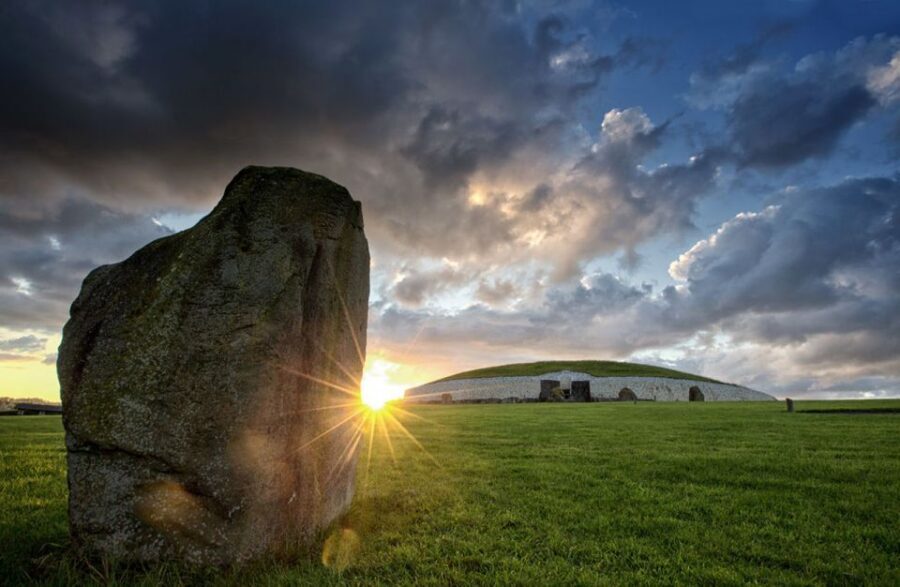
- Skip-the-queue access to Newgrange and Bru na Boinne, so you lose less time waiting
- Newgrange’s star-and-sun importance, explained with the right historical frame
- Battle of the Boyne Visitor Centre, turning 1690 into a story you can place on a map
- Monasterboice’s round tower and high crosses, including 10th-century Muiredach’s High Cross
- Smooth pacing from Dublin, with a return to the city around mid/late afternoon
- Seasonal change in winter: Knowth isn’t accessible between Nov 1 and Mar 1, so the Bru na Boinne portion is shorter
Dublin to Boyne Valley: What This Day Trip Really Does
This isn’t a “bus, snap photos, repeat” kind of outing. It’s built around major UNESCO-level stops—Newgrange and Bru na Boinne—then fills in the nearby history that makes the Boyne Valley feel like a living timeline.
You start in Dublin at the Molly Malone statue on Suffolk Street. Ten minutes before departure, you’ll look for a small white minibus with the HilltopTreks sign. From there, you’re on a coach to County Meath, with guided storytelling between stops so the day doesn’t feel like separate tourist checkboxes.
The big value here is what you get with your ticket price: transport from Dublin, entrance fees, and a live English guide. You’re paying for entry and interpretation, not just scenery.
You can also read our reviews of more tours and experiences in Dublin.


Price and Value: Is $96 a Fair Deal?
At $96 per person, this trip can actually make budget sense—especially if you’d otherwise be paying separately for long-distance transport and high-demand sites.
Here’s why the math can work:
- Entry fees are included for Newgrange and Bru na Boinne (and you still get the guided part).
- Skip-the-queue is included for those two sites, which matters because arrival times and waiting can make or break your day.
- You’re getting three major stops with guided time, plus the Battle of the Boyne Visitor Centre and Monasterboice.
The main cost that isn’t covered is simple: food and drinks. Since some reviews mention limited or not-great meal options at one of the visitor centre stops, I’d treat this as a day where you either eat lightly on the day or plan ahead with snacks. If you don’t, you may find yourself hungry at the wrong time—right when the coach schedule is strict.
The Morning Start: Getting from Dublin without Stress
You meet at the Molly Malone statue on Suffolk Street. That’s a convenient anchor in Dublin, and it helps you avoid that familiar travel frustration of “where exactly is the pickup?” With the HilltopTreks minibus sign, you can usually spot your group quickly.
The tour duration is listed as 8 hours, and the day is set up for an afternoon return to Dublin. Based on timing described by guests, expect to land back around 4:30–5:00 PM. That’s not just nice for your evening plans—it also means you’re not stuck in “all-day commuting mode,” which can drain the fun out of even great sites.
The practical tip is boring, but it works: wear comfortable shoes. You’ll be moving at multiple sites, and some areas can be exposed to wind.
Newgrange: Why This UNESCO Site Feels Like a Time Machine
Newgrange is the headline, and it’s earned. This is a Neolithic monument with astronomical and ceremonial importance—built long before most places in Europe even began stacking history in neat layers.
What I like about this stop on a guided tour is that you don’t just walk the perimeter and admire the mass of stone. Your guide frames what you’re looking at: why the builders aligned their world to the sky, and how ritual and belief shaped design choices.
Expect:
- Photo opportunities plus a guided component at the site
- Enough time to take it in without feeling rushed
- The chance to understand why Newgrange is famous for light events, including the equinox concept that guests mention as a favorite moment
If you’re the kind of person who usually skips guided explanations because you think you can “read a sign,” this is one of the days where that instinct might fail. The monument is impressive on its own, but the meaning sticks better with an informed guide. The best guides on this route use the drive and briefing time to set you up so you’re not staring at stones wondering what the big deal is.
Timing-wise, Newgrange is scheduled as the main visit—around 3 hours total for the stop and its guided portion.
A note about weather and comfort
Newgrange and the surrounding valley can be windy or damp. Bring an umbrella if the forecast looks questionable. It’s the kind of small step that keeps the day fun instead of annoying.



Bru na Boinne and Knowth: The Bonus Stop That Makes It Feel Bigger
Bru na Boinne is the wider UNESCO complex that includes multiple megalithic sites. In practice on this tour, you’ll visit the Bru na Boinne area connected to the major tomb experience.
Here’s the key seasonal detail you should know: between Nov 1 and Mar 1, Knowth is not accessible, so the Bru na Boinne portion is slightly shorter.
If you’re going outside that window, you can expect the itinerary to include more of the Bru na Boinne experience (including Knowth in many versions of the trip). Guests often call out Knowth as a highlight alongside Newgrange, mostly because it expands your sense of the valley beyond a single famous monument.
Why this stop matters:
- It shows you that Neolithic sites weren’t random. They were a system—shared sacred geography.
- The guide helps you connect the stonework to belief, ceremony, and the way communities organized memory in place.
The skip-the-queue entry is a big plus here too. When access is time-based, waiting can eat your energy. Having that handled means you can focus on the site instead of the clock.
Battle of the Boyne Visitor Centre: History That Explains the Present
After the Neolithic sites, the tour heads to the Battle of the Boyne Visitor Centre, where the pace shifts from deep-time stones to much more recent, conflict-driven history.
You’ll have about 1 to 1.5 hours here. The story centers on the Battle of the Boyne in 1690, which is described as a decisive battle not just for the ruling class in Ireland, but also for Britain and Europe. The guide context connects why it’s remembered and celebrated annually on July 12 by the Loyalist community.
You also learn the other side of the framing: the conflict involved a struggle for the English throne between King James II (Catholic) and William of Orange (Protestant). That’s not just political trivia. It helps you understand why the battle became more than a single day—it became a long-running marker in identity and history.
This is a heavy topic, so the best version of this stop is when your guide keeps it factual and clear. The strongest tours I’ve seen in this category are the ones that explain the cause-and-effect without turning it into a shouting match. On this route, several guides (including Matt and Kevin in guest comments) are praised for pacing and clarity.
If you tend to tune out at “museum mode,” give this one a chance. The Visitor Centre helps you place the Boyne Valley in a bigger Irish and British story, not just an old-stones story.
Monasterboice: Round Tower Views and Muiredach’s High Cross
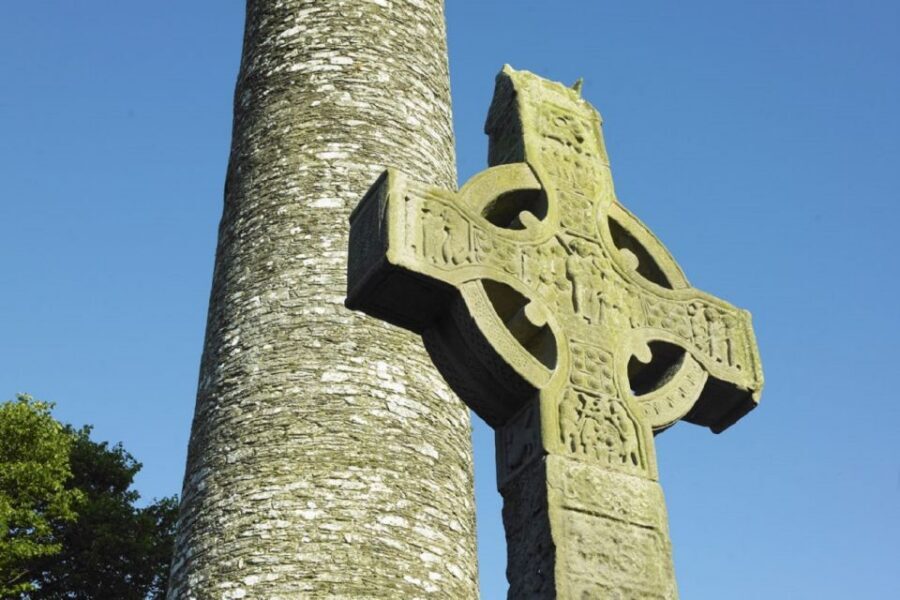
Next comes a very different kind of landmark: Monasterboice, a monastery site with roots in the early Christian era. It’s associated with St Bhuite and includes structures spanning several centuries.
The tour stop is scheduled for about 45 minutes (with a shorter “photo stop plus guided exploration” rhythm). In that time you’ll be focusing on the most iconic features:
- A round tower about 28 meters tall, in very good condition
- The tower is described as likely built shortly after 968 and damaged by a fire in 1098
- Three Celtic high crosses dating from the 10th century, part of a scriptural group showing biblical scenes
The standout is Muiredach’s High Cross, about 5.5 meters tall. It’s regarded as the finest high cross in Ireland and features carvings from the Old and New Testaments. It’s named after an abbot, Muiredach mac Domhnaill, who died in 923.
This stop feels powerful because it’s not just “old architecture.” It connects artistic skill to teaching and belief. The high crosses weren’t decorative; they were part of how communities communicated stories and doctrine when most people couldn’t read.
A practical note: you’ll want to move around for angles and photos, and those round towers can look different depending on the light and your position.
Timing and Pacing: Why the Day Feels Doable
One reason this trip gets repeat praise is that it doesn’t waste the day. It’s structured around key time windows at Newgrange and Bru na Boinne, with shorter connecting stops at the visitor centre and Monasterboice.
A typical rhythm looks like:
- Drive Dublin to the Boyne Valley
- Newgrange as the main event (around 3 hours total)
- Battle of the Boyne Visitor Centre with a focused history block (about 1 to 1.5 hours)
- Monasterboice as the final major stop (around 45 minutes)
Then you’re back to Dublin around 4:30–5:00 PM. That matters. It keeps your energy for the ride and leaves the evening open for your own Dublin plans.
If you’re only in Dublin for a short time, this is a solid way to get out of the city while still returning at a sane hour.
What to Bring (and What to Skip)
The tour’s guidance is simple and worth following:
- Comfortable shoes
- Umbrella
I’d add two practical tweaks:
- Bring a small snack stash for the in-between gaps, since lunch isn’t included and food quality can vary at visitor centres.
- Keep your phone charged. Newgrange and Monasterboice are both photo-friendly, and you’ll want to remember details like carvings and tower proportions.
Who This Tour Suits Best
This is a great fit if you:
- Want big-name UNESCO sites without having to plan timed entry yourself
- Enjoy history when it’s explained in plain language, not just displayed in cases
- Like getting multiple time periods in one day: Neolithic ceremony, 1690 conflict context, then early Christian art and architecture
It may be less ideal if you:
- Hate group pacing and want fully independent wandering time
- Expect lunch to be a satisfying sit-down meal included in the price
For most people, though, the guided structure helps more than it restricts. Guests consistently praise the way guides handle timing and questions, including comments about Matt’s explanations and Kevin’s story style.
Should You Book This Boyne Valley Day Trip?
Yes, I think you should book it if your goal is a high-value Dublin day trip built around two of Ireland’s most important prehistoric sites—plus the additional context at the Battle of the Boyne Visitor Centre and Monasterboice.
Book it especially if you want:
- Skip-the-queue ease for Newgrange and Bru na Boinne
- A live English guide who turns the stones and battles into stories you can hold onto
- A day that ends early enough to still enjoy Dublin later
Just go in with one mindset: plan your food. With lunch not included and meal options sometimes described as limited, a little snack strategy can make the day feel smoother from start to finish.
If you want, tell me your travel dates (month helps for the Knowth access change) and whether you prefer more time outdoors or more time in visitor centres. I can help you decide if this specific schedule matches your style.
FAQ
How long is the Dublin to Boyne Valley day trip?
The duration is listed as 8 hours.
Where do I meet the tour in Dublin?
You meet at the Molly Malone statue on Suffolk Street, 10 minutes before departure. You should look for a small white minibus with the HilltopTreks sign.
Are entrance fees included?
Yes. Entrance fees are included for Newgrange and Bru na Boinne, and you also get skip-the-queue entry.
What places does the tour visit besides Newgrange?
You also visit the Battle of the Boyne Visitor Centre and Monasterboice.
Is food included?
No. Food and drinks are not included.
Is Knowth always accessible at Bru na Boinne?
No. Between Nov 1 and Mar 1, Knowth is not accessible, so the Bru na Boinne portion is slightly shorter.
What language is the guide?
The tour is led by a live English-speaking guide.
What should I bring?
Bring comfortable shoes and an umbrella.
Can I cancel for a refund?
Yes. Free cancellation is available up to 24 hours in advance for a full refund.