REVIEW · DUBLIN
Dublin: World of Illusion Entry Ticket
Book on GetYourGuide →Operated by World of Illusion · Bookable on GetYourGuide
Your eyes will argue with your brain here. World of Illusion in Dublin is a hands-on walk through mind-bending optical illusions and interactive setups, spread across three floors with over 70 things to try.
I particularly like how the exhibits focus on how your brain interprets information, not just flashy effects. One thing to consider: it’s not suitable for vertigo, because the Vortex Tunnel can feel disorienting.
In This Review
- Key highlights at a glance
- What World of Illusion in Dublin feels like (and why it’s worth your time)
- Three floors of interactive illusions: how the layout keeps you moving
- The brain game: optical illusions that teach you how perception works
- Gravity-defying room: where your body starts to doubt physics
- Infinity mirrors: the easiest wow-factor and the best photo payoff
- Large Kaleidoscope: for color lovers and patient photographers
- Vortex Tunnel: fun for most, not for vertigo
- What to do first inside: a simple flow that avoids bottlenecks
- Timing and how long to plan for your visit
- Ticket price and value: is $28 a fair deal?
- Who this is perfect for (and who should rethink it)
- Photo tips that actually help (without turning it into a photo shoot)
- Should you book World of Illusion Dublin?
- FAQ
- How long does the World of Illusion Dublin visit take?
- How many illusions and exhibits are included?
- What are some of the main highlights?
- Is World of Illusion suitable for people with vertigo?
- Are food and drinks included?
- Is free cancellation or pay-later available?
Key highlights at a glance
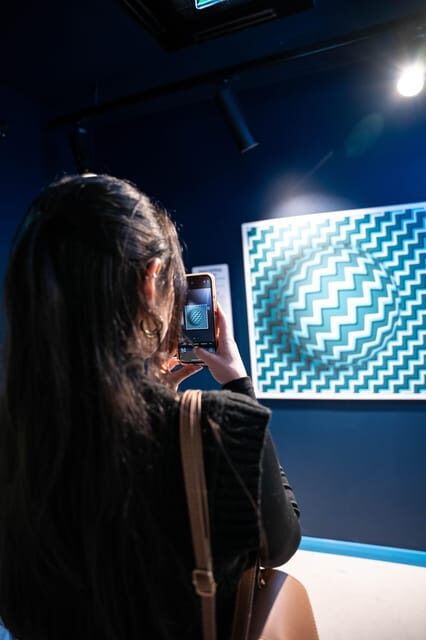
- 70+ interactive illusions built around perception, light, color, and patterns
- Three floors of hands-on exhibits that you explore at your own pace
- Photo-friendly moments like infinity mirrors and the gravity-defying room
- The Vortex Tunnel, which is fun but not for anyone prone to vertigo
- A big, showy Large Kaleidoscope among the featured installations
- Staff assistance that can help you get the best photo angles in tricky displays
What World of Illusion in Dublin feels like (and why it’s worth your time)
World of Illusion is basically a playground for perception. You move room to room, and each space tries to trick your brain in a different way. The idea is simple: your senses feed information to your mind, and your mind builds the “reality” you think you’re seeing.
What makes it work so well is that it’s interactive. Instead of only watching displays, you step into positions, look through openings, and change how you’re seen by the setup. That’s why it’s a great stop for groups: kids can run through the fun faster, while adults can slow down and read the logic behind the illusions.
The other reason it’s good value is the format. You’re looking at a short visit, not an all-day commitment. Plan on about 45 to 75 minutes, so you can fit it into a wider Dublin day without wrecking your schedule.
A few more Dublin tours and experiences worth a look



Three floors of interactive illusions: how the layout keeps you moving

The ticket gets you into a building with three floors of mind-bending exhibits. That vertical layout matters, because it keeps the experience from feeling repetitive. You’re constantly getting new visual rules to follow, then testing those rules with your own eyes.
On each floor, you’ll see the same general theme—your brain making sense of what it receives—but the tricks differ. Some exhibits play with light and color. Others use patterns and symmetry. And a few rely on how your body position lines up with the display, so the illusion changes depending on where you stand.
The most practical tip: don’t rush. You’ll have the best time if you take a little pause in each room, then try the exhibit from a couple angles. That’s when you notice the illusion isn’t random—it’s consistent, just counter to your expectations.
The brain game: optical illusions that teach you how perception works
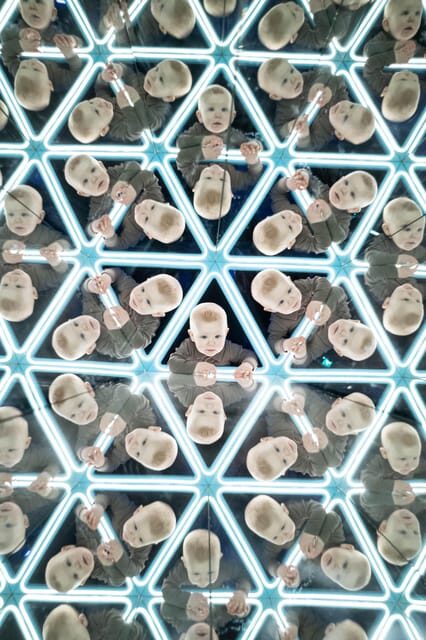
A lot of museums show optical illusions like science facts on a wall. World of Illusion turns that concept into something you experience. The exhibits are built to show how the brain interprets information—and how it can be wrong even when you’re sure you’re seeing clearly.
You’ll see examples of:
- Optical illusions based on contrast, light, and shadows
- Tricks built on repeating shapes and patterns
- Visual setups that make you question depth, motion, or scale
If you enjoy thinking about how people’s eyes work, this place feels extra rewarding. If you’re coming with kids, it still lands, because the “why” is usually paired with something you can do immediately. Either way, you’re getting a bit of education without it turning into a lecture.
One small consideration: some parts include explanations and instructions. If your group likes to skip reading, you can still have fun, but you’ll get more out of it if you stick with the cues.
Gravity-defying room: where your body starts to doubt physics
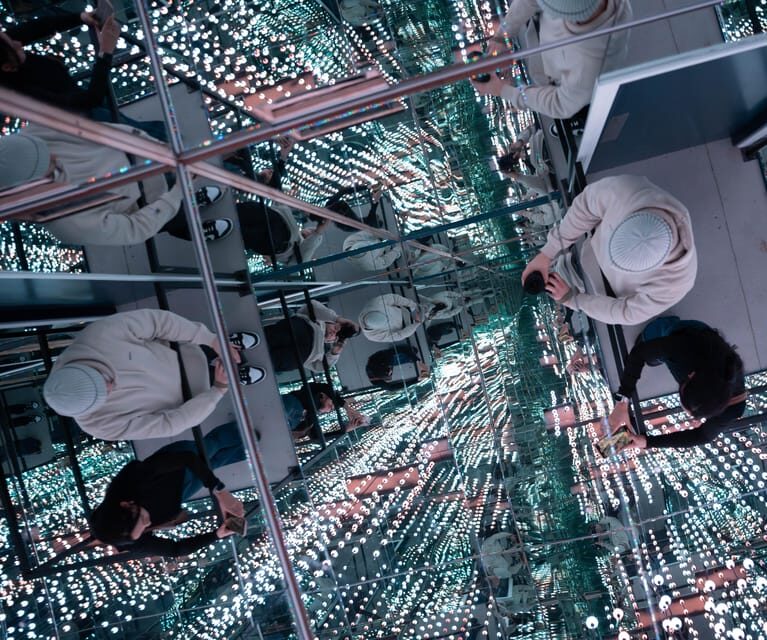
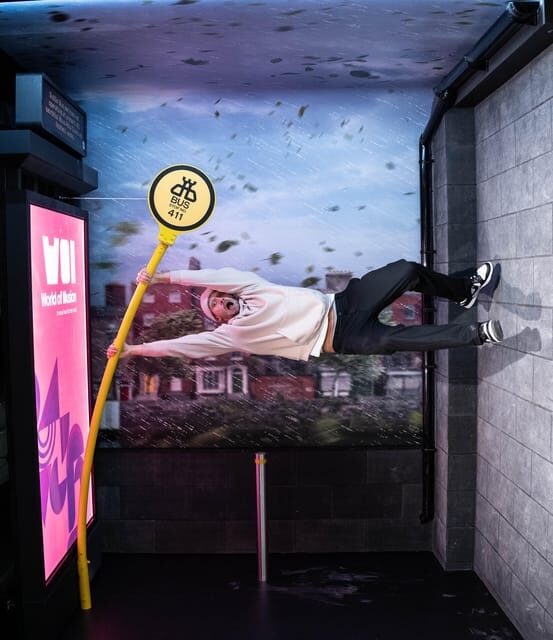
One of the featured highlights is the gravity-defying room. This is the kind of exhibit where you’ll probably want to line up for a clear photo, because the trick works best when your position is right.
What I like about this type of display is that it’s not just visual—it’s physical. Your brain expects normal movement and weight, but the room gives you cues that suggest the opposite. The result is a quick burst of disbelief, followed by that satisfying moment when you figure out what the exhibit is doing.
Photo tip: gravity rooms are all about framing. If you’re shooting for a dramatic shot, try to get a clean view of the “before” you and the “effect” of the illusion. The staff can also help with timing and angles when people are lining up.
Infinity mirrors: the easiest wow-factor and the best photo payoff
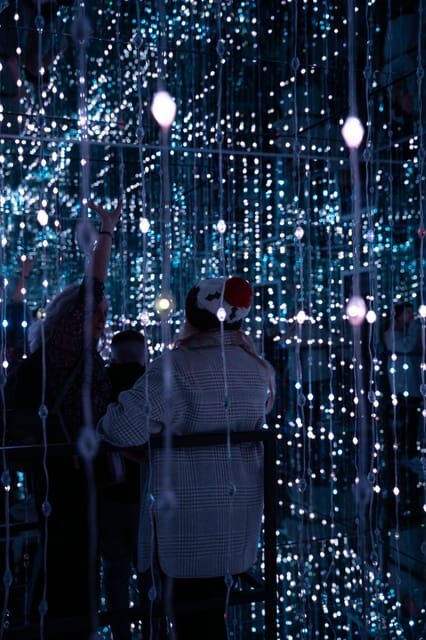
Then you hit the infinity mirrors, one of those classic illusions that still feels magical. The setup creates the look of endless reflection, so you get the sensation of depth stretching far beyond the room.
Why it works: your eyes chase repeating reflections, and your brain keeps trying to measure distance. But the “distance” is part of the optical design. The moment you notice you can pose and “fall” into the infinite effect, it turns into a game.
If you care about photos, infinity mirrors are usually your best friend here. They give you dramatic results even with basic camera settings. Just watch your lighting: bright overhead light can flatten the effect, while a bit of controlled framing makes the illusion pop.





Large Kaleidoscope: for color lovers and patient photographers
The Large Kaleidoscope is another included highlight, and it brings a different flavor from rooms that depend on your body position. Instead, it’s about color, symmetry, and shifting patterns.
This can be a great breather between the more intense illusion rooms. It also suits mixed groups: kids can enjoy the colors, while adults can linger and watch how the patterns change as viewing angles shift.
If you like collecting memorable snapshots, this is one of the setups where small changes matter. Move slightly, watch how the pattern evolves, then snap a few photos in quick succession.
Vortex Tunnel: fun for most, not for vertigo
The Vortex Tunnel is the headline feature for thrill-seekers. It’s designed to create that disorienting, spinny sensation that makes you feel like your perception is being “pulled” inward.
This is also why the attraction comes with a clear warning: it’s not suitable for people with vertigo. If that’s you (or someone in your group), skip this section. You’ll still have plenty of other exhibits to enjoy.
For everyone else, go in with realistic expectations. This isn’t a gentle optical puzzle. It’s closer to a sensory effect that plays with motion and depth. If you tend to get motion- or dizziness-related nausea, it’s worth treating this as a “test your comfort level” moment and stepping out if needed.
What to do first inside: a simple flow that avoids bottlenecks

You can explore at your own pace, and that freedom is part of the experience. Still, you’ll enjoy it more if you plan a simple order so you don’t backtrack.
A good strategy:
- Start with the rooms that feel most “center stage” for photos (infinity mirrors, gravity-defying room).
- Then move through the more detailed optical areas on the upper or lower floors.
- Save the Vortex Tunnel for when you’re ready for the most intense effect.
That order keeps the most intense moment from being the first thing that throws you off. It also helps you capture photos while your group energy is still high and everyone is fresh.
Timing and how long to plan for your visit
The visit is listed as 1 hour, but the practical guidance is 45 to 75 minutes. In real life, this range makes sense because your speed depends on two things:
- how long you stop for photos and re-dos
- how much you read the exhibit explanations
If you’re traveling with kids, you can often move briskly and still feel like you did everything. If you’re more into the science behind the tricks, plan closer to the top end of the time window.
A helpful mindset: treat it like a sequence of mini attractions, not one long show. Each room is self-contained, so you can “dose” your time based on energy levels.
Ticket price and value: is $28 a fair deal?
At $28 per person, this isn’t a budget snack. But it can feel fair if you’re expecting a short, high-energy, hands-on attraction rather than a long museum.
Here’s the value breakdown that matters most:
- You get access to 3 floors and 70+ interactive exhibits, so you’re not paying for one room.
- You get multiple photo-worthy installations, especially infinity mirrors and the gravity-defying room.
- The experience is designed for a quick visit, so you’re not “burning a day” to justify the cost.
If you’re comparing it to a typical indoor attraction, it’s often a better deal than paying for one specialty show, because you control your pace and repeat the best rooms until you’ve got the shots you want.
That said, if you’re a student group or on a tight budget, it can feel steep. In that case, you’ll want to be sure you’re going for the right reasons: hands-on illusions and photos, not quiet sightseeing.
Who this is perfect for (and who should rethink it)
World of Illusion in Dublin is a strong match if you’re traveling with:
- families with kids who enjoy interactive activities
- teens who like visuals, challenges, and taking photos
- adults who enjoy optical tricks and perception games
- mixed groups where some people want fun now and others want a little explanation
It’s less ideal if anyone in your group:
- has vertigo or gets dizzy easily
- prefers quiet, strictly educational experiences without sensory effects
One more practical fit note: if your group likes to follow instructions and read the brief explanations, you’ll likely find more satisfaction in each room. If you’re skipping the text entirely, you can still have fun, but you’ll miss some of the “aha” moments.
Photo tips that actually help (without turning it into a photo shoot)
The exhibits are built for cameras, but the best results come from small habits:
- Take a few photos, then step back and let the next person try. It keeps the line moving and improves your chances of getting a clean shot.
- For rooms with mirrors and repeating reflections, pause before you shoot. Your first photo is often your least dramatic.
- If you see staff nearby, don’t be shy about asking for help with angles. People seem to get solid assistance there, especially for the trickier setups.
If you’re going for a full memory set, focus on the big three: infinity mirrors, the gravity-defying room, and the Vortex Tunnel (if suitable). Then round out with the rest.
Should you book World of Illusion Dublin?
Book it if you want a short, hands-on attraction where your whole group can play with perception, not just watch it. The three-floor layout, the large number of exhibits, and the standout photo moments make it a good use of time when you’re in Dublin.
Skip or reconsider if someone in your group has vertigo, or if you really dislike sensory disorientation. And if your budget is tight, be honest about what you want: if you’re mainly after quiet culture, this may not be the best fit. If you want playful, visual, and a little brain-twisty, it’s a strong pick.
FAQ
How long does the World of Illusion Dublin visit take?
Plan for about 45 to 75 minutes. The ticket is listed with a 1-hour duration, but that range gives you room to explore and take photos.
How many illusions and exhibits are included?
You can expect over 70 mind-bending illusions and interactive exhibits across the three floors.
What are some of the main highlights?
Featured highlights include the gravity-defying room, infinity mirrors, the Vortex Tunnel, and a Large Kaleidoscope.
Is World of Illusion suitable for people with vertigo?
No. It is specifically noted as not suitable for people with vertigo, especially because of the Vortex Tunnel.
Are food and drinks included?
No. Food and drinks are not included with the ticket.
Is free cancellation or pay-later available?
Yes. Free cancellation is available up to 24 hours in advance for a full refund, and there’s also a reserve now & pay later option to keep plans flexible.
If you want, tell me your travel dates and who’s coming (ages, motion sensitivity, and whether you’re more into photos or the science side). I’ll suggest the best time to go and a simple room order that fits your group.