REVIEW · DUBLIN
Dublin Express Private Guided Walking Tour
Book on Viator →Operated by Travelling Ireland · Bookable on Viator
Two hours is all it takes to orient fast. I love the 2-hour landmark run and the stop at Claddagh Records, but the pace is brisk, so if you want extra detail, you’ll need to speak up and ask questions.
This private guided walk works well when you want a tight intro to Dublin without juggling tickets and routes, and it’s built for real comfort with umbrellas plus rest and toilet breaks if needed.
In This Review
- Key points before you go
- Why a 2-hour Dublin Express is such a smart move
- Meeting on Cecilia Street, ending at Dublin Castle
- Claddagh Records and the Wall of Fame: Dublin’s music shortcut
- Temple Bar to Ha’penny Bridge: reading the city by the Liffey
- College Green and Trinity College: power and learning in the same breath
- Molly Malone and the lore you can actually remember
- Dubh Linn Gardens and Dublin Castle’s most useful corners
- What’s included (and why the extras matter)
- Price and pacing: is $84.11 per person worth it?
- Should you book the Dublin Express Private Guided Walking Tour?
- FAQ
- How long is the Dublin Express Private Guided Walking Tour?
- Is this a private tour or a shared group tour?
- Where does the tour start and end?
- What landmarks and areas does the tour cover?
- Are there any entrance fees included in the price?
- What’s included in the tour price besides the guide?
- Is the tour family-friendly and suitable for most people?
Key points before you go

- Claddagh Records first: Dublin’s traditional music world, with real local context
- Wall of Fame stop: U2, Bob Geldof, Philip Lynott, Sinéad O’Connor, Van Morrison, and more
- Temple Bar to Ha’penny Bridge in one smooth arc: you’ll see the Liffey divide explained
- Trinity College + College Green: learning and power in the same city blocks
- Dublin Castle corners via Dubh Linn Gardens: history plus a famous-name origin moment
- Private pacing that can fit families (I’ve seen guides tailor tours for kids and mixed ages)
Why a 2-hour Dublin Express is such a smart move
If this is your first time in Dublin, you’ll feel the benefit right away. A lot of visitors spend their early hours wandering without a plan. This kind of tour gives you a guided route that puts the most useful city landmarks in your head fast, so the rest of your trip feels easier.
The tour’s strength is how it links entertainment, streets, and real institutions. You start with traditional music and the famous names on the music scene, then you move into classic Dublin streets and civic spots, and you finish with Dublin Castle and a garden tucked behind it. In other words, you don’t just collect photos. You connect the dots.
The only real catch is time. Two hours means it’s not a slow, deep lecture. If your idea of fun is long explanations at every step, consider spending a bit more time after the tour or choosing activities that go deeper in one theme.
You can also read our reviews of more walking tours in Dublin



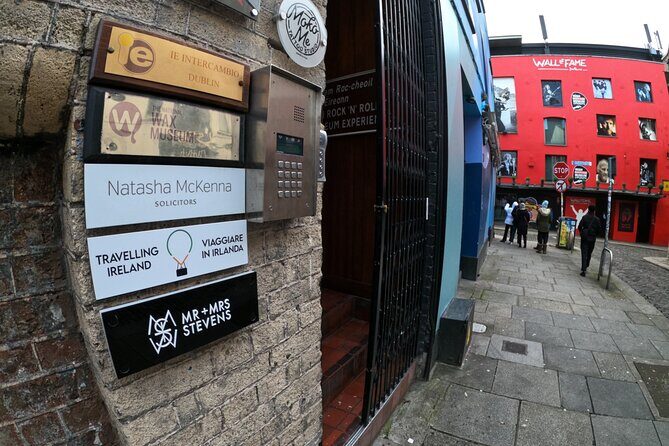
Meeting on Cecilia Street, ending at Dublin Castle
The tour starts at Travelling Ireland Viaggiare in Irlanda, 8 Cecilia St, Temple Bar (D02 RW82). You finish at Dublin Castle on Dame Street, Dublin 2, at the main Dublin Castle area.
That matters because it shapes how you use the rest of your day. Starting in Temple Bar makes sense for most arrivals because it’s central and lively. Ending at Dublin Castle is a clean handoff if you plan to keep exploring that part of the city, grab a meal nearby, or simply head on to your next stop with the confidence that you’re already oriented.
You’ll also have a mobile ticket, and it’s near public transportation, which helps if your schedule shifts. Umbrellas are provided too, and that’s a practical win in Ireland.
Claddagh Records and the Wall of Fame: Dublin’s music shortcut
Stop 1 is Claddagh Records. This is the kind of place you usually only find if you already know what to look for: Ireland’s top traditional Irish and folk music store. Even if you’re not a deep music nerd, this stop works because it gives you a Dublin thread to carry with you. You’ll start noticing that music isn’t just background here. It’s part of how people tell stories about the city.
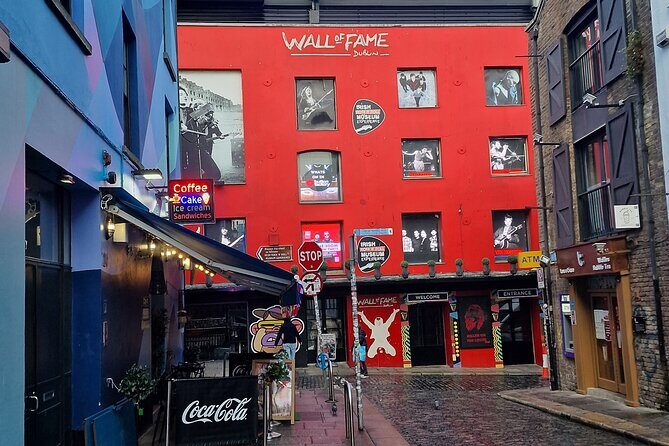
Next up is the Wall of Fame, with Irish bands and singers like U2, Bob Geldof, Philip Lynott, Sinéad O’Connor, and Van Morrison. This is a short stop, but it’s a useful one. It turns famous names into a mental map. After this, when you hear Irish music references later in pubs, shops, or concerts, you’ll know what they’re pointing to.
One reason this works so well is the guides. In the reviews, I saw different guides bring different strengths. For example, Ian was praised for connecting music, history, and architecture with inside stories from growing up in Dublin. Pasquale and Ed were also noted for being informative and good at answering random questions. If you come with curiosity, you’ll usually get payoff.
Temple Bar to Ha’penny Bridge: reading the city by the Liffey
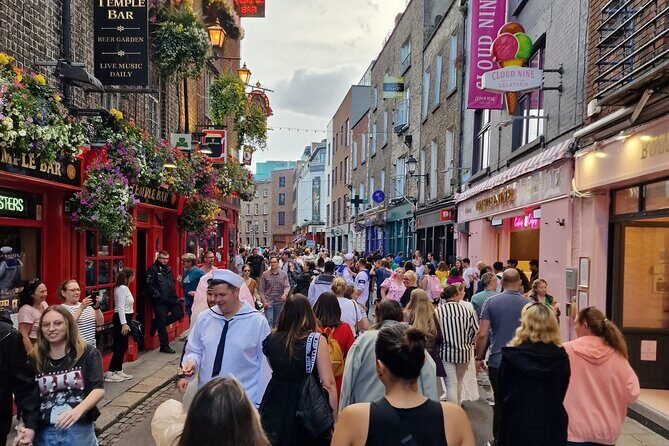
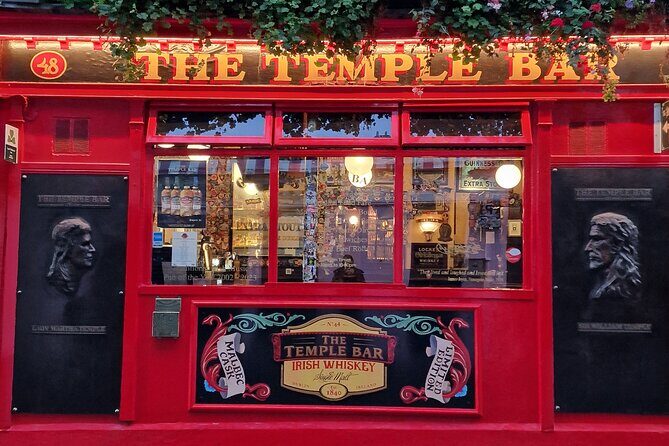
Stop 3 is Temple Bar, and you’ll walk through the area with a focus on what it’s like beyond the postcard. You’ll hear the history behind Temple Bar and get practical guidance on what’s around—food, music, comedy, and things to do. For a lot of first-timers, Temple Bar can feel like a swirl of noise and tourist buzz. This stop helps you separate what’s actually worth your time from what’s just there because it’s famous.
Stop 4 is Ha’penny Bridge. Here, the tour slows just enough to give meaning to the view. You’ll get history behind the bridge and context for the North and South sides of the city. You’ll also connect the Liffey River, plus the Custom House and the IFSC area in the wider urban story.
This portion is a great example of why a guided route beats self-guided aimlessness. The bridge is iconic, yes. But the explanation makes it useful. After you walk it, you’ll understand why people talk about Dublin’s geography in terms of sides and neighborhoods.
College Green and Trinity College: power and learning in the same breath
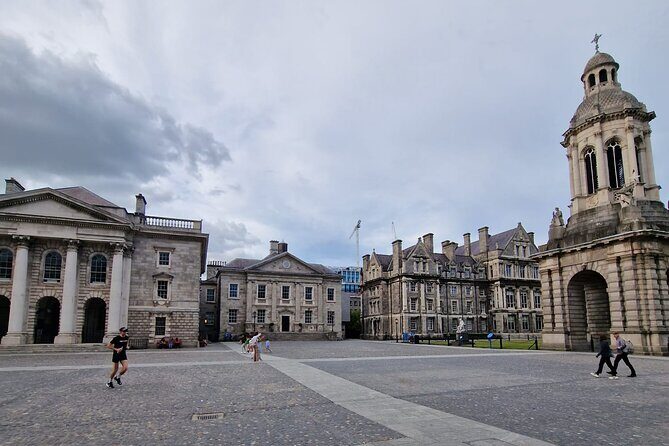
Stop 5 is College Green, a three-sided plaza in the center of Dublin. On its northern side is the Bank of Ireland building, which was Ireland’s Parliament House until 1800. To the east sits Trinity College Dublin, and to the south you see a series of 19th-century buildings.
So this isn’t just a pretty square. It’s a quick lesson in how Dublin’s center has shifted through time—politics, institutions, and the buildings that keep showing up in photographs for a reason.
Stop 6 is Trinity College Dublin, described as Ireland’s oldest and most prestigious university. You’ll visit the campus and take a stroll that mixes history with a working, modern institution that’s been active for more than 400 years.
A short campus walk like this is ideal when you want the vibe and the big facts without spending hours. If you want to go deeper, treat it as your starting point. Note the buildings and the areas that spark your curiosity, then return later on your own.
You can also read our reviews of more guided tours in Dublin






Molly Malone and the lore you can actually remember
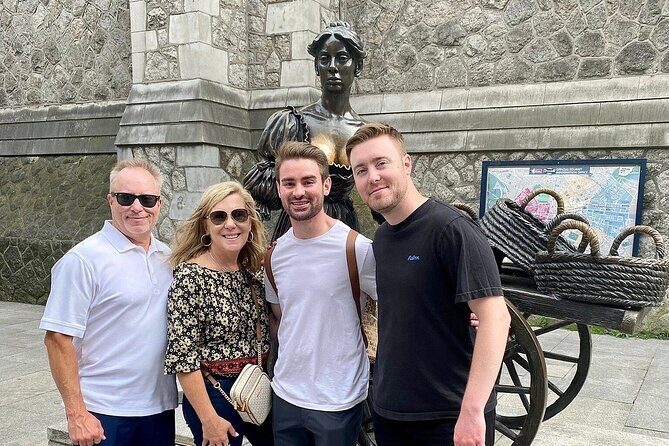
Stop 7 is the Molly Malone Statue. Molly Malone is famous for a reason: she’s wrapped in folklore, and the story is tied to her life as a fishmonger. This is one of those Dublin moments that feels simple at first, then sticks with you once the context clicks.
The tour also connects nearby landmarks, including St. Andrew’s church and O’Neills pub established in 1885. That combination matters. It turns the statue from a quick snapshot into a doorway into Dublin’s older pub culture and street-level storytelling.
If you’re traveling with kids or you like playful history, this stop usually lands well. It’s short, visual, and the story has personality.
Dubh Linn Gardens and Dublin Castle’s most useful corners
Stop 8 is Dubh Linn Gardens, at the back of Dublin Castle. This is presented as a hidden gem and an award-winning open garden in Europe. You’ll also learn about the connection between the garden and the name Dublin—something that gives the entire castle complex a deeper local anchor.
Stop 9 is Dublin Castle itself. You’ll see it as a medieval castle in the city center dating to the 13th century, including a medieval tower and the Chapel Royal. The guide will also cover the history of the British in Ireland as it relates to the site.
This is the part of the tour where it’s worth paying attention to your guide’s emphasis. The castle has layers, and a short walking tour can’t cover all of them. A good guide will help you focus on the big themes—how power operated here, what you’re looking at, and why it matters in the story of modern Dublin.
One practical note: because Dubh Linn Gardens sits at the back of the castle area, it gives you a different perspective than the most obvious castle front views. You’ll leave feeling like you saw more than the standard lineup.
What’s included (and why the extras matter)
This isn’t just a route on a map. You get an experienced, licensed tour guide, and it’s a private guided tour for your group only. That means you’re not squeezed into a shared pace or forced to smile through a group dynamic that doesn’t match your energy.
Here’s what you also get:
- Restaurant, pub, and shop recommendations
- Photo opportunities
- Rest/toilette breaks if needed
- Umbrellas provided
- Local tips and tricks
- Group discounts
In real terms, those inclusions help you after the tour ends. A great walking guide doesn’t just point at landmarks; they help you decide what to do next. In the reviews, Ed’s tailoring for family interests and Pasquale’s ability to answer questions quickly are exactly the kind of service that makes those recommendations feel personal instead of generic.
Price and pacing: is $84.11 per person worth it?
At $84.11 per person for about 2 hours, you’re paying for a private guide plus a smart route through major Dublin landmarks. Whether it feels like a bargain depends on how you compare it to alternatives.
Here’s the value angle that works for most people:
- You’re covering a concentrated set of top sights without having to plan every turn.
- Many stops are built around free admission moments during the walk, which keeps your overall spend lighter than a typical ticket-heavy tour.
- You get a guide who can adjust to your group, which matters if you’re traveling with kids, mixed ages, or just want the story framed in your preferred way.
The potential downside is the express format itself. One review noted that an efficient express tour didn’t feel especially awe-inspiring. That’s the risk with any time-limited intro: if your expectations are for museum-level detail, you may feel the time constraints.
My advice is simple: treat it as orientation plus story seeds. Then build your later days around what you liked most—music stops, institutions, or castle history.
Should you book the Dublin Express Private Guided Walking Tour?
Book it if:
- You want a fast, well-sequenced first look at Dublin
- You care about music, street-level storytelling, and the meaning behind landmarks
- You’d rather have a guide handle the route and context, especially if you’re short on time
- You’re traveling as a family or with mixed ages and want the pacing adjusted
Skip it or pair it with something else if:
- You want long, slow explanations at each major stop
- You’re hoping for a totally offbeat route with far fewer famous sites
If you like the idea of starting with Claddagh Records, getting music-history anchors at the Wall of Fame, and finishing with Dubh Linn Gardens and Dublin Castle, this tour is a practical way to get your bearings fast. It’s the kind of Dublin intro that helps you walk around later with confidence instead of guesswork.
FAQ
How long is the Dublin Express Private Guided Walking Tour?
It’s approximately 2 hours.
Is this a private tour or a shared group tour?
It’s a private tour, meaning only your group participates.
Where does the tour start and end?
It starts at Travelling Ireland Viaggiare in Irlanda, 8 Cecilia St, Temple Bar, and ends at Dublin Castle on Dame Street, Dublin 2.
What landmarks and areas does the tour cover?
You’ll visit Claddagh Records, the Wall of Fame, Temple Bar, Ha’penny Bridge, College Green, Trinity College Dublin, the Molly Malone Statue, Dubh Linn Gardens, and Dublin Castle.
Are there any entrance fees included in the price?
The tour’s listed stops show free admission tickets for the stops included in the route.
What’s included in the tour price besides the guide?
The tour includes a licensed guide, restaurant and pub/shop recommendations, rest/toilette breaks if needed, photo opportunities, umbrellas, and local tips and tricks.
Is the tour family-friendly and suitable for most people?
It’s described as family friendly and most travelers can participate. Service animals are allowed, and it’s near public transportation.