REVIEW · DUBLIN
Dublin: Dublin City Highlights Private Guided Walking Tour
Book on GetYourGuide →Operated by Ireland Travelling · Bookable on GetYourGuide
Dublin’s landmarks are easier with a guide. This private walking tour strings together the city’s most famous stops—Temple Bar, Ha’penny Bridge, and Trinity College—and explains what’s behind each one as you walk. I like that it’s private (so you can ask questions and move at your pace), and I also like the music-focused detour at Claddagh Records and the Wall of Fame. One thing to consider: it’s only 3 hours and some major sights are more about the exterior and story than about going inside, since entrance fees aren’t included.
You’ll start at Viaggiare in Irlanda and end back there, with an authorized English/Italian live guide. The route is built to keep you in the historic center on foot, and the itinerary can be adjusted to your needs. If you want maximum time inside museums or big-ticket buildings, you may need extra add-ons beyond this walk.
In This Review
- Key things to know before you go
- Why a private Dublin highlights walk works so well
- Route and timing: 3 hours in the center without rushing
- Claddagh Records and the Wall of Fame: music history on Dublin sidewalks
- Temple Bar to Ha’penny Bridge: how the famous got famous
- College Green and Trinity College: Elizabeth I, Parliament, and legendary objects
- Molly Malone and Grafton Street: folklore, shopping streets, and people-watching
- St. Stephen’s Green, Government Buildings, and the Oscar Wilde memorial
- Price and what you’re really paying for at $153
- Who this Dublin highlights tour is best for
- Should you book this private Dublin City Highlights tour?
- FAQ
- How long is the Dublin city highlights private walking tour?
- Where do I meet for the tour, and where does it end?
- Is the tour private, and what languages are available?
- Is the tour wheelchair accessible?
- What major entrances are not included in the price?
- Can the itinerary be adjusted during the tour?
- Is there insurance included?
Key things to know before you go
- Private, not crowded: you get a real guide conversation instead of a loud group shuffle.
- Music stops included: Claddagh Records and the Wall of Fame connect Dublin’s streets to U2 and other famous Irish acts.
- Iconic bridges and squares: Ha’penny Bridge and College Green are explained with clear, practical context.
- Trinity College area highlights: you’ll connect Elizabeth I-era Dublin to the Book of Kells and the Brian Boru Harp.
- Flexible itinerary: the tour can shift based on what you want to emphasize.
- Wheelchair accessible: it’s designed to be doable for wheelchair users.
Why a private Dublin highlights walk works so well
Dublin can feel simple at first glance: streets, pubs, a few famous bridges, and a lot of history signs. But the city’s story isn’t always obvious just by looking. This tour is built to fix that. You walk a tight loop through major landmarks, and your guide gives you the “why” behind each stop.
What makes this style of tour valuable is the pacing. You’re not just ticking boxes. You’re learning how Temple Bar became a magnet for visitors, what College Green meant in political terms before 1800, and why Ha’penny Bridge matters as a piece of Dublin engineering. You also get practical pointers along the way—like where to eat near Temple Bar and where to look for live traditional Irish music sessions.
You can also read our reviews of more walking tours in Dublin



Route and timing: 3 hours in the center without rushing
The whole tour runs about 3 hours, with different stops ranging from quick 10-minute looks to longer 20–25 minute segments. That structure matters. Short visits keep the walk moving, while the longer blocks give you time to absorb the surroundings and get a proper explanation.
You’ll meet at Viaggiare in Irlanda and finish back at the meeting point. Because it’s a walking tour, you’ll want comfortable shoes and a weather-ready layer. Dublin can shift fast—windy, drizzly, then bright—so dress for changing conditions rather than one perfect forecast.
Also, since the guide can adjust the itinerary based on your needs, you’re not stuck if you want more time on a specific corner of the city (or if you’d rather cut a stop a little shorter).
Claddagh Records and the Wall of Fame: music history on Dublin sidewalks
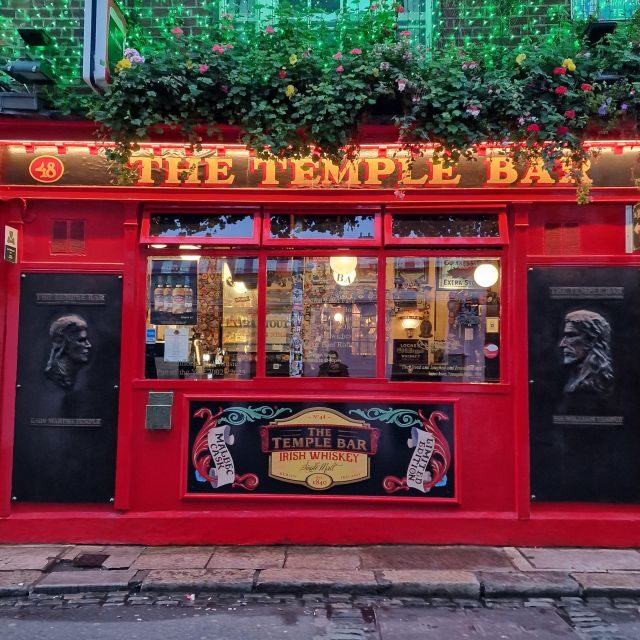
If you love music, this is one of the smartest parts of the tour. You’ll stop at Claddagh Records at Cecilia Street, where the tour notes that U2 band members used to meet there and recorded a few songs. Today it’s a music shop, but the story adds weight to an otherwise straightforward storefront.
The guide also ties the name Claddagh back to a famous Galway ring tradition. You’re not just seeing a record shop—you’re picking up a cultural thread that explains why certain Irish symbols and places show up again and again.
Then you’ll head to the Wall of Fame by Temple Bar, which celebrates Irish acts and singers connected to Dublin’s music scene. The list the tour highlights includes U2, Phil Lynott, Rory Gallagher, Sinead O’Connor, Shane MacGowan, Bob Geldof, The Undertones, and Luke Kelly. Even if you only know a few, you’ll come away with a clearer sense of how Dublin’s creative energy became part of the city’s identity.
Tip for you: use this stop to decide what kind of Ireland you want to hear more about later. If the Wall of Fame clicks for you, you’ll likely enjoy seeking out a traditional music session in the Temple Bar area with the guide’s suggestions.
Temple Bar to Ha’penny Bridge: how the famous got famous
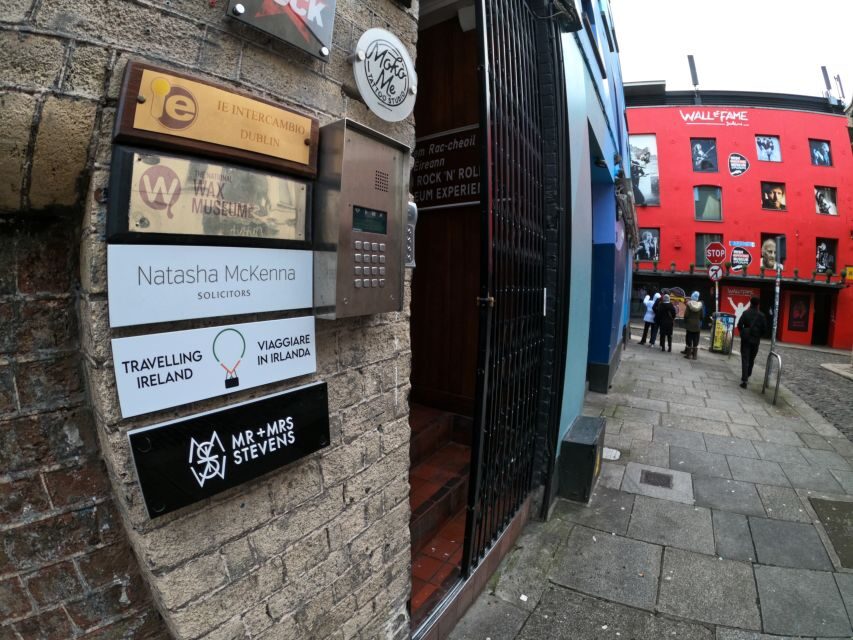
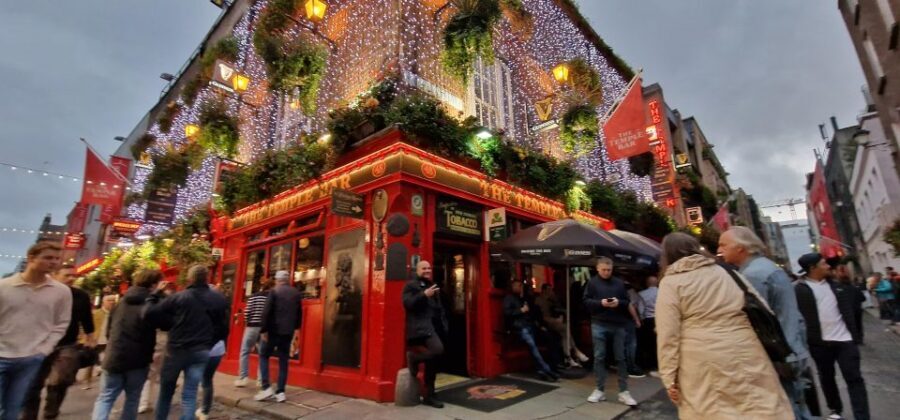
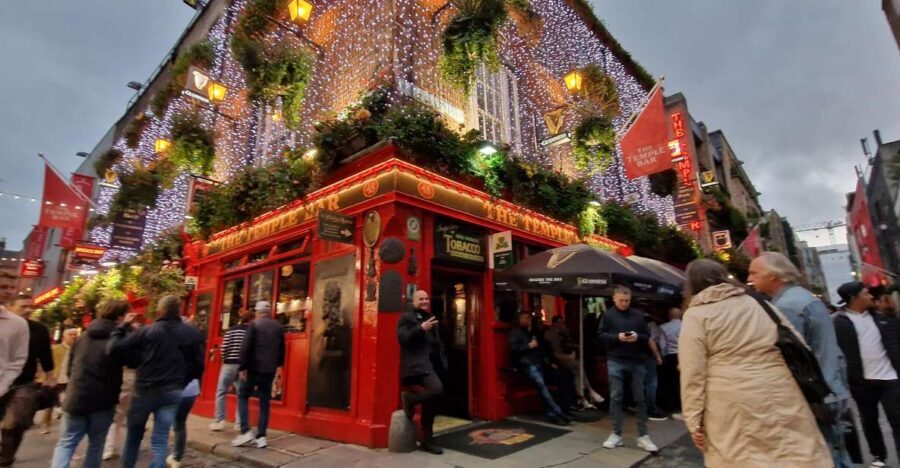
Temple Bar is one of those places people think they already understand—until you learn the story behind the name and the culture around it. In this segment, you walk through Temple Bar while your guide explains why it became so famous and where tourists typically concentrate.
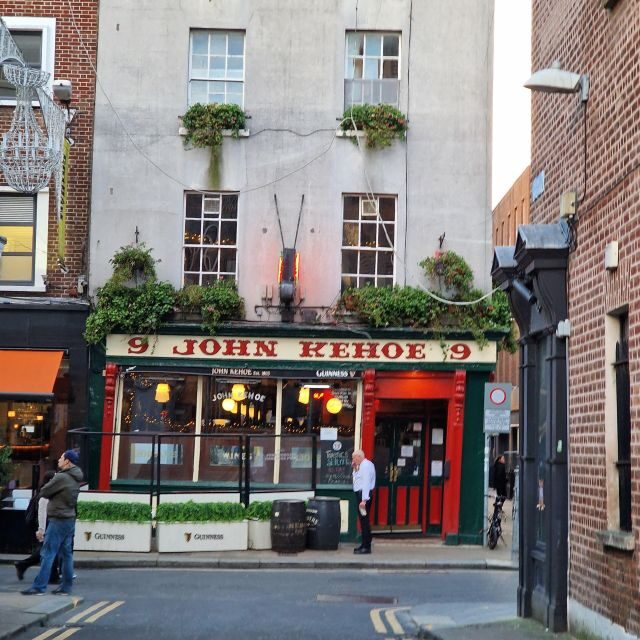
You’ll also get practical guidance on food and entertainment. The tour description specifically points you toward where to go for something to eat and the best places to join a live traditional Irish music session. That’s the kind of advice that saves time, because Dublin’s music scene has options, and it helps to know where locals and visitors tend to meet.
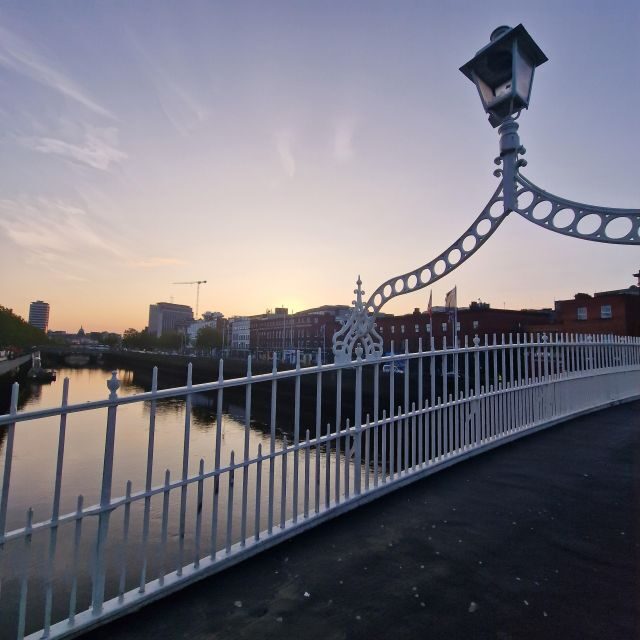
From there, the tour moves to Ha’penny Bridge, with a guided history that includes its construction in 1816. You’ll hear what makes it iconic and get context for why it’s a go-to photo spot. The bridge is described as especially beautiful at night and also during the day—so if you’re the type who likes night views, you’ll probably want to circle back later after the tour.
A small reality check: in a 3-hour tour, you’ll see these highlights, not linger for long photo marathons. If you’re hoping for sunset-level photos, plan to return outside the tour window.
College Green and Trinity College: Elizabeth I, Parliament, and legendary objects
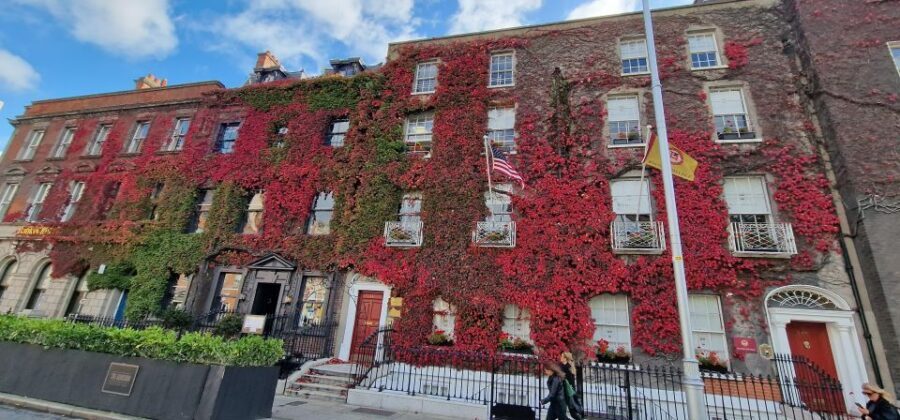
This is where the tour’s “big Dublin” feeling really lands. You’ll stop at Bank of Ireland / Former Irish Parliament on College Green, a three-sided plaza in the center of town. The guide points out that the Bank of Ireland building was Ireland’s Parliament House until 1800, and you’ll also learn how Trinity College sits to the east. The south side is described as a series of 19th-century buildings, which helps you orient yourself in the space.
Then the tour continues to Trinity College Dublin. The tour notes Trinity was the university built in Ireland by Elizabeth I, and the guide connects that legacy to famous cultural items associated with the campus. You’ll hear about the Book of Kells and the Brian Boru Harp as major symbols of Irish history and culture.
One key value of this stop is interpretation. Trinity College can feel like just “a famous campus” unless someone explains what the place represents. Here, you get a narrative link between monarchy-era education, political history nearby, and the cultural artifacts people come to see.
Another practical consideration: entrance is not included for Trinity College. So think of this as a guided orientation and highlight walk around the Trinity area. If you want to see exhibitions inside, you’ll likely need to purchase that separately when you decide you’ve got the right amount of time.
You can also read our reviews of more guided tours in Dublin






Molly Malone and Grafton Street: folklore, shopping streets, and people-watching
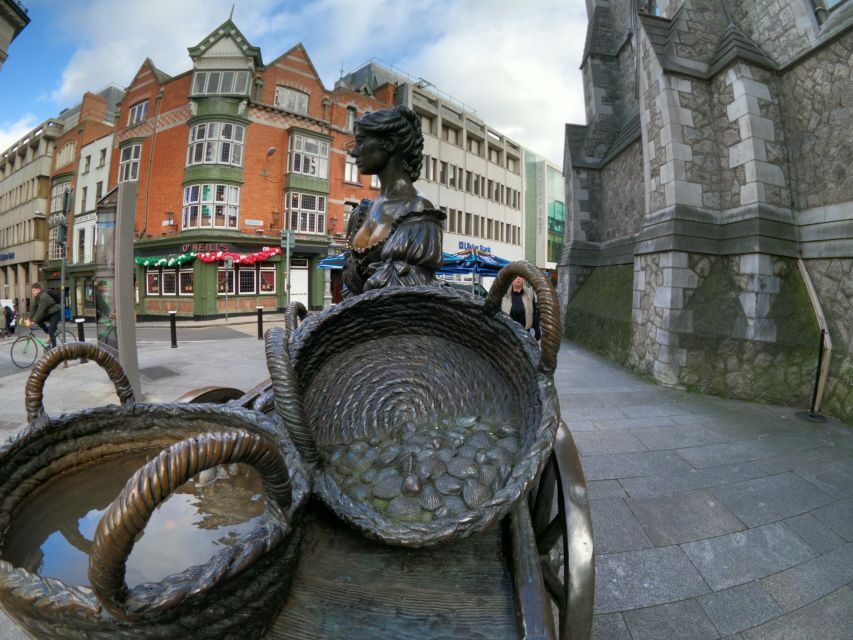
Next you’ll hit the Molly Malone Statue on Suffolk Street. The tour frames it through Molly Malone’s life and folklore, and positions her as one of Dublin’s best-known figures. Even if you don’t love statue photo stops, this one works because the guide connects the character to the street’s story. It’s a quick stop, but it adds personality to the city center.
After that comes Grafton Street, Dublin’s famous high street. Here the tour turns lighter. You’ll stroll past shops and the kind of street scene that makes Grafton feel like Dublin in miniature. The tour description highlights street artists and “nice food in nice places,” plus the general energy of a major shopping street. If you want to combine history with real-day Dublin life, this is the moment.
What I like about this segment for you is that it breaks up the heavier history stops. You get a change of pace, and you can also use the time to decide what you want for lunch based on what you see and what your guide recommends.
St. Stephen’s Green, Government Buildings, and the Oscar Wilde memorial
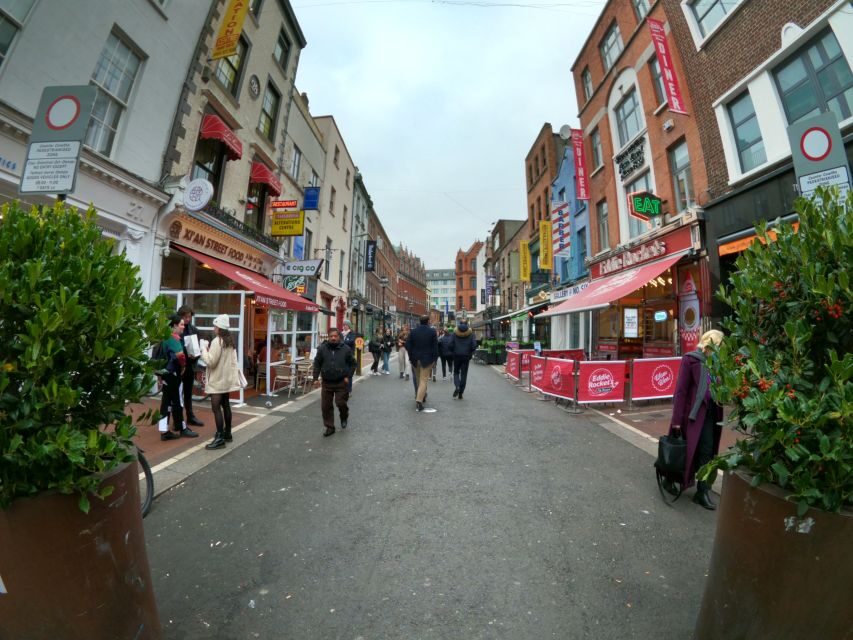
The tour then moves into park-and-government territory, which gives you a more balanced Dublin picture than pub and museum scenes alone.
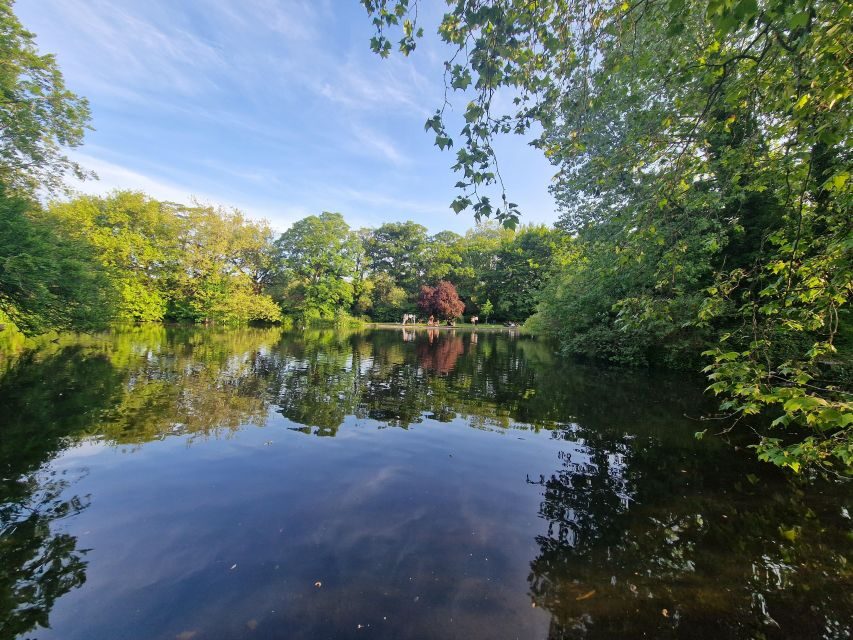
You’ll stop at St. Stephen’s Green Shopping Centre near St. Stephen’s Green park. The tour describes the park as a small Central Park style space—popular with people, with animals and lots of flowers. It’s the kind of stop that helps you feel Dublin as a living city, not just a set of famous photos.
From there, the walk includes the Department of the Taoiseach, based in the Government Buildings on Merrion Street. The Taoiseach is the Irish title for the head of government, and this stop gives you a clear sense of where modern power sits in the city center.
Next comes Irish Parliament at Leinster House. The tour notes Leinster House was the former ducal residence of the Duke of Leinster and has served as the parliament building for the Irish Free State since 1922. That date anchors the story in a specific historical shift, which is exactly what you want when you’re standing in front of government architecture.
Finally, you’ll reach the Monument to Oscar Wilde at the corner of Merrion Square Park. The tour frames it with bronze statues and highlights Oscar Wilde house connections in the area. You end in Merrion Square Park, another leafy stop that helps the walk feel complete rather than abruptly ending at a single landmark.
Price and what you’re really paying for at $153
At $153 per person for about 3 hours, you’re paying for a few things at once:
- A private guide, meaning the explanations can match your interests instead of running on a fixed script.
- An itinerary that stays central, so you spend your time on foot seeing Dublin’s core highlights.
- A music-history angle (Claddagh Records and the Wall of Fame) that many generic city walks don’t include.
Included in the price are a national guide, an official guide, and insurance. Entrance fees are not included for Trinity College (and the General Post office is also listed as not having entrance included). That means the tour value is strongest for people who want guided storytelling, orientation, and key sights rather than a ticket-heavy “museum tour.”
The biggest practical drawback for value is simple: if you’re expecting every major interior stop to be included, you may feel a little nickeled-and-dimed at the end. If you’re happy paying for entrances when you actually want them, this price makes a lot more sense.
Who this Dublin highlights tour is best for
This tour is a great fit if you want:
- A private guide who can answer questions and explain why landmarks matter
- A balanced mix of history, culture, and music references
- A route that makes sense if it’s your first time in Dublin
It also makes sense if you’re traveling with someone who has different interests. The music stops help people who love pop and rock history, while College Green and Trinity College satisfy the history crowd. And because the itinerary can be changed based on your needs, you have some control.
If you only want to sprint between must-sees with no guide conversation, a private guide may feel like extra. Likewise, if your main goal is spending hours inside specific buildings, plan for additional time beyond this 3-hour walk.
Should you book this private Dublin City Highlights tour?
I’d book it if you want to get your bearings fast and understand what you’re looking at. The combination of Temple Bar, Ha’penny Bridge, College Green, and Trinity College gives you the “core Dublin” story in a tight format, and the Claddagh Records + Wall of Fame stops add something genuinely Dublin and music-specific.
Skip it if your ideal day is mostly inside-ticket attractions, or if you dislike walking for roughly 3 hours even with breaks between stops. For most first-time visitors, though, this is a strong way to turn famous landmarks into something you actually remember.
FAQ
How long is the Dublin city highlights private walking tour?
It lasts about 3 hours, with starting times depending on availability.
Where do I meet for the tour, and where does it end?
You meet at Viaggiare in Irlanda, and the tour ends back at the same meeting point.
Is the tour private, and what languages are available?
Yes, it’s a private group tour. The guide offers English and Italian.
Is the tour wheelchair accessible?
Yes, it is listed as wheelchair accessible.
What major entrances are not included in the price?
Entrance to Trinity College is not included, and entrance to the General Post office is also listed as not included.
Can the itinerary be adjusted during the tour?
Yes, there is the possibility to change the itinerary based on your needs.
Is there insurance included?
Yes, insurance is included with the tour.