REVIEW · DUBLIN
DayTripper Dublin: A Guided City Walking Tour
Book on Viator →Operated by Unearthed Tours · Bookable on Viator
Dublin makes sense fast on foot. This guided walking tour is a practical way to orient yourself, then turn those street corners into stories you’ll remember. I especially like the solid route of major landmarks and the chance to ask your guide for real local tips as you go.
You’ll get a tight mix of parks, high streets, and famous Dublin statues—plus a politics-and-culture thread that connects the stops. One drawback to note: this is a walk-and-look tour. You do not enter several big-ticket sites, so if you’re hoping for inside views and long museum time, you’ll want a different plan.
The good news is the format fits most first trips. It’s about 2 hours 30 minutes, geared for a moderate walking level, and capped at 25 people, so it feels personal even when it isn’t a private tour.
In This Review
- Key takeaways
- Why DayTripper Dublin Works as a First-Timer Walk
- The Route Start and Finish: Easy to Plug Into Your Day
- Getting the City Bearings: St Stephen’s Green to Grafton Street
- Statues That Act Like Study Guides: Molly Malone and More
- The Cathedral Courtyards: What You See When You Do Not Enter
- Dubh Linn Gardens: A Viking-Era Landmark You Can Actually Find
- Dublin Castle and Trinity College: Outside Views With Big Context
- Temple Bar and O’Connell Street: Turning Nightlife Into Story
- The Irish Dance and Music Moment
- Group Size, Pace, and How to Prepare
- Does It Offer Real Value at $27.82?
- How Guides Make or Break a Short Walking Tour
- Best Fit: Who This Tour Suits Best
- Should You Book DayTripper Dublin?
- FAQ
- How long is the DayTripper Dublin walking tour?
- Where does the tour start and end?
- How much does the tour cost?
- Is the tour offered in English?
- Is lunch included?
- Do you enter St Patrick’s Cathedral during the tour?
- Do you enter Dublin Castle or Christ Church Cathedral?
- Is Trinity College Dublin visited inside?
- What group size should I expect?
- Is there free cancellation?
Key takeaways
- Perfect first-day orientation: You’ll hit central Dublin landmarks in a manageable 2.5 hours.
- Outdoor-first sightseeing: St Patrick’s Cathedral, Dublin Castle, and Christ Church are viewed from the grounds/courtyards, not inside.
- Culture + politics thread: O’Connell Street and other stops tie Irish history to what you see today.
- Guide Q&A time: Near the end, you get recommendations for what to do next, including places to eat.
- Small-group feel: Maximum of 25 travelers, with frequent stops and quick context.
Why DayTripper Dublin Works as a First-Timer Walk
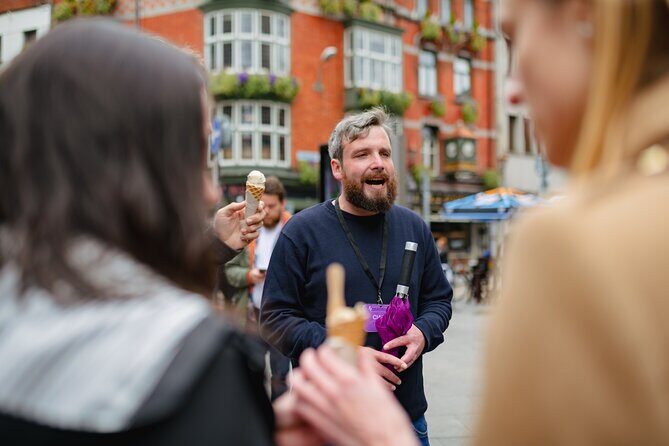
If you’ve never been to Dublin, the hardest part is figuring out where everything is—fast. This tour gives you that head start. You’re not just collecting photos. You’re learning how the city’s layout and landmarks connect to Ireland’s modern story.
I like that the tour doesn’t pretend Dublin is only one thing. It’s part parkland, part high street, part political street scene. Then it swings into religious and Viking-era references, all while your feet keep moving and the “why it matters” keeps landing.
At around 2 hours 30 minutes, the pacing is built for momentum. Stops are short, usually 5–15 minutes, which helps you absorb a lot without getting stuck in one spot for ages. That makes it a strong option if you want to spend the rest of your day roaming freely with a better sense of direction.
You can also read our reviews of more walking tours in Dublin



The Route Start and Finish: Easy to Plug Into Your Day

You start at the Theobald Wolfe Tone Sculpture in St Stephen’s Green. That’s a central, recognizable spot, and it’s one of the reasons the tour is easy to start on time. From there, your guide threads through key areas that most first-timers naturally want to see.
The tour ends at College Green, with a practical payoff: it’s about a 15-minute walk from Tara or Pearse Station and about a 2-minute walk from Grafton Street. In plain terms, you can end the tour and either keep exploring on foot or switch to transit without feeling stranded.
A nice extra for planning: the tour runs with a mobile ticket, and you’ll receive confirmation when you book. The tour is also offered in English, so you can focus on the stories instead of decoding language.
Getting the City Bearings: St Stephen’s Green to Grafton Street

St Stephen’s Green is where many first-time Dublin days begin for a reason: it’s calm, central, and full of “this is Dublin” atmosphere. On this tour, you pass through the park as your guide introduces Irish history and Irish culture. Even if you don’t slow down for a long sit, you get context that makes the city feel less random.
From the park, you head to Grafton Street, one of Dublin’s busiest high streets. This isn’t a long stop, but it’s useful. Your guide walks and talks through the street’s role in daily life, so you understand what you’re seeing rather than just noting that it’s busy.
If you’re the type who likes to map as you go, this section helps. You’ll start to see how Dublin’s “green space to shopping and street life” pattern shows up again and again as your walk continues.
Statues That Act Like Study Guides: Molly Malone and More
Dublin is a city where statues are more than decoration. They’re shorthand for social memory. Two of the tour’s best examples are Molly Malone and the stop at O’Connell Street.
At the Molly Malone statue, your guide frames what the figure represents—working-class Dublin and the famous character tied to the city’s folklore. The stop is short, but this is one of those moments where the guide’s framing changes your eyes. You start noticing details you would otherwise skip.
Then comes O’Connell Street, where the tour shifts into the political landscape of Ireland through the 20th century. Instead of treating history like a distant textbook, you connect it to statues and public space. Even with brief timing, you’re walking in a place designed for public memory, which makes the explanation stick.
The Cathedral Courtyards: What You See When You Do Not Enter
Two major stops are handled with a key twist: you do not enter the big buildings.
At St Patrick’s Cathedral, the guide meets you at the gardens and explains the history and origins of Dublin City. You’re not paying for entry, and you’re not waiting for a ticket line. What you get instead is a viewpoint and story that works well for a short tour.
The same idea shows up at Christ Church Cathedral. You stay in the courtyard area, walking around the outside architecture while your guide explains the cathedral’s founding and includes Viking history connections. Again: no interior visit. But if your goal is city orientation plus context, it’s a smart choice because it keeps the time moving.
This approach can be a drawback if you’re the kind of traveler who wants to spend an hour inside cathedrals with a slow look. But if you’re trying to cover a lot in one morning or afternoon, skipping entry time makes sense. You also save energy for the rest of Dublin that day.
You can also read our reviews of more guided tours in Dublin






Dubh Linn Gardens: A Viking-Era Landmark You Can Actually Find
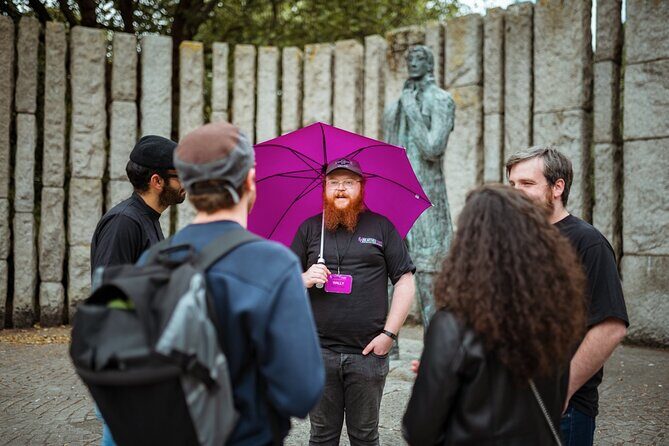
One stop that really helps your mental map is Dubh Linn Gardens. Here, your guide points out this picturesque landmark and explains its significance as a place dating back to the Vikings.
The value of this stop isn’t that it’s long. It’s that it anchors the city’s timeline. Dublin often gets reduced to medieval castles or 20th-century politics. This adds an older layer, and because the stop is still central and outdoors, it fits neatly into the walk without turning into a full detour.
If you like when a city tour gives you at least one “wait, Dublin goes back that far” moment, this is one of the best chances in the route.
Dublin Castle and Trinity College: Outside Views With Big Context
Two other major names—Dublin Castle and Trinity College Dublin—are treated the same way as the cathedral stops. You don’t go in. Instead, you see the courtyards and exterior areas and get history explained as you look.
At Dublin Castle, your guide takes you into the courtyards and introduces history tied to Northern Ireland and political struggles across the nation. It’s a powerful pairing: you’re in a setting people associate with power, and your guide connects it to the broader conflict story.
At Trinity College Dublin, the guide stops outside and also mentions the Central Bank of Ireland. The focus includes the Great Irish Hunger, often called the famine, and connects it to Trinity’s place in the city’s story. That’s a lot to fit into a quick stop, but the outside framing helps you connect the dots without spending hours inside.
This “outside, but explained” structure is great for travelers who want depth without committing to separate attraction tickets on top of the tour.
Temple Bar and O’Connell Street: Turning Nightlife Into Story

The tour includes Temple Bar through a walk in the neighborhood. The stop is brief, but your guide uses it to keep the cultural thread moving. It’s a helpful contrast after the political street stops: you see how Dublin’s famous social district fits into the bigger picture of identity and history.
Then O’Connell Street continues that thread with the 20th-century political landscape. Together, these two stops give you both the public monument side and the day-to-night city side. It’s an efficient way to avoid the common mistake of seeing nightlife areas as only entertainment.
The Irish Dance and Music Moment
There’s a dedicated segment along the route where your guide talks about Irish dance & music. It’s not a long performance moment—it’s more like a story-driven stop that adds flavor to what you’re learning.
This matters because it turns Dublin from just “buildings and battles” into something lived. Even if you don’t know much about Irish arts, you’ll come away with a clearer sense of how music and dance tie into culture, identity, and national memory.
Group Size, Pace, and How to Prepare
This is designed for a maximum of 25 travelers, which keeps the group manageable. You also have short stops, so you’ll be moving most of the time rather than waiting around.
The tour is listed for travelers with moderate physical fitness. That’s your clue to plan for walking on city sidewalks and making quick repositioning between stops. It’s also a good reason to wear shoes you trust.
If you’re someone who likes taking photos every 30 seconds, you might feel the speed a bit. But that’s also why the timing works. It keeps the tour from ballooning into something that eats your whole day.
One more practical note: the tour is near public transportation, so you can adjust your day easily if your schedule changes.
Does It Offer Real Value at $27.82?
At $27.82 per person, you’re paying for a live guide, not for attraction entry. That’s important. Many stops are free and outside, while some major sites specifically note that admission is not included, and you do not enter the buildings anyway.
So where’s the value? It’s in interpretation.
You’re getting:
- A guided route through central Dublin
- Quick context at each stop (not just signage)
- Recommendations at the end for what to do next
- A coherent thread connecting culture, politics, and place
If you’re the kind of traveler who reads plaques, then turns away, this tour helps you stay engaged. You’ll learn enough to make your independent wandering more rewarding. And because the tour ends near Grafton Street, it’s easy to roll into shopping, cafés, and more walking right after.
If you’re already deeply read on Irish history and you don’t need orientation, the ticket may feel like you’re paying mostly for pacing. But for most first-timers, this is a cost-effective way to “buy” time and clarity.
How Guides Make or Break a Short Walking Tour
Short tours rise or fall on the guide’s skill. The standout theme in the tour experience is that guides are very strong on Irish history and culture and are comfortable answering questions.
The reviews point to guides like Keiron and Ciaran/Ciarán (spelled a few different ways across the feedback) as particularly engaging. One person even lucked into a situation where they had a one-on-one style experience because the group was smaller than expected. That’s not something you should bank on, but it fits the general idea: when a guide is good, you feel it even in brief stops.
You also get a practical benefit at the end. Near the finish, your guide wraps up the route and provides recommendations on what to do in Dublin, where to go, where to eat, and any smaller sights you might otherwise miss. That’s the kind of help that makes the next 24 hours better.
Best Fit: Who This Tour Suits Best
I think this tour is a great fit if:
- You’re visiting Dublin for the first time and want city bearings
- You want a history-and-culture angle, not just photos
- You like asking questions and getting local guidance
- You want to keep a lighter schedule with major landmarks done quickly
It may be less ideal if:
- You want long interior visits to major attractions
- You dislike walking between multiple stops
- You’re already covering Dublin with a deep, specialized history program and don’t need orientation
Should You Book DayTripper Dublin?
My take: yes, book it early in your trip—especially if you’re trying to understand Dublin beyond the postcard list. The tour’s strength is that it compresses a lot of central Dublin into a route you can build the rest of your day around. You’ll leave with a map in your head, plus a guide-style suggestion list for where to eat and what to do next.
It’s also a smart value when you consider what you’re buying. For $27.82, you get a live guide and a structured walk through major areas, with a focus on meaning rather than tickets.
If you’ve got one free window to get grounded, this is the kind of activity that pays you back later when you recognize what you’re looking at.
FAQ
How long is the DayTripper Dublin walking tour?
It runs about 2 hours 30 minutes.
Where does the tour start and end?
It starts at the Theobald Wolfe Tone Sculpture in St Stephen’s Green and ends at College Green.
How much does the tour cost?
The price is $27.82 per person.
Is the tour offered in English?
Yes, it’s offered in English.
Is lunch included?
No, lunch is not included.
Do you enter St Patrick’s Cathedral during the tour?
No. The tour discusses St Patrick’s Cathedral from the gardens area, and it says you do not enter the cathedral.
Do you enter Dublin Castle or Christ Church Cathedral?
No. The tour takes you to the courtyards/outside areas and says you do not enter Dublin Castle or Christ Church Cathedral.
Is Trinity College Dublin visited inside?
No. The tour stop is outside Trinity College, and it does not enter the college.
What group size should I expect?
The tour has a maximum of 25 travelers.
Is there free cancellation?
Yes. You can cancel for a full refund if you cancel up to 24 hours in advance.