REVIEW · DUBLIN
Small Group-Dublin Walking Tours
Book on Viator →Operated by Damian Dublin Tours · Bookable on Viator
If you want Dublin fast, do this walk. It strings together castle walls, cathedral stories, and Temple Bar all in one compact route. I like how it mixes major sights with smaller details you’d miss on your own, and how the guide keeps things lively with music and story-driven explanations.
Two things I especially like: the capped group size (max 8) makes it feel personal, and the route is built for orientation, so you leave knowing where you are and where to go next. One possible drawback: it’s a walking tour on cobblestones, so you’ll want comfy shoes and a little patience for a few quick stops where you’re mainly looking and listening.
In This Review
- Key highlights you’ll feel right away
- Why this 2-hour Dublin walk is such a smart first move
- Chester Beatty Library and Dubh Linn Garden: Dublin’s beginnings in 20 minutes
- Dublin Castle gardens: why the name of the city keeps coming back
- Christ Church Cathedral to Temple Bar: cathedrals, Handel, and downtown orientation
- O’Connell Bridge and the Liffey: 1916, Daniel O’Connell, and the river stories
- Trinity College Dublin in short bursts: the courtyard feeling without the time sink
- St Anne’s Church to Grafton Street: Bram Stoker’s personal Dublin trail
- Leinster House and Kildare Street: politics, a Dracula connection, and a US link
- St Stephen’s Green and Grafton Street: the city’s calm counterpoint
- Powerscourt Townhouse Centre: your walk ends in an atrium you’ll want to visit twice
- Practical tips that actually help (not generic ones)
- Who should book this tour, and who should skip it
- Should you book? My take on the value
- FAQ
- FAQ
- How long is the Small Group-Dublin Walking Tours?
- What does the tour cost?
- What is the group size?
- Where does the tour start?
- Where does the tour end?
- Is the tour in English?
- Do I need a mobile ticket?
- Are admissions free for the listed stops?
- Are service animals allowed?
- Can I cancel for a full refund?
Key highlights you’ll feel right away
- Small group of up to 8 keeps questions easy and the pace friendly
- Music interludes help the stories land, not just facts dumped at you
- Quick, meaningful stops that cover both Viking-era roots and 1916-era moments
- Free admission stops where listed means you spend time on-site, not ticket logistics
- Easy start near Dublin Castle and Chester Beatty helps you find the meeting point with less stress
Why this 2-hour Dublin walk is such a smart first move
Dublin can feel big and a bit scattered until you see how its eras overlap. This tour is designed to fix that. In about two hours, you cover key center-city landmarks and learn the connections between them, from the name of the city to the political sparks that shaped the modern streets.
The group stays small, with a maximum of 8 people, so you’re not just being marched through sights. You can ask questions, and you’ll notice the guide adjusting the tour to the group energy. In the reviews, people also mention the guide being attentive to individual needs, including one guest with a hip issue—so don’t assume every walking tour is one-size-fits-all.
Value-wise, it’s priced at $60.47 per person. That sounds simple, but it’s actually about what you’re buying: a guided route that hits many top landmarks in a short window, plus thoughtful storytelling and entertainment (music and light skits show up in the experience). You’re also told that the listed admissions are free for the stops shown—so your money mostly goes to the guide and time-saving route planning, not extra entry fees.
You can also read our reviews of more walking tours in Dublin

Chester Beatty Library and Dubh Linn Garden: Dublin’s beginnings in 20 minutes
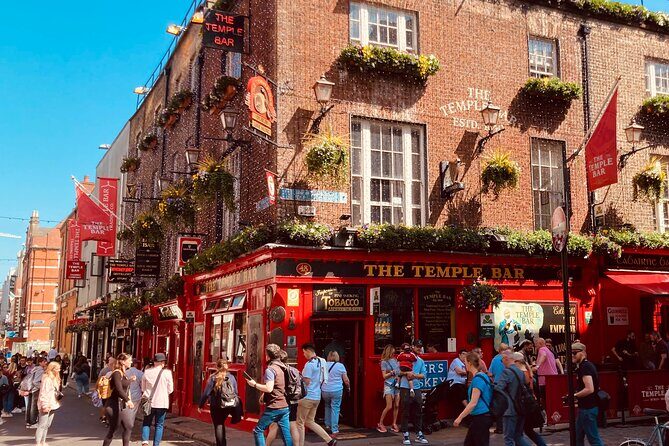
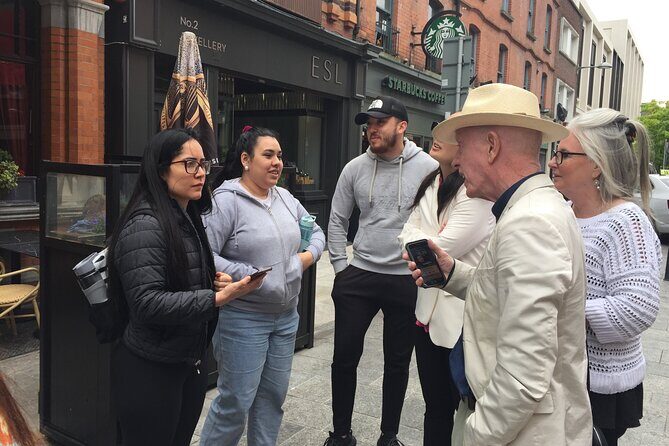
You start at Chester Beatty Library, tucked in the Dubh Linn Garden behind Dublin Castle. The meeting point is easy to find by Dublin standards: Castle Street, Dublin 2. You’ll meet the guide, get a quick outline of what’s ahead, and then step into a calmer pocket of the city.
This first section matters because it frames the whole walk. You hear about the origins of the name of Dublin and how the early environment shaped where people built and traveled. It’s not abstract. You walk through the castle-grounds setting and get a sense of why this area became a power center in the first place.
From a pacing angle, it’s a great warm-up. The first two stops are short—around 10 minutes each—so you’re not rushed out of the gate. If you’re the type who wants context before the big tourist hits, this is your moment.
A practical consideration: you’ll likely be standing and listening in garden areas. Wear shoes you can stand in comfortably, even if you’re not expecting a long stretch yet.
Dublin Castle gardens: why the name of the city keeps coming back
The tour continues by exploring the gardens of Dublin Castle, still in the general castle precinct area. You’ll get another angle on the same central idea: the early origins of Dublin, how the ground and the river system influenced settlement, and how the castle-adjacent setting connects to the city’s story.
Why repeat the theme here? Because it gives you a mental map. Before you move into cathedrals and nightlife, you understand where the city began and why. That makes the later stops hit harder, especially the parts about trade, travel, and political power.
Also, this is one of those sections where the benefits of a local guide are obvious. Even if you’ve walked by Dublin Castle before, the way the guide links today’s streets to early Dublin helps you read the city like a timeline, not a random collection of buildings.
Christ Church Cathedral to Temple Bar: cathedrals, Handel, and downtown orientation
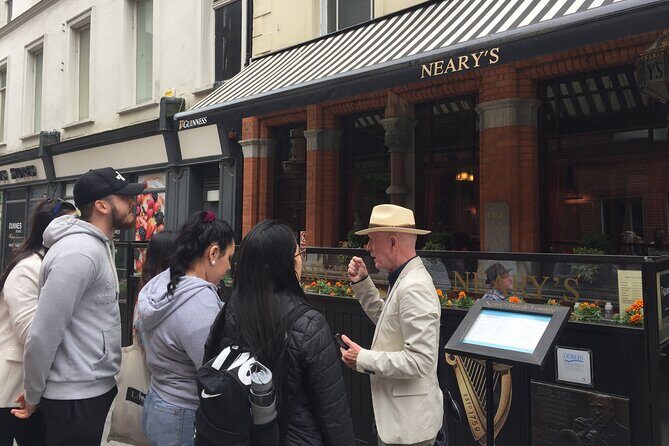
Next up is Christ Church Cathedral. You’re not going deep inside for long here, but you pass along it and learn key parts of the story tied to the Catholic Church in Ireland. You’ll also hear a standout cultural detail: the view of the venue where Handel’s Messiah was first performed.
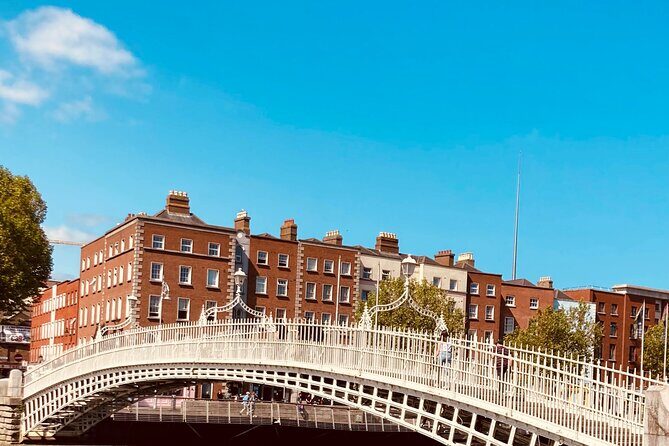
Then the tour shifts toward the city’s energy with a stop at Temple Bar, Dublin’s nightlife district. This is where you see the other side of Dublin: live music, packed street corners, and the kind of place where people actually linger. You’ll cross the Ha’penny Bridge and learn how the city’s foundations connect to trade and travel through the town center.
This section is excellent for orientation. You’ll start to recognize street directions and river landmarks. After this, it’s much easier to plan your next walks—because you’ll already know what’s across the river and how the main central areas connect.
One note: Temple Bar is busy by nature. Even during a guided stop, expect noise and crowds. If you’re sensitive to loud music and shoulder-to-shoulder sidewalks, you may want to arrive prepared with a calm mindset.
O’Connell Bridge and the Liffey: 1916, Daniel O’Connell, and the river stories
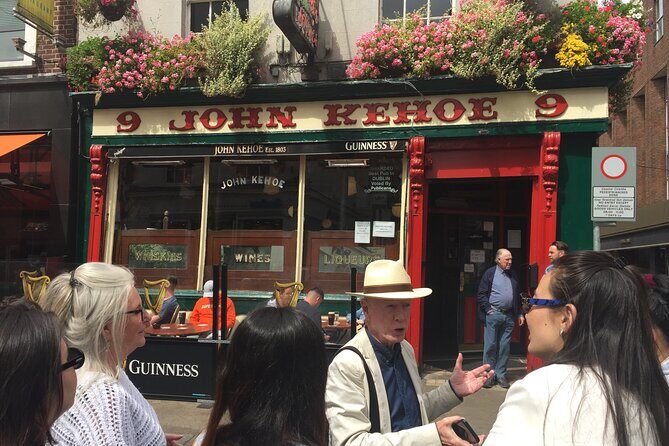
From Temple Bar, you head toward O’Connell Bridge, which places you near the epicenter of the 1916 Easter Rising. You’ll see a statue connected to Irish parliamentarian Daniel O’Connell, then shift to an essential Dublin character: the River Liffey.
This isn’t just a generic river chat. The guide ties the river to famous tales, including the Liffey Swim. That kind of detail is what makes this walking tour feel more like learning local Dublin rhythm than reading a textbook.
Also, crossing bridges gives your brain a natural reset. You’re walking through different eras, but you’re also physically moving between key viewpoints. That’s helpful if you want to remember the city by landmarks, not just names.
Practical tip: if you’re taking photos, you’ll have a few moments around bridges and cathedral exteriors. It’s not a photo marathon, but you’ll get enough chances to capture the big reference points.






Trinity College Dublin in short bursts: the courtyard feeling without the time sink
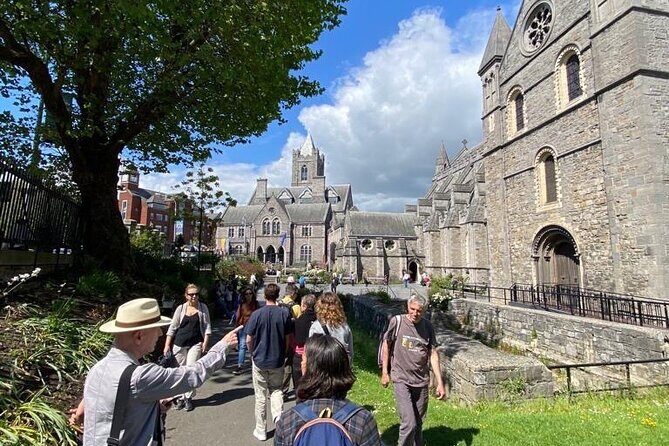
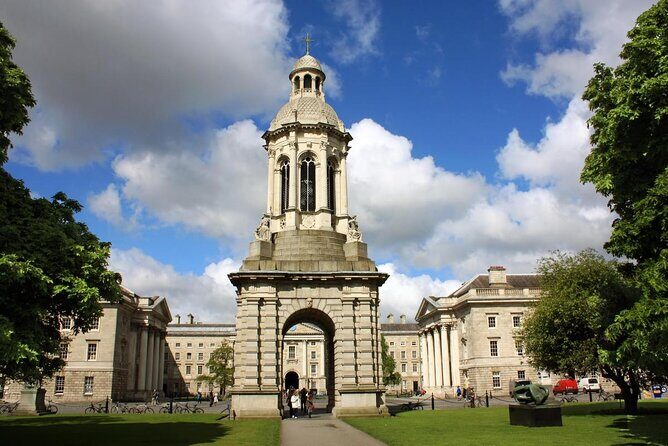
A key stop is Trinity College Dublin. The tour focuses on viewing the university and learning about notable figures who studied there. You can enter the courtyard area for a few minutes to look at the original architecture.
Even if you don’t spend hours on campus, this stop gives you a strong sense of Trinity’s role in shaping Dublin’s intellectual identity. It also sets you up nicely for what comes next on Dame Street—because you’ll catch a glimpse of Parliament House, known historically as the House of Lords, along Dame Street.
The strength here is the timing. You’re not trapped in a long museum-style schedule. You’re getting a quick, memorable visual and a few high-impact context points, then moving on while everything is still fresh.
If you want to go deeper later, this stop is a perfect sampler. After the tour, you’ll have a better idea of what to seek out if you return.
St Anne’s Church to Grafton Street: Bram Stoker’s personal Dublin trail
Next, you stop outside St Anne’s Church on Dawson Street to talk about the wedding of Bram Stoker, the famous Irish writer who married there. This is the kind of detail that feels small but sticks with you because it connects Dublin’s literary legacy to a real, specific street corner.
Then the route heads toward Bewley’s Café on Grafton Street. You’re not told to spend a long time inside, but this is where your walk naturally intersects with shopping and café life. Grafton Street is one of the main pedestrian-friendly areas downtown, so the mood shifts from landmarks to everyday city life.
For many people, this section is the break they didn’t know they needed. You get a story moment, then you step into a more relaxed street rhythm. If you’re walking with kids, this is also the part where the tour can feel more familiar and less academic.
Leinster House and Kildare Street: politics, a Dracula connection, and a US link
The tour moves along Kildare Street, where you’ll see Leinster House, Ireland’s houses of parliament. You’ll also hear about how Leinster House relates to the White House in Washington, DC, plus a Dracula-related twist: the original home of Bram Stoker is connected to the area.
This stop is clever because it links two kinds of power. One is political power (the parliament). The other is cultural power (Stoker and the story-making Dublin exports to the world). It’s a reminder that Dublin’s influence isn’t only governmental. It’s artistic too.
You also pass along the National Museum of Archaeology during this segment. Even if you don’t enter, seeing it on the walk helps you understand how packed this central area is with major institutions.
St Stephen’s Green and Grafton Street: the city’s calm counterpoint
Later, the tour brings you to St Stephen’s Green, with coverage that includes Grafton Street, the Royal College of Surgeons, and a passing glance of Georgian-era architecture.
This part works well because it gives contrast. Temple Bar is loud and commercial. Castle gardens are quieter. St Stephen’s Green is a breather, a park setting that lets you reset while still staying central to the story of Dublin.
You also get a better sense of how Dublin keeps mixing eras in the same small radius. A grand institution, a Georgian streetscape, a park, and then a shopping street all roll into each other. That’s a big reason why the walking format works here—you see the adjacency rather than the separation you’d get on a bus ride.
Powerscourt Townhouse Centre: your walk ends in an atrium you’ll want to visit twice
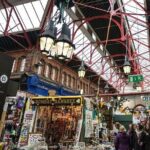
The final stop is Powerscourt Townhouse Centre, on South William Street between South William Street and Clarendon Street. This is an easy ending point, and it’s a visually satisfying one: you’re in the middle of the action, with upscale and boutique shopping outlets, plus a café/restaurant in an impressive atrium.
Why end here? Because it’s a practical handoff. When the tour finishes, you’re dropped in a central area where you can keep moving—grab a bite, browse, or head to your next planned stop with less guesswork.
If you’re planning a Dublin day after this tour, consider using the last stop as your springboard. You already have river/bridge orientation from earlier, and now you’re in a destination you can casually explore on foot.
Practical tips that actually help (not generic ones)
- Wear comfy shoes. Cobblestones show up along the route, and you’ll be on your feet for the entire two hours.
- Bring a question or two. The small group setup makes it worth asking follow-ups instead of just listening.
- Use this as your bearings tour. The best value is not only the landmarks, but the mental map you build as you move from castle grounds to bridges to Trinity and back down to the shopping streets.
- Expect quick viewing moments. Many stops are short; you’re meant to see, listen, and move, not linger for long inside every site.
- Plan for city atmosphere. Temple Bar can be noisy and crowded. If you need quiet, just be strategic about your positioning during that segment.
Who should book this tour, and who should skip it
You’ll love this tour if you want:
- a first visit to Dublin and want to understand how the center connects
- a short, focused walk instead of an all-day tour
- a guide who uses music and storytelling to keep you engaged while you learn
You might skip it if:
- you hate short stops and prefer long time inside museums and buildings
- you have limited mobility on cobblestones and stairs, since the route is walking-based even if the timing is controlled
Overall, it’s a good choice for couples, solo travelers, and even families who want a fun, story-led overview without locking into a full half-day of sightseeing.
Should you book? My take on the value
For $60.47 and about two hours, this tour offers strong value because it stacks multiple top sights with connecting stories, while keeping the group small enough for real conversation. The route covers Dublin’s anchors—Dublin Castle, Christ Church, Temple Bar, Trinity College, and key bridge and parliamentary landmarks—and it does it in a way that helps you leave with a workable city map.
If you’re hoping to book, note that demand can be high; it’s often booked around 66 days in advance. To avoid last-minute stress, I’d lock it in early, especially if your dates are tight.
My final advice: book it on your first couple of days in Dublin. You’ll get your bearings fast, and your later independent exploring will feel easier.
FAQ
FAQ
How long is the Small Group-Dublin Walking Tours?
The tour lasts about 2 hours.
What does the tour cost?
The price is listed as $60.47 per person.
What is the group size?
The tour caps at a maximum of 8 travelers.
Where does the tour start?
The meeting point is at Dublin Castle / Chester Beatty Library area, on Castle Street, Dublin 2, D02 AD92, Ireland.
Where does the tour end?
The tour ends at Powerscourt Townhouse Centre, 59 William St S, Centre, Dublin 2, D02 HF95, Ireland.
Is the tour in English?
Yes, the tour is offered in English.
Do I need a mobile ticket?
Yes, the tour uses a mobile ticket.
Are admissions free for the listed stops?
The tour information lists admission tickets as free at each stop.
Are service animals allowed?
Yes, service animals are allowed.
Can I cancel for a full refund?
Free cancellation is offered if you cancel up to 24 hours in advance of the experience start time.