REVIEW · DUBLIN
Street Art Walking Tour
Book on GetYourGuide →Operated by Alternative Dublin · Bookable on GetYourGuide
Dublin’s walls talk if you know how to listen. On this street art and graffiti walk, I loved the way guide Liam shares backstory about specific murals, and I loved how the route leads to spots you would not find on your own. One possible drawback: it is still a real walking tour, and parts are not suitable for mobility impairments or wheelchair users.
In about 2 hours, you’ll see over 30 public artworks across Dublin city centre, from murals to graffiti, stickers, and paste-ups. You’ll get short guided stops built around looking closely and taking photos, plus insider context for what’s going on in Dublin’s underground art scene right now.
The tour also doesn’t end at the street. You finish at Crampton Court and you’ll be taken to a small gallery where you can support artists by buying prints and paintings or even commissioning work.
In This Review
- Key things that make this Dublin street art walk worth it
- Entering Dublin’s street art scene from the ground up
- The Grand Social start: getting your bearings fast
- Yamamori Tengu: a quick stop that teaches you how to read the wall
- Abbey Court Hostel: finding art in plain sight
- The Icon Factory and The Icon Walk: icons, identity, and street culture
- Temple Bar: where mainstream tourism meets street-level messages
- Blooms Hotel: street art near the hotels you already booked
- Project Arts Centre: where the underground and the institutional overlap
- Crampton Court: the finish line and a chance to support artists
- Price and value: why $17 can feel fair for this much access
- Practical tips for enjoying it (and avoiding the common annoyances)
- Who should book this Dublin street art and graffiti walking tour?
- Should you book this tour?
- FAQ
- How long is the Street Art Walking Tour?
- Where do I meet the guide, and where does the tour end?
- What will I see on the tour?
- Is there a gallery visit during the tour?
- What happens if it rains?
- Is the tour wheelchair accessible?
- What are the cancellation and refund rules?
- Should I tip the guide?
Key things that make this Dublin street art walk worth it
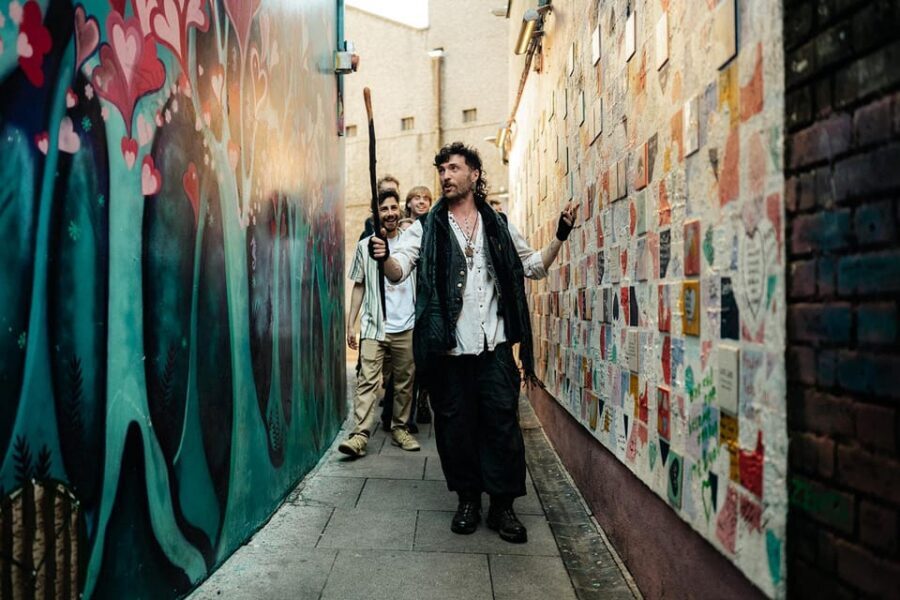
- 30+ pieces of public art in about 2 hours, with photo-friendly pacing
- Liam as your guide, plus other guides who do street art or graffiti in their spare time
- Real underground culture context, not just a list of pretty murals
- Stops that mix famous streets with lesser-known corners, the kind you only catch by following someone local
- A gallery visit to support artists, plus links sent after the tour to the artists featured
Entering Dublin’s street art scene from the ground up
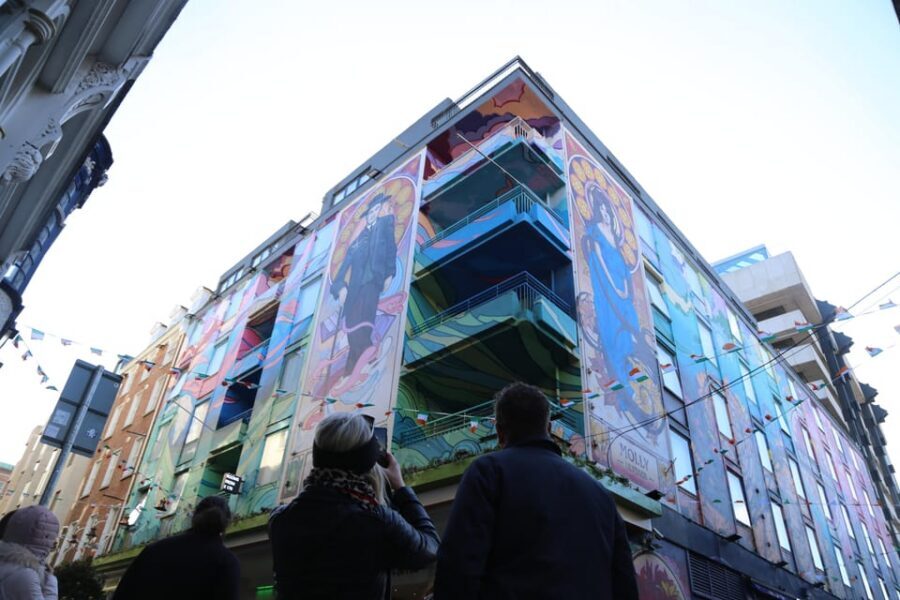
This is the kind of tour that changes how you look at a city. Dublin has plenty of traditional sights, sure, but the walls tell a parallel story too. This walk is built around Dublin’s street art and graffiti subcultures, with an emphasis on how murals, tags, stickers, and paste-ups operate as part of an ongoing conversation in the city.
The best part for you is the teaching style. You aren’t just handed directions like a scavenger hunt. You’re guided to notice details: placement, recurring themes, layers of past work, and the fact that some art shows up like a message and not a decoration. After the tour, Dublin reads differently. Even if you only have one or two days in town, you get that fast.
And because it’s only 2 hours, you’re not stuck outdoors for half your trip. It’s long enough to feel like you’ve actually seen a mini-world, but short enough to still enjoy the rest of Dublin on your own schedule.
You can also read our reviews of more walking tours in Dublin


The Grand Social start: getting your bearings fast
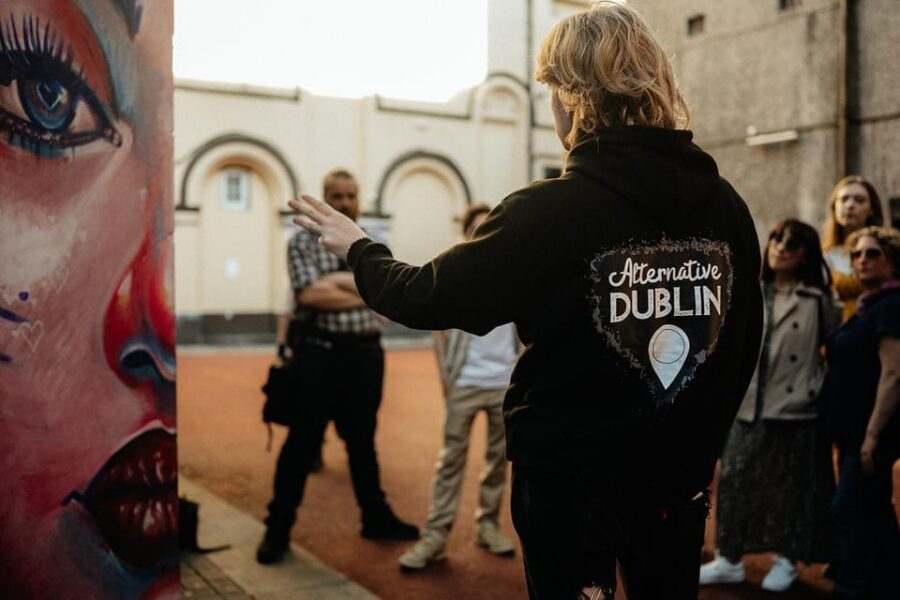
You meet outside The Grand Social on Liffey Street, beside the trees by the Ha’penny Bridge. That location matters. It puts you near a central landmark, so you can show up without stress, then immediately start walking with purpose.
This opening moment is about setting expectations for how to look at street art. Your guide frames what you’ll see—murals, graffiti, stickers, and paste-ups—so that your first photos don’t look like random pictures. You’re learning how to spot the difference between a quick mark and a more crafted piece, and how street art can function like commentary, memory, or community building.
Also, having a guide who’s active in the scene is a big advantage. Liam and the team aren’t speaking as tourists with a map. They understand the culture language, and you feel that in how they explain what you’re looking at.
Yamamori Tengu: a quick stop that teaches you how to read the wall
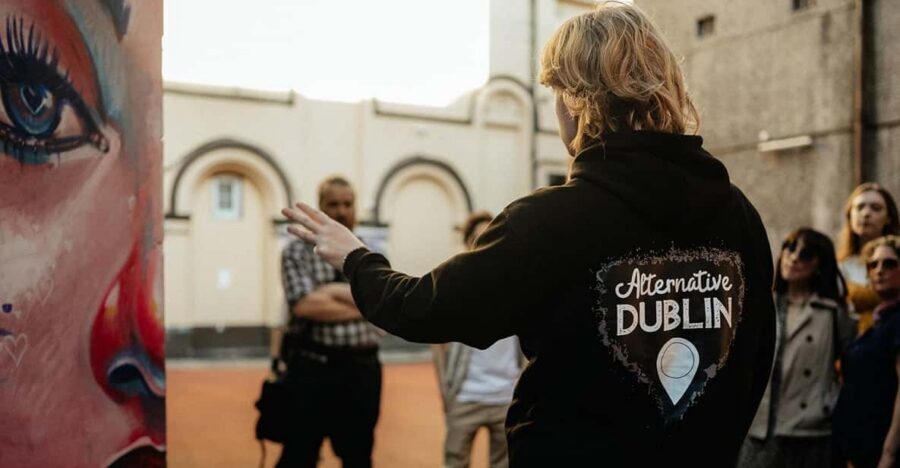
One of the early photo stops is Yamamori Tengu. You’ll get guided looking time here, not just a quick photo and move on.
This is exactly how the tour works in a useful way: it mixes moments for learning with moments for photographing. You’re meant to stand still long enough to notice what’s happening, then take pictures with context. That turns your camera roll from clutter into a mini scrapbook with meaning.
If you like street art for the visual style, this stop will satisfy you. If you like it for the story, you’ll probably appreciate that your guide pushes you to think about why a piece looks the way it does and what kind of audience it speaks to.
Abbey Court Hostel: finding art in plain sight
Next you head toward Abbey Court Hostel. This is the kind of stop that makes street art tours addictive, because it reminds you how much public art sits right under your nose.
The value here is in the guided commentary. A wall can look like a wall until someone points out the layers: how new work interacts with older work, how certain marks repeat, and how street artists treat surfaces like an ongoing canvas rather than a one-time installation.
Even if you’re not the type to chase street art normally, you’ll start noticing patterns fast. You get that sense that Dublin’s art scene is alive and changing, not frozen behind glass.
The Icon Factory and The Icon Walk: icons, identity, and street culture
Then it’s on to The Icon Factory and The Icon Walk. Even by name, you can tell this is more than random graffiti.
This stop is where the tour’s “underground culture” theme becomes clearer. You start seeing how street art can borrow from graphic design logic—symbols, iconography, bold shapes—then translate it into something that belongs to the street. The guide’s job here is to help you connect those dots without making it feel like school.
You’ll also likely appreciate the photo time. The Icon Factory area is the type of location where good lighting and angles really matter. With a guided stop, you can take a few thoughtful shots instead of rushing because you’re worried you’ll miss the group.
A few more Dublin tours and experiences worth a look

Temple Bar: where mainstream tourism meets street-level messages
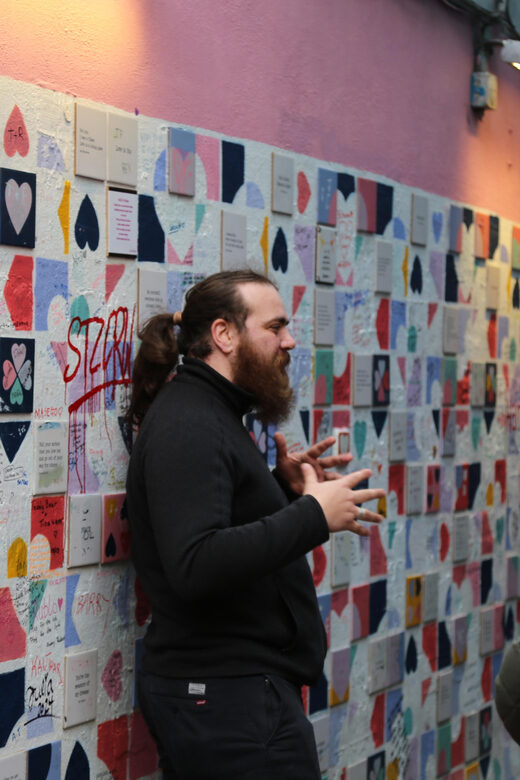
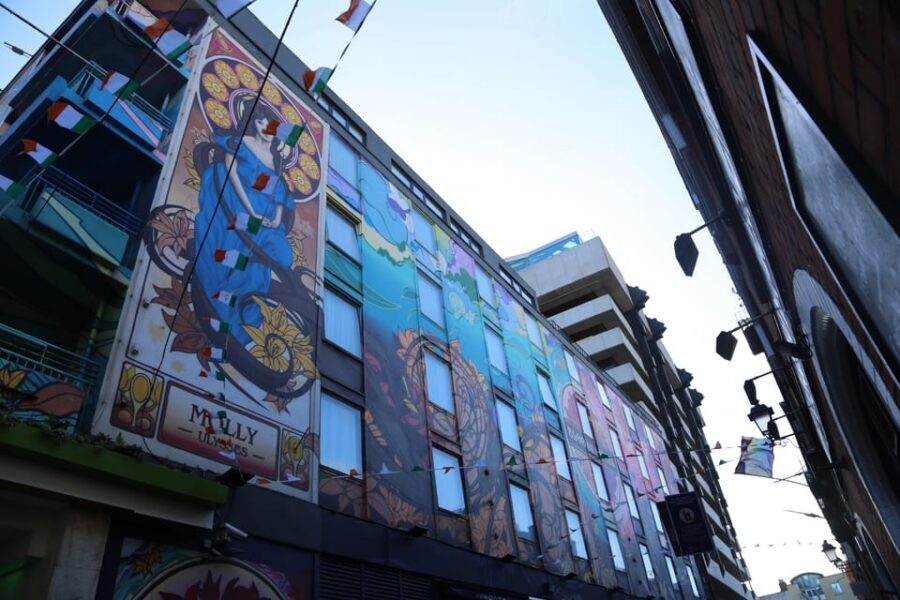
You’ll spend time at Temple Bar as one of the major stops. This is a useful contrast point. Temple Bar is the famous area, so it’s easy to assume street art there is just a tourist add-on.
But on this tour, Temple Bar works differently. Your guide uses it as a chance to show how street art can exist inside high-footfall zones while still keeping its street logic. You learn to spot how art messages can slip into places people think they already understand.
This is also where you’ll probably start talking to yourself with your camera: I should have noticed this earlier. That’s the real win. You don’t leave thinking you just collected images. You leave thinking you learned a way of seeing.
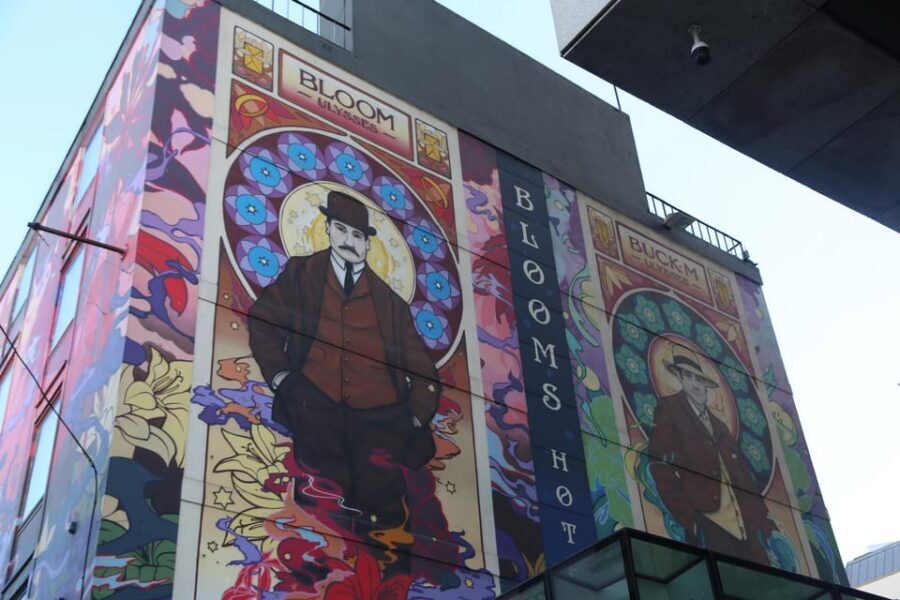
Blooms Hotel: street art near the hotels you already booked
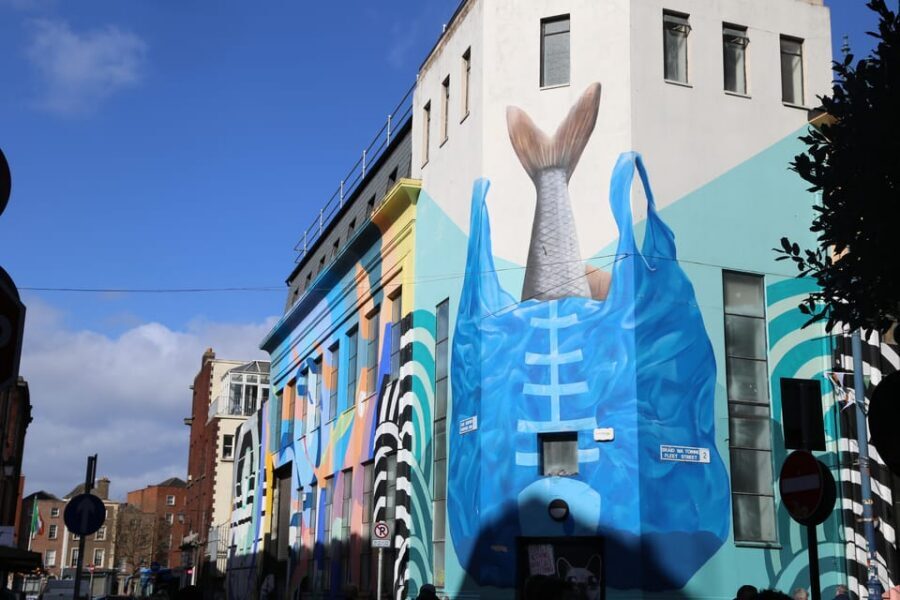
Next you pass by Blooms Hotel for another photo stop and guided sightseeing time. This might sound minor compared to murals you’d expect in a more offbeat neighborhood, but that’s exactly why it’s smart.
When street art appears near normal travel spaces—hotels, hostels, busy streets—it proves a point: public art doesn’t only live in far-flung alleys. It’s part of daily movement. The guide’s context helps you recognize that these pieces are not separate from Dublin life. They’re stitched into it.
If you’re planning a first Dublin trip and you want an experience that feels authentic without turning into a scavenger slog, this stop helps you connect the dots.
Project Arts Centre: where the underground and the institutional overlap
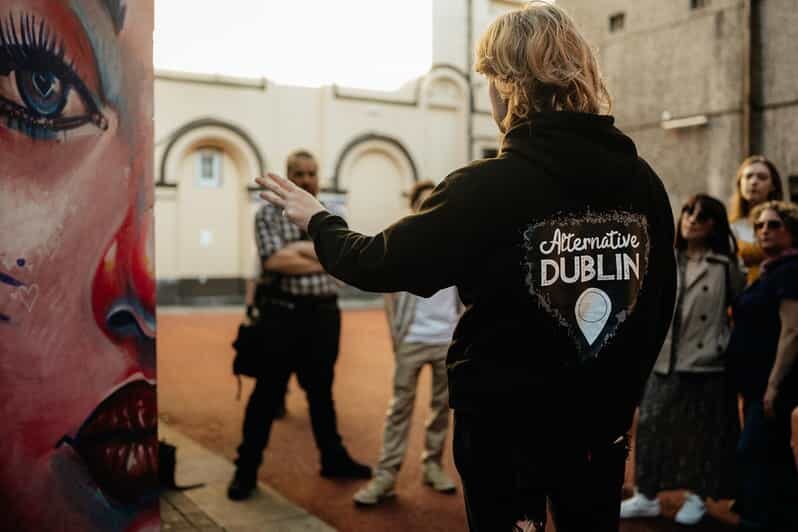
You’ll also visit Project Arts Centre for a short guided stop. This location gives the tour a different flavor.
It’s one of the bridges between the street scene and the more formal arts world. You don’t need to choose one or the other. The street art culture here is part of the wider creative ecosystem, and the guide helps you see that link without pretending they are identical.
For you, this means the tour doesn’t just end with paint and stickers. You get a sense of how ideas move from street-level to galleries, venues, and public conversations. Even if you’re not an art insider, the takeaway is clear: Dublin’s creative energy has multiple doors, and street art is one of them.
Crampton Court: the finish line and a chance to support artists
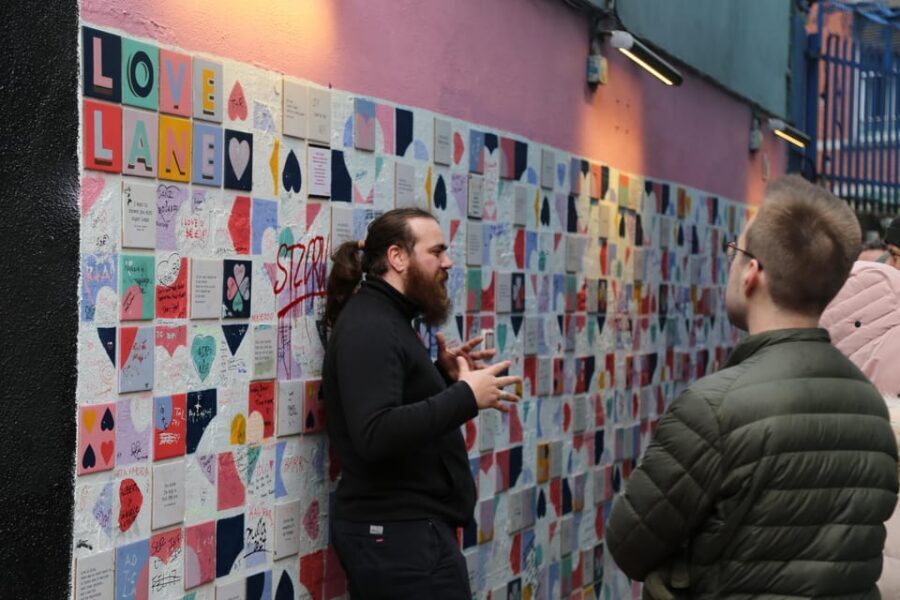
The tour’s endpoint is Crampton Court, and this is also where the gallery visit comes in. The guide brings you to a gallery tucked away in the city centre, with a direct path from what you saw outside to what you can support inside.
This matters, because street art can feel temporary. Pieces change, walls get cleaned, and tags move on. A gallery stop gives you a different way to connect: you can support artists by buying prints, paintings, or commissioning new work.
You also get practical follow-through after the tour. You’ll be sent a link to each artist featured. That’s helpful when you want to keep the thread going after the walk ends, especially if you photographed something you loved and want to find more.
Price and value: why $17 can feel fair for this much access
At $17 per person for up to 2 hours with a live English-speaking guide, this is priced like a real local experience, not a “pay for a bus ride” package.
Here’s why it feels like good value:
- You get over 30 pieces of public art in a concentrated route.
- You get guided context that helps you understand what you’re looking at.
- You get recommendations to help you optimize your Dublin stay (the guide can point you to places to visit after).
- You get the gallery visit and a way to support artists directly.
- You receive links to featured artists after the tour.
Even if you’re not planning to buy anything from the gallery, that artist link follow-up alone can extend the experience. It turns a short walk into a mini learning loop you can keep at home.
Practical tips for enjoying it (and avoiding the common annoyances)
Street art tours are simple, but a few practical moves make your life easier.
Wear comfortable shoes. This is a city-centre walking experience with multiple photo stops. Even if you enjoy wandering, you’ll want your feet ready.
Bring a camera or phone with space. You’ll take pictures with different art pieces, and you’ll want enough storage for a mix of wide shots and close-ups.
Plan for rain. The tour runs even if it’s raining. Bring an umbrella or rain jacket, and remember that wet surfaces can also make colors pop in photos.
Respect the rules. The experience doesn’t allow weapons or sharp objects, and intoxication is not allowed. Alcohol and drugs are also not permitted, and making fire and nudity are prohibited. It’s built to be safe and respectful, so you should expect a clean, family-friendly vibe even when the art scene is edgy.
Know who it’s for. It’s not suitable for people with mobility impairments or wheelchair users, since parts of the route aren’t accessible.
Who should book this Dublin street art and graffiti walking tour?
This tour is ideal if you want your Dublin trip to feel more like discovery and less like checklist travel.
You’ll especially enjoy it if you:
- like street art culture and want real context for murals, graffiti, stickers, and paste-ups
- want an easy way to see a lot of public artworks quickly without spending hours mapping your own route
- enjoy photo stops where you can actually look, not just pose and move
- like the idea of supporting artists through a gallery visit
It might not be your best match if:
- you need wheelchair-friendly accessibility
- you only want indoor museum-style art
- you dislike walking in the city, even when it’s raining
Should you book this tour?
If you’re the type who looks at street corners and wonders what you’re missing, I think you’ll be happy you booked. The $17 price is realistic for a two-hour, guide-led experience that goes beyond visuals into story, and the gallery visit plus artist links give you something to carry home.
The only real reason to skip is if mobility issues or outdoor walking won’t work for you. If that’s not a concern, this is one of the more practical ways to experience Dublin’s creative underground in a short time.
FAQ
How long is the Street Art Walking Tour?
The tour lasts up to 2 hours, and you can check availability to see starting times.
Where do I meet the guide, and where does the tour end?
You meet outside The Grand Social on Liffey Street, with the guide waiting in the public space beside the trees near the Ha’penny Bridge. The tour finishes at Crampton Court.
What will I see on the tour?
You’ll visit street art locations around Dublin city centre and learn about murals, graffiti, stickers, and paste-ups. The tour includes photo stops and guided sightseeing at each location, and you’ll see over 30 public artworks.
Is there a gallery visit during the tour?
Yes. After the street stops, you’re brought to a unique gallery in the city centre where you can support artists by buying prints or paintings or by commissioning work.
What happens if it rains?
All tours proceed even if it’s raining, so bring an umbrella or rain jacket just in case.
Is the tour wheelchair accessible?
No. The tour is not suitable for wheelchair users, and parts of the tour are not accessible for everyone.
What are the cancellation and refund rules?
The experience offers free cancellation up to 24 hours in advance for a full refund. The provider also notes that they need 5 days notice to issue a refund due to how the business runs on small groups. You may be able to transfer your ticket to someone else with 5 days notice.
Should I tip the guide?
If you enjoy the tour, you can tip your guide. The guides keep all tips from the tours to support artists and creatives.