REVIEW · DUBLIN
Private Dublin Historical and Heritage Tour by Bike
Book on Viator →Operated by MYBIKEORHIKE · Bookable on Viator
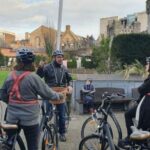
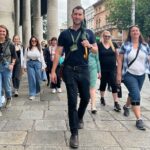
Pedaling through Dublin feels like speed-reading history. On this private bike tour, I liked how smoothly it connects major landmarks to everyday local stories, and I especially liked having Ben as our guide—he’s the kind of person who turns a quick stop into something you can actually picture.
The only thing to watch is the weather and your stamina. This ride asks for moderate physical fitness, and it runs only in good weather, so plan to wear layers and keep a backup day in mind.
In This Review
- Key things to know before you ride
- How this private Dublin bike tour works (and why it’s such good value)
- From Grattan Bridge to Dublin Castle: Dublin’s name, Norman walls, and political center
- Dubh Linn Gardens and The 40 Steps: the small corners that explain the big myths
- Saint Patrick’s Cathedral and Teeling Whiskey: monuments plus working-class Dublin
- The Liberties, Royal Hospital Kilmainham, and the shift from center-city to reflective spaces
- Kilmainham Gaol and War Memorial Gardens: the emotional stops without the heavy slog
- Chapelizod and Phoenix Park: calmer riding, deer sightings, and a big-city reset
- Croppies Acre Memorial Park: rebellion memory and city views across the river
- Price and timing: does $120.14 make sense for 2.5 to 3.5 hours?
- Practical tips for getting the most from this ride
- Should you book this Dublin historical heritage bike tour?
- FAQ
- How long is the Private Dublin Historical and Heritage Tour by Bike?
- Is pickup available, and where does the tour start?
- Are bicycles provided?
- What fitness level do I need?
- Are snacks or drinks included?
- What happens if weather is poor?
Key things to know before you ride
- A private guide with photo help: your guide can take pictures of you while you’re on the move.
- You get a souvenir video later: captioned photos get sent after the tour, so you don’t just rely on your phone memory.
- Mostly car-light routes: you’ll spend time on safer, purpose-built cycling paths along the river.
- Big-name sights plus lesser-seen corners: you’ll cover Dublin’s headline spots and also the smaller streets that explain why the city looks the way it does.
- Time-boxed stops: each location is short, so you see a lot without turning into a sit-and-wait crawl.
- Snacks are on you: drinks and refreshments aren’t included, so bring a plan (or at least water).
How this private Dublin bike tour works (and why it’s such good value)
This is a true private experience, meaning only your group rides with the guide. That matters in Dublin, where the pace of sightseeing can feel either rushed or awkward. With one guide and one route, you can move at a human speed—stop when something catches your eye, keep rolling when you want momentum.
The tour runs about 2.5 to 3.5 hours, and the schedule is built around a series of short, story-rich stops. You’ll start at Bike Stop Dublin37 Capel St, North City. If you’re staying within 1 km, pickup is offered and the team will walk you to the start so you don’t have to navigate city blocks with your bike search-face on.
The bike is included, and you get a mobile ticket. Communication is in English, so if you’re more comfortable with that language, you’re set.
At about $120.14 per person, it’s not a cheap thrill—yet it’s also not “tourist-day-price” for something that feels vague. You’re paying for: guided context, the bike, and the extra keepsake video with captioned photos after the ride. If you like your sightseeing to make sense (instead of just collecting photos), that’s where this tour earns its cost.
You can also read our reviews of more cycling tours in Dublin


From Grattan Bridge to Dublin Castle: Dublin’s name, Norman walls, and political center
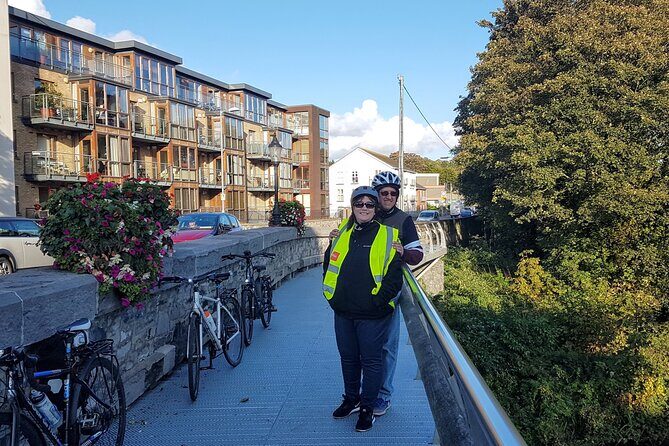
The route begins in central Dublin, where the older city layers are never far away. Your first stop is Grattan Bridge, a historic crossing built in 1875 using foundations from an earlier bridge dating to 1755. This is where you’ll hear how water and architecture shaped the city’s story: the meeting of two rivers that connects to how Dublin got its name, plus the sights around the Custom House area and the broader feeling of Dublin moving from old trade hubs into modern streets.
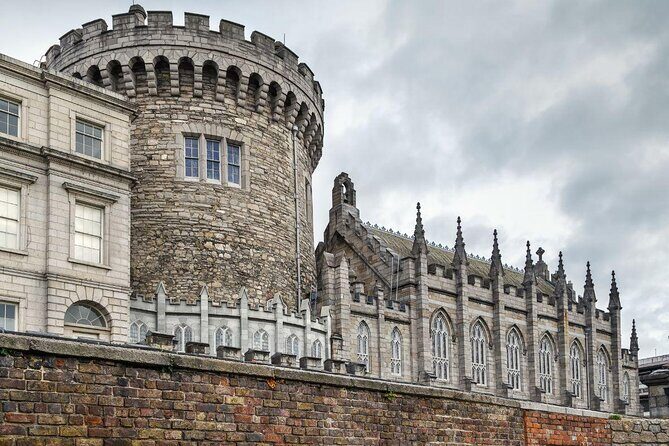
Then you roll into Dublin Castle, passing through the courtyard that once served as the center of government when Ireland was under British rule. This stop is more than a quick look at stonework. You’ll notice the clash of different architectural eras, including remnants of early Norman influence. It’s a reminder that Dublin’s power centers weren’t just modern institutions—they grew over centuries, and their traces still sit in the middle of daily life.
What I like about this pairing is how it sets the tone: bridge to castle, motion to authority. It gives you a mental map early, so later stops don’t feel random.
Dubh Linn Gardens and The 40 Steps: the small corners that explain the big myths
Right by the castle grounds, you pause at Dubh Linn Gardens, a city-center oasis with a story that goes straight to the name Dublin. The circular garden reflects the idea of a “dark pool,” and standing near it helps the city’s naming feel less like trivia and more like place-based memory. You’ll also pass by notable markers in the area, including memorials and tributes, and you’ll hear about cultural neighbors like the Chester Beatty Museum and Library.
Next up: The 40 Steps, one of those street corners where Dublin squeezes centuries into a few blocks. You’ll see how the medieval city walls are represented using metal plates, and you’ll hear the story of Jonathan Swift’s birthplace nearby. There’s also a human side to the myths and mistakes—like a mis-translated street detail—and the role of the suffragettes, including how they were arrested after throwing stones at windows.
This is one of the stops where a private guide makes a difference. With a group tour, you may rush past the interesting bits. Here, you can slow down enough to understand why the street is shaped the way it is.
One consideration: The 40 Steps and similar stops reward attention. If you’re the type who just wants a checklist photo, you might wish you had headphones for your own speed—yet if you like stories, this is where the tour delivers.
Saint Patrick’s Cathedral and Teeling Whiskey: monuments plus working-class Dublin
From The 40 Steps, you head to Saint Patrick’s Cathedral, known as a rival to Christchurch Cathedral. The vibe here is both grand and practical: you get views of the cathedral and its gardens, and you also catch architectural layers moving around the area, including still-intact Norman walls. Plus, the guide ties in connections to Jonathan Swift again as you travel between stops, so the name keeps popping back into your understanding of Dublin rather than feeling like a one-off trivia moment.
Then the ride shifts from cathedral grandeur to a modern-but-very-local industry story at Teeling Whiskey Distillery. In just a short stop, you’ll hear about the famous Dublin whiskey fire from the 19th century. It’s a reminder that Dublin’s heritage isn’t only castles and cathedrals. It’s also the working districts and the risks people faced when alcohol production was a major part of economic life.
If you like tasting-room culture but also care about the “how did we get here” part, you’ll probably appreciate how this stop balances modern branding with older hardship.
The Liberties, Royal Hospital Kilmainham, and the shift from center-city to reflective spaces
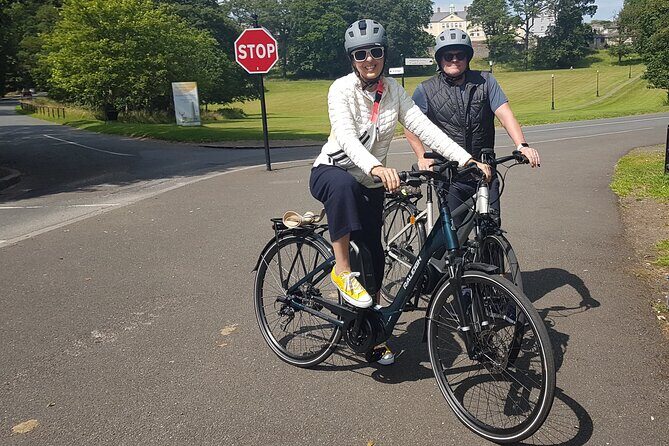
Pedal through The Liberties, one of Dublin’s oldest residential districts. This is the working-class heart of the city, and the guide explains how the name developed and what the architecture from the 19th and 20th centuries feels like when you’re riding through it rather than staring at it from a bus window. There’s also a direct link to the Guinness business, which helps explain why food, drink, and industry are braided into Dublin’s identity.
Then you reach Royal Hospital Kilmainham, built as the Royal Kilmainham Hospital in the 17th century and now home to the Irish Museum of Modern Art. You’ll stop by the building and its gardens, with views out over the city. This is one of the best “pause and look” parts of the route. You get a break from dense streets, while still feeling the gravity of Dublin’s institutional past.
From there, the ride continues along a traffic-free path to the area of Dublin’s oldest cemetery. Even if you don’t stay long, that kind of stop changes the mood of a bike tour in a good way. It’s quieter. It makes the rest of the sights feel less like a theme park and more like a living city with memory.
You can also read our reviews of more private tours in Dublin


Kilmainham Gaol and War Memorial Gardens: the emotional stops without the heavy slog
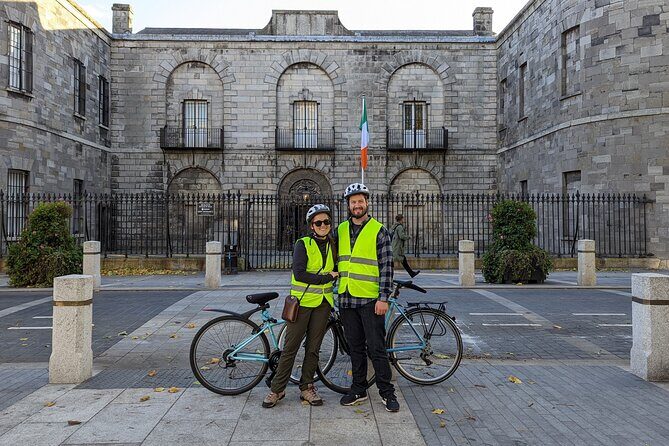
Next is Kilmainham Gaol, where you park and gardens area provides a respectful viewpoint at the entrance. This stop focuses on what the site used to be: a place of public executions. The guide shares stories about the troubling past that made the museum famous.
Then the route moves into the War Memorial Gardens, built in remembrance of the First World War. When you’re cycling, it’s easy to treat monuments like background texture. Here, the pause matters, because you actually have time to look and connect.
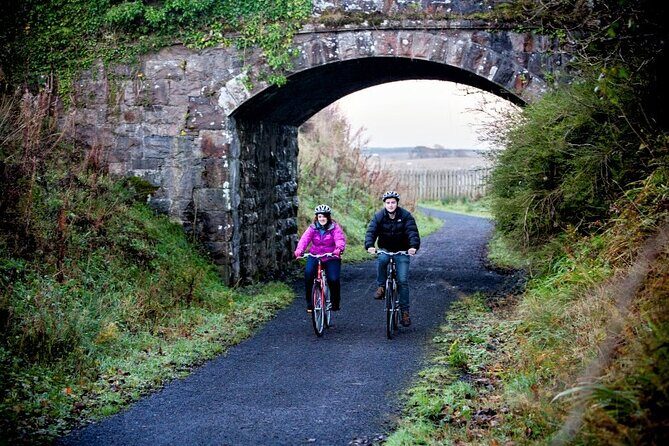
After that, you ride along traffic-free pathways and a purpose-built cycle route along the River Liffey toward Chapelizod. This stretch is practical value: it means more sightseeing time and less time negotiating traffic chaos. If you’ve ever felt stressed on a city bike ride, this part is the antidote.
Chapelizod and Phoenix Park: calmer riding, deer sightings, and a big-city reset
Leaving Chapelizod, the tour heads into one of Europe’s largest urban parks through a gate in its 17th-century walls. This is where Dublin changes tone again. You’re still in the same city, but the pace feels different, like someone turned down the volume.
The best part is the chance to spot wild deer with a bit of luck. You’re not guaranteed it, but it’s exactly the kind of detail that makes a bike tour feel alive—like you’re riding through a real place, not just passing monuments.
The route uses dedicated cycle paths, and you get a natural-scene break before heading back toward more memorial and city-linked stops. Even if you’re not a “park person,” this is worth it because it balances the emotional heaviness of Kilmainham Gaol with open air and room to breathe.
Croppies Acre Memorial Park: rebellion memory and city views across the river
Back near the river, you stop at Croppies Acre Memorial Park. The folklore around this site involves mass burial of victims of the 1798 rebellion. You’ll also learn about Collins Barracks and the National Decorative Arts and Military Museum nearby.
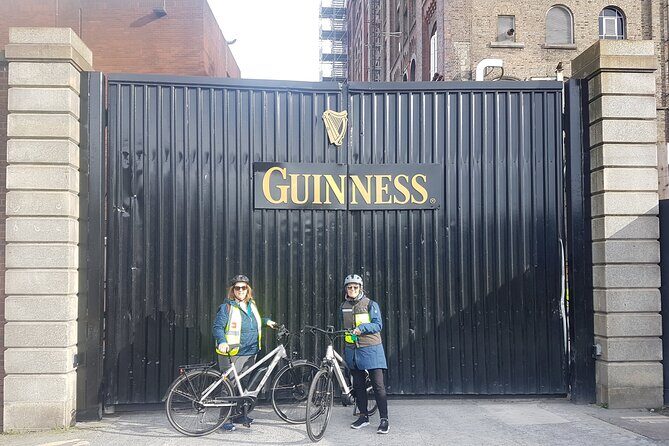
One of the most useful things about a stop like this on a bike tour is sightline context. From here, you can look toward the Guinness Brewery across the River Liffey, which loops nicely back to the earlier story of The Liberties and the Guinness link. It ties your day together without needing a long lecture.
This is also a good moment to let everything click: Dublin isn’t just one era. It’s a chain of events, institutions, and local economies that still sit in the same streets.
Price and timing: does $120.14 make sense for 2.5 to 3.5 hours?
Let’s talk straight value. At $120.14 per person, you’re paying for a package that includes:
- Bike use
- A private guide
- A route built for short stops that add up quickly
- A souvenir video with captioned photos later
- Ongoing photo help so you don’t sacrifice every scenic moment to your own shaky selfie game
Duration matters too. With 2 hours 30 minutes to 3 hours 30 minutes, you’re in motion for most of the day without being stuck for the full afternoon. If you’ve got limited time in Dublin, this is a smart use of it. If you’re the type who likes to “walk it out” for hours, you may feel it’s faster than you prefer. But if you want depth without a full museum day, it’s a good trade.
Booking pace is another hint. On average, people book around 59 days in advance, which suggests this is a popular way to get your bearings. If Dublin is busy when you’re there, I’d reserve early so you can match your schedule.
Practical tips for getting the most from this ride
A few simple things can make your experience smoother.
Bring your own water plan since snacks and drinks aren’t included. Even if stops are short, you’ll still burn energy on a bike, and Dublin weather can swing fast.
Wear shoes that handle short stops and possible cobbles. You’re on a bike for the main part, but you’ll park, stand, and look at each location.
Also, take advantage of the guide’s photo help. If you want pictures that look like you were part of the day (not just you riding past signs), ask for them at the scenic moments rather than at the start of every stop.
Finally, be ready for a weather-dependent day. The tour requires good weather, and if it’s canceled due to poor conditions, you’ll be offered another date or a full refund. That flexibility helps, but it still means you should keep other plans loose if possible.
Should you book this Dublin historical heritage bike tour?
Book it if you want Dublin to make sense fast. You’ll get a guided line through major sites like Dublin Castle and Saint Patrick’s Cathedral, plus the more emotional and working-class story stops around Kilmainham Gaol, the Liberties, and memorial areas like Croppies Acre. The bike format helps you cover ground without turning the day into a long slog.
Skip it (or at least think twice) if you hate cycling in any form or you want only relaxed, unstructured sightseeing. This tour is built for movement and short stops, and the route depends on good weather and moderate physical fitness.
If you’re weighing bike vs. walking, I’d choose bike here. The Liffey ride and traffic-free pathways make the difference between seeing Dublin and merely reaching it.
FAQ
How long is the Private Dublin Historical and Heritage Tour by Bike?
It runs about 2 hours 30 minutes to 3 hours 30 minutes depending on the pace and time spent at stops.
Is pickup available, and where does the tour start?
You’ll meet at Bike Stop Dublin37 Capel St, North City, Dublin, D01 X2E5, Ireland. If you’re staying within 1 km, pickup may be available, and the team will walk you to the start point.
Are bicycles provided?
Yes. Bicycle use is included in the tour.
What fitness level do I need?
The tour says travelers should have moderate physical fitness.
Are snacks or drinks included?
No. Snacks and refreshments are not included, so you’ll want your own plan.
What happens if weather is poor?
The experience requires good weather. If it’s canceled due to poor weather, you’ll be offered a different date or a full refund.