REVIEW · DUBLIN
Macabre, Ghostly & Bloody Walking Tour
Book on Viator →Operated by Yellow Umbrella Tours Ltd · Bookable on Viator
Dublin gets frightening after dark. This walking tour strings macabre Dublin history into a tight route through eight real sites, with stories that are funny, grim, and easy to follow. I especially like how each stop connects legend, crime, and plague into one flowing narrative, and I really value the professional guide energy that keeps it lively. One drawback: if gore and gruesome details will bother you, this is not the gentle side of Dublin.
You’ll meet in the North City at the Spire (120 meters tall) and finish near Christchurch Cathedral and the Temple Bar area. It runs about 2 hours, starts at 6:00 pm, and keeps the group to 25 people max, so you’re not lost in a crowd. For the price of $20.43, you’re getting guided storytelling across central landmarks with free admission at the stops listed.
I’d treat this as a night-walk for people who enjoy real history with an edge. Come prepared to stand outside, follow along, and let the guide’s pacing do its job—because the route is set up for story, not museum time.
In This Review
- Key things to look forward to
- Value check: $20.43 for a guided dark-history walk
- Starting at the Spire: how the route finds its angle fast
- General Post Office and the Death of Cuchulainn story moment
- Wolfe Tone Park: grave robbers and Arthur Guinness’s wedding link
- Oxmantown: Vikings, the old fruit market, and ritual brutality
- Father Matthew Bridge: the grim rat-devouring ending
- St. Audoen’s Church: Black Death quarantine cages at the city walls
- Fishamble Street: the brothel keeper and a death by fire
- St. Michan’s Church: mummies in the cellar and the legless serial killer
- Where to go next around Christchurch and Temple Bar
- Should you book this macabre walking tour?
- FAQ
- How long is the macabre walking tour in Dublin?
- What time does the tour start?
- Where do I meet the guide?
- Where does the tour finish?
- Is the tour offered in English?
- Is admission included for the stops?
- How big is the group?
- Can I get a refund if I cancel?
Key things to look forward to

- A story-built route across central Dublin with eight stops in about two hours
- The Spire start point gives you an instant sense of direction in the middle of town
- General Post Office stop includes the Death of Cuchulainn moment
- Black Death quarantine cages at St. Audoen’s Church bring plague history into focus
- Fishamble Street’s brothel keeper tale ends with a fire-at-the-stake thread
- St. Michan’s Church links cellar mummies with the legend of a legless serial killer
Value check: $20.43 for a guided dark-history walk
At $20.43 per person for roughly two hours, this is one of those tours that feels like good math. You pay for the guide, and the stops on the itinerary are listed with free admission ticket notes—so you’re not stacking extra entry fees on top of the ticket price.
What makes it feel like real value isn’t just the price. It’s the structure: you hit eight locations in sequence, and the guide turns each one into a specific story point. That matters because dark-history tours can get repetitive fast. Here, the route keeps changing tone—myth at the GPO, grave and plague at churches, crime and punishment on streets—so the time doesn’t drag.
A bonus for planning: this one tends to book about 33 days ahead on average, so if you’re choosing between time slots in Dublin, don’t wait until the last minute.
You can also read our reviews of more walking tours in Dublin


Starting at the Spire: how the route finds its angle fast
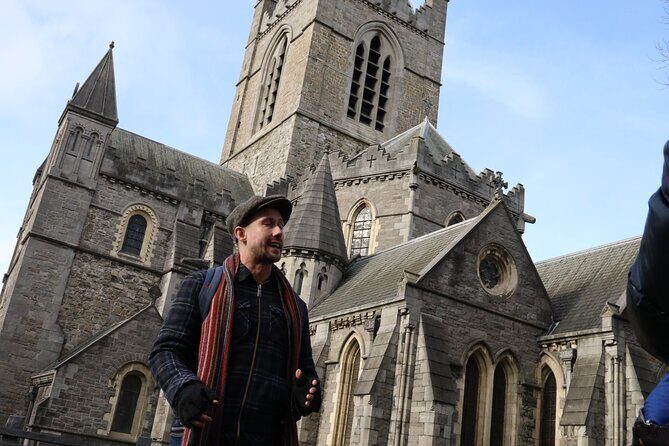
You begin beside the Spire on O’Connell Street Upper, North City. This 120-metre landmark does two useful things right away. First, it makes the tour easy to locate. Second, it’s a visual anchor before the stories get dark, so you can quickly map where you are in Dublin before the guide starts linking places and events.
The pacing here is also worth noticing. The first stop is only about 15 minutes, and that rhythm continues throughout. That’s ideal if you don’t want a long, slow crawl through one neighborhood. It’s also ideal if you like your history threaded with storytelling instead of facts dumped on you for an hour straight.
Practical move: arrive a few minutes early. With a 25-person cap, you want to be present when the guide sets expectations for what kind of stories you’ll hear—because the theme is macabre, not spooky-light.
General Post Office and the Death of Cuchulainn story moment
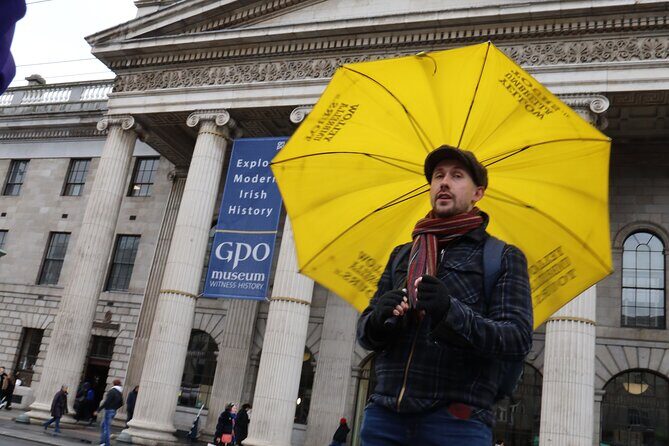
Next up is the An Post General Post Office stop. You’ll view the relevant statue and hear the story tied to the Death of Cuchulainn. Even if you don’t know Irish myth in depth, this is a strong start for a tour like this because it gives you a bigger cultural frame than “crime happened here.”
Why it works for you: the tour isn’t only about horror in the modern sense. It keeps pulling from older Ireland—myth, identity, and legend—then bridges back to real streets and real buildings. That blend makes the walk feel more like Dublin itself talking, instead of a single genre theme.
The time is short here too—again, around 15 minutes. That’s a good thing. You get the key story beat without turning it into a lecture, and then you move on while the energy stays up.
If you like tours that connect iconic Dublin architecture with the human stories attached to it, this GPO stop is one of the best places to feel that intention.
Wolfe Tone Park: grave robbers and Arthur Guinness’s wedding link
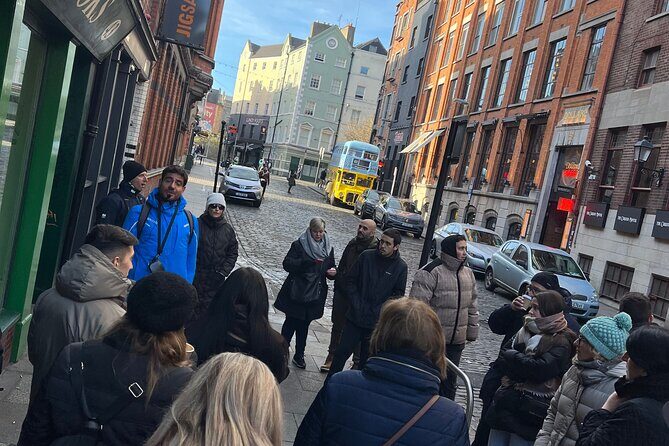
At Wolfe Tone Park, the stories shift into Victorian-era territory. The focus includes grave robbers and a link to the wedding venue of Arthur Guinness. This is a smart stop choice because it mixes two things that draw people in: the scandalous crime side and the social-celebration side.
From your perspective, that contrast keeps the theme from becoming one-note. One minute you’re hearing about theft from graves; the next you’re hearing how the same area connects to a famous Irish family moment. That balance also helps you understand something bigger about cities: “respectable” and “unspeakable” histories can sit close together.
It’s another 15-minute stop, so keep your attention tuned. When a tour changes gears like this, you’ll miss details if you’re busy checking your phone. If you’re the type who likes photos, snap quickly, then listen—these stories depend on the guide’s pacing.
Oxmantown: Vikings, the old fruit market, and ritual brutality
Then the route heads to Oxmantown, outside the old fruit and vegetable market. Here you’ll hear about the history of the Vikings in this area, including some of the more gorier aspects of Viking ritual.
This is where the tour leans hardest into “macabre” as a theme. If you’ve been expecting only modern crime stories, this is a good reminder that people have always been fascinated by death and punishment—and by the rituals societies built around them.
For you, the value is context. Vikings in Dublin can sound like a generic “they were here” fact unless a guide shows how those histories land in specific street-level places. This stop is designed to do that. You’re not learning Vikings from a textbook; you’re learning how the neighborhood’s past gets told through a particular darker lens.
The stop is listed at 15 minutes, so don’t expect a full Viking history lesson. Think of it as a narrative snapshot: enough to make you curious, not enough to overwhelm.






Father Matthew Bridge: the grim rat-devouring ending
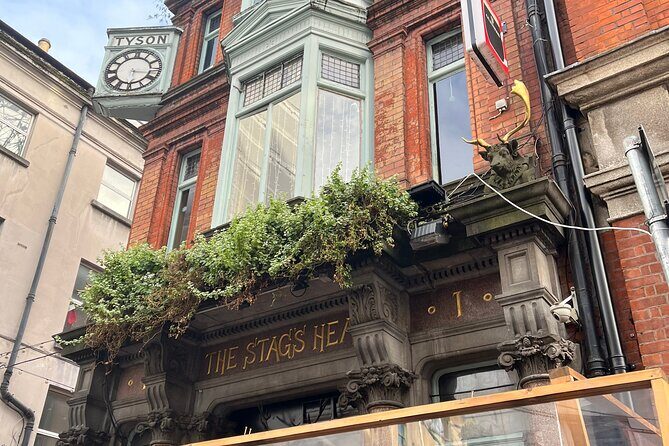
At Father Matthew Bridge, the story turns into a darker urban legend: the end for a soldier devoured by man-eating rats. This is the kind of tale that cities love because it feels both awful and strangely believable—like it could be whispered from street to street forever.
What I like about a stop like this is how it highlights rumor as part of local history. You’re not just hearing “something happened.” You’re hearing how a story gets attached to a place and then sticks, because it captures fear in a memorable image.
It’s only 15 minutes, so treat it like a story scene. Let the guide set the mood, and you’ll get more from it than if you approach it like you’re fact-checking every beat on the spot.
Also: bridges mean open air. If it’s cool or windy in Dublin at night, this is a good point in the tour to have a layer ready.
St. Audoen’s Church: Black Death quarantine cages at the city walls
At St. Audoen’s Church, you’ll see the quarantine cages at the old city walls, connected to the Black Death. This is one of the most sobering stops on the walk, because it moves beyond ghost stories and into public-health reality.
For you, this is a payoff moment. It grounds the tour’s macabre focus in how people tried to manage disease. Even without going heavy into medical history, the idea of quarantine cages brings home the fear and urgency cities faced during plague outbreaks.
The time is listed at 15 minutes, but the visual anchor matters here. Seeing a physical reminder of historic quarantine practices is more memorable than hearing a purely verbal description.
Practical note: church-area stops can involve uneven ground or narrow edges near walls. I’d keep your footing careful and don’t crowd into tight spots if you see others trying to hear.
Fishamble Street: the brothel keeper and a death by fire
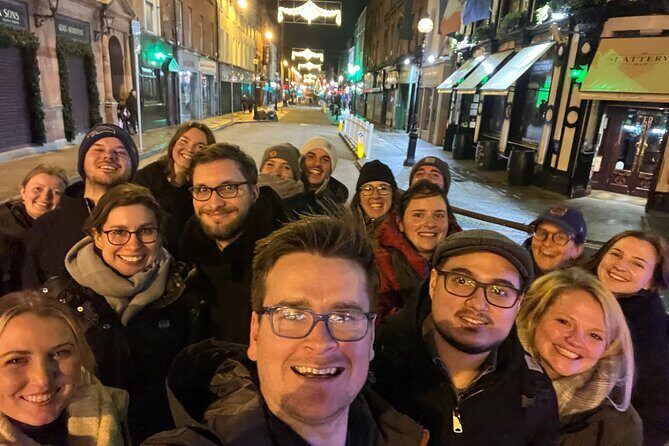
Then you’ll hit Fishamble Street, and the story goes straight into notoriety: the infamous brothel keeper and her death by fire at the stake. This stop is built around crime, punishment, and public spectacle, which are central ingredients in why “dark history” tours stay popular.
Why this part works for you: brothel-related stories can become sensational if a guide doesn’t handle them with care. Here, the tour is structured to keep you focused on the place and the consequences, not just shock value. The street setting also helps: it’s easier to imagine the human scale of a story when you’re standing where it was lived out.
Again, it’s around 15 minutes. That’s enough time to hear the full arc and then move on without lingering too long in one emotional tone.
If you’re traveling with someone who’s less into horror but still curious about history, Fishamble Street is a good middle ground. It’s dark, yes, but it also makes the city’s moral and legal sides feel real.
St. Michan’s Church: mummies in the cellar and the legless serial killer
Finally, you’ll end at St. Michan’s Church, where the tour covers the mummified corpses in the cellar and the legend of a legless serial killer. This stop is the tour’s headline for many people because it combines physical remains with a notorious criminal story thread.
From a visitor’s standpoint, the value here is sensory storytelling. Even if you’re not squeamish, mummified remains tend to make history stick in your mind. Pair that with a criminal legend and you get a strong “last stop” memory hook.
The stop is again about 15 minutes, which helps you pace your own reaction. If you’re sensitive to macabre details, you can decide how long you want to stand and listen. If you’re totally fine with it, you’ll probably find yourself wishing the tour could slow down for just a few more minutes—but the design is clearly for a tight two-hour story arc.
Once the walk wraps, you finish beside Christchurch Cathedral and the Temple Bar District, which is a nice transition if you want a drink afterward or just to browse without needing another plan.
Where to go next around Christchurch and Temple Bar
Because you finish near Christchurch Cathedral and the Temple Bar area, you’re in the part of Dublin that’s easy to navigate for a quick post-tour wander. I like treating the finish point as a reset: you leave behind the most intense stories, then you shift into normal city life.
If you’ve still got energy, take a slow walk in the area and use the facts you heard. It turns ordinary streets into a map in your head. If you’re tired, do the smart thing: grab a warm drink, then call it a night. A dark-history tour is best when you let the stories land without trying to cram in five more activities.
Should you book this macabre walking tour?
Book it if you want Dublin history with an edge and you like storytelling that moves. The tour has a 4.9 rating from 15 reviews and is marked as recommended by 100% of travelers, which is rare in this category. More importantly, the format makes it work: eight stops, short story scenes, and a guide who can keep the pace entertaining instead of turning it into a grim lecture.
Skip it or approach carefully if you’re likely to be bothered by graphic or unsettling details. This is explicitly built around macabre themes—things like the Black Death quarantine cages, mummified remains, and a rat-devouring ending. You’re free to enjoy history, but this tour makes no attempt to soften the subject matter.
If you’re traveling solo, with friends, or with a partner who likes the darker side of culture, this is a solid value choice. For a little over twenty bucks, you get a professional guide, free admission at the stops, and a route that keeps you moving through the city’s real spaces.
FAQ
How long is the macabre walking tour in Dublin?
It lasts about 2 hours (approx.).
What time does the tour start?
The start time is 6:00 pm.
Where do I meet the guide?
You meet beside the Spire on O’Connell Street Upper, North City, Dublin.
Where does the tour finish?
The tour finishes beside Fishamble Street, near Christchurch Cathedral and the Temple Bar District.
Is the tour offered in English?
Yes, it’s offered in English.
Is admission included for the stops?
The tour lists free admission tickets for the stops in the itinerary.
How big is the group?
The maximum group size is 25 travelers.
Can I get a refund if I cancel?
Yes. You can cancel up to 24 hours in advance for a full refund. If you cancel less than 24 hours before the start time, the amount paid is not refunded.