REVIEW · DUBLIN
Dublin: Mythology, Folklore and Legends Walking Tour
Book on GetYourGuide →Operated by Original Dublin · Bookable on GetYourGuide
Fairies talk in Dublin’s city center. On this Dublin mythology and folklore walking tour, a local storyteller connects Celtic legends to street corners you’ll actually pass later on your trip. I especially liked how the tour pairs creature lore like the banshee and púca with the city’s darker historical side, and I liked the stop-and-rest rhythm that keeps it comfortable. The one trade-off: you’re still walking most of the time on city pavement, so wear shoes you trust.
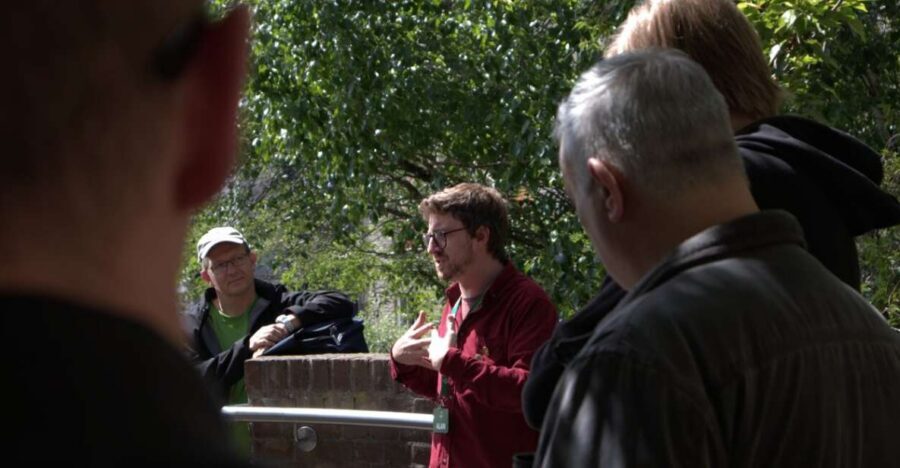
I also liked the way the guide reframes famous spots like Temple Bar and O’Connell Street so they feel less like photo stops and more like clues. Guides such as Helena, Lee, and Dave bring humor and energy, which matters because these stories get better when you hear them out loud. If you prefer strict museum-style facts only, you may find the focus on story and meaning more satisfying than paperwork.
You’ll finish with a clearer sense of why storytelling is so tied to Irish identity and Gaelic culture. And if you like seeing Dublin from an angle most “see-the-sites” tours miss, this tour gives you that extra layer without turning it into a lecture.
In This Review
- Key highlights before you go
- Why myths belong on Dublin streets, not just in books
- Starting outside The Old Storehouse Pub under a green umbrella
- Temple Bar and Celtic origins: the tour’s myth-setting
- Fairies, banshees, púca, and the myths that shaped everyday life
- The Georgian Quarter’s macabre side: rebellions and grave robbing
- The Abbey Theatre’s tragic thread and why art and identity overlap
- O’Connell Street: Gaelic revival and modern street characters
- Price and value for a $27, 2-hour storytelling walk
- What to expect on the ground: guide style and walking comfort
- Who should book this Dublin mythology tour
- Should you book it? My decision rule
- FAQ
- How long is the Dublin mythology, folklore and legends walking tour?
- Where does the tour start and how do I find it?
- Where does the tour end?
- What’s the price?
- What’s included in the ticket price?
- Is it wheelchair accessible, and what language is the tour in?
Key highlights before you go
- Temple Bar origins in a myth key: Start where the guide links Celtic beliefs to the city’s earliest story-world.
- Creature lore you can picture: You’ll learn about banshee, púca, fairies, and even leprechaun-style figures.
- Georgian Quarter’s macabre edge: Rebellions, grave robbing, and revolutions show up in the same walking flow.
- A tragic thread through the Abbey Theatre: The guide ties theatre history to bigger themes of grief and resistance.
- O’Connell Street + Gaelic revival: You end with how the language and culture are reasserted today.
Why myths belong on Dublin streets, not just in books
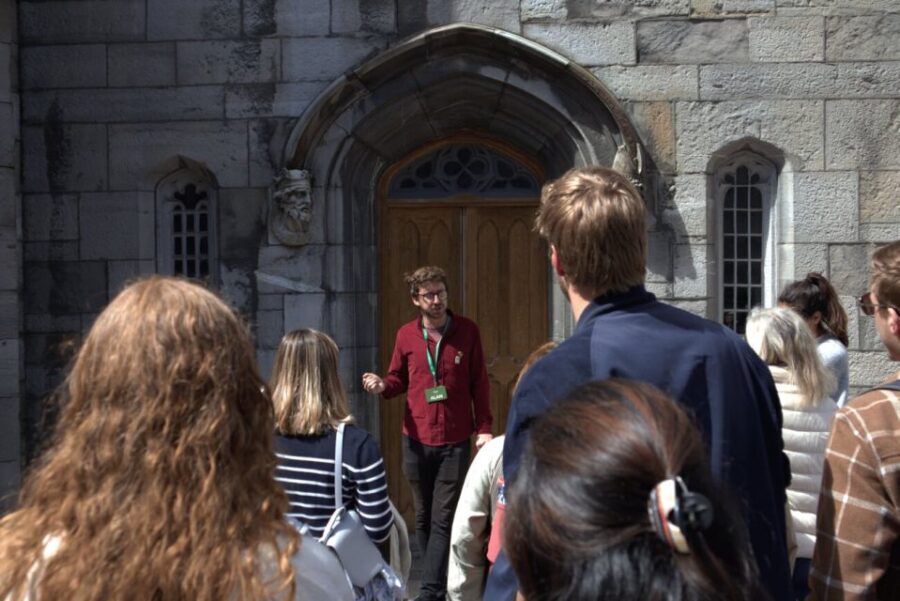
Dublin has a talent for making the past feel loud. This tour leans into that idea by treating folklore like a map. You don’t just hear names of legendary beings; you learn how people used stories to explain fear, weather, war, love, and loss.
What I liked most is the balance between fantasy and local place. You’ll walk past landmarks you already recognize, then the guide helps you read them differently. That’s useful on a trip, because myths become a way to remember details when you’re back at dinner later.
The tone stays accessible. The guide tells stories with energy and humor, which helps when you’re learning things like a whole set of mythical rules (who appears, what it means, why people believed it). It’s also paced well for a typical walking-tour schedule, with stops designed to give your legs a break.
You can also read our reviews of more walking tours in Dublin


Starting outside The Old Storehouse Pub under a green umbrella
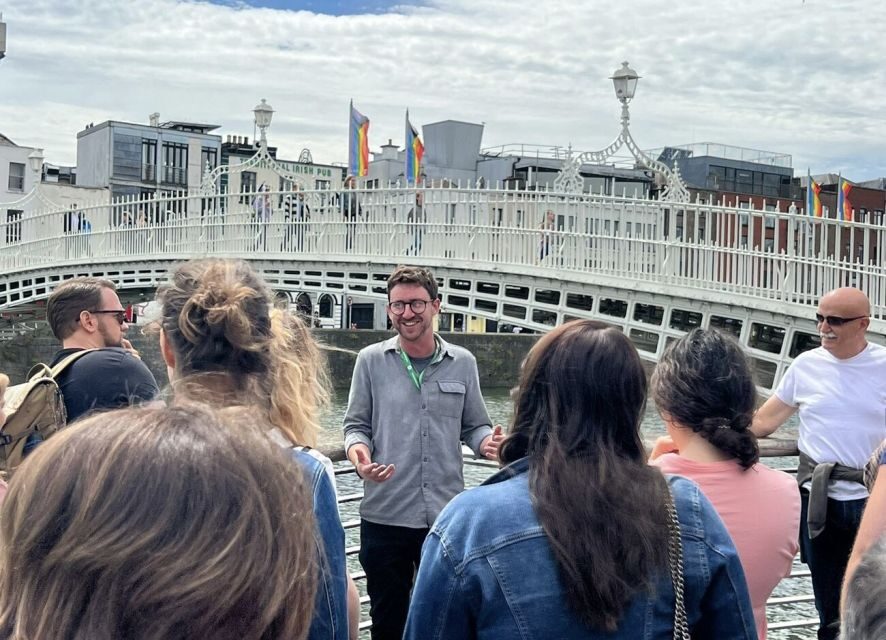
The tour meeting point is outside The Old Storehouse pub, and you’ll want to look for the green umbrella. It’s a practical setup because you can aim for a clear, street-level landmark instead of searching around a transit hub.
Because there’s no hotel pickup, you’ll be walking to the start on your own. That’s normal for Dublin tours, but it does matter if you’re coming from far across town. Give yourself a little buffer so you’re not arriving out of breath and distracted.
This start location also sets the mood. Temple Bar is a busy area, but the guide uses it as a launchpad into older beliefs. Instead of treating it as just nightlife, the tour frames it as a place where Irish identity and story traditions have always mattered.
Temple Bar and Celtic origins: the tour’s myth-setting
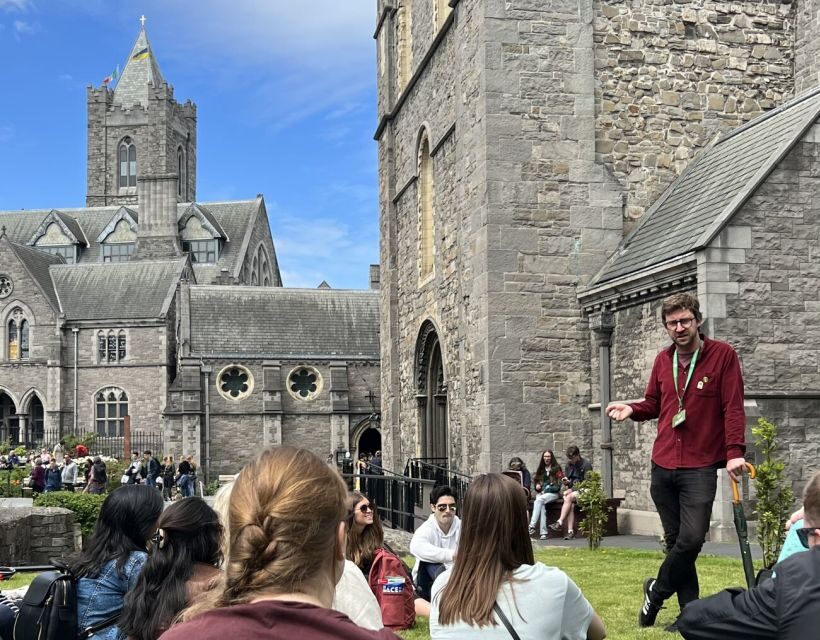
Temple Bar is usually sold as a centerpiece for drinks and music. Here, it’s treated like a gateway to mythic origins and older Celtic traditions. The guide walks you through ideas of beginnings: how people explained the world before modern science did, and how those beliefs stuck around in language and culture.
You’ll learn how Celtic thinking shaped what people expected to see and what they feared. That’s the key, because it changes how you interpret what comes next. A banshee isn’t just a spooky name; it’s part of a belief system about warning, death, and who controls the message.
This opening also helps you connect the rest of the walk. You start to notice that the tour’s storytelling isn’t random. Each legend and character has a role, and the guide keeps moving so the narrative builds.
Fairies, banshees, púca, and the myths that shaped everyday life
One of the biggest reasons this tour gets high marks is the way it makes creatures feel personal. You’ll hear about mythical figures from Irish folklore like the banshee, the púca, and also fairies and leprechaun-style characters.
The guide’s job is not just to say these names, but to explain what they represented. In folklore, a creature often stands in for an emotion or an event: grief, danger, sudden change, or the uncanny feeling that something is wrong. Once you understand that function, the stories become more than spooky entertainment.
And yes, you’ll get the chance to trade questions as you walk. Several guides on this company are known for chatty, personable delivery, so if you’re curious about how folklore shows up in modern life, you’ll likely find the conversation easy to join.
If you like stories with structure, you’ll enjoy this section. The myths are introduced with enough context that you can keep them straight, even if you’re new to Irish folklore.
The Georgian Quarter’s macabre side: rebellions and grave robbing
After Temple Bar, the tour turns darker. You’ll get off the usual tourist track and spend time in the Georgian Quarter with a more macabre set of themes: rebellions, grave robbing, and revolutions.
This is where Dublin’s layers show up. The guide connects street-level scenes to human stakes: power struggles, public fear, and the way societies punish or reinvent themselves. Even if you’ve read a little Irish history already, this angle can add something new because it filters events through the stories people told to survive them.
A note on pacing: this part includes longer stops, which helps. You’re not trudging nonstop; you’re hearing a sequence of scenes and meanings, then pausing so you can reset before moving on.
The “drawback” here is also personal preference. If you don’t enjoy macabre or political history, the tone may feel heavy. But if you like your Dublin with some teeth, this is a strong reason to book.






The Abbey Theatre’s tragic thread and why art and identity overlap
One of the more memorable moments is the tour’s treatment of the Abbey Theatre and its tragic history. The guide weaves theatre into the larger story of Irish identity, not just as a building but as a cultural force.
This matters because Irish storytelling isn’t confined to myths about supernatural beings. It also shows up in performance, protest, and language. The Abbey Theatre becomes a place where stories get shaped into public statements.
You’ll leave this section seeing theatre history differently. Instead of thinking of it as entertainment, you’ll recognize it as another channel for national feeling and memory, similar to how folklore preserves shared beliefs.
And since you’re walking, you get a real sense of how the city itself supports the narrative. The guide’s method is to connect what you see on the street to why people made and kept making stories.
O’Connell Street: Gaelic revival and modern street characters
The tour ends on O’Connell Street, giving you a clean finish line and a major landmark to help you orient afterward. Here the tone shifts from old legends to present-day culture, with an introduction to the revival of the Gaelic language and culture in Ireland.
You’ll also get to meet some of Dublin’s contemporary street characters. That piece is subtle but important. It’s the tour’s reminder that folklore isn’t locked in the past. The guide helps you see how cultural identity keeps reappearing in daily life, jokes, signs, and speech.
This ending is a good final contrast to earlier stops. You started with mythical origins and creature lore, you moved through macabre history, and then you landed with language and modern personality. For many people, it’s the section that makes the trip feel relevant beyond just “cool stories.”
Price and value for a $27, 2-hour storytelling walk
At $27 per person for about 2 hours, this tour prices itself as an affordable, high-impact introduction to Irish myth culture. You’re not paying for a museum ticket or transportation; you’re paying for a live guide who can translate folklore into something you can picture.
In practical terms, the value is that you get context for things you’ll see around Dublin anyway. When you later walk near Temple Bar or O’Connell Street on your own, the stories don’t vanish. They act like memory hooks.
Also, it’s short enough to fit into a busy schedule. Two hours is a sweet spot: long enough to build a narrative arc, short enough that you don’t lose your whole day.
What you should consider is that it’s a walking tour with a live storyteller, not a sit-down show. If you’re expecting maximum comfort with minimal movement, you may still want to pick a time of day when the streets feel manageable.
What to expect on the ground: guide style and walking comfort
This tour is wheelchair accessible, and it’s led by a live guide in English. The walking portion is designed for a typical city pace, and the tour includes stops so you’re not stuck listening while moving nonstop.
Based on what I’d look for in a good folklore guide experience, this one seems to nail the delivery. Guides like Helena, Lee, Emily, and Dave are described as fun, enthusiastic, and strongly storytelling-focused, with humor that helps the material land. That kind of guide makes a difference because folklore works best when it’s told like a story, not like trivia.
If you’re traveling with kids or if your feet are tired from other sightseeing, this tour’s stop-start rhythm can make it feel doable. Bring supportive shoes either way; Dublin streets can be uneven in spots.
Who should book this Dublin mythology tour
Book it if you want Dublin to feel like a living place, not a checklist. This tour is especially good for:
- First-timers who want context beyond standard landmarks
- People who like folklore, creature stories, and cultural meaning
- Travelers who enjoy humor in guided experiences
- Families or anyone wanting a manageable 2-hour outing
It may not be your best choice if you mainly want hard dates and academic-style analysis. This tour prioritizes storytelling, characters, and cultural role—so it’s more about how people made sense of life than about deep scholarly sourcing.
Should you book it? My decision rule
If you’re trying to choose between a standard city highlights walk and something more character-driven, I’d lean toward this one. For $27, you’re getting a guided dose of Irish myth, plus a detour into the Georgian Quarter’s darker themes and an ending tied to the Gaelic revival.
You should book this tour if you enjoy legends that explain human behavior and if you want your Dublin sightseeing to have a memorable “why.” You’ll come away with a different mental soundtrack for the city, and that makes exploring the rest of Dublin easier, not harder.
FAQ
How long is the Dublin mythology, folklore and legends walking tour?
The tour lasts 2 hours.
Where does the tour start and how do I find it?
Meet outside The Old Storehouse pub, and look for the green umbrella.
Where does the tour end?
The tour ends back at the meeting point.
What’s the price?
It’s listed at $27 per person.
What’s included in the ticket price?
The ticket includes the guide and the walking tour.
Is it wheelchair accessible, and what language is the tour in?
Yes, it’s wheelchair accessible, and the tour is offered in English.