REVIEW · DUBLIN
Dublin Mythology and Folklore Tour with Irish Stories and Legends
Book on Viator →Operated by Original Dublin · Bookable on Viator
Dublin has myths in plain sight. This 2-hour walk turns everyday streets into a living map of Irish mythology, starting in Temple Bar and ending at Parnell Square with stories that connect old legends to what Ireland looks like now.
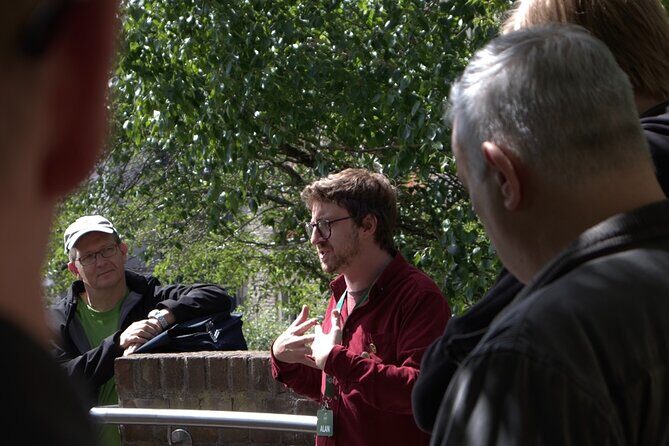
I really like two things here. First, the way the tour links folklore to specific buildings and details, like Grattan Bridge’s ornate seahorse-adorned lamps. Second, the storytelling energy—guides such as Deidre, Helena, Dave, Emily, Lee, and Ross are repeatedly praised for humor and getting questions answered.
One thing to consider: it’s mostly on your feet. If you’re sensitive to standing time or you prefer more hearing-friendly groups, the walking pace and group size (up to 25) can be a factor.
In This Review
- Key highlights you should know
- Starting at 3 Crown Alley in Temple Bar
- River Liffey moments that make Dublin click
- Grattan Bridge and the seahorse lamps
- St. Michan’s Church, crypt tales, and the Newgate/Green Street area
- GPO Museum facade: Irish mythology meets modern Ireland
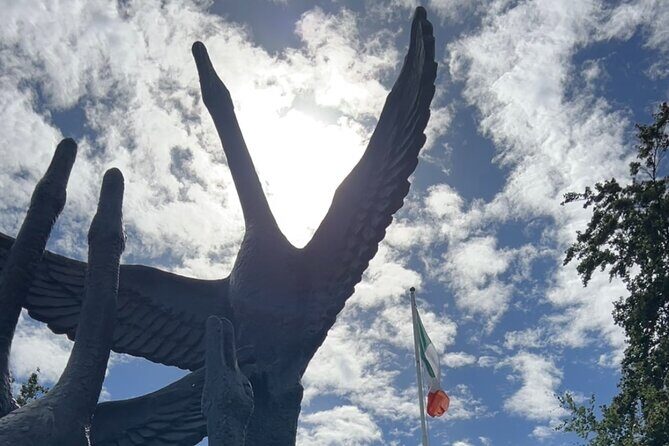
- Finishing in Parnell Square at the Children Of Sir statue
- Price and logistics: is $29.02 good value?
- Who this Dublin mythology tour fits best
- Should you book this Dublin Mythology and Folklore Tour?
- FAQ
- How long is the Dublin Mythology and Folklore Tour?
- Where does the tour start?
- Where does the tour end?
- Is the tour wheelchair and stroller accessible?
- What is the group size?
- Is the tour offered in English?
- Are any admission tickets required at the stops?
- What is the cancellation policy?
Key highlights you should know

- Temple Bar meeting point near transit so you can start fast and don’t waste time finding the group
- Grattan Bridge details focus on the ornate lamps and the bridge’s role in linking city streets
- St. Michan’s Church and crypt stories plus the Newgate Prison and Green Street Courthouse grounds for the darker side of Dublin’s past
- GPO Museum outside viewing ties Irish mythology to how modern Ireland formed
- Parnell Square finish at Oisin Kelly’s Children Of Sir statue, a calm end point to reflect on what you just heard
- Small group size and accessibility: max 25, wheelchair and stroller accessible, service animals allowed
Starting at 3 Crown Alley in Temple Bar
Most Dublin walks start with a landmark. This one starts with a working neighborhood vibe: 3 Crown Alley, right in the Temple Bar area. You’ll be right in the middle of the action, but the key is what happens next: the guide uses the Temple Bar stretch as a story launchpad rather than just a photo stop.
Temple Bar can be touristy, sure, but that’s exactly why it works here. The tour treats the area like a stage where folklore and city identity overlap. Expect to move through much of Temple Bar on the way to the next bridge stop, so you’re building a mental picture of where the stories “fit” in the real city layout.
Tip: dress for the weather and plan on moving. One of the nice surprises in the feedback is how people stayed engaged even when it rained. The tour doesn’t grind to a halt just because the sky has opinions.
You can also read our reviews of more tours and experiences in Dublin.



River Liffey moments that make Dublin click
After Temple Bar, you spend time along the River Liffey, looking at Dublin from both sides. The guide doesn’t treat the river like a backdrop. Instead, it becomes a boundary line for where stories grew and where people moved.
You’ll get a feel for the city’s rhythm: how the south and north sides look and why the river keeps showing up in Dublin’s identity. Even if you’ve seen plenty of photos of the Liffey already, walking it with a folklore lens changes how you read the city. You start noticing how legends stick to locations—especially in a place where history has layers.
Why this section is worth your time: it’s short, but it resets your brain. You stop thinking of Dublin as just streets and start seeing it as a sequence of story locations that connect.
Grattan Bridge and the seahorse lamps
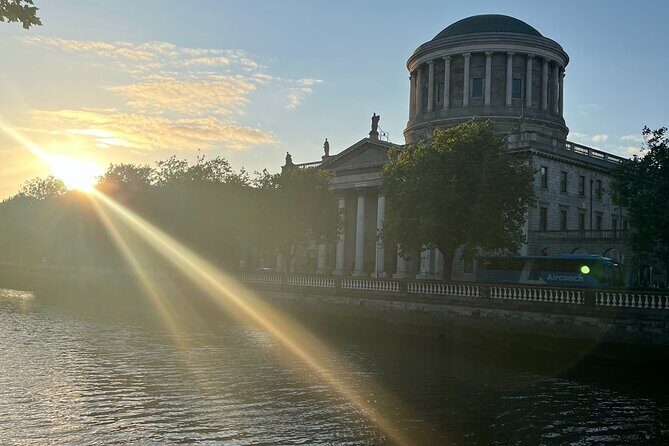
Grattan Bridge is one of those spots you’d probably walk over without really seeing it. Here, you’ll slow down. You’ll learn that the bridge straddles the River Liffey and connects Parliament Street to Capel Street, and you’ll be pointed toward the ornate details—especially the seahorse-adorned lamps.
That seahorse detail matters because it’s the tour’s pattern in miniature: a small, decorative element becomes a doorway to larger themes. The guide uses that kind of visual clue to link myth-making to the way a city chooses what to honor. It’s not about dragons and fireworks; it’s about noticing what’s been placed in public view for a reason.
Practical note: this is outdoors and on foot. If you want photos, it helps to keep your camera accessible. The best moments are often at curb edges and bridge approaches where you’ll be asked to look up and around quickly.
St. Michan’s Church, crypt tales, and the Newgate/Green Street area
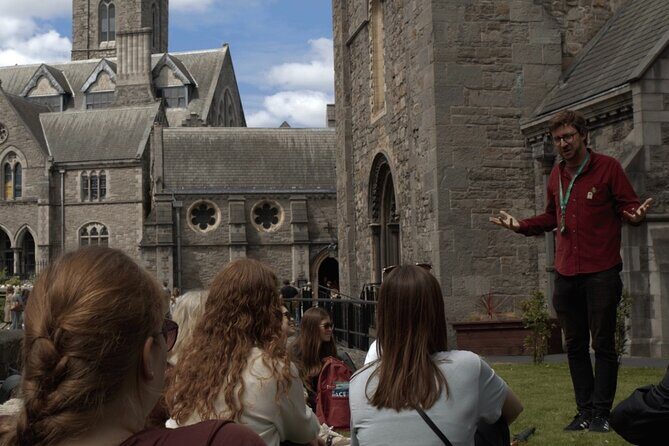
St. Michan’s Church is where the tour shifts tone. You stop outside this famous old church and hear how it links to Dublin’s secret tales. The church’s crypt is part of the discussion, including the bodies said to be held there.
That’s a lot to pack into a city-centre stop, and it can sound heavy on paper. In practice, this is where the tour feels most “Dublin.” You’re not just learning pretty stories—you’re hearing how myth, fear, memory, and local identity blend together in real places.
Then comes another layer: the guide also points to the grounds of the old Newgate Prison and the Green Street Courthouse, a smaller corner of Dublin that still played an important role in Ireland’s story. You may not know these names yet, but you’ll leave with the sense that Dublin isn’t only built from grand monuments. It’s built from corners where history happened—and where people later attached meaning to those events.
Small drawback to plan for: this part involves more standing outside. If you’re tired, it can help to take breaks where your guide allows questions before moving on.
GPO Museum facade: Irish mythology meets modern Ireland
Next, you head to the GPO Museum area. This stop is focused on the impressive facade, and the big idea is that Irish mythology isn’t stuck in the past. The tour explains how Irish myths and legends have shaped modern Irish history, and how that shows up in the way the country tells its own story.
The value here is perspective. Instead of treating mythology like fantasy, you’ll learn to see it as cultural language—something people use to explain identity, resistance, justice, sacrifice, and community values. That’s why the GPO Museum stop feels different from Temple Bar or the bridge. It’s less about ornament and more about the link between story and nation-building.
Tip: even if you’re not planning to go inside museums, the facade stop can still be a strong payoff. You’ll get context you can carry into whatever you do later in Dublin, including other historical sites you might already have on your list.



Finishing in Parnell Square at the Children Of Sir statue
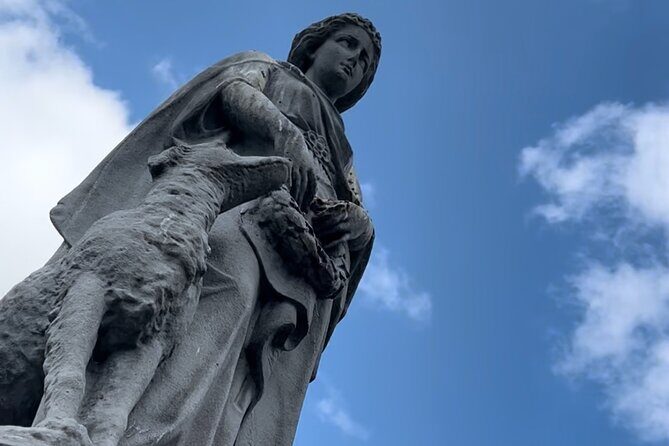
You end at the foot of Oisin Kelly’s Children Of Sir statue in the Garden of Remembrance in Parnell Square. This is a smart ending point. You go from the city’s louder history cues into a more reflective setting, which helps the stories land.
The statue name matters because the tour leaves you with a sense of continuity: folklore isn’t only about leprechauns and fairies. It’s also about how Ireland remembers people, grief, and hope through symbols in public spaces. By the time you reach the Garden of Remembrance, you’ve heard enough to connect the emotional dots yourself.
Practical advantage: Parnell Square is an easy place to regroup. If you have dinner plans or want to continue exploring nearby, you’re dropped off in a central, practical spot rather than at some remote edge of town.
Price and logistics: is $29.02 good value?
At $29.02 per person, this tour is priced like an affordable intro—good for people who want a story-led orientation without paying museum prices for a single stop. The “2 hours (approx.)” format also helps: you’re not committing a whole day, and the route stays within Dublin’s central core.
A few logistics points help you judge value:
- Group size max 25 keeps it social, but still limits crowding compared with very large walks
- Mobile ticket reduces hassle on the day
- Near public transportation means you can slot this into a busy itinerary without stress
- Wheelchair and stroller accessible is a real plus for families and mobility needs
- Service animals allowed gives peace of mind if that applies to your group
What to watch for is pacing. Some people loved the flow and found it manageable with stops. Others noted the guide can move fast. A simple move: wear shoes you can walk in all evening, and don’t book back-to-back tours if you’re even slightly unsure about stamina.
Also, Dublin’s weather is unpredictable. One person mentioned the rain didn’t dampen the experience—so keep a light layer or a compact rain option and you’ll be fine.
Finally, a small timing detail: this tour is often booked about 24 days in advance. It’s not a sign you must plan months out, but it does suggest it tends to fill, especially around peak travel times.
Who this Dublin mythology tour fits best
This is a great fit if you want:
- A story-first walk that connects Irish legends to real street corners and landmarks
- An entertaining way to learn how mythology shows up in architecture, bridges, churches, and public spaces
- A short evening activity that still feels educational without needing a full museum visit
It’s especially good for couples and small friend groups who enjoy conversation and questions. Many guides are praised for humor and for making the material feel human, not like a lecture.
It might be less ideal if:
- You strongly dislike standing time
- You rely on hearing instructions clearly and are concerned about crowd noise (a few comments point to difficulty hearing with a larger group)
- You have tight timing constraints—one late-start issue shows that schedules can occasionally slip
Should you book this Dublin Mythology and Folklore Tour?
Yes, if you want a high-value Dublin orientation that mixes Irish mythology with tangible city details, and you’re okay with a mostly outdoor, city-centre walking format. The ending at Parnell Square gives you a satisfying close, not just a return to another crowded street.
Skip it only if your priority is indoor exhibits and long stops, or if you know you struggle with on-your-feet walking. In that case, consider adding a shorter, more seated activity instead.
If you do book, come prepared for a lively walk: comfy shoes, a layer for rain, and a willingness to look up at the details (seahorse lamps included). You’ll leave with Dublin feeling a lot more like a story you can read.
FAQ
How long is the Dublin Mythology and Folklore Tour?
It runs for about 2 hours.
Where does the tour start?
The meeting point is 3 Crown Alley, Temple Bar, Dublin (D02 CX67).
Where does the tour end?
It ends in the Garden of Remembrance in Parnell Square at the foot of Oisin Kelly’s Children Of Sir statue (Dublin 1).
Is the tour wheelchair and stroller accessible?
Yes, it is wheelchair and stroller accessible.
What is the group size?
The tour has a maximum of 25 travelers.
Is the tour offered in English?
Yes, it’s offered in English.
Are any admission tickets required at the stops?
The listed stops show admission ticket free.
What is the cancellation policy?
You can cancel for a full refund up to 24 hours before the experience starts. If you cancel less than 24 hours before, the amount paid is not refunded.