REVIEW · DUBLIN
Dublin City Center Walking Tour
Book on Viator →Operated by Irlanda Oculta- by Paseando por Irlanda · Bookable on Viator
One good walk can teach Dublin. This 3-hour, Spanish-guided route mixes big stories with real street-level views, from Temple Bar to Trinity.
I really like two things: the guide’s chatty, humorous style that keeps the history moving, and the clear sense of respect for the facts without turning the tour into a lecture. One thing to consider is that some major sights on the route are mostly outside or free-entry areas, so if you want lots of paid museum time, you’ll still need your own plans.
You’ll cover a tight loop of classic Dublin landmarks while your guide builds connections between eras: Vikings, medieval walls, writers like Jonathan Swift, and the later Dublin you recognize today. Guides I saw highlighted include Álvaro and Bea, both praised for energy and for making sure everyone can hear (small speaker system is mentioned). If you’re hoping for a quiet stroll, this isn’t that kind of tour—it’s active, talk-forward, and story-rich.
In This Review
- Key Highlights
- Dublin Walk With Stories That Feel Like Street Talk
- Price and Value: What You’re Really Paying For
- Where You Start and Finish (And Why It Matters)
- Temple Bar: Pub Origins, Beer Logic, and Music Clues
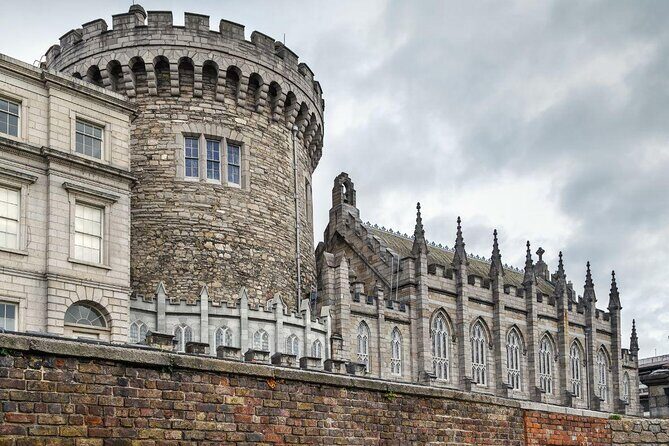
- Dublin Castle: Prisoner Escape, Ireland-Spain Links, and Irish Language Seeds
- Dubh Linn Gardens: A Viking Dock Story in the Middle of the City
- The 40 Steps: Jonathan Swift, a Medieval Wall Piece, and Film Trivia
- St Patrick’s Cathedral: Architecture and Gardens With Visit-Worth-It Notes
- Christ Church Cathedral: Outside Beauty and Viking-Settlement Context
- Trinity College Dublin: What You Can Do Without a Guided Group
- Molly Malone Statue: The Story Behind a Song
- The End Near the Old Jameson Distillery Tower
- What This Tour Style Gets Right (And Who Should Choose It)
- Should You Book This Dublin City Center Walk?
- FAQ
- How long is the Dublin City Center walking tour?
- Where do we meet and where does the tour end?
- Is there a Spanish-speaking guide?
- Is the ticket mobile?
- Are there entrance fees at the stops?
- What is included in the price?
- What is not included?
- Can service animals join the tour?
- Can I cancel for a full refund?
Key Highlights
- Spanish guide with a close, friendly tone, plus room to ask questions as you walk
- Temple Bar to Trinity College in about three hours, with quick stops that still feel complete
- Free-admission stops are marked along the way, so your sightseeing costs stay controlled
- Viking-to-medieval-to-modern connections you can actually remember (not just names on a sign)
- A finish at Generator Dublin’s Chimney Viewing Tower with a surprise near the old Jameson distillery tower
Dublin Walk With Stories That Feel Like Street Talk
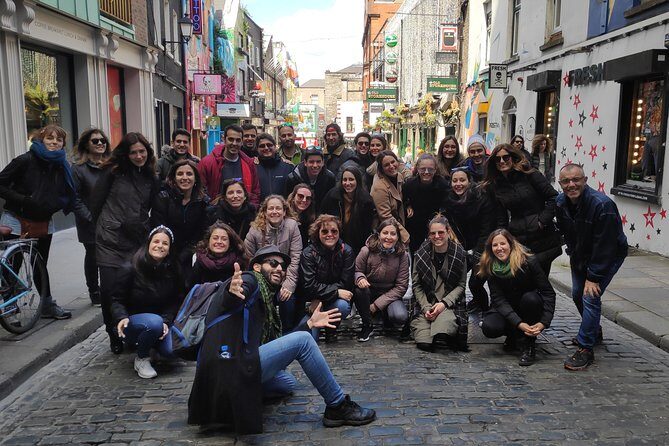
If you want Dublin to make sense fast, this tour is built for that. You’re not just ticking off landmarks. You’re being handed small pieces of the city’s puzzle, then watching them connect as you move from one neighborhood moment to the next.
The big win here is pacing. Each stop is short enough to keep you from dragging, but long enough for your guide to share the kind of details you won’t get from a phone screen alone. You come away with a Dublin mindset: pubs aren’t just pubs, cathedrals aren’t just pretty buildings, and statues like Molly Malone come with a story you’ll want to repeat.
Also, the tour is designed to be custom to what you like. If you’re more curious about Irish language, music, or the Spain-Ireland link mentioned by the guide, you can steer the conversation.
You can also read our reviews of more walking tours in Dublin



Price and Value: What You’re Really Paying For
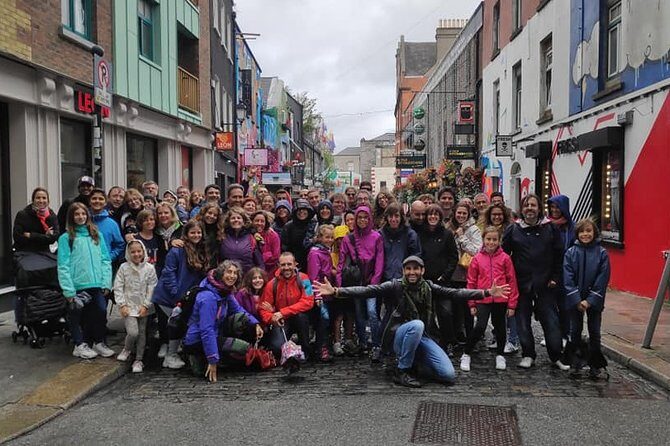
The price is $417.09 per group (up to 15), and the tour lasts about 3 hours. That can sound high until you do the math.
- If the group hits the full 15, the rough per-person cost is about $27.81.
- If the group is smaller, the per-person cost rises, since it’s per group.
For the value side, you’re paying for a live guide who does three things at once:
1) gives you fast context (so you don’t get lost in dates),
2) keeps the route lively (so you don’t tune out), and
3) hands you on-the-ground tips for what to see, what to eat, and where music happens.
The tour also marks many stops as admission ticket free, which helps keep the day predictable. Food, drinks, and bottled water aren’t included, so plan on handling those on your own.
Where You Start and Finish (And Why It Matters)
You begin at The Big Tree Pub, Dorset Street Lower, Dublin. That puts you right in the city center zone where you can walk from pub energy to castle gravitas without a transit headache.
You end at Generator Dublin, Chimney Viewing Tower, Arran Quay, Smithfield. That’s a smart finish location because it puts you near a “modern Dublin” viewpoint. The tour also mentions a final surprise next to the tower of the old Jameson distillery, so you’re not walking out with only memories—you’re closing with one last prompt to look around.
Temple Bar: Pub Origins, Beer Logic, and Music Clues
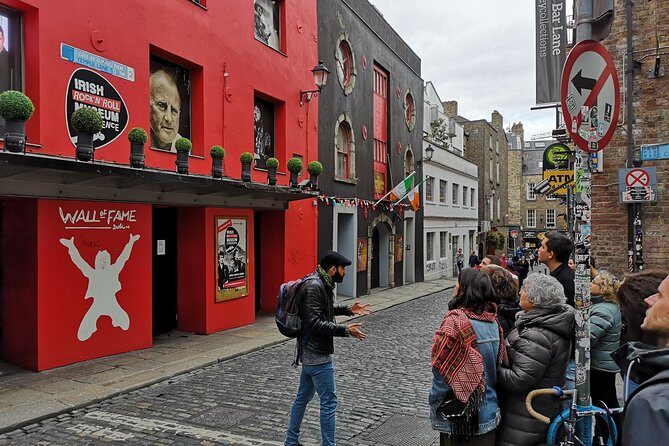
Your first stop is Temple Bar. Here’s the way this part works: your guide uses the pub area as a doorway into Irish pub culture, then adds practical details so you’ll know what you’re looking at later.
You’ll learn:
- the origin of the Irish pub and what that tradition means in daily life,
- how to think about types of beer (and your guide’s recommendations can be useful when you’re ordering),
- the importance of music in Ireland, not as background noise but as identity,
- and typical Irish dishes linked to pub culture.
Temple Bar can be touristy, so the real value is the guide’s framing. Instead of treating it like a photo stop, you’re taught what to notice: the rhythm of the place, why music shows up, and why a pub isn’t just about drinking.
Potential drawback: the Temple Bar area can be busy, so if you’re sensitive to crowds, expect some shoulder-to-shoulder moments early on.
Dublin Castle: Prisoner Escape, Ireland-Spain Links, and Irish Language Seeds
Next up is Dublin Castle. This isn’t presented as a silent “see the building” moment. Your guide sets up the major events that shaped the island of Ireland, then connects them to the castle’s own history.
A memorable part here is a “famous prisoner” story and an epic escape. You’ll also hear about the relationship between Spain and Ireland, which is a great reminder that Irish history didn’t happen in isolation.
Then comes a small but fun feature: basic Irish language words. Even if you don’t learn a lot in one stop, those first words are a mental souvenir. They also give you something to listen for later in Dublin’s signage and street life.
Potential drawback: the castle stop is time-boxed (about 45 minutes), so you’ll get a guided story experience rather than a slow, independent museum day.
You can also read our reviews of more city tours in Dublin





Dubh Linn Gardens: A Viking Dock Story in the Middle of the City
After the castle, the tour gives you a breather at Dubh Linn Gardens. This part works because it changes your pace. You’re moving from political power to a calmer pocket of green.
The key facts you’ll take away:
- it used to be a pond where Vikings docked ships,
- it’s now an oasis of tranquility right in the city center,
- and you’ll hear what’s nearby, including the Chester Beatty Library.
This stop is short, but it does something important: it helps you visualize Dublin’s layering. The city didn’t just “appear” in medieval times. It grew from earlier waterlines and settlement patterns.
The 40 Steps: Jonathan Swift, a Medieval Wall Piece, and Film Trivia
At The 40 Steps, your guide shifts to writers and urban quirks. You’ll spend time on Jonathan Swift, one of Ireland’s big literary names, and you’ll also hear about other Irish writing geniuses.
You’ll notice a piece of the medieval wall, which turns the steps from a photo moment into a real-time lesson in how cities tighten and change over centuries.
Then there’s a fun add-on: a scene from a film shot in Ireland that’s tied to this area. If you like connecting what you see in Dublin with what you’ve watched on screen, this stop gives you an easy “I’ll remember that” moment.
Potential drawback: since this is a small area and the stop is brief, you’ll want to keep pace with the group and not get lost in side streets.
St Patrick’s Cathedral: Architecture and Gardens With Visit-Worth-It Notes
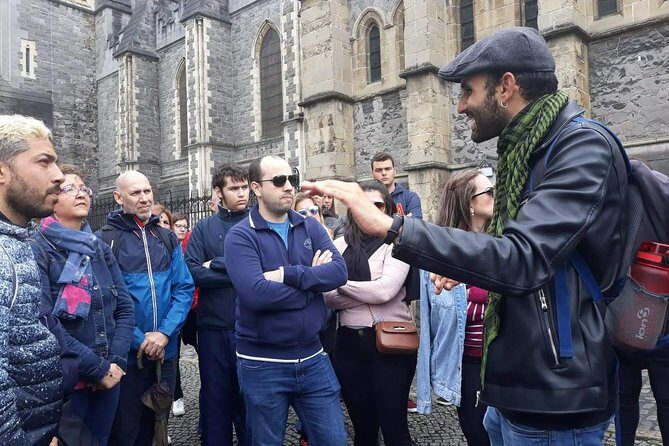
At Saint Patrick’s Cathedral, you’re focusing on the national cathedral of Ireland and the architecture that made it a landmark.
Your guide also points out the beautiful gardens, but the emphasis here is practical. You’ll hear what aspects are worth considering before you visit, which matters because cathedral visits are often about timing, routes, and what you want out of the experience.
This stop works well if you enjoy:
- seeing how different Dublin buildings express power through design,
- and learning what to pay attention to beyond the front doors.
Christ Church Cathedral: Outside Beauty and Viking-Settlement Context
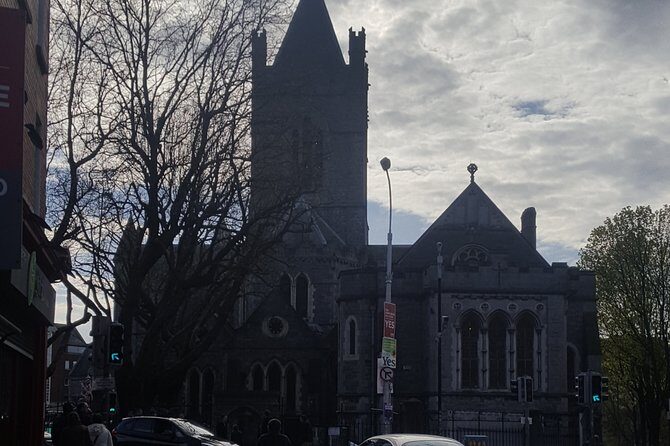
Then you move to Christ Church Cathedral. The tour focuses on what you can see outside, which means you still get the visual impact without turning this into a long “inside only” block.
You’ll learn it was built next to an ancient Viking settlement, which gives you another layer connection. Your guide also shares an environmental curiosity, which is a nice change from the usual dates-and-kings format.
Potential drawback: if you want only fully guided interior visits, this one may feel like less than you expected because the emphasis is outside viewing.
Trinity College Dublin: What You Can Do Without a Guided Group
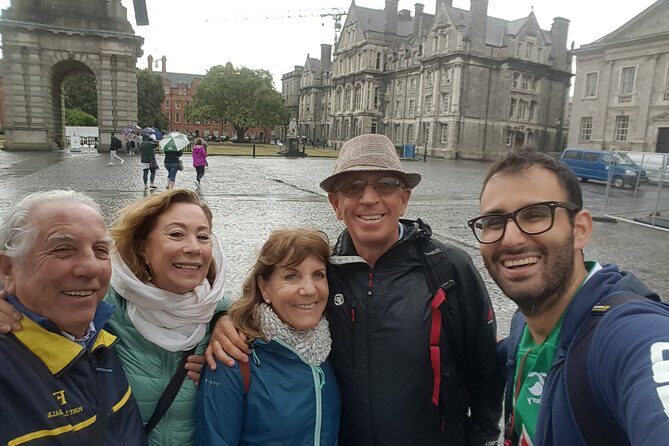
Next is Trinity College Dublin. Here’s the important nuance: guided groups aren’t admitted in the way you might expect, so the tour frames what you can do on your own.
You’ll hear curiosities about this “mythical university” and how you can visit it freely without needing a guided group. There’s also an option to purchase a guided tour on campus, if you decide you want a deeper campus walkthrough later.
Your guide also ties Trinity’s area to civic history by pointing out the Bank of Ireland, described as the seat of the old Irish Parliament.
This is a smart stop because it prevents a common disappointment. Instead of showing you a fence and moving on, your guide sets expectations and helps you turn Trinity into something you can actually plan.
Molly Malone Statue: The Story Behind a Song
Your last landmark stop is the Molly Malone Statue. This is where the tour goes extra playful, but still purposeful.
You’ll get the “who was Molly Malone” question, plus the fact that there are many versions of her story. Your guide shares the version considered most credible and builds it so you’re guessing as you go. Then the tour finishes this section with her famous song, which will stick with you during the rest of your Dublin trip.
This stop matters because it connects folklore and tourism in a way that feels like you’re in on the joke.
Potential drawback: since it’s a quick stop, you’ll want to stay present. This is one of those moments where missing the explanation means missing the fun.
The End Near the Old Jameson Distillery Tower
At the end you reach Generator Dublin’s Chimney Viewing Tower. The tour notes a final surprise next to the tower of the old Jameson distillery.
Even without knowing the exact content of that surprise, the logic is solid: you end with a view-oriented, photo-friendly area and a Dublin icon nearby. It’s the kind of finish that helps you transition from “tour mode” into “walk on your own and explore” mode.
What This Tour Style Gets Right (And Who Should Choose It)
This tour is built for people who want Dublin to feel human. The guide’s approach is described as close and funny, with humor used to keep momentum. In practical terms, that means you get:
- enough storytelling to understand the city’s “why,”
- enough local tone to feel less like a tourist checklist,
- and enough quick advice to make your next hours better.
It also looks like the tour is designed for interaction. You can ask questions, and your guide will answer with the kind of on-the-spot context that turns a “what is that?” moment into a mini history lesson.
This is a good fit if you:
- like walking tours with personality,
- want a Spanish guide and want to practice listening,
- enjoy quick stops that still feel meaningful,
- and don’t mind an efficient, talk-forward pace.
It might be less ideal if you prefer silent or slow tours, or if you want long inside-the-building time at every stop.
Should You Book This Dublin City Center Walk?
Yes—if your goal is to get your bearings fast and leave with a Dublin story you can retell. The mix of Temple Bar, Dublin Castle, gardens tied to Vikings, Swift and the 40 Steps, two major cathedral vibes, Trinity context, and the Molly Malone song makes it feel like the whole city is speaking, not just one neighborhood.
I’d skip it only if you’re looking for a deep, interior-only museum day. This tour is designed around walking, stories, and free-entry style stops. If that matches your trip rhythm, it’s a strong way to spend three hours in the center.
FAQ
How long is the Dublin City Center walking tour?
It lasts about 3 hours.
Where do we meet and where does the tour end?
You start at The Big Tree Pub on Dorset Street Lower, Dublin. You end at Generator Dublin’s Chimney Viewing Tower area near Arran Quay, Smithfield, Dublin, with a final surprise next to the old Jameson distillery tower.
Is there a Spanish-speaking guide?
Yes. The tour includes a guide in Spanish.
Is the ticket mobile?
Yes. The tour uses a mobile ticket.
Are there entrance fees at the stops?
The stops listed for the tour are marked as Admission Ticket Free.
What is included in the price?
The Dublin City Walking Tour and a guide in Spanish are included.
What is not included?
Alcoholic beverages, bottled water, and food are not included.
Can service animals join the tour?
Yes. Service animals are allowed.
Can I cancel for a full refund?
You can cancel up to 24 hours in advance for a full refund.