REVIEW · DUBLIN
Vikings In Dublin (Walking Tour)
Book on GetYourGuide →Operated by MP Tour Guiding · Bookable on GetYourGuide
Vikings walk right through modern Dublin. This 1.5-hour stroll starts at the Viking longboat sculpture and builds a clear picture of how Norse sailors came up the Liffey and formed Dublin’s early identity as Dubh Linn.
What I like most is the way the tour story stays human and specific, not just a list of Viking facts. You’ll also spend real time at big-name landmarks, including a guided visit to Christ Church Cathedral.
One drawback to plan for: the live guide speaks French. If you’re not comfortable in French, you may find it harder to follow every detail, since this isn’t positioned as a multilingual tour.
In This Review
- Key things to know before you go
- How a Viking longboat sculpture turns on your Dublin timeline
- The surprise stops that add street-level Viking context
- Christ Church Cathedral: early Dublin through a guided lens
- St Audoen’s and Fishamble Street: where the story feels close
- Dublin Castle and the city’s power center
- The final guided stop and the walk into Trinity College
- Price and pace: does $45 buy real value?
- The guide experience: French narration done right
- Who should book this Viking in Dublin walk
- Should you book Vikings in Dublin?
- FAQ
- FAQ
- How long is the Vikings in Dublin walking tour?
- What’s included in the tour?
- Where does the tour start?
- Where does the tour end?
- What language is the tour guide?
- Is this tour wheelchair accessible?
- How much does it cost?
- Is there free cancellation?
- Can I reserve now and pay later?
- Which major sites are visited?
Key things to know before you go
- French-language live guide who explains the Viking period clearly and answers questions in a relevant way
- Christ Church Cathedral is part of the guided route, not just a quick photo stop
- A strong, nuanced view of Vikings (not reduced to stereotypes), with lively anecdotes that keep it moving
- Two surprise-style guided stops (listed as secret and hidden) that add texture beyond the obvious sights
- A focused 1.5-hour format that’s designed for getting your bearings fast while still feeling like a guided experience
How a Viking longboat sculpture turns on your Dublin timeline
The tour starts at Báite – Viking Longboat (1988) by Betty Newman Maguire. That matters more than it sounds. Before you even hit the first guided stop, you’re oriented to the theme: longships, arrivals on the water, and the early footprint of Norse influence in the city you know today.
I like that the tour doesn’t waste time on a dry introduction. You start with a strong visual cue, then you move straight into the idea that Dublin wasn’t always the Dublin of today’s streets. The guide frames the story around how Vikings navigated the Liffey’s waters and founded the city they called Dubh Linn—simple words, but they make you picture movement and settlement rather than distant history.
If you enjoy walking tours, you’ll probably appreciate the pace right away. It’s long enough to connect several parts of central Dublin, but short enough that you won’t feel trapped for hours in just one neighborhood.
Still, because the start is a sculpture, you’ll want to give yourself a few extra minutes to find it and settle in before the guide begins.
You can also read our reviews of more walking tours in Dublin



The surprise stops that add street-level Viking context

After the start, you hit a secret stop with a guided explanation. Then, later, you’ll have another hidden or less-obvious guided stop before the finish near Trinity College. The point here isn’t secrecy for its own sake—it’s contrast.
Big landmarks can feel distant if you only look at stone and signage. These surprise stops help the tour connect the Viking story to the city’s street pattern, the kind of everyday details you’d normally miss if you were just sightseeing on your own.
From what’s described, the tour leans into “how people lived” and “how places functioned” during and after the Viking era. For instance, it references longships docking, markets thriving, and Dublin’s foundations holding echoes of that period. Even if you don’t catch every single historical term, you’ll leave with a stronger mental map of where activity likely clustered and how the city developed.
Practical tip: bring comfortable shoes. You’re walking between multiple guided visits, and the surprise stops can make the route feel a bit less predictable than a straight-line itinerary.
Christ Church Cathedral: early Dublin through a guided lens

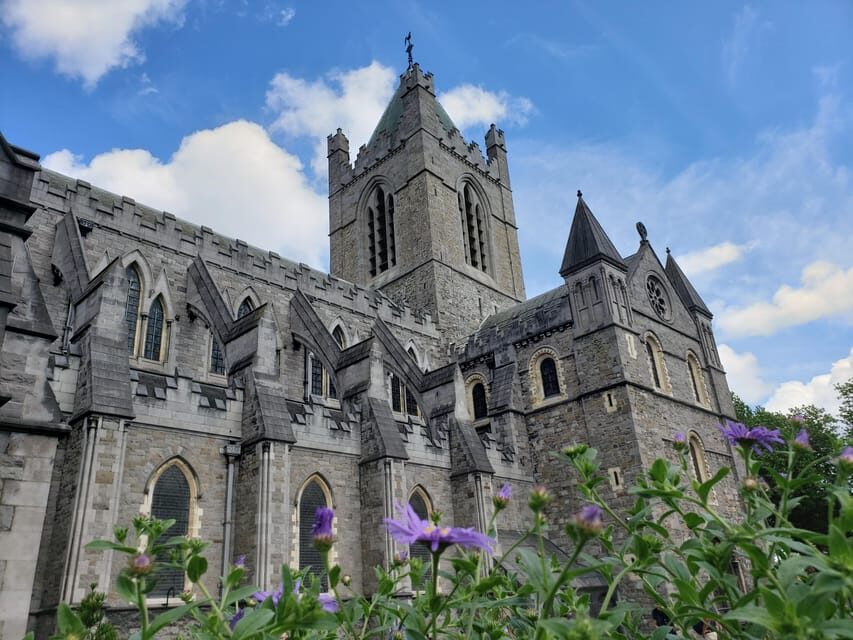
Christ Church Cathedral is one of the main guided stops, and it’s a smart anchor. Big religious buildings tend to outlast everything around them, so when a tour includes a guided look here, it’s usually because the site helps you “read” the city in layers.
On this tour, the cathedral visit isn’t treated like a standalone sightseeing item. It’s used as a point where you can connect the Viking period to the later Dublin you’re standing in now. The guide’s goal is to help you understand the overview of Dublin in that earlier era, then show how that influence lingered.
I especially liked how the guide talks about the Viking period with nuance. One of the strongest review themes is that the guide doesn’t frame Vikings as only barbarians or one-dimensional invaders. Instead, you get motivations, customs, and cultural impact—presented in a way that feels balanced rather than sensational.
As for how long you’ll be inside or how deep the cathedral visit goes: the tour runs 1.5 hours total, so expect a guided introduction rather than an all-day museum level experience. If you’re the type who loves long, quiet cathedral time, you may want to plan a follow-up visit on your own after the tour.
St Audoen’s and Fishamble Street: where the story feels close
Next up is Saint Audoen’s, followed by Fishamble Street, Dublin. Together, these stops shift the feeling of the tour. You move from monumental landmark energy into street-level storytelling, which is often where you start noticing how a city keeps traces of its past.
Fishamble Street is especially valuable on a walking tour like this because it sounds like the kind of place where everyday life would have clustered at different times. The tour description points to markets thriving and Norse activity connected to the city’s growth. Even without getting overly technical, those ideas help you look at the street differently: not just as a place to stroll, but as a part of Dublin’s longer commercial and community rhythm.
Saint Audoen’s adds another layer: religious and civic history in the same walking frame. When the guide connects these sites to Viking influence, you start seeing the city as a chain of eras, not isolated “topics.”
One more thing I’d call out: the guide is live, and questions are handled in a relevant way. That means if you’re curious about why the tour moves from one type of place to another—cathedral to street, street to castle area—you’re more likely to get an answer that actually fits the theme.
Dublin Castle and the city’s power center
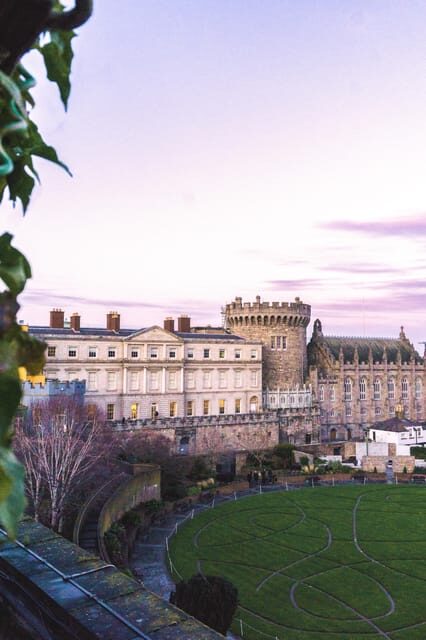
Then you’ll reach Dublin Castle for a guided stop. This is where the tour pulls you toward the idea of institutions and authority—how a city organizes itself over time.
The Viking-era story you’re hearing earlier focuses on arrival and settlement, longships, and markets. But Dublin doesn’t stay in one stage forever. A castle site acts like a natural “next chapter” in the walking narrative: it helps you understand how later Dublin gathered power and governance in particular locations.
I like that this doesn’t feel like random sightseeing. It’s included as part of an overview of Dublin during the Viking period and after it—so you can connect how early activity around the Liffey and city foundations could lead to later urban development.
If you’re sensitive to crowds or long queues inside major attractions, keep your expectations realistic. This tour is 1.5 hours total, so you won’t have time for a leisurely, independent deep visit to every stop. The value here is the guide’s ability to tie the route into one coherent story.






The final guided stop and the walk into Trinity College
Near the end, there’s another guided stop described as a hidden one. Then the tour finishes at Trinity College (the itinerary lists that clearly).
That finish is a good design choice. Trinity College is easy to orient to after a walking tour, and it gives you a natural place to either head for lunch or keep exploring nearby on your own. It also helps you end without feeling stranded in a random alley far from transit.
One small consideration: the activity description also says the experience ends back at the meeting point. Your best move is to check the exact end point in your confirmation. The itinerary text and the general description don’t perfectly agree, and I’d rather you verify than guess when you’re trying to plan your afternoon.
Either way, you’ll have a clear sense of where to go next because the tour ends in a central, well-known area.
Price and pace: does $45 buy real value?
At $45 per person for about 1.5 hours, this tour is priced like a focused guided experience, not a budget group stroll. The best way to judge value here is what you’re getting per hour.
You get multiple guided stops tied to Viking history and Dublin’s development: from the Viking longboat starting point to Christ Church Cathedral, Saint Audoen’s, Fishamble Street, Dublin Castle, plus two surprise-style guided stops. The structure suggests you’re not just walking past sights—you’re getting explanations built around the Viking period and its influence.
The strongest value factor, though, is the guide. The reviews you provided highlight the guide’s historical knowledge and the ability to explain things in a clear, concise way. You also get a more nuanced presentation of Vikings, with anecdotes that keep the tour lively, and a willingness to answer questions.
That means you’re paying not just for the route, but for interpretation. If you like understanding what you’re seeing—why it matters, not only what it is—you’ll likely feel this is money well spent.
If you’re the type who prefers quiet self-guided sightseeing, you might find the 1.5 hours a bit rushed for major interiors. But if your goal is context and getting your bearings fast, the time window makes sense.
The guide experience: French narration done right
The tour is live-guided in French. That can be a deal-breaker or a perfect fit, depending on you.
If you speak French (or you’re comfortable with historical descriptions in French), you’ll probably enjoy how the guide handles questions. Several reviews emphasize that questions get answered in a relevant way, and that anecdotes make the tour feel more like a story you’re part of than a lecture you’re enduring.
I also appreciate the teaching style described: clear and concise explanations with attention to nuance. Vikings are often reduced to a pop-culture stereotype. Here, the goal is to show motivations and culture, and to explain their impact on the island without turning it into a one-note “good guys vs bad guys” tale.
One extra practical note from the reviews: the guide can adapt when someone has a minor health issue. That doesn’t guarantee anything for every situation, but it does suggest a bit of care and flexibility in real time—useful if you’re traveling with any concerns.
Who should book this Viking in Dublin walk

This is a good match if you want:
- A guided Viking overview tied directly to central Dublin landmarks
- A guide who explains customs, motivations, and impact in a balanced way
- A short, structured walk that helps you build a mental map quickly
It’s probably not your best choice if:
- You need the tour in English or another language, since the live guide listed is French
- You’re hoping for a long, slow cathedral-and-objects deep dive in 1.5 hours
If you’re visiting Dublin for the first time and you want a story-driven introduction before you do independent wandering, this tour makes a lot of sense. You’ll know what to look for when you come back to the same streets later.
Should you book Vikings in Dublin?
Yes, if you’re comfortable with French or you can follow along well. The combination of central sites, a short walking format, and a guide who focuses on nuance and clear explanations is a strong setup for value.
I’d book it if your goal is to understand Dublin’s Viking-era footprint: the idea of Norse navigation on the Liffey, the city called Dubh Linn, and how later Dublin still carries those echoes in its foundations and major landmarks.
I wouldn’t book it if language flexibility matters most to you. With a French-only guide, you’d be relying on your own comprehension to get the full benefit.
If you want a Viking story that actually makes sense as you walk the streets, this one does the job.
FAQ
FAQ
How long is the Vikings in Dublin walking tour?
It’s listed as 1.5 hours.
What’s included in the tour?
You get a guided walking tour of famous places related to Viking history in Dublin, with information about Viking life and their influences.
Where does the tour start?
It starts at Báite – Viking Longboat (1988) by Betty Newman Maguire.
Where does the tour end?
The itinerary says it finishes at Trinity College. The activity description also says it ends back at the meeting point, so it’s smart to check your confirmation for the exact endpoint.
What language is the tour guide?
The live tour guide speaks French.
Is this tour wheelchair accessible?
Yes, it’s listed as wheelchair accessible.
How much does it cost?
The price is $45 per person.
Is there free cancellation?
Yes. Free cancellation is available up to 24 hours in advance for a full refund.
Can I reserve now and pay later?
Yes. It offers reserve now & pay later, meaning you can book your spot and pay nothing today.
Which major sites are visited?
The guided stops include Christ Church Cathedral, Saint Audoen’s, Fishamble Street, Dublin Castle, plus additional guided stops along the route.