REVIEW · CORK
Historic Cork Delicious Donut Adventure by Underground Donut Tour
Book on Viator →Operated by Underground Donut Tour · Bookable on Viator
Donuts and Cork history work surprisingly well. I like that this tour gets you moving through the city with a guide who helps you make sense of Cork fast, and I like the focus on fresh donuts that show up before you get too full of facts. One watch-out: the sweet stops come in quick succession, and for some kids (and adults), that can feel like a sugar overload late in the walk.
I also appreciate that the group stays small (max 20), so you’re not just herded past sights. Guides I’ve seen praised by name—like Marysol, Paddy, Chloe, Rachel, and Julian—are the kind who keep things lively at street level, not in lecture mode.
In This Review
- Key highlights for your Cork donut walk
- Starting at Cameron Bakery: the sweet kickoff in central Cork
- Merchants Quay Shopping Centre: learning Cork through the river trade
- Cork Opera House and Shandon Bells: quick landmark hits with big payoff
- Rory Gallagher Memorial Sculpture: a photo stop that teaches more than you expect
- Coal Quay Market: medieval food-buying and Cork’s coats of arms
- Washington Street to St. Augustine’s: architecture spotting without a homework assignment
- St Patrick Street and the Huguenot burial ground: old faith, mixed eras
- Donuts, sweets, and why pacing matters more than you think
- Is $65 worth it for a 2-hour walking tour?
- What you’ll actually see and how it fits together
- Who should book this Cork donut adventure?
- Book it or pass: my decision rule for you
- FAQ
- How long is the Historic Cork Delicious Donut Adventure?
- What is the price per person?
- Where does the tour start and end?
- Is the tour in English?
- How many stops will we make in Cork?
- What’s included in the tour?
- Do I need a paper ticket?
- Is the tour family-friendly?
- Will the tour still run in bad weather?
- What’s the group size limit?
Key highlights for your Cork donut walk
- City-center walkthrough: you’ll cover major streets and landmarks on foot, with context as you go
- English Market visit: one of the oldest covered markets in Europe, and a key stop for local food culture
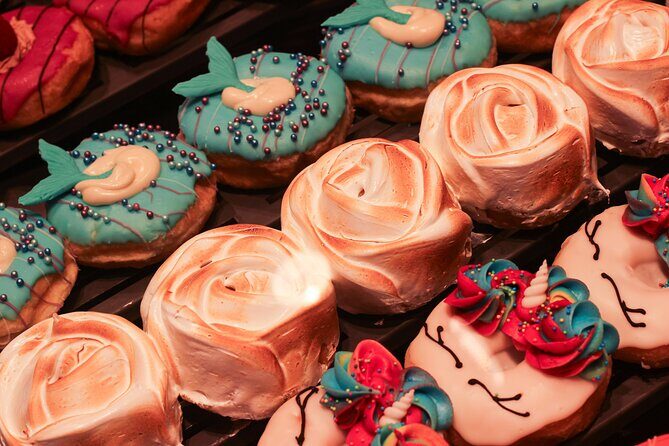
- Fresh donut moments: you can see donuts made before your eyes, turning the tasting into an event
- Iconic Cork sights: Shandon Bells, Opera House area, and photo-friendly landmarks
- Family-friendly pacing: the route is short enough to hold attention, with treats breaking up the stories
Starting at Cameron Bakery: the sweet kickoff in central Cork
The tour starts at Cameron Bakery on Parnell Place, right in the middle of Cork’s action. That matters because you’re not spending your time hunting for the right corner of town before you even get a bite.
From there, the plan is simple: a guided walk plus multiple donut tastings that function like your “checkpoints.” If you prefer experiences where food is part of the itinerary (not just an afterthought), this format is a good match.
The tour is in English, lasts about 2 hours, and keeps the pace city-walkable. Most people can join, but if you have significant mobility limits, you’ll likely find a walking tour around the center less comfortable.
You can also read our reviews of more historical tours in Cork


Merchants Quay Shopping Centre: learning Cork through the river trade
Your first stop is Merchants Quay Shopping Centre, and the guide frames this stretch the way locals often do: as a place that used to be all about boats and cargo. The story centers on how goods came in and out of Cork over centuries, including famous items like casks of premium quality Cork butter.
Why this works: it turns a modern shopping area into a time machine. Instead of staring at buildings and guessing what they used to be, you get a clear idea of what “business” meant here.
One small consideration: this opening segment is only about 15 minutes, so if you want very deep detail right away, you may have to save that curiosity for later museums or reading. The trade-off is momentum—you’re not stuck in a single spot waiting for the story to build.
Cork Opera House and Shandon Bells: quick landmark hits with big payoff
Next you head to the Cork Opera House area (Emmet Place). You stand outside the building and get the kind of explanation that makes a landmark feel personal: who built it, why it matters, and which nearby features to notice.
The highlight is the Shandon Bells, plus the guide points out Queen Anne houses nearby. One of those houses is connected to the modern-day reality you’ll recognize instantly, including a well-known coffee chain operating nearby.
I like this stop because it’s built for first-time visitors. You leave knowing what the bells are and why people bring visitors here—not just because it looks scenic, but because it’s part of Cork’s identity.
Rory Gallagher Memorial Sculpture: a photo stop that teaches more than you expect
A 15-minute stop at the Rory Gallagher Memorial Sculpture adds a distinctly Cork twist. It’s a bronze statue honoring the rock and blues guitarist, placed in a plaza dedicated to him, and you’ll have time to take photos while the guide connects Rory Gallagher to the city.
This is one of those moments where the tour avoids being strictly “old stones” and shows modern cultural pride. If you’ve got any music fans in your group, this stop tends to land well because it’s immediate and recognizable.
The time is short, so it won’t turn into a full biography. But it gives you a starting point—enough to appreciate why the statue exists and why Cork would honor him there.
Coal Quay Market: medieval food-buying and Cork’s coats of arms
Then you move into the Coal Quay Market area, which is set up like a living map of medieval Cork. The guide explains what the city looked like from a daily-life perspective, including where people had to buy food.
You also get a specific visual history lesson: a view of Cork’s coat of arms on a wall tied to the site of an older structure connected with the Queens castle area. That’s the kind of detail that makes you slow down, read a plaque, and realize you’re standing where something older once stood.
The main drawback here is simply how much you’ll be trying to absorb in a short walk. If you like history to be uninterrupted and linear, you may find the tour’s “stop and snack” rhythm slightly jumpy.




Washington Street to St. Augustine’s: architecture spotting without a homework assignment

At Washington Street, the guide steers you past standout architecture and notable institutions you might miss if you were wandering alone. You’ll see the extraordinary Cork Courthouse, Reardons Emporium, and the church of St. Augustines.
This is one of the tour segments that feels like a practical orientation lesson. You’ll pick up a mental map of the city’s layout and learn what to look for on future walks—especially if you’re staying only a short time in Cork.
In other words, even if your group stops caring about one story halfway through (it happens), you still get value through the “eyes open” effect on your walk.
St Patrick Street and the Huguenot burial ground: old faith, mixed eras
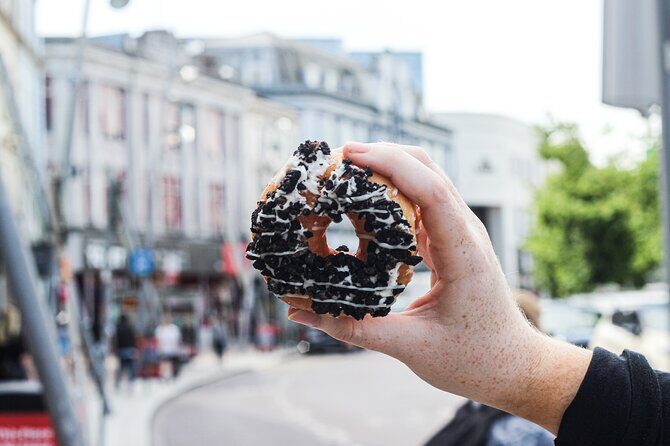
The final main walk takes you through St Patrick Street, described in a way that makes sense: this is where Cork looks modern, while still carrying older layers. The guide points out architectural styles that shift as you move along.
A standout stop in this area is the Hugenot burial ground, located right in the heart of the city. It’s a small but meaningful reminder that Cork’s story isn’t only about medieval markets or famous buildings—it’s also about people who lived through migrations, faith communities, and changing times.
The best part is that the tour doesn’t force the lesson into a heavy tone. You get the point, you get the location, and then you keep walking—so the history doesn’t feel like homework.
Donuts, sweets, and why pacing matters more than you think
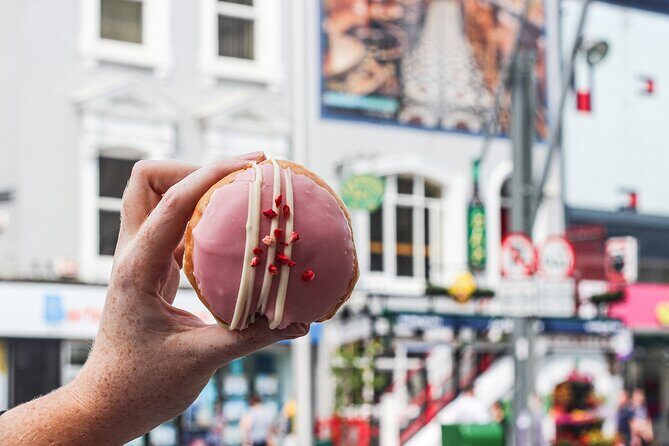
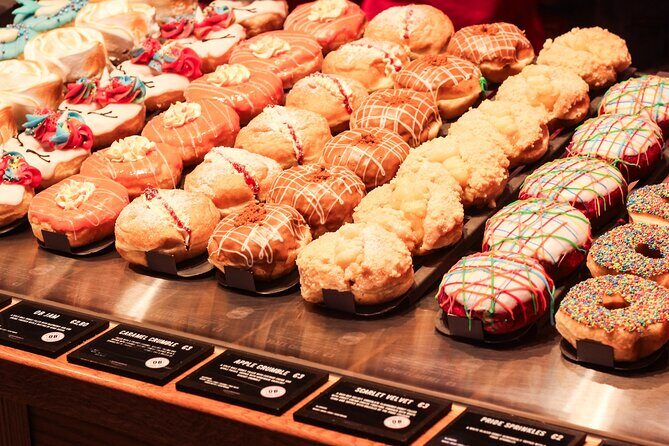
The tour is built around breakfast-style donuts and multiple tastings, with a highlight that includes watching donuts made fresh before your eyes. That “see it happen” piece changes the feel of the tour. It’s not just taste-testing; it’s a food workshop moment wrapped in a city walk.
A lot of people love this because it’s a change-of-pace break from typical sightseeing. Guides have been praised for making the walk fun, and many visitors specifically call out that the walk helps burn off the treats.
But I’d plan smart if you’re coming with kids or anyone watching sugar intake. One family felt the tour was pricey and the donut portion became too sweet late in the experience. You don’t control every tasting, but you can control your behavior: pace bites, sip water often, and be ready to share.
If you’re someone who only wants one or two donut samples, this might not be your best fit. This is a donut-forward tour, not a light snack.
Is $65 worth it for a 2-hour walking tour?
At $65 per person for about 2 hours, you’re paying for three things at once: guided routing through central Cork, multiple donut tastings, and meaningful stops that prevent you from wandering without direction.
Here’s how I judge value:
- If you’re a first-time visitor, the guide’s role in pointing out what matters saves time.
- If you love food experiences, the donuts aren’t “bonus snacks”—they are the engine of the tour.
- If you like family-friendly activities, the pacing can work because kids get treats while still seeing famous sights.
The tour’s small group size (max 20) also helps the experience feel more personal than bigger walking groups. You’re not just following a dot on a map; you’re getting guided attention in the streets.
The reason I still mention the drawback is simple: the sweetness can be intense, and if your group wants a heavier history tour with fewer food moments, you may feel the balance is off. Price can sting more when the experience is not what you hoped for.
What you’ll actually see and how it fits together
What makes this tour feel cohesive is that the city stops connect like a story, even though each stop is short. You start with river trade energy around Merchants Quay, shift to major landmark identity near the Opera House and Shandon Bells, then move into culture with Rory Gallagher, and finally into daily-life Cork through medieval market cues and street-level landmarks.
You’ll finish at Cafe Mexicana (Carey’s Lane) after the St Patrick Street segment. That ending point is convenient because it keeps you in the center with options nearby, rather than sending you out to a distant edge of town.
In practical terms, this is a great “first afternoon in Cork” activity. You’ll come away with a clearer mental map, plus a fun food memory that’s tied to specific places you can point to again later.
Who should book this Cork donut adventure?
You’ll probably enjoy this tour most if you:
- Want a walk that mixes food and landmarks instead of choosing one or the other
- Travel with kids who need frequent payoffs along the route
- Prefer smaller groups and a guide who can keep the pace friendly
- Like street-level history told in short, location-based stories
You might want to skip it (or look for a more history-heavy option) if:
- Your group hates lots of sweets or plans to avoid sugar-heavy tastings
- You’re expecting a long, deep, museum-style history lecture
- Mobility limitations make walking around the center difficult
Guides are a big part of the experience, and people often mention names like Marysol, Paddy, Chloe, Rachel, and Julian. While you can’t guarantee a specific guide, you can take that as a sign that the program attracts and supports guides who can keep things engaging.
Book it or pass: my decision rule for you
Book this tour if you want a fun, central Cork plan that combines a guided walk with fresh donut moments and landmark context like the English Market and Shandon Bells. It’s a strong choice when you want to see Cork without turning your afternoon into a checklist marathon.
Pass if you’re mainly craving detailed history and would rather not mix it with multiple sweet stops. In that case, the $65 price can feel steep when the balance doesn’t match your priorities.
If you do book, my best advice is to arrive hungry and ready to share water. This tour works best when you lean into the donut idea, then let the city stops help you remember Cork as more than just photos.
FAQ
How long is the Historic Cork Delicious Donut Adventure?
It runs for about 2 hours.
What is the price per person?
The price is $65.00 per person.
Where does the tour start and end?
It starts at Cameron Bakery, 25 Parnell Pl, Centre, Cork, and it ends at Cafe Mexicana on Carey’s Ln, Centre, Cork.
Is the tour in English?
Yes, it’s offered in English.
How many stops will we make in Cork?
The route includes six named city stops.
What’s included in the tour?
Breakfast donuts are included.
Do I need a paper ticket?
No, it uses a mobile ticket.
Is the tour family-friendly?
The tour is designed to keep kids engaged, with cultural insight paired with lots of treats.
Will the tour still run in bad weather?
It requires good weather. If it’s canceled due to poor weather, you’ll be offered a different date or a full refund.
What’s the group size limit?
There’s a maximum of 20 travelers.