REVIEW · DUBLIN
Dublin: River Liffey Sightseeing Cruise
Book on GetYourGuide →Operated by Dublin Discovered · Bookable on GetYourGuide
Dublin’s river shows a different city. This 45-minute Liffey cruise pairs city views with a fast, story-filled history run from the Vikings to modern redevelopment. You’ll like the way the live guide connects landmarks to real events instead of reading placards.
I also love the vantage point: from the water, places like Docklands and the harbor edge look way more physical and working than they do from the street. It’s one of the easiest ways to get your bearings fast in Dublin without committing to a long day.
One thing to keep in mind: with tides and conditions, the operator may adjust what you’re able to pass, and the cruise is short enough that you’ll feel the “wish it lasted longer” effect.
In This Review
- Key things that make this cruise worth your time
- Where you meet the boat and how the cruise is set up
- The live guide story: from Vikings to reclaimed land
- Docklands, Jeanie Johnston, and the harbor edge at Dublin Port
- Ha’penny Bridge and Custom House: landmarks you can place instantly
- Cromwell, canals, and William Bligh: small history facts with big context
- Reclaimed land and Trinity’s Spire: how today sits on yesterday
- Comfort, timing, and what tides can change
- Cost and value: is $23 a fair deal for Dublin?
- Who this cruise suits best (and who might want a different option)
- My take: should you book the Dublin River Liffey cruise?
- FAQ
- How long is the River Liffey sightseeing cruise?
- Where do I meet the boat?
- Is hotel pickup included?
- Is the cruise wheelchair accessible?
- Will the cruise run in bad weather?
- Are there toilets on board?
- What happens if tides affect the selected time?
Key things that make this cruise worth your time
- Live commentary with a clear story arc, not random facts
- Docklands and Dublin Port views that feel like the city’s backstage
- Jeanie Johnston spotted from the river during your sail-by
- Iconic stops explained: Ha’penny Bridge, Custom House, and canal history
- A short, efficient 45 minutes that fits almost any Dublin schedule
- All-weather boat on a 48-passenger craft, so you’re not stuck waiting around
Where you meet the boat and how the cruise is set up
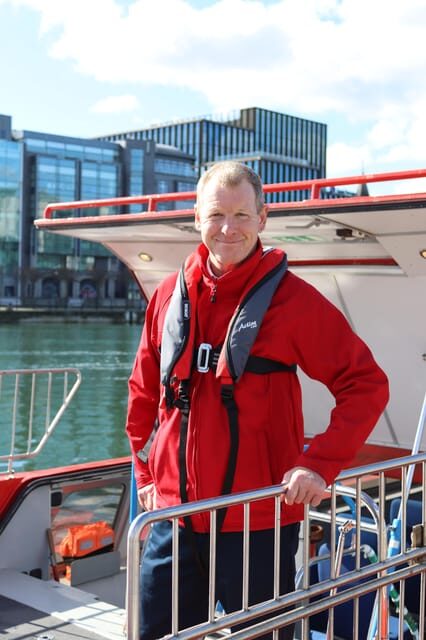
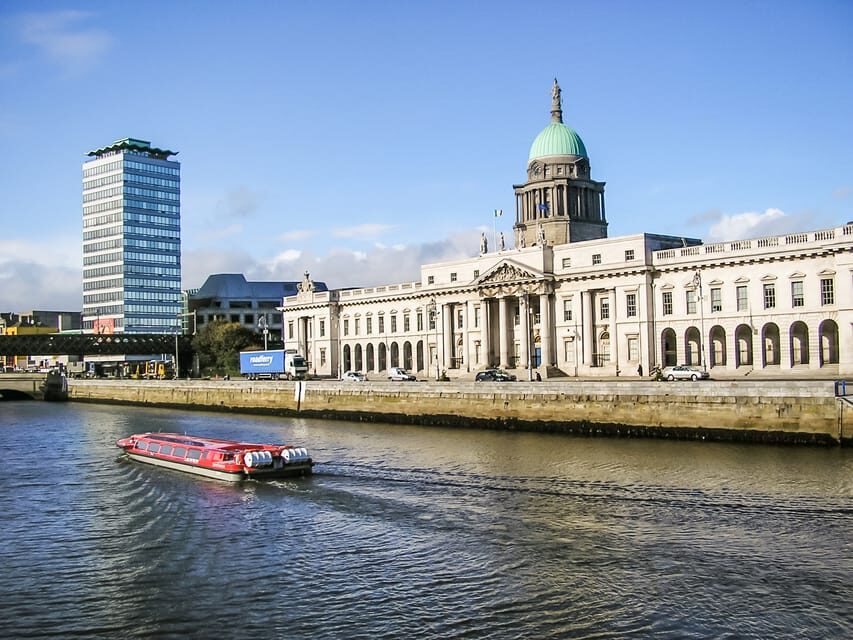
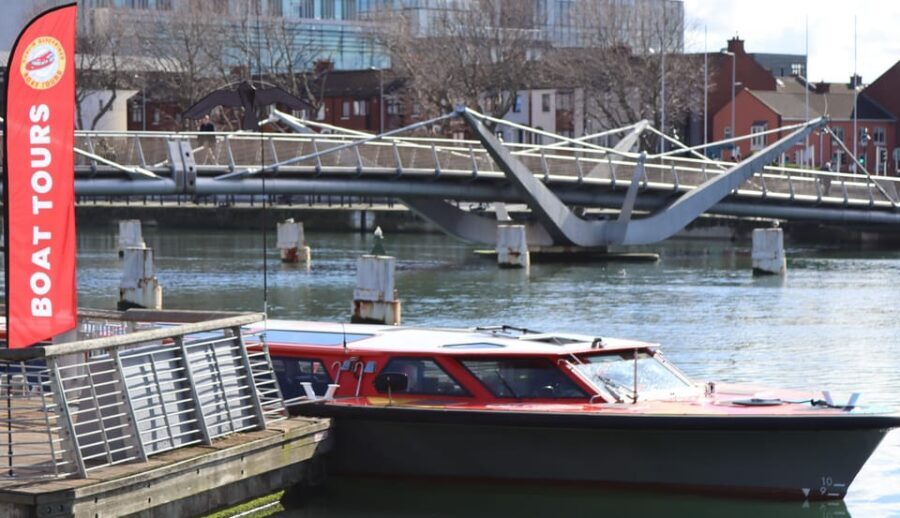
This is a straightforward, no-fuss meeting. All cruises depart from and return to the pontoon at The Sean O’ Casey Footbridge, on the north side of the river at Custom House Quay (opposite the CHQ building). Plan to arrive about 10 minutes early so you can check in and get instructions from the crew.
There’s no hotel pickup/drop-off, so you’ll be walking over from wherever you’re staying or using a quick ride if your day is packed. The good news: being tied to a central quay means you’re not hunting for a remote dock.
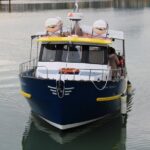
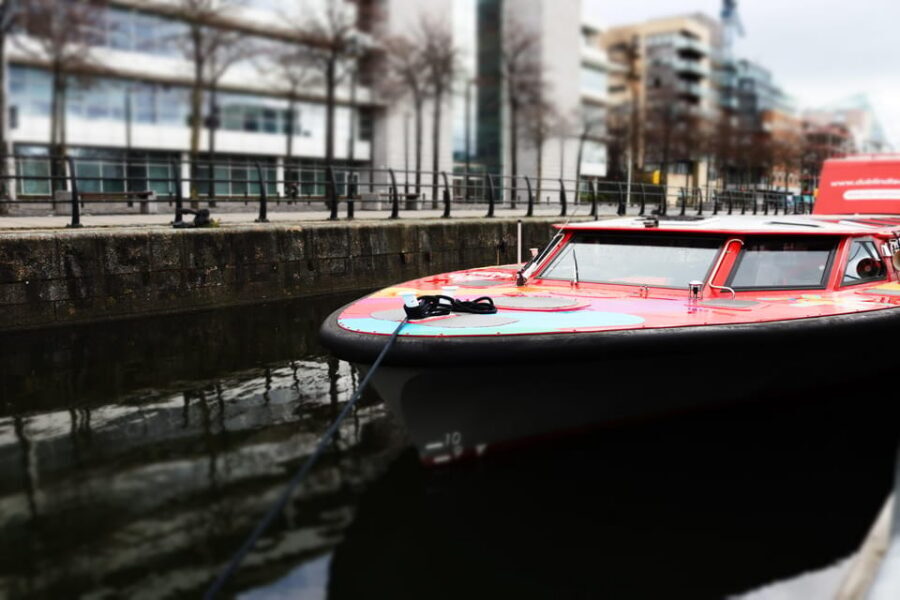
The boat itself is an all-weather, 48-passenger river craft. That matters in Dublin, where you can go from sun to drizzle without warning. Having a smallish passenger count also tends to make the ride feel more personal than big-departure sightseeing buses.
You can also read our reviews of more boat tours in Dublin
The live guide story: from Vikings to reclaimed land
What makes this cruise more than just scenery is how the commentary is built. You’ll get a history thread focused on Dublin and especially the River Liffey—how it shaped the city’s rise, decline, and reinvention.
The narration typically starts with the Vikings and runs through Dublin’s big growth spurts in the 18th and 19th centuries, when the city expanded quickly along the river. Then it shifts into the later story of decline—and the more recent push to redevelop areas like Dublin Docklands.
What you’ll find genuinely useful is that the guide doesn’t just name buildings. They tie them to the river’s role as a transport route, a boundary, and a working artery. That turns the Liffey from a pretty line on a map into a timeline you can actually see.
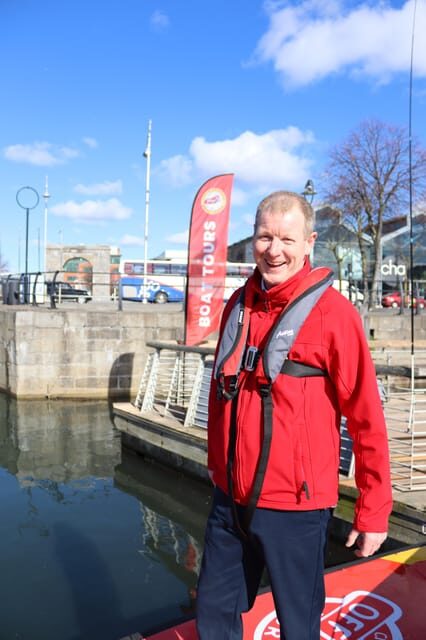
If you’re lucky enough to have a guide like Peter (praised for story-telling pacing) or Lucy (praised for clear, non-overloaded explanations), you’ll get the sense that the boat is a moving history lesson—without it turning into homework.
Docklands, Jeanie Johnston, and the harbor edge at Dublin Port
One of the most satisfying parts is watching Dublin’s working waterfront from the water. You’ll see historic neighborhoods like Docklands from the river, which helps you understand why the redevelopment story matters. From street level, Docklands can feel like a modern zone. From the Liffey, you see the shape of the river life that came before.
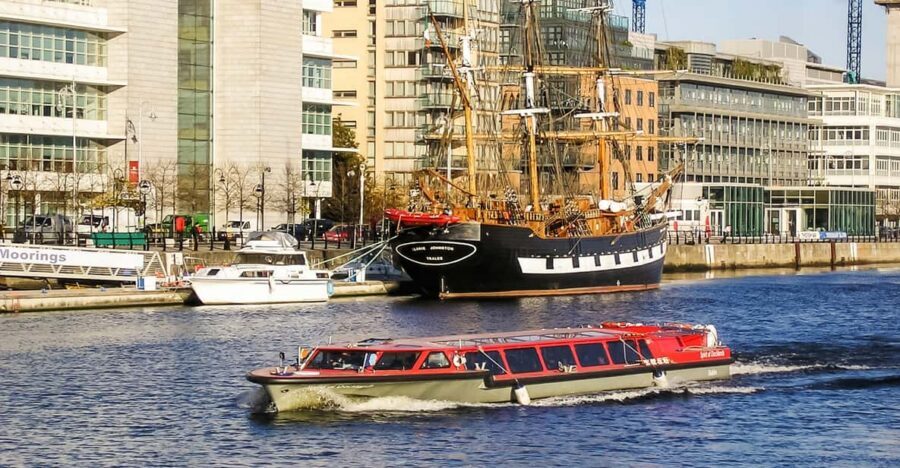
You also sail past Jeanie Johnston, a ship that shows up in Dublin’s coastal storytelling. It’s the kind of landmark that can be easy to miss if you’re only doing pub-and-castle rounds, but it lands well on the water because it fits the “Dublin and the sea” theme.
Near the end of the city’s waterfront story, the cruise points you toward the idea of where the city meets the sea—at the edge of Dublin Port. Even if you’re not a port-nerd, seeing the shift from inner-city walls to harbor infrastructure gives you a sharper picture of how Dublin grew.
Ha’penny Bridge and Custom House: landmarks you can place instantly
From the river, you’ll catch Dublin’s most recognizable river moments, and then—this is the key part—the guide explains what they mean.
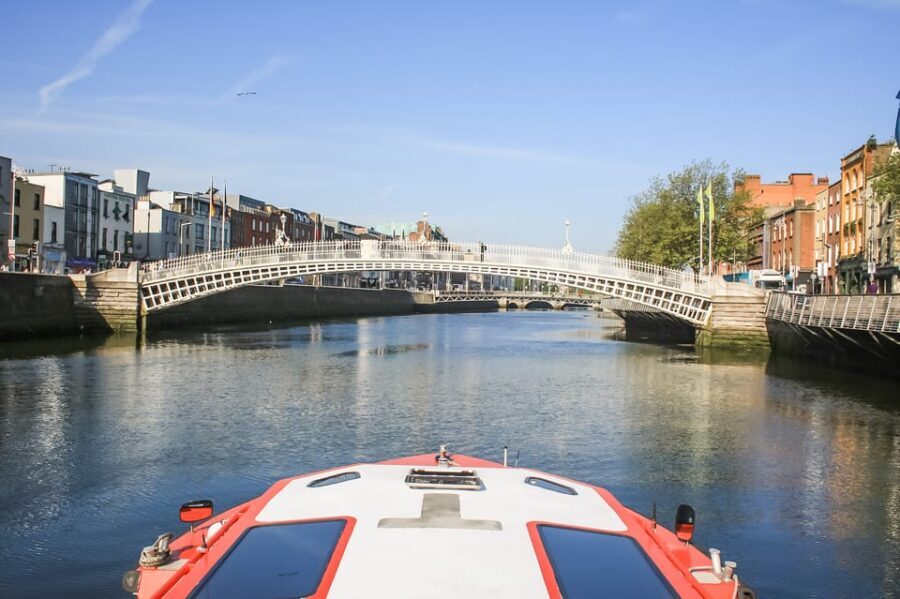
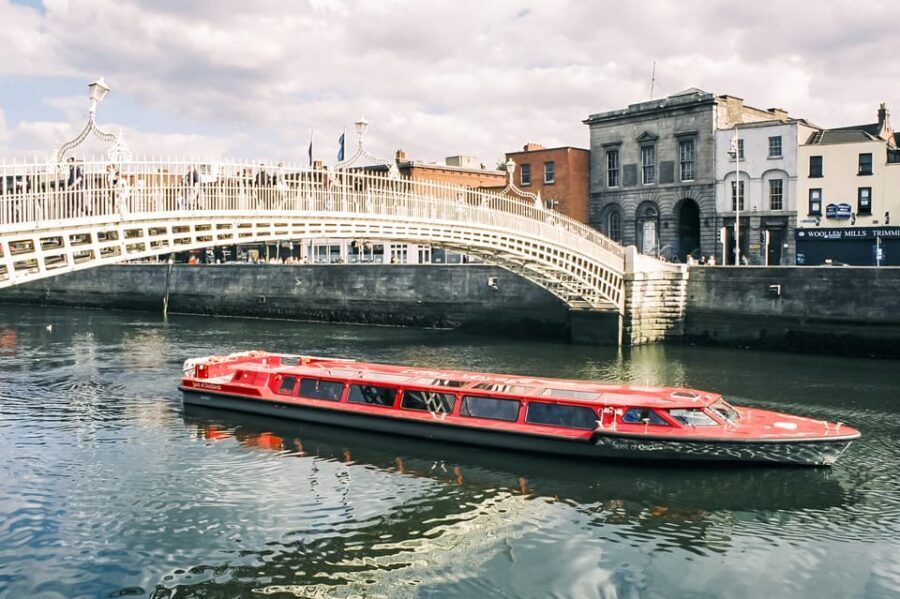
The cruise specifically highlights Ha’penny Bridge, a small but instantly memorable crossing. From land, it’s just a landmark you walk past. From the water, it becomes a hinge point: a connection between neighborhoods, trade routes, and the river’s changing importance.
You’ll also hear about Gandon’s masterpiece Custom House. Custom House is one of those buildings that can feel like a background photo spot. On this cruise, it’s treated like a clue. The guide ties its presence to the river’s role in commerce and the city’s 18th/19th-century momentum.
As you glide along, you’re not only spotting sights—you’re building a mental map. That makes your later walks in central Dublin easier, because you’ll know what direction you’re facing and why certain areas feel the way they do.
Cromwell, canals, and William Bligh: small history facts with big context
This is where the cruise gets extra fun if you like history, but still accessible if you don’t. You’ll follow along with Dublin’s river-and-water story using real names and specific moments.
The narration includes the Royal and Grand Canals—helpful because canals explain how Dublin moved people and goods even beyond the river itself. You may not trace every canal line afterward, but you’ll understand why they were built and how they fit into the city’s growth.
You’ll also hear about Oliver Cromwell landing in 1649. That’s a dramatic date to throw into a calm boat ride, and it works: the guide uses the timeline to show that the river wasn’t only for daily movement—it was involved in major political and military shifts.
Another standout is Captain William Bligh surveying Dublin Bay in 1800. Even if Bligh isn’t your everyday reference point, the point of mentioning him is that Dublin’s relationship with waterways wasn’t isolated—it fit into wider maritime history. It gives the Liffey a larger stage.




Reclaimed land and Trinity’s Spire: how today sits on yesterday
The cruise ends up at the theme that really ties everything together: how much of modern Dublin sits on reclaimed land. That includes Trinity College and the Spire on O’Connell Street.
This is one of those facts that changes how you look at the city. If you see Trinity and the Spire as purely “street landmarks,” you’ll miss the deeper connection: Dublin has physically reshaped its shoreline over time. The river is still there, but it’s also part of a city that kept rebuilding around it.
So even if you only remember a few names—Ha’penny Bridge, Custom House, Jeanie Johnston—you’ll still walk away with a better sense of Dublin’s physical evolution. That’s the best kind of sightseeing: it sticks.
Comfort, timing, and what tides can change
Timing is simple: the cruise runs about 45 minutes. Check availability for exact starting times, and pick one that gives you breathing room before or after.
The boat is designed for all-weather sailing, but Irish weather is Irish weather. Dress for damp wind and bring a layer. The good part is that you don’t have to decide between “ruin my day” and “skip the river.”
Now for the one practical complication: bookings are subject to tidal conditions. The operator can contact you if your selected time and date becomes a problem and arrange an alternative sailing. On some days, you might even notice how close you get when sailing under bridges—tide height can change the feel.
To keep your body comfortable, plan ahead with bathrooms. One practical note: there are no toilets on board, and you may want to use the facilities across the road before you go. It’s the kind of detail that doesn’t sound important until you’re already standing on the pontoon.
Cost and value: is $23 a fair deal for Dublin?
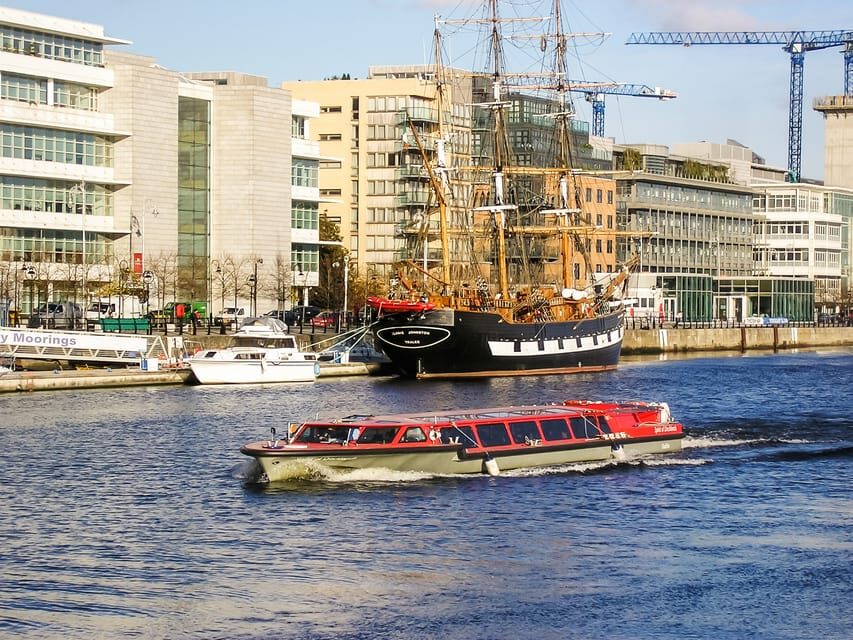
At $23 per person for a 45-minute live-guided cruise, you’re paying for three things: a central location, a guided interpretation of what you’d otherwise glance at, and a weather-proof activity that doesn’t drain your whole day.
Here’s how I see the value:
- If you’re short on time, 45 minutes can give you an overview that helps you plan the rest of your Dublin walks.
- If the weather isn’t cooperating, this is the kind of outing that still feels worthwhile because you’re literally on the water.
- If you enjoy stories with landmarks, the guide’s history thread turns views into meaning.
You’re not buying a long museum-style experience, and you shouldn’t expect it to replace Dublin walking tours. But for orientation plus context—especially on your first day—this is priced like a smart add-on rather than a major commitment.
Who this cruise suits best (and who might want a different option)
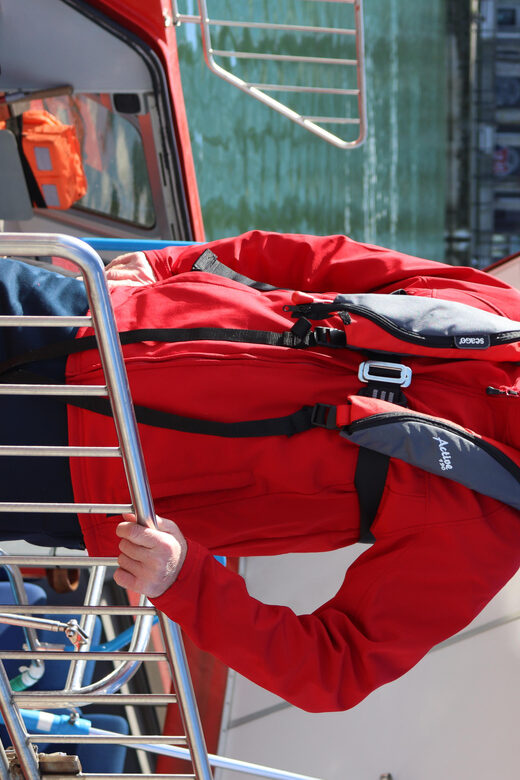
This cruise is a great fit if you:
- are visiting Dublin for the first time and want a quick orientation
- like history when it’s told in plain language, tied to places you can see
- want something easy and low-effort that still feels “proper sightseeing”
- want an option that works even if the day is grey and breezy
It might be less ideal if you:
- want a long, deep, hour-by-hour history tour (this is intentionally short)
- need flexibility beyond what tides allow (the operator can adjust sailing based on conditions)
For families, it’s also appealing because the duration is manageable and the boat ride is simple. Just remember the lack of toilets on board.
My take: should you book the Dublin River Liffey cruise?
I’d book this if you want Dublin in “one hour with context.” The biggest selling point is that the ride doesn’t just show you the Liffey—it explains what the Liffey did for Dublin. You’ll come away with a clearer mental map, plus a handful of landmark stories you’ll recognize later when you’re on foot.
Choose this particularly if:
- it’s your first or second day in the city
- the weather might be hit-or-miss
- you want a guided perspective without committing to a full-day tour
If you want a calm, efficient Dublin activity that mixes views with well-chosen history stops—Ha’penny Bridge, Custom House, Docklands, Jeanie Johnston, and Dublin Port—this cruise is a solid bet.
FAQ
How long is the River Liffey sightseeing cruise?
The cruise lasts about 45 minutes.
Where do I meet the boat?
You meet at the pontoon at The Sean O’ Casey Footbridge on Custom House Quay on the north side of the river, opposite the CHQ building. The tour also ends back at this same meeting point.
Is hotel pickup included?
No. Hotel pickup and drop-off are not included, so you’ll need to get yourself to the meeting pontoon.
Is the cruise wheelchair accessible?
Yes, the activity is listed as wheelchair accessible.
Will the cruise run in bad weather?
The boat is described as all-weather, and the cruise is planned with that in mind.
Are there toilets on board?
No toilets are available on board. It’s recommended to use facilities across the road before you go.
What happens if tides affect the selected time?
Bookings are subject to availability and tidal conditions. If there’s a problem with your chosen time and date, you’ll be contacted to arrange an alternative sailing.