Tallaght has stories you won’t expect. This two-hour walk with local guide Sophie turns an area many people skip into a chain of human stories, not just stops on a map, and I really liked the way letters and poems are shared along the way. You’ll learn about writers, war correspondents, and Irish-language culture without feeling like you’re in a classroom.
One thing to consider: the pacing is brisk, with short moments at each site, and the tour depends on good weather, so wear shoes you trust.
In This Review
- Key highlights you’ll notice fast
- Price and logistics: what $18.05 buys you
- Kingswood Heights: where Tallaght starts its story
- Katharine Tynan at Whitehall: poetry circles and real letters
- Jobstown’s William Howard Russell: the war correspondent who covered it all
- Oisín in Tír na nÓg: myth, a bilingual moment, and a Dublin Mountains view
- Tallaght Aerodrome, Urney Chocolates, and the story of local industry
- TU Dublin and Tallaght’s 1970s–80s transformation
- St Maelruain’s Church of Ireland: monastery roots and the two eyes of Ireland
- Alice Furlong at St Maelruain’s: poetry, the Irish language, and translations
- Tallaght Village Green and the Fenian Rising of 1867
- Tallaght Village finale: Byrne cottages, the DBST tramway, and basic Irish
- Who this Tallaght walking tour suits best
- Should you book this tour?
- FAQ
- How long is the Tallaght walking tour?
- What language is the tour offered in?
- Where do you meet, and where does it end?
- How many people are in a group?
- Is the tour suitable for most people?
- What happens if the weather is bad?
Key highlights you’ll notice fast
- A small group (max 12) keeps the conversation going and makes questions easy.
- People-driven storytelling: Katharine Tynan, William Howard Russell, Alice Furlong, and more.
- Bilingual surprises show up in the myths and in the language practice at the end.
- Tallaght’s changes over decades are explained with specific places you can still see.
- A viewpoints moment ties Irish legend to the Dublin Mountains area.
Price and logistics: what $18.05 buys you
At $18.05 per person for about two hours, this is one of those pricing setups that feels fair rather than gimmicky. You’re not paying for a bus ride or big attractions. You’re paying for a local guide and a tight route that uses everyday streets and buildings as history markers.
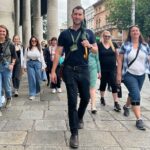
The tour runs in English, uses a mobile ticket, and keeps group size small (up to 12). That matters because Tallaght history is detailed, and a bigger group usually means less time for questions. Also, the meeting point is in KingswoodKilnamanagh and the tour ends in Tallaght Village by a bilingual Irish/English café, which is a nice built-in payoff for the language part at the end.
You can also read our reviews of more walking tours in Dublin
Kingswood Heights: where Tallaght starts its story
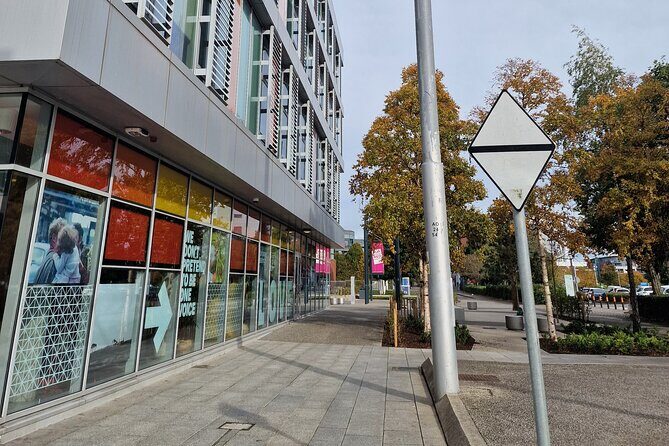
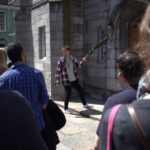
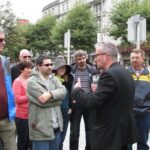
You begin in Kingswood Heights, in the Kilnamanagh area of Dublin’s south side. The first moments set the tone: you get a quick introduction to Tallaght’s roots and how far back the story goes in ancient Irish history. It’s not just dates. It’s framing—so the later stops make sense as part of one long narrative.
This opening is short (around five minutes), so don’t expect a slow warm-up. The upside is that you’re immediately walking with purpose. If you’re the type who likes structure, you’ll appreciate that the guide uses the first stop to build a mental map before names and eras stack up.
Katharine Tynan at Whitehall: poetry circles and real letters
Next, you head to a former residence connected with Katharine Tynan, known as Whitehall. This is one of the tour’s most satisfying segments because it blends biography with connection—how one person links multiple parts of Irish and English literary life.
You learn about her friendships with W.B. Yeats and George William Russell (AE), and you also hear about how she was viewed in the lead-up to what’s often called the Irish Renaissance. A standout detail here is that letters from Katharine to Yeats and AE are shared during the walk. That turns history from something abstract into something human and close to the page.
This stop runs about 15 minutes. If you’re not usually a poetry person, don’t worry. The guide keeps it grounded in who knew whom and why it mattered, so it feels like social history as much as literary history.
Jobstown’s William Howard Russell: the war correspondent who covered it all
At Belgard Road, you shift from writers to one of Tallaght’s best-known news figures: William Howard Russell, born in Jobstown. He’s described as one of the first war correspondents, and the tour leans into that idea by walking you through the timeline of what he reported on.
You’ll hear how his early life in Tallaght connects to a long career mostly for The Times, with coverage that stretches from major Irish events like discussions involving Daniel O’Connell and the Great Famine to wars such as the Crimean War and the American Civil War. There’s also a brief note on his friendship with Charles Dickens, which adds a “people in the room” feeling to the story.
This segment is about 10 minutes. That’s short, but it’s used wisely: you get the arc of his career and the sense that Tallaght fed talent into the wider world, not just local life.
Oisín in Tír na nÓg: myth, a bilingual moment, and a Dublin Mountains view
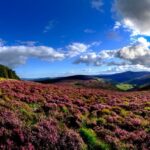
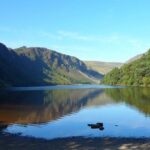
One of the more fun turns on the walk comes when the guide switches to Irish mythology. You get background first, then the focus lands on Oisín in Tír na nÓg (Oisín in the Land of Youth). Here you’ll get a bilingual version—Irish and English are both used—and you’ll also learn how the legend links to the Dublin Mountains.
The view angle matters because you’re not only hearing a story; you’re seeing the terrain it ties to. That’s why this stop feels different from the others. It takes a myth and makes it physical.
Time on this one is around 10 minutes. If it’s a windy day, expect to be a little more aware of weather, since views can expose you. Bring a layer you can manage while standing still.
You can also read our reviews of more guided tours in Dublin



Tallaght Aerodrome, Urney Chocolates, and the story of local industry
At Belgard Retail Park, the tour stretches into the 1900s, including the former Tallaght Aerodrome. You’re given context for its roles through major periods: World War I, the Irish War of Independence, and the Irish Civil War. It’s a neat example of how the same patch of ground can wear different historical “hats” across generations.
From there, the story pivots to the Gallagher family and Urney Chocolates. You learn how Urney Chocolates became part of Tallaght for decades, then closed in 1980. The guide also talks about how the brand lives on afterward, plus a brief mention of Jacob’s operating in Tallaght for a time too.
One reason I liked this stop is that it explains impact, not just trivia. The message is that businesses weren’t only commerce. They shaped daily life and identity. This segment runs about 15 minutes, which is about right for mixing war-era use with shop-floor nostalgia without losing the thread.
TU Dublin and Tallaght’s 1970s–80s transformation
As the walk continues, you head to TU Dublin’s Tallaght Campus area and tackle the big “then and now” shift. You’ll look at Tallaght’s transformation over a short stretch in the 1970s and 1980s, when it became one of Ireland’s larger urban areas. The guide connects that growth to the pressures of the time—economic difficulties, unemployment, and high emigration.
This part is about 15 minutes, and the value is in how the guide frames fast change. You’re learning why a place can feel like it has two personalities: older roots in one direction, and rapid expansion in another.
Potential drawback: if you’re hoping for a long, detailed explanation of economic history, this stop is too short for that. But if you want the “why this town looks the way it does” answer, it hits the mark.
St Maelruain’s Church of Ireland: monastery roots and the two eyes of Ireland
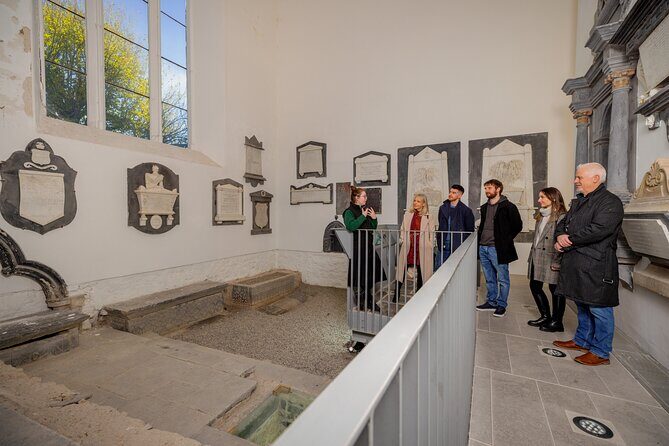
At St Maelruain’s Church of Ireland, you move into earlier centuries. The tour explains that the church stands on what used to be a monastery, and it connects St Maelruain’s site with another monastery at Finglas. Together, they’re described as the two eyes of Ireland.
You’ll hear about St Maelruain himself and also how the present-day church came into being. This is about five minutes, so treat it as a targeted reset: a quick anchor back into ancient religious importance before the walk returns to more recent people.
If you’re sensitive to church settings (sound rules, quiet moments, etc.), just be respectful and follow the guide’s tone. The stop is brief, so you won’t be hanging around for long.
Alice Furlong at St Maelruain’s: poetry, the Irish language, and translations
Another powerful segment happens at St Maelruain’s again, this time focusing on Alice Furlong, buried on the grounds. You learn she was part of Inghinidhe na hÉireann (Daughters of Ireland), including founding membership and vice-presidential roles. The tour also highlights her as a poet and writer, and an advocate for the Irish language.
What makes this one land is the way her writing is handled. Some of her poetry is shared with works in Irish, and professional translations into English are provided. That means you can follow the meaning without turning it into a guessing game.
This stop lasts about 15 minutes. If you enjoy language and literature, you’ll likely appreciate it more here than at the earlier poetry-related stop, because the Irish-language element is directly present in what you’re given.
Tallaght Village Green and the Fenian Rising of 1867
At the Village Green, a plaque marks the Fenian Rising of 1867, and the guide uses it to explain Tallaght’s role in that period of Irish history. You also get a note on Charles Dickens’s writings that connect to this era in Tallaght.
This stop runs about 10 minutes. It’s short, but it’s useful because it turns a plaque into context. If you tend to overlook small memorial markers, this is the kind of tour stop that teaches you what to look for next time.
The drawback here is also the advantage: you’re not lingering for lots of detail. If you crave deep background on the Fenian Rising, you’ll want to read up afterward. But for a walking tour, it’s well paced.
Tallaght Village finale: Byrne cottages, the DBST tramway, and basic Irish
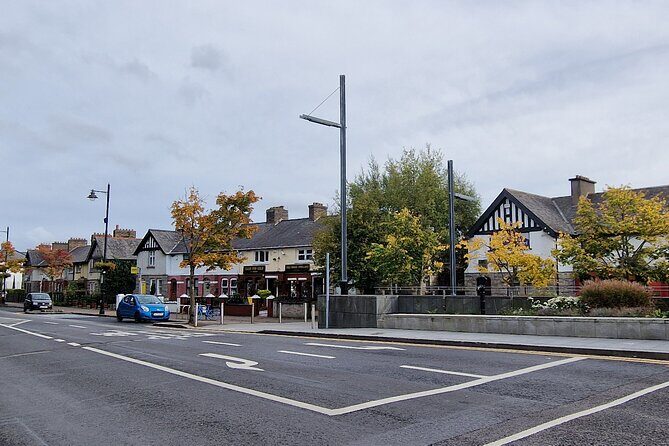
The walk ends back in Tallaght Village, near a bilingual Irish/English café. Here you see cottages designed by architect Thomas Joseph Byrne, who’s described as one of the most influential architects of his day. It’s a satisfying closing image because it brings architecture into the story, not just names.
You also get a quick look at the Dublin and Blessington Steam Tramway (DBST), which ran through the area before closing in 1932. This is one of those small “everyday infrastructure” facts that makes a town feel real. Streets and buildings are one thing. Transport routes explain why people and places connect.
The finale also includes a basic Irish language lesson. You’re invited to use what you learn in a local café right in Tallaght Village if you’d like. That’s smart value, because it turns learning into action instead of ending with a shrug and a goodbye.
This ending segment is about 20 minutes, so it feels relaxed compared to earlier stops.
Who this Tallaght walking tour suits best
You’ll get the most from this if you like:
- history that lives in everyday streets, not just museums
- people-focused stories that link local life to bigger Irish and world events
- Irish language moments, including bilingual materials and a small practical lesson
- a small-group format where you can ask questions
You might not love it if you want a long, slow, museum-style experience. This is a walk with tight stops and a guided narrative thread, not a deep research session.
Should you book this tour?
I’d book it if you want to see Dublin from a side most visitors skip and you enjoy stories that connect literature, journalism, myth, and real places. At $18.05 for about two hours, you’re getting a lot of topic coverage for the price, and the bilingual elements plus the short Irish lesson at the end make it more than a facts-only walk.
If the weather is iffy, treat that as your main decision factor. But if you can go on a decent day and you like being outdoors while learning, this is a very practical way to understand Tallaght as more than a suburb label.
FAQ
How long is the Tallaght walking tour?
It runs for about 2 hours.
What language is the tour offered in?
The tour is offered in English.
Where do you meet, and where does it end?
You start in KingswoodKilnamanagh and end in Tallaght Village, beside a bilingual Irish/English café.
How many people are in a group?
The tour has a maximum of 12 travelers.
Is the tour suitable for most people?
Most travelers can participate, and it’s near public transportation.
What happens if the weather is bad?
This experience requires good weather. If it’s canceled due to poor weather, you’ll be offered a different date or a full refund.