REVIEW · CORK
Cork Chat and History Walking Tour
Book on Viator →Operated by Tours of Cork · Bookable on Viator
Cork has stories on every corner. This Cork Chat and History Walking Tour strings together the places you’d pass anyway—then gives you the backstory that makes them click. You’ll cover major highlights like St. Patrick Street, the English Market, the William Burgess cathedral, and the old city wall area, with short, well-paced stops.
What I like most is the way Neasa (your local guide) turns ordinary streets into living history. Two hours flies because the stops are tight and specific, and she’s great at pointing out the small details you’d otherwise walk right past.
A second big plus: you still get value even when a stop isn’t ideal. For example, on a Sunday the English Market may be closed, but the guide can keep the story going. One possible drawback is that this tour depends on good weather, and it is a walking tour—so comfortable shoes matter.
In This Review
- Key highlights you’ll feel right away
- Why this Cork walking tour works in just two hours
- Starting at Crawford Art Gallery: the easy meeting point
- St Patrick Street (Pana) and the Burning of Cork in 1920
- English Market: oldest in Ireland, 1788 to today
- The William Burgess cathedral and the angel trumpet story
- Coal Quay Market, the Corn Market, and the Cork crest from 1458
- Rory Gallagher tribute and the street-level shopping vibe
- Bishop Lucey Park and the 12th-century city wall remnants
- Price and logistics: is $276.93 per group a fair deal?
- Who this tour suits best (and who might skip it)
- Should you book the Cork Chat and History Walking Tour?
- FAQ
- How long is the Cork Chat and History Walking Tour?
- What does it cost and how many people are in a group?
- Where does the tour start?
- Where does the tour end?
- What language is the tour offered in?
- Is there any paid admission at the stops?
- Is this a private tour?
- What if the weather is bad?
- Can I cancel for a full refund?
- Is there a mobile ticket?
- Is the tour suitable for most travelers?
Key highlights you’ll feel right away
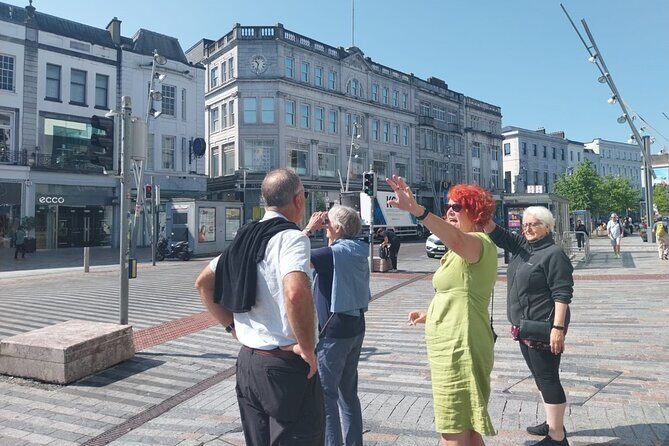
- Meet beside the Opera House at Crawford Art Gallery, then loop back to the same spot
- St. Patrick Street is more than shopping when you hear the Burning of Cork story from 1920
- English Market is treated like a time machine starting from 1788
- William Burgess cathedral details like the angel tied to the Last Day theme
- Coal Quay and Corn Market history including the crest first used in 1458
- Rory Gallagher gets a spotlight, plus time for second-hand browsing and vintage shops
Why this Cork walking tour works in just two hours
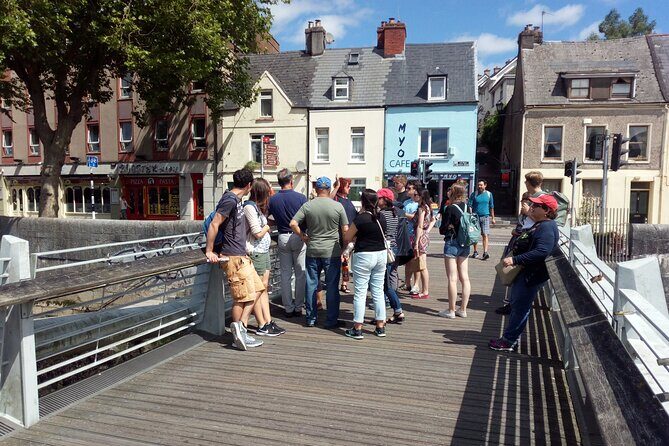
Two hours in Cork is not a lot of time. That’s exactly why I like this format: it’s short enough to stay lively, and focused enough that you leave with real “aha” moments instead of just photos.
The tour balances three good things in one go:
- City storytelling (why places matter, not just what they are)
- Walkable Cork anchors (you hit the downtown sights without extra planning)
- A local guide voice that helps you notice architecture, street names, and symbols
If you’re the type who likes to understand what you’re looking at—rather than just ticking boxes—you’ll get your money’s worth faster than you think.
You can also read our reviews of more walking tours in Cork

Starting at Crawford Art Gallery: the easy meeting point
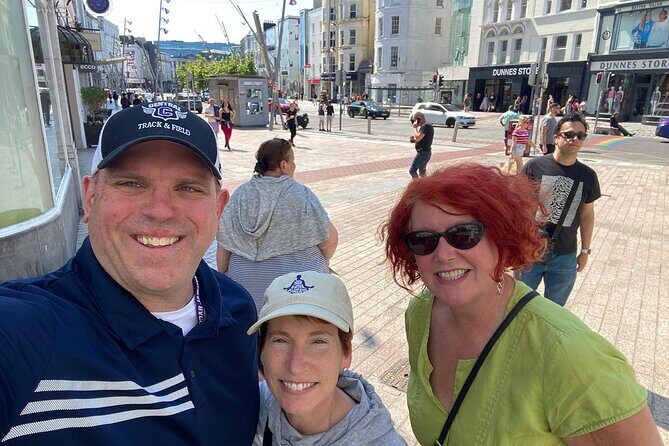
You start and finish at Crawford Art Gallery on Emmett Place, right in Cork’s city center, beside the Opera House. That’s useful because you’re not hunting around for a random curb somewhere far from the main action.
The tour uses a mobile ticket, which is handy if you’re juggling phone-only plans on your trip. And since the meeting spot is near public transportation, you can flex your timing without stress.
Also, the group is kept small: it’s a private tour for your group only, up to six people. For a city like Cork, that makes a difference—you get fewer pauses and more back-and-forth as the guide answers questions.
St Patrick Street (Pana) and the Burning of Cork in 1920
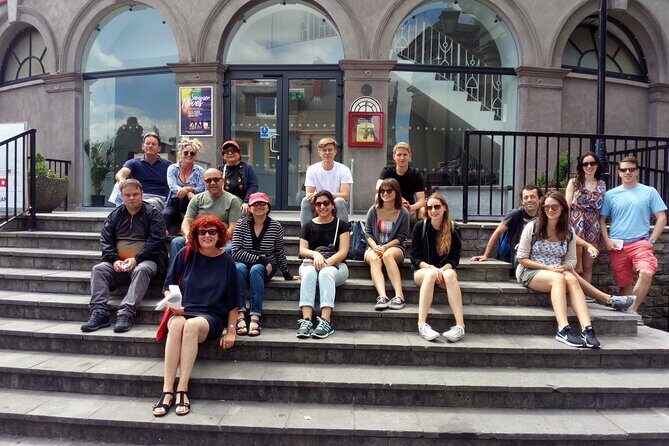
St. Patrick Street is the main shopping boulevard in Cork, and locals often call it Pana. On its surface, it’s the kind of street you stroll for shops and atmosphere. But with a guide, it turns into a timeline.
This stop is built around one major story: the Burning of Cork in 1920. It’s the kind of event that explains why cities feel the way they do—why certain areas have their particular shapes, and why memories cling to streets even after buildings change.
What I love about this stop is that it doesn’t feel like a lecture. It’s framed around the street itself: you’re standing in the place while hearing what happened there and why it matters. That makes the past feel less abstract.
Practical tip: if you’re planning to shop afterward, do it with a bit of patience. You’ll start noticing “where history sits” as you move along Pana, not just the storefronts.
English Market: oldest in Ireland, 1788 to today
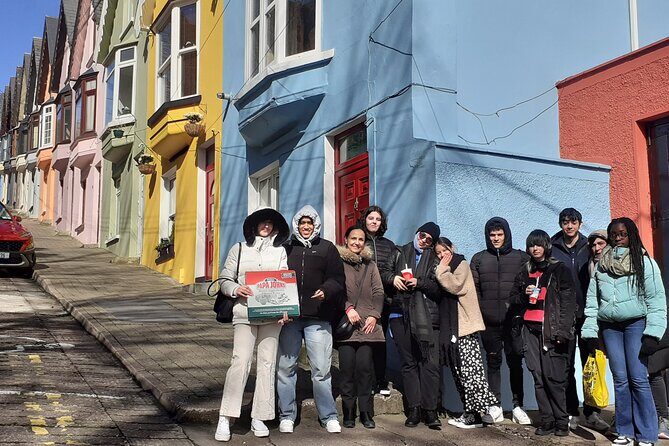
The English Market is one of those places where you can tell it’s important because everyone treats it like a destination. It dates from 1788, and it’s still a go-to shopping experience for food lovers.
Your guide gives you more than a quick stop-in. You get a guided look at the market’s character—cheeses, olives, and even the more adventurous local offerings like tripe and drisheen. If you like food culture, this is the kind of place that makes travel feel real. It’s not only for visitors.
This stop is also a reminder of something practical: markets have hours and closures. One review experience you should take seriously—on a Sunday, the English Market may be closed. The good news is that the guide can still keep the area lively and tell you what matters so you’re not just standing there waiting.
Value for your money: even if you don’t eat inside, you’re learning how Cork’s food traditions and everyday life connect. That’s the point of a guided stop like this.
The William Burgess cathedral and the angel trumpet story
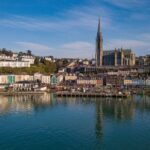
At some point on the route you’ll reach a cathedral designed by architect William Burgess. It has a Gothic design and is often compared to Notre Dame in spirit and style, not because they’re identical, but because the look carries that big, historic drama.
This stop also includes a specific detail that stuck for me: there’s a famous angel associated with the theme of the Last Day, said to play her trumpet to alert Corkonians to get into heaven. Whether you treat it as a legend or a piece of local belief, it’s the kind of detail you’ll remember because it’s specific and visual.
Why this stop works in a walking tour:
- Architecture is easier to understand when someone points at the right features.
- Religious artwork and symbolism can feel distant if nobody gives you the story behind them.
- A cathedral stop gives your mind a breather—then you’re ready for more streets and markets.
Possible drawback to consider: if you dislike religious sites or quiet stops, this part might feel slower than the market sections. But it’s a chance to see how Cork’s history and identity show up in stonework.
You can also read our reviews of more historical tours in Cork

Coal Quay Market, the Corn Market, and the Cork crest from 1458
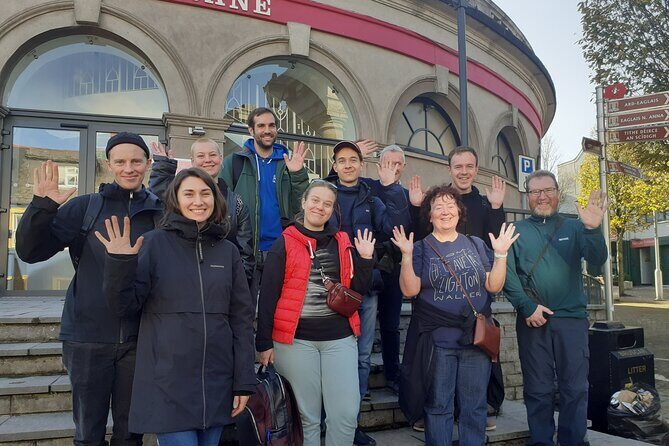
Next you head toward the old Coal Quay area—part of Cork’s market history. You’ll hear about the Corn Market too, which dates from the 1720s and is one of the oldest buildings in the city.
What makes this stop more than scenery is the city symbol connection. The tour highlights the Cork city crest, first used in 1458, and still in everyday use today. That detail matters because it’s not just an old logo on a wall—it’s a living thread that connects present-day Cork to medieval-era civic identity.
This is a “look closer” stop. When your guide points out the crest and the context around these market spaces, you start seeing the city as a set of functions—trade, gathering, decision-making—rather than just a collection of landmarks.
Small time note: the stop here is short (about 5 minutes). That means it’s perfect for busy travelers who want the key facts without long museum pacing. If you’re the type who likes to linger, you can always extend your time on your own after the tour ends.
Rory Gallagher tribute and the street-level shopping vibe
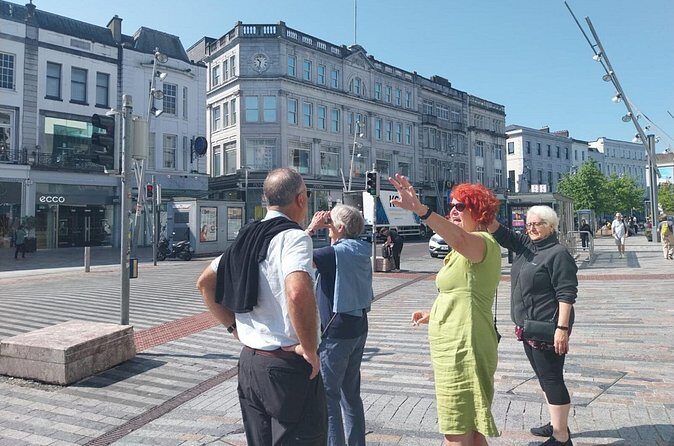
Not every history tour gives you music history and street shopping in the same route. This one does.
You’ll get a tribute to Rory Gallagher, and the story is connected to major guitar respect. Jimi Hendrix is said to have rated Gallagher extremely highly—described as the greatest guitarist in the world. Even if you aren’t a guitarist, this stop helps you understand that Cork doesn’t only build history in buildings. It creates it in culture and people.
Then you’ll have time to walk past and notice the kinds of shops Cork is known for—vintage and second-hand stores where you can find clothing, books, and other odd-and-interesting items.
This part is valuable because it keeps the tour from turning into only “history mode.” It reminds you that you’re in a living city with real shopping habits, not a themed set.
How to use this time: if you’re serious about browsing, bring an extra few minutes in your own schedule after the tour. You’ll see the variety, get pointed in the right direction by context, and then decide where to return.
Bishop Lucey Park and the 12th-century city wall remnants
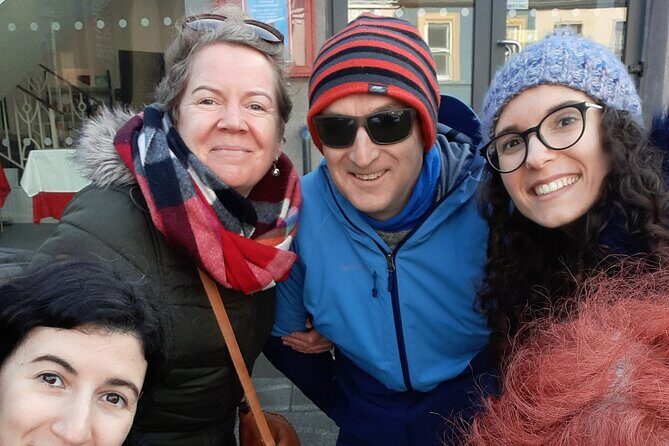
The tour ends at Bishop Lucey Park, where you can see remnants of Cork’s old city wall dating to the 12th century. That’s a big headline, but it’s also a satisfying finish because it shifts from markets and buildings to something more structural and foundational.
City walls are like the city’s original “logic.” They show where power sat, where boundaries were drawn, and how people moved. When you view the remnants, you understand that Cork’s center didn’t just develop randomly—it grew inside constraints and definitions.
This stop is short (about 5 minutes), so treat it like a guided zoom-in rather than a long archaeological session. If you want to photograph, bring your camera stance and do it quickly. The guide will help you know what to focus on.
Price and logistics: is $276.93 per group a fair deal?
This costs $276.93 per group for up to six people. That pricing can feel high if you’re thinking solo, but private tours often work out better when you share.
Here’s how I’d think about value:
- You’re paying for a local guide and a tight route that avoids you piecing together history yourself.
- Most stops include free admission elements in the experience format, so you’re not getting hit with extra entry fees at each stop.
- It’s private, so your questions don’t get swallowed by a big crowd.
For a group of two, three, or four, it can be a smart way to spend time in Cork. For solo travelers, I’d weigh the cost against how much you care about interpretation. If you love stories and details, a guided 2-hour route can save you time later. If you prefer independent wandering with a phone map, it might not be the best use of budget.
One more practical point: the tour runs with the expectation of good weather. If the forecast looks rough, plan for a reschedule option or a refund depending on how weather affects the experience.
Who this tour suits best (and who might skip it)
This tour is a strong match if:
- You enjoy walking city tours that teach you what you’re looking at
- You like history tied to specific places—streets, markets, and architecture
- You want a guide who can connect food, music, and civic history
- You’re traveling as a small group and want a private pace
It might be less ideal if:
- You dislike walking or short time windows at multiple stops
- You prefer long, ticketed museum-style experiences
- You want a purely food-focused tour. There’s plenty of food culture, but the route is broader than eating.
Should you book the Cork Chat and History Walking Tour?
I’d book it if you want a focused Cork orientation with stories that stick. The route hits the kind of places you’ll see even on your own, but the guide work changes your experience from I was here to now I understand why it matters.
The biggest reasons to choose it are simple:
- Neasa’s guide style—personal, story-driven, and detail-focused
- The mix of history + everyday Cork (markets, city symbols, music culture, and second-hand shopping)
- The route stays efficient, so you can fit it without sacrificing the rest of your trip
If your schedule is tight and you want your time in Cork to feel intentional, this is an easy yes.
FAQ
How long is the Cork Chat and History Walking Tour?
It runs for about 2 hours (walking time is included in the tour duration).
What does it cost and how many people are in a group?
The price is $276.93 per group, for a private tour/activity with up to 6 people.
Where does the tour start?
The meeting point is Crawford Art Gallery, Emmett Pl, Centre, Cork (beside the Opera House).
Where does the tour end?
It ends at the same location: Crawford Art Gallery, beside the Opera House.
What language is the tour offered in?
The tour is offered in English.
Is there any paid admission at the stops?
The stop descriptions you’ll visit include free admission for the listed sights/areas.
Is this a private tour?
Yes. This is private, and only your group participates.
What if the weather is bad?
The experience requires good weather. If it’s canceled due to poor weather, you’ll be offered a different date or a full refund.
Can I cancel for a full refund?
You can cancel up to 24 hours in advance for a full refund. If you cancel less than 24 hours before the start time, the amount paid won’t be refunded.
Is there a mobile ticket?
Yes, you’ll receive a mobile ticket.
Is the tour suitable for most travelers?
The tour notes that most travelers can participate, and it allows service animals.