REVIEW · DUBLIN
A Self Guided Walking Tour of Dublin’s Docklands
Book on Viator →Operated by VoiceMap Audio Tours · Bookable on Viator
Docklands tells Dublin in snapshots. This self-guided Dublin Docklands walking tour uses a GPS audio guide so you can move at your pace while the narration explains how this riverfront area shifted from maritime work to modern Dublin. I especially like the offline audio and maps, and I found the narration style easy to follow with a pace that feels doable even if you’re not a fast walker.
One thing to consider: this is audio on your device, so you’ll need your own smartphone and headphones. If you want back-and-forth questions with a real human guide, you won’t get that here.
In This Review
- Key Highlights You’ll Notice Right Away
- Why Dublin Docklands Works So Well as an Audio Walk
- Start at the Custom House and Use the Route Like a Checklist
- Custom House to Connolly: Trade, Labor, and Power in Plain Sight
- Busáras, Connolly Station, and the IFSC Shift You Can See While Walking
- Triumphal Arch to Scherzer Lift Bridges: Maritime Engineering Takes the Stage
- Memorials Along the River: Great Famine and Seafarers
- The Jeanie Johnston and Modern Crossings: Two Eras on One Route
- Admiral William Brown, the Diving Bell, and the Locks That Kept Things Running
- BrewDog Outpost to Hanover Quay: A Break Without Losing the Plot
- Grand Canal Square and Red Sticks Dublin: Finishing With Modern Docklands Energy
- Price and Timing: Is $11.99 a Good Deal for This Walk?
- Practical Tips Before You Start (So It Feels Effortless)
- Should You Book This Dublin Docklands Audio Walking Tour?
- FAQ
- What language is the audio tour offered in?
- How long does the Docklands walking tour take?
- Where does the tour start and end?
- What price should I expect to pay?
- Do I need to bring my own headphones and smartphone?
- Can I use the tour offline?
- Is there a virtual playback option?
- Do I need to book a specific time to start?
- Is this tour only for my group?
- Is the meeting point easy to reach by public transport?
Key Highlights You’ll Notice Right Away

- Offline maps, audio, and geodata so you’re not tied to cell signal
- Easy-to-understand narration with a walk-time range of about 50 minutes to 1 hour 10 minutes
- Docklands landmarks in a logical route from the Custom House toward Grand Canal Dock areas
- Real engineering sights, including the Scherzer Rolling Lift Bridges and the sea lock
- Memorial stops that give context, from the Great Famine to Irish seafarers
- A finish at Grand Canal Square / Red Sticks Dublin, where the modern Docklands vibe shows up clearly
Why Dublin Docklands Works So Well as an Audio Walk
Dublin Docklands is one of those areas where you can see different eras stacked side by side. You get old trade and maritime infrastructure, major transport nodes, labor history landmarks, and then the newer faces of Dublin—financial offices, modern bridges, and event venues.
That mix is exactly why this format helps. Instead of trying to read everything on plaques while you’re walking, you’re given timed narration as you pass major points. You don’t have to stop every 10 seconds. You can just keep moving, look up when the story says to, and then stroll on.
Also, the tour is designed for a short time window. You’re not signing up for a half-day ordeal. You’re signing up for a focused walk that’s long enough to feel like you covered a “real” chunk of Docklands, but short enough that you can still fit in other plans the same day.
You can also read our reviews of more walking tours in Dublin



Start at the Custom House and Use the Route Like a Checklist
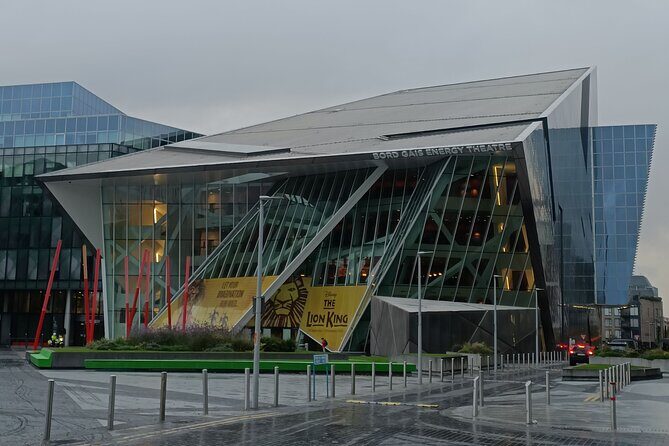
You begin at the Custom House on North Wall, Dublin 1. It’s a smart meeting point because it’s tied to the story of Irish trade and commerce, and it’s also easy to reach from central Dublin.
Here’s what I’d do so you feel confident from minute one:
- Make sure your smartphone is charged before you start.
- Download the tour so your offline maps and audio are ready before you step into the walk.
- Get your headphones on, then start listening once you’re at the start point.
In practical terms, this start location is also well connected. The tour is noted as being reachable by public transport from Busáras, nearby Luas and bus stops, and the Tara Street DART station. If you’re already near O’Connell Street, it’s about a 10-minute walk. From College Green it’s roughly 15 to 20 minutes. So even if your timing is a little off, you can still slide into the route without stress.
Custom House to Connolly: Trade, Labor, and Power in Plain Sight
Right away, the tour sets the tone with the Custom House, described as a stunning neoclassical building that served as the center of Irish trade and commerce. Even if you’ve seen neoclassical façades before, this one matters because it anchors the maritime-to-business story you’ll keep seeing along the route.
Then you move into the labor and independence layer of the Docklands narrative:
- You pass the memorial honoring James Connolly, a key figure in Ireland’s fight for independence and workers’ rights.
- You walk by the Liberty Hall Theatre, tied to Dublin’s labor movement history.
What makes these stops valuable on an audio tour is how they change the way you view the buildings around you. You start noticing that this area isn’t only about ships and warehouses. It’s also about people, organizing, and the conflicts of working life.
If you’re the type who likes your travel stories connected to real names, these segments deliver. If you’re not, you can still treat them as meaningful pauses to reset your attention before the route ramps up again.
Busáras, Connolly Station, and the IFSC Shift You Can See While Walking
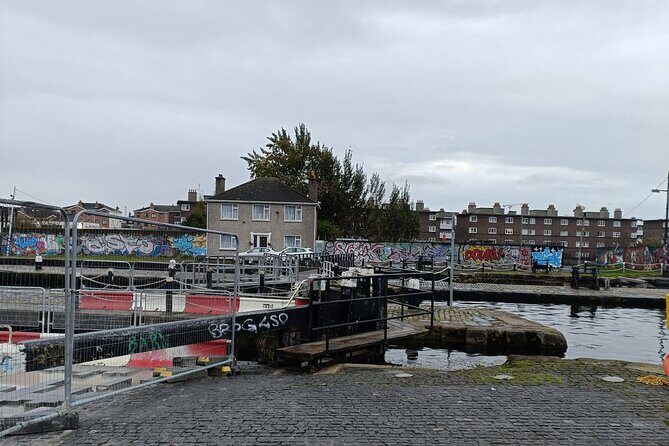
Next comes an area where Docklands connects Dublin to the rest of the country and beyond. You’ll pass:
- Busáras, Dublin’s central bus station and a major transportation hub
- Connolly Train Station, one of Dublin’s main railway stations serving domestic and international routes
Then the route moves into a different world: finance.
- You pass through the IFSC, Dublin’s financial hub with multinational companies and financial institutions.
This is one of the tour’s smartest choices, because it shows change without making you guess. You’re literally walking from transit and industry-era spaces toward modern offices and global business activity. If you’ve ever visited a port district that felt frozen in time, this helps you see the reality: Docklands keeps shifting, and it keeps attracting new functions.
One small consideration: because these are active transport areas, you’ll get more foot traffic and street noise than at the memorials and waterfront spots. That doesn’t ruin the tour, but it can make it easier to miss bits of narration if you keep your headphones too low.
Triumphal Arch to Scherzer Lift Bridges: Maritime Engineering Takes the Stage
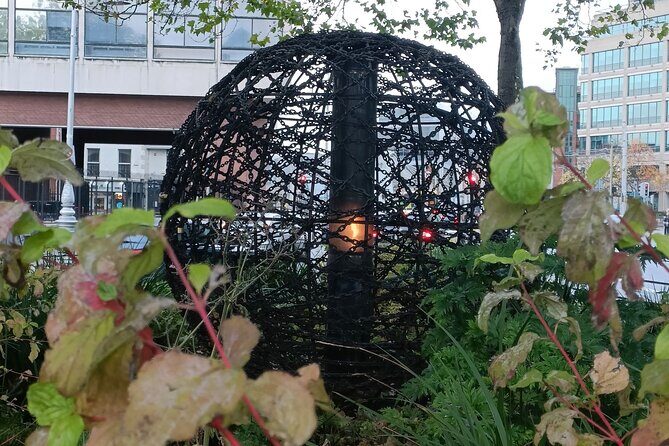
The next stretch focuses on Dublin’s maritime identity in a very physical way.
You’ll pass the Triumphal Arch, a historic monument commemorating Dublin’s maritime heritage and economic prosperity. Then you’ll reach the Scherzer Rolling Lift Bridges, described as engineering marvels that once facilitated maritime traffic here.
This is the kind of stop you’ll appreciate most if you like infrastructure details. The narration helps because you’re not just looking at metal and angles—you’re hearing what it was for and why it mattered. If you’re more of a “walk and absorb” person, you’ll still get something useful: these structures act like mile markers for the port’s working history.
Tip: when you get to the bridges, take 30 seconds to look beyond the immediate view. Ports are about networks—roads, channels, water levels, and movement. The audio guide sets that context, and suddenly the area feels more organized.
You can also read our reviews of more guided tours in Dublin






Memorials Along the River: Great Famine and Seafarers
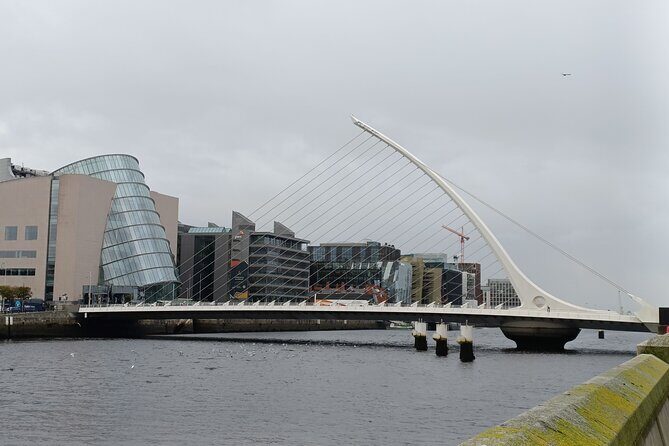
Then the tour turns to remembrance, and it does it in steps.
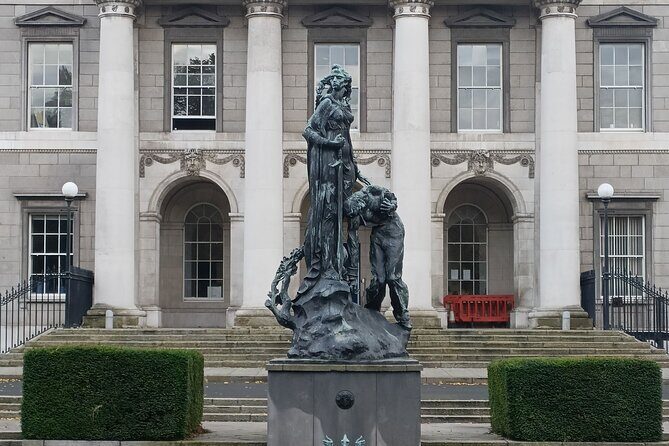
You pass the Famine Memorial, a poignant tribute to those who suffered during Ireland’s Great Famine in the 19th century. After that, you cross the story into the river moment and the seafaring loss:
- You cross the River Liffey via the Seán O’Casey Bridge
- You pass the memorial honoring Irish seafarers who lost their lives at sea
These segments can hit harder than you expect, mostly because they’re placed near real-world waterfront infrastructure. You’re not stuck in a museum room. You’re standing in the same general zone where maritime life would have played out.
If you’re traveling with family, this part can be a short but meaningful pause. If you don’t want heavy moments, you can still listen at your own level—just be aware the narration is designed to frame these memorials, not rush past them.
The Jeanie Johnston and Modern Crossings: Two Eras on One Route
Continuing along the riverfront, you’ll see a mix of historical and modern symbols:
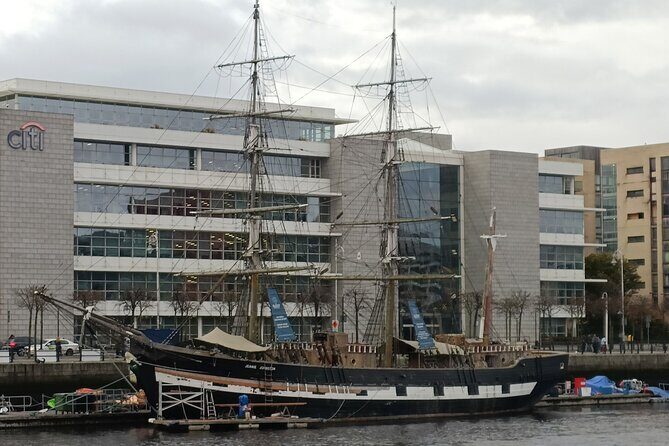
- You’ll see a replica of The Jeanie Johnston, a historic ship that carried Irish emigrants to North America during the Great Famine.
- You pass the Samuel Beckett Bridge, an iconic modern bridge named after the writer.
- You walk by the Convention Centre Dublin, a state-of-the-art venue hosting conferences, events, and exhibitions.
That pairing—famine-era emigration imagery next to a modern civic building—works better than you might think. It reminds you that Docklands isn’t just “history.” It’s also where Dublin gathers, works, and celebrates now.
The tour keeps the pacing fairly steady here. The trick is to take the narrative at the speed you can manage. If you hear a story point tied to a view, pause your walking for a minute. If not, keep moving and let the route carry you forward.
Admiral William Brown, the Diving Bell, and the Locks That Kept Things Running
This is where the Docklands story gets extra specific about people and port maintenance.
You’ll pass:
- A statue of Admiral William Brown, an Irish-born naval officer who founded the Argentine Navy.
- The historic Diving Bell, once used for dock maintenance in Dublin’s bustling port.
- The sea lock, described as a crucial piece of maritime infrastructure regulating water levels in the docks.
These stops are practical in a different way than the transport hubs. They connect you to the behind-the-scenes reality: ports depend on maintenance, control, and expertise—not only ships and docks.
If you like “how does this actually work” travel, you’ll enjoy the Diving Bell and sea lock segments the most. Even if you don’t, they add credibility to the overall narrative. You get the sense that the audio guide isn’t only naming landmarks—it’s explaining why the port system mattered.
BrewDog Outpost to Hanover Quay: A Break Without Losing the Plot
Not every audio walk needs a café detour, but having an easy one helps.
You pass BrewDog Outpost Dublin, described as a popular brewery with a lively atmosphere. You can use this as a natural reset point in your walk. If you want a drink or snack, this is an easy place to pause without leaving the Docklands loop.
Then the route heads toward the Grand Canal Docks area:
- You see the Grand Canal Docks sign, marking the entrance to Dublin’s historic canal basin.
- You pass Hanover Quay, known for a mix of residential and commercial developments.
- You walk by Hanover Quay Studios, a recording studio complex frequented by musicians and artists.
These stops help you understand why the Docklands doesn’t feel like a single-purpose district anymore. Housing, recording studios, and leisure are now part of the story. It’s a more complete picture than “old port” alone.
If you’re trying to plan your day, this stretch also gives you options: you can keep walking steadily, or you can break when you hit areas with more people and more places to grab a bite.
Grand Canal Square and Red Sticks Dublin: Finishing With Modern Docklands Energy
You end the tour in the Grand Canal area, around Red Sticks Dublin (with the route listed as ending at Red Sticks Dublin on the Grand Canal). The route also points you through Grand Canal Square, described as a vibrant public space with modern architecture and cultural attractions.
You also pass Red Sticks Dublin, a landmark sculpture adding to the artistic landscape of the Docklands. Since the last part of the route is where you see more contemporary features, it’s a good place to decide what you want to do next—wander more along the canal, grab a final drink, or connect to public transport.
One small note: the final area can feel more open than some of the narrower streets and waterfront edges earlier in the walk. If you’re listening for clues that you’re near the finish, watch for narration cues tied to the Grand Canal Square and sculpture segments rather than relying on GPS alone.
Price and Timing: Is $11.99 a Good Deal for This Walk?
At $11.99 per person, this tour is priced like a solid “value add” experience rather than a full-day guided program. And the features explain why:
- Duration is about 50 minutes to 1 hour 10 minutes, so it won’t crowd your itinerary.
- You get offline access to audio and maps, which matters a lot in cities where signal can drop.
- There’s a virtual playback option, so you can listen like an audiobook from anywhere.
- You get unlimited, lifetime use of the tour, before your booking date and after it (so you can revisit if you want a second pass later).
The other key value is simplicity. This tour gives you a structured route and narration, but you’re not locked into a group schedule. That matters in a district like Docklands, where it’s easy to keep moving and hard to know what’s worth your time unless someone explains it.
If you’re a solo traveler who enjoys walking and wants context without paying for a guide for the full day, this fits well. If you’re the kind of traveler who wants deep interaction on the spot, you might feel the self-guided format is a compromise—but for many people, that trade is exactly what keeps the cost down.
Practical Tips Before You Start (So It Feels Effortless)
A few things will make your experience smoother from the start:
- Bring your own headphones. If your audio leaks or you listen at low volume, you’ll miss details.
- Wear shoes you can walk in comfortably for up to around 70 minutes.
- Plan to start when you have a clear hour. Docklands is easy to drift through, but the tour works best when you follow its flow.
- If you’re using public transport, aim to arrive near Busáras or connect via Tara Street DART. The meeting point is described as close enough to make last-mile walking easy.
- Keep an eye out for the big named landmarks. The route is built around them, so it’s not just a random wandering walk.
Also, keep your expectations honest: this is a private self-guided tour for your group. There’s no group meeting point after you start, and no guide traveling with you.
Should You Book This Dublin Docklands Audio Walking Tour?
Book it if you want an efficient way to understand Dublin’s maritime roots, its labor and independence connections, and its modern Docklands transformation in under an hour. It’s also a strong choice if you like listening while walking, and especially if you care about having offline audio and maps.
Skip it if you need a live guide to answer questions, or if you’re not comfortable using your own phone and headphones for navigation. The tour is easy to follow, but it relies on you having the basics ready.
If your goal is to leave Docklands with more meaning than just photos of bridges and warehouses, this walk does that job—without turning your day into a long tour schedule.
FAQ
What language is the audio tour offered in?
The tour is offered in English.
How long does the Docklands walking tour take?
It runs about 50 minutes to 1 hour 10 minutes.
Where does the tour start and end?
It starts at the Custom House, North Wall, Dublin 1, and ends at Red Sticks Dublin on the Grand Canal.
What price should I expect to pay?
The price is listed as $11.99 per person.
Do I need to bring my own headphones and smartphone?
Yes. A smartphone and headphones are not included.
Can I use the tour offline?
Yes. Offline access to audio, maps, and geodata is included.
Is there a virtual playback option?
Yes. You can use virtual playback to listen like an audiobook from anywhere.
Do I need to book a specific time to start?
The start and end locations list opening hours as 12:00 AM to 11:59 PM for the date range shown, and the tour runs as a self-guided experience.
Is this tour only for my group?
Yes. It’s private, meaning only your group participates.
Is the meeting point easy to reach by public transport?
It’s near public transportation, with access described from Busárás (plus nearby Luas and bus stops) and Tara Street DART.