REVIEW · DUBLIN
Small Group Bucket List Sights Walking Tour with a Local Guide
Book on Viator →Operated by Yellow Umbrella Tours Ltd · Bookable on Viator
Dublin history gets real fast on foot. This small-group walking tour strings together big Dublin sights with guide-led stories that connect Vikings, British rule, and modern Dublin in a tight route. I like that the stops are short and focused, so you get orientation without spending your whole morning inside ticket lines.
Two things I really love: first, the way the guide brings architecture and names to life (hello Viking mooring stories and whiskey-funded renovations). Second, you’ll get practical city context, including why the flag outside City Hall matters and how the river crossings shaped how Dublin looks today. A fair heads-up: several major buildings are outside-only on this walk, and admission isn’t included for Christ Church, St. Patrick’s, Dublin Castle, and Trinity.
You’ll be walking for about two hours, with each stop kept to around ten minutes. That pacing is great for getting your bearings, but if you want to linger or go deep into interior chapels and exhibits during the tour itself, you’ll likely want to book those separately right after.
In This Review
- Quick Hits You’ll Care About
- Why This Christ Church to Trinity Walk Is Such a Good Starter
- Christ Church Cathedral: Vikings to Whiskey Money (Without Going Inside)
- St. Patrick’s Cathedral and the Guinness Renovation Angle
- Dubh Linn Gardens: The Quiet Stop Where Vikings Moored Their Long Boats
- Dublin Castle: 700 Years of British Government in Mixed Architecture
- City Hall and the National Flag Lesson: Peace, North and South
- Temple Bar at Tudor Layout Speed (Not Just Pubs)
- Millennium Bridge: East Is for the Celts, West Is for the Silicon Docks
- Ha’penny Bridge: Wellington’s Name and Harland & Wolff’s Fix
- Merchant’s Arch to College Green: Crown Alley Contrasts and the Government-Finance Core
- Molly Malone Statue and the Trinity College Finish You Can Build On
- Timing, Pace, and What to Expect in Those 10-Minute Stops
- Price and Value: Why $20.52 Can Make Sense
- Who Should Book This Dublin Highlights Walk
- Should You Book It?
- FAQ
- What is the duration of the Dublin walking tour?
- How much does it cost per person?
- Where does the tour start and where does it end?
- What time does the tour begin?
- Is the tour in English?
- Do I need to buy separate admission tickets for the stops?
- How big is the group?
- Do I get a mobile ticket?
- Is the meeting point near public transportation?
- Is free cancellation available?
Quick Hits You’ll Care About
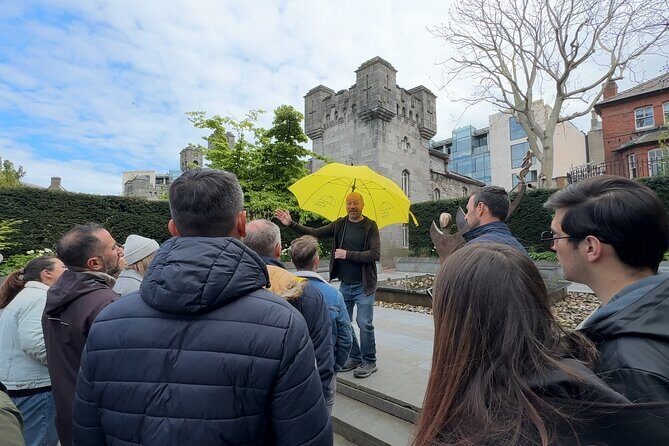
- Small group, max 25 people: easier questions, less feeling like you’re being herded.
- Two-hour overview route: Christ Church Cathedral through Trinity College, ending on College Green.
- No ticket surprises at free stops: Dubh Linn Gardens, City Hall area, Temple Bar, and College Green are free.
- Outside storytelling at the big-hitters: cathedrals, castle, and Trinity are framed without rushing you into lines.
- Bridge facts that actually stick: Ha’penny Bridge’s shaking fix and Millennium Bridge’s east-west history contrast.
Why This Christ Church to Trinity Walk Is Such a Good Starter
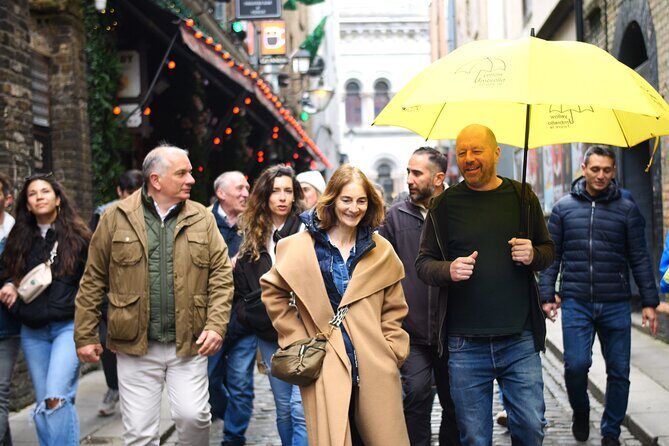
If Dublin is your first stop on Ireland’s itinerary, this tour helps you build a mental map quickly. The route runs through the oldest core of the city—cathedrals, government buildings, and classic photo points—so you’re learning as you’re looking. For about two hours, you go from the Viking-to-Norman layers near the river to the grand Trinity finish on College Green.
You’ll start at 121 R137, Wood Quay and finish at Fox House, 37 College Green (outside the front gate of Trinity). Meeting at the river area also means you’re near transit and you can link the tour with your morning plans afterward. The timing you’re given is 10:00 am, and the whole thing runs on a mobile ticket.
What makes this tour feel like value is that it’s not just a checklist of names. The guide’s job is to connect the why behind each location—so when you later walk around on your own, you’ll know what you’re seeing and why people cared about it at the time.
You can also read our reviews of more walking tours in Dublin



Christ Church Cathedral: Vikings to Whiskey Money (Without Going Inside)
Christ Church Cathedral is the kind of place where the history is written into the walls. The story you’ll hear starts with Viking-era construction in wood, then shifts to the Normans recasting it in stone. The plot thickens in the 19th century, when renovation came thanks to whiskey money. That mix—Vikings, Normans, and money from a very Irish product—makes the cathedral a perfect opener.
On the tour, you’ll spend around ten minutes here and you won’t include admission. That sounds like a limitation, but it can also be smart. Ten minutes at the right angle outside a big landmark helps you understand what you’re seeing before you decide whether paying for entry is worth your time later.
What to do during your stop: look up and compare the feel of different sections—old stone, later additions, and anything that seems rebuilt or reworked. If you’re the type who hates feeling rushed, this part is friendly because the guide can explain what to notice in a short burst.
St. Patrick’s Cathedral and the Guinness Renovation Angle
St. Patrick’s Cathedral earns its place on any Dublin highlights walk. The story you’ll get ties the cathedral’s name to Ireland’s patron saint—traditionally linked to driving snakes off the island—and then it lands in the 1860s with renovations funded by the Guinness family, specifically Sir Benjamin Lee Guinness.
Again, your time here is about ten minutes, and admission isn’t included on the tour. For some people, that’s exactly right. You still get the full narrative arc—who built what, and who paid to reshape it—without committing to a longer ticketed visit.
A consideration: if you’re hoping to see major interior details or a specific exhibit, plan to revisit on another day. The tour is built for orientation and context, not a full cathedral immersion.
Dubh Linn Gardens: The Quiet Stop Where Vikings Moored Their Long Boats
Between the heavier landmark stops, Dubh Linn Gardens offers a breather. You’ll hear a strong Dublin-origin story here: it’s described as the place where Vikings moored their long boats when they arrived in Dublin in the 9th century. The stop also ties to Chester Beatty Library, since this garden area is associated with it.
The good news for value is that admission is free at this stop. That matters because it gives you at least one moment where the tour includes a place you can simply enjoy without worrying about separate tickets. Even if you don’t enter any museum-style rooms, the tone of the stop is different from the street—more pause, less rush.
Practical tip: treat this as your mental reset. You’ll remember more of the day’s history if you take a short, calmer moment here instead of rushing from one crowd magnet to the next.
Dublin Castle: 700 Years of British Government in Mixed Architecture
Dublin Castle is one of the most important political landmarks in the center of the city. During your stop, you’ll get the big framing detail: it was the center of British government in Ireland for about 700 years. That’s the kind of statement that can feel abstract until you pair it with architecture.
The guide will point out how the castle is a mix of medieval, Georgian, Gothic, and modern elements. That blend is the real lesson here: Dublin’s political layers didn’t disappear neatly. They were rebuilt, repurposed, expanded, and reshaped.
Your tour time here is about ten minutes, and admission isn’t included, so you’ll experience it from outside. That can be limiting if you were hoping to tour halls, but it’s also useful. You’ll leave with enough context to decide later if it’s worth buying a castle ticket on your own schedule.
You can also read our reviews of more guided tours in Dublin






City Hall and the National Flag Lesson: Peace, North and South
Right by City Hall and near the front gate of the castle, the tour explains the significance of Ireland’s national flag. The point you’ll hear is grounded in peace between Catholic and Protestant, and between North and South. It’s not a random photo stop. It’s the tour’s way of tying the city’s architecture and politics to lived identity.
This stop also lists free admission, which is another value boost. Even without entering anything, the guide’s explanation helps you interpret what you see around you. If you’re trying to understand modern Ireland beyond pub stories, this is one of the most meaningful moments on the walk.
Temple Bar at Tudor Layout Speed (Not Just Pubs)
Temple Bar is famous for nightlife, and you’ll still see the area’s energy and pub identity. But this tour uses Temple Bar for something more interesting: it explains how the area was laid out during the Tudor conquest of Ireland.
That framing is helpful because it stops Temple Bar from being only a “party zone” in your head. You’re learning the logic of a historic neighborhood, then you can understand why today’s streets feel the way they do.
The tour lists free admission for this stop and keeps it at about ten minutes. Since your tour begins at 10:00 am, you’ll likely get a calmer look at the streets than you would later at night. That makes it easier to focus on the layout and the guide’s explanation rather than squeezing through crowds.
Millennium Bridge: East Is for the Celts, West Is for the Silicon Docks
Millennium Bridge is where the river turns into a timeline you can see with your eyes. You’ll cross from the south to the north, then take in views from the east and west.
Here’s the standout detail you’ll hear: to the east, you’ll learn about a Celtic settlement that’s described as dating back 2,100 years. To the west, you’ll hear about the Silicon Docks, a modern tech connection described as inspired by Americans about 21 years ago.
That “then and now” framing makes the bridge more than a photo op. It teaches you how Dublin layers old settlements and modern industry into the same view.
No admission is listed for this stop, and it fits the tour format perfectly: quick, guided, and picture-friendly.
Ha’penny Bridge: Wellington’s Name and Harland & Wolff’s Fix
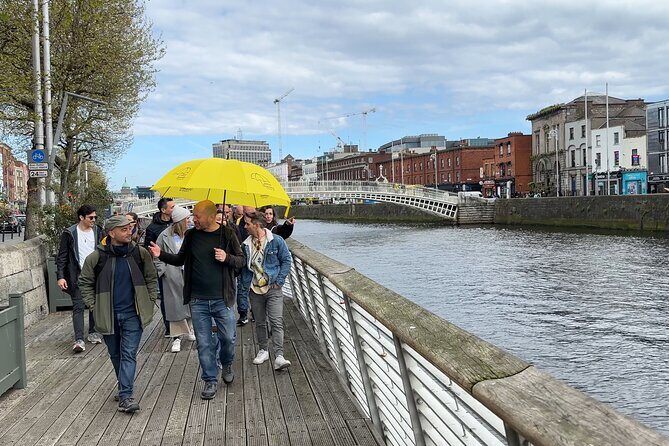
Next you’ll cross back over the river on Ha’penny Bridge, one of Dublin’s most iconic bridges. The tour story here starts with the bridge’s original name: it was named after the Duke of Wellington. Then comes a mechanical piece of Dublin trivia that you’ll probably remember for years—thanks to Harland & Wolff, the bridge no longer shakes when you walk over it.
This stop is great for two reasons. First, it gives you a memorable detail that goes beyond generic “historic bridge” talk. Second, it anchors you visually as you move through the city center back toward the government-finance core.
If you like taking photos from bridge centers, this is your moment. The walk keeps it brief, so move with purpose and don’t get stuck too long.
Merchant’s Arch to College Green: Crown Alley Contrasts and the Government-Finance Core
After the river crossings, the tour shifts into the city’s contrast zones—where old lanes meet newer forms.
At Merchant’s Arch, you’ll learn the idea of Dublin contrasts through Crown Alley and what’s at each end: Merchant’s Arch at one side, and at the other, the brutalist Stephenson Tower (described as a brutalist behemoth). That kind of comparison is helpful if you’re trying to understand how Dublin evolved without always replacing everything. The city keeps its layers visible.
Then you’ll reach College Green, where the focus turns to power and administration. You’ll hear that this was a center of government and finance for a city that considered itself the 2nd city of the empire (as described in the tour narrative). You’ll also be pointed toward the beautiful buildings around you, including banks and parliament.
This stop is free, and it’s about ten minutes. It’s also a smart place to stand and take in the architecture before your final stretch to Trinity.
Molly Malone Statue and the Trinity College Finish You Can Build On
A tour of Dublin without acknowledging Molly Malone would be weird. You’ll get your hello at the statue and the guide will connect her to the idea of Dublin’s favorite daughter. It’s quick, but it’s a cultural anchor.
Then you’ll finish outside Trinity College Dublin. You won’t be going inside on the tour stop, and admission isn’t included. Still, the guide points out that Trinity is home to the famous Book of Kells exhibition, which is exactly the kind of detail that helps you plan the rest of your day. If that’s on your list, your tour gives you the “why” behind your next ticket purchase.
Your end point is Fox House, 37 College Green, outside Trinity’s front gate. That location is convenient because it drops you right in the center of where you’ll likely want to continue sightseeing, grabbing lunch, or planning a museum visit.
Timing, Pace, and What to Expect in Those 10-Minute Stops
This tour runs about two hours and keeps each stop around ten minutes. That pacing is intentional. It’s designed to get you from one major node to another without losing the thread.
A small group helps a lot. With up to 25 people, you can ask questions at the stops, and the guide can tailor answers to what you’re curious about (language, politics, architecture, what to do next in the city). The ratings are high for a reason: the guide storytelling style tends to land well for people who want clarity and context, not just dates.
What you should bring is simple: comfortable walking shoes, a phone for the mobile ticket, and something for Dublin weather. If it’s raining, you’ll still be outside for most of this day, so a light rain layer beats struggling with a wet sleeve situation.
Price and Value: Why $20.52 Can Make Sense
At $20.52 per person for roughly two hours, the price is what you’d call budget-friendly for a guided orientation through central Dublin. The biggest thing to understand is what you are paying for: storytelling and route efficiency.
A lot of the most famous spots on the walk are outside viewing. Tickets to Christ Church, St. Patrick’s, Dublin Castle, and Trinity aren’t included. So if your goal is purely to buy entry and maximize museum time, this may not be your best first spend.
But if your goal is to understand the city fast—so you can decide what to do after—this can be a smart buy. The free stops (Dubh Linn Gardens, City Hall area, Temple Bar, and College Green) also help your money stretch, and the bridge segments give you major view value without needing any ticket.
Who Should Book This Dublin Highlights Walk
This tour fits best if you:
- Want a tight orientation to central Dublin in about two hours.
- Like history that connects places and politics, not just facts thrown at you.
- Prefer a small group where questions feel normal.
- Are planning to return to certain buildings later and want the guide’s “what to notice” framing first.
It may not be the right match if you:
- Want to spend long periods inside cathedrals, the castle, or Trinity.
- Have very limited mobility and can’t handle steady walking between central stops.
- Need a tour that’s mostly about interiors and exhibits rather than guided exterior context.
Should You Book It?
I’d book this if you’re doing Dublin in a short time window and you want your bearings fast. It’s a practical way to see the core sights—Christ Church, St. Patrick’s, Dublin Castle, bridges, College Green, and Trinity—while getting story context that makes the rest of your day smoother.
Skip it if you’re already committed to going inside multiple ticketed sites and you’d rather use your morning for those specific entrances. In that case, you might do better with a tour that includes fewer stops but more time per stop inside.
FAQ
What is the duration of the Dublin walking tour?
The tour is about 2 hours.
How much does it cost per person?
The price is $20.52 per person.
Where does the tour start and where does it end?
It starts at 121 R137, Wood Quay, Dublin, Ireland, and ends at Fox House, 37 College Green, Dublin 2, Ireland.
What time does the tour begin?
The start time listed is 10:00 am.
Is the tour in English?
Yes, it’s offered in English.
Do I need to buy separate admission tickets for the stops?
Not for every stop. The tour notes admission is not included for Christ Church Cathedral, St. Patrick’s Cathedral, Dublin Castle, Millennium Bridge, Ha’penny Bridge, Merchant’s Arch, Molly Malone Statue, and Trinity College Dublin. Admission is listed as free for Dubh Linn Gardens, City Hall, Temple Bar, and College Green.
How big is the group?
The maximum group size is 25 travelers.
Do I get a mobile ticket?
Yes, it includes a mobile ticket.
Is the meeting point near public transportation?
Yes, it’s noted as near public transportation.
Is free cancellation available?
Yes. You can cancel up to 24 hours in advance for a full refund.