REVIEW · DUBLIN
Private Guided Walking Tour in Dublin
Book on Viator →Operated by MYBIKEORHIKE · Bookable on Viator
Dublin history walks like a living street scene, and this private walk turns famous buildings into real stories you can picture. I like that you get live commentary one-on-one while you move at a comfortable pace. I also like the video route map souvenir, with captioned photos, video clips, and music to keep the route handy after you go home.
If you enjoy asking questions, you’ll like this format. The guide, often described by name as Ben, handles everything with humor and patience, and he’s the type to answer follow-ups and toss in practical suggestions like where to eat afterward. And because the walk is built around key landmarks, you get a sense of how Dublin grew from medieval city life into the city you see today.
One thing to consider: the medieval church stop (with a visitor centre) is included only subject to opening times, so on some days you may see the exterior or have a shorter experience there than you hoped.
In This Review
- Key highlights worth planning around
- Starting at Barnardo Square: getting your bearings fast
- City Hall, Royal Exchange roots, and why Dublin’s center feels political
- Temple Bar corridor to Christ Church: famous stops with real context
- Essex Gate and Wood Quay: Viking traces you can stand in front of
- City walls and St Audoen’s Church: the medieval layer you can touch
- The Brazen Head: a pub stop with a date that lands hard
- The Liberties loop: named streets, market echoes, and a cathedral showdown
- Dubh Linn Gardens: the pause that makes the walk feel complete
- Dublin Castle: 700 years in one stop (and why you’ll remember the tower story)
- Price and value: $200.62 per group makes sense when you split and slow down
- Who this tour fits best (and who may want a different option)
- Should you book this private Dublin walking tour?
- FAQ
- How long is the private guided walking tour in Dublin?
- Is this tour private?
- What group size can I book for?
- What’s included in the experience?
- Are snacks or drinks included?
- Which stops are included on the walk?
- Is the medieval church entrance guaranteed?
- Where do I meet for the tour, and where does it end?
- Is a service animal allowed?
- Do you cancel for bad weather?
Key highlights worth planning around
- A private route through Dublin’s medieval core with chances to ask questions as you go
- A Viking-to-Norman-to-British thread running through Wood Quay, city walls, and Dublin Castle
- City Hall and Parliament Street for civic history, not just sightseeing selfies
- Christ Church Cathedral and the cathedral rivalry energy as you compare different eras and styles
- The Brazen Head pub stop tied to a legendary date (1198) and old Dublin atmosphere
- A video souvenir route map that helps you remember what you saw and where
Starting at Barnardo Square: getting your bearings fast
The tour meets at Dublin Tourist Information Centre, Barnardo Square, 3 Palace St (Dublin 2). It ends back at that same point, which matters in Dublin because you don’t have to guess how to get home after a few hours of walking.
The “private” part here is practical, not just a label. Your group stays together with the guide and you can set the pace—pause for photos, ask for context, or spend extra time at a doorway or view that grabs you. With up to 15 people per group, you still get the feeling of a guided stroll rather than a crowded bus tour.
You’ll also receive a mobile ticket, so make sure your phone battery is decent before you start. I’d treat this tour like a walking day: plan shoes you can trust, and go in ready to cover ground at street level.
You can also read our reviews of more walking tours in Dublin



City Hall, Royal Exchange roots, and why Dublin’s center feels political
You begin at Dublin City Hall, a building that’s easy to spot and surprisingly layered. It started as the Royal Exchange, later became headquarters for Dublin Corporation (the city authority), and eventually the city authority relocated to Wood Quay. Today, it’s used for all sorts of events—from weddings to film shoots—so you’re standing in a space that still carries civic weight.
From there, the route shifts into the “why this place matters” mode. You’ll meander down Parliament Street, passing landmarks tied to Dublin’s trading and administration past. Along the way, you get glimpses of the Temple Bar district, not as a nightlife slogan, but as a neighborhood with a long memory.
This opening stretch is more than an intro. It helps you start seeing Dublin as a city of institutions—markets, customs, city government—stacked on top of older streets and older meanings.
Temple Bar corridor to Christ Church: famous stops with real context
As you head toward the area around Temple Bar and Christ Church, you’re not just ticking boxes. The guide helps you connect street names and building roles to how Dublin functioned.
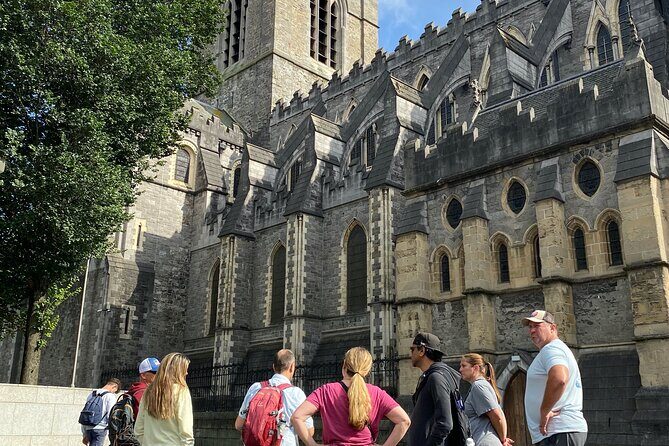
Christ Church Cathedral is the anchor here. Built by the Normans in the 12th century, it dominates the cobbled walkways around it, and you’ll have time for stories and photo opportunities that explain what you’re looking at. When you understand the Norman roots, the rest of the walk makes more sense—Dublin’s medieval landscape stops feeling random.
A practical note: cathedral areas can be the busiest part of central Dublin. This tour is private, so you won’t be fighting a crowd in the same way you would on a group hop-on tour, but you should still expect steady foot traffic around the major sights.
Essex Gate and Wood Quay: Viking traces you can stand in front of
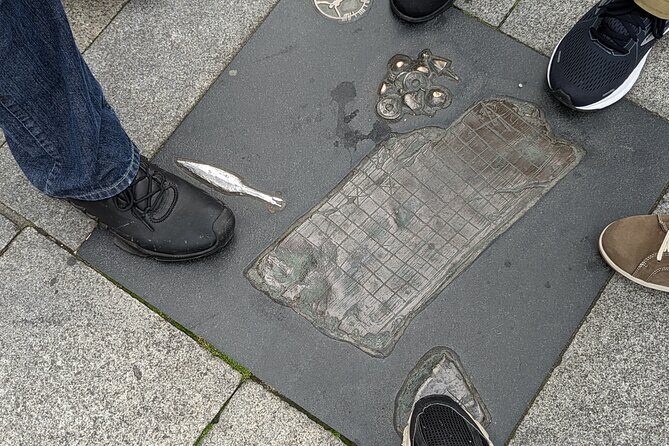
One of my favorite parts of the route is the turn along Essex Gate, a cobblestone street connected to an entrance into the medieval walled city of Dublin. Street names here aren’t just labels. They’re clues to how people moved, where power sat, and how Dublin defended itself.
This section layers in a few sharp reminders of earlier eras. You’ll pass a famous theatre with roots back to the 17th century, then you’ll see a Viking longboat placed as a reminder of unwelcome visitors from the past. Right after that, you stand at Wood Quay, the site of an ancient Viking settlement, which brings the timeline down from “history book” to “walk here and look.”
From Wood Quay, you move toward Dublin’s oldest street. Names in this area reflect medieval activity—markets, trades, and daily life. Fishamble Street, for example, is tied to a market that was once thriving. If you like cities where street names actually mean something, this is a treat.
City walls and St Audoen’s Church: the medieval layer you can touch
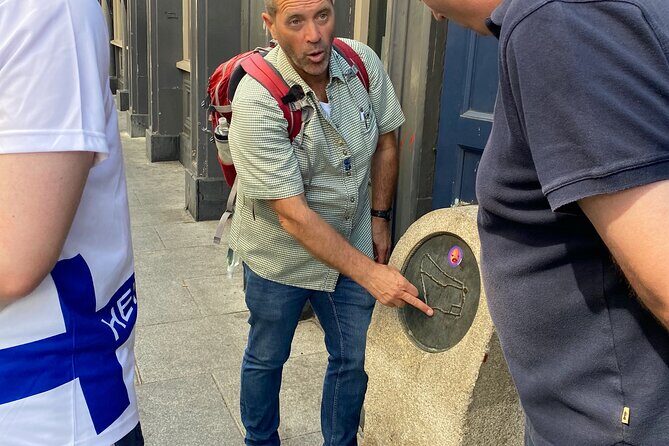
The tour’s medieval city-wall segment is one of its strongest storytelling tools. You double back briefly, then trace the perimeter walls of the medieval city. In this area you can see a distinctive surviving chunk along Lamb Alley, which gives you a physical sense of how the city worked as a defended unit.
After crossing Winetavern St, you move through a residential area that has kept the medieval land use pattern through to modern times. Then the atmosphere shifts toward the religious and civic side of medieval Dublin.
St. Audoen’s Church is where that feeling locks in. Services are described as having continued uninterrupted since the 12th century, and today it functions as a visitor centre where you can learn about prayer, guilds, and burials. The visitor centre stop is included as part of the experience, but remember it depends on opening times, which is why it’s worth building some flexibility into your expectations.
You’ll also hear about the Gates of Hell on the walk toward the church. It’s the kind of detail that makes the route memorable, because it mixes medieval storytelling with a real place you can stand in front of.
You can also read our reviews of more guided tours in Dublin






The Brazen Head: a pub stop with a date that lands hard
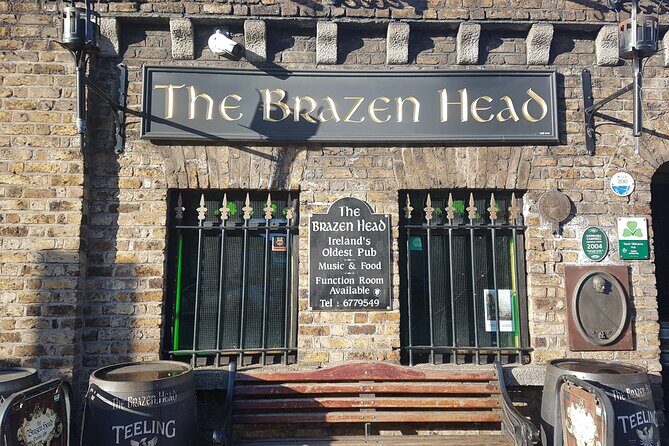
No Dublin medieval walk feels complete without stopping at the Brazen Head, which is described as Ireland’s oldest pub. It was established in 1198 CE, a date the route links to the death of Ireland’s last High King, Rory O’Connor. Even if you’re not a trivia person, dates like this make the whole city feel connected.
You’ll have about 15 minutes here, which is just enough time to settle in without turning the tour into a long pub crawl. You can stop for a drink if you want, and the guide typically shares stories while you look at the walls of the cavernous interior.
This stop is a good example of why private walking tours can beat bigger experiences. It’s short, guided, and contextual. You’re not just “in a pub,” you’re in a pub with a place in the timeline.
The Liberties loop: named streets, market echoes, and a cathedral showdown
After the medieval wall segment, the route enters the Liberties neighborhood. This is where street names start acting like a roll call of Dublin’s characters. You pass St. Nicholas of Myra church, the site of the once-thriving Iveagh Market, and streets named after luminaries such as Dean Swift, John Dillon, and Thomas Davis.
Then you reach another arched alleyway area that’s described in relation to competition with Christchurch Cathedral. That leads into the next major stop: Saint Patrick’s Cathedral.
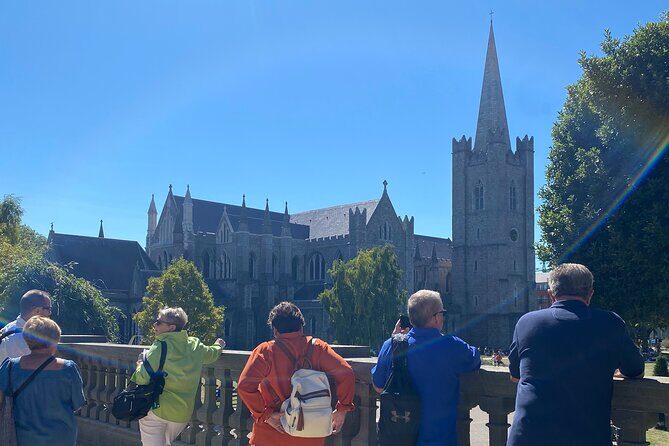
Saint Patrick’s Cathedral is presented as a rival to Christchurch Cathedral, and you’ll get views over the cathedral and gardens. The guide connects the story line from Vikings to Normans, through the Reformation and Oliver Cromwell, then to Guinness and the cathedral and gardens you see today. If the weather cooperates and time allows, there’s an outdoor cafe option nearby, and seating in the gardens may be a tempting way to rest your legs for a moment.
This cathedral pair is the reason the itinerary feels more than “a greatest hits list.” You’re comparing styles and eras through two different institutions, all within the same walking rhythm.
Dubh Linn Gardens: the pause that makes the walk feel complete
Leaving the cathedral and gardens area, you loop back toward another intact stretch of Norman walls—this time forming the southern perimeter of the medieval city. This segment uses the same tactic as earlier: show you the physical remnants, then explain what they meant for daily life and city structure.
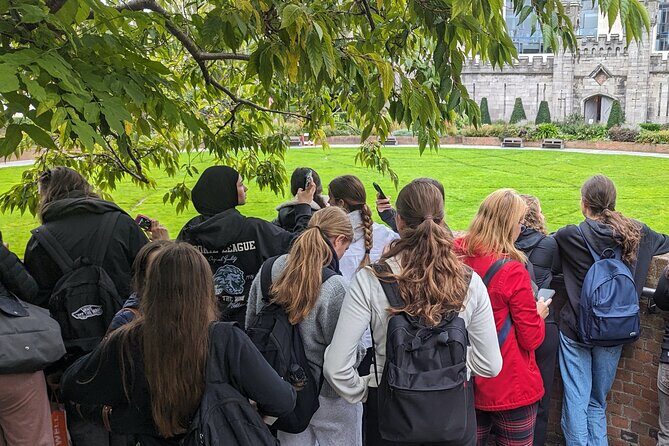
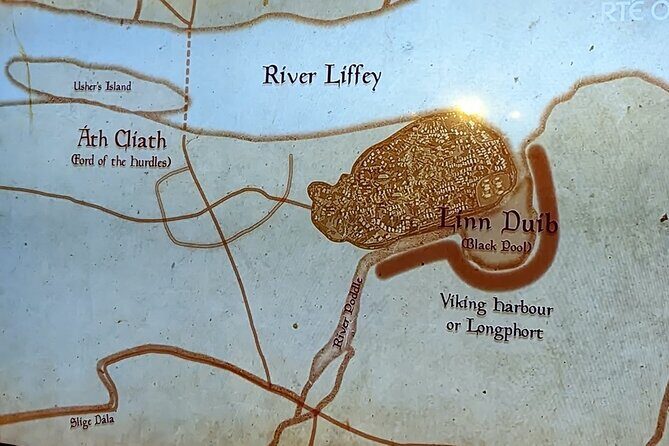
Then you reach Dubh Linn Gardens, described as a city-centre oasis with heritage that can take your breath away. This part is more than a break. You hear about the circular garden that was once the dark pool, which is tied to the origin story behind the name Dublin.
Along the way you’ll also see or hear about specific memorials and connections, including the Garda Memorial, the David and Goliath statue, and a Special Olympics tribute. The route also points you toward the Chester Beatty Museum and Library, giving you a next step if you want to keep exploring after the walk ends.
If you’re the type who wants one “breather” point during a walking tour, this is the one.
Dublin Castle: 700 years in one stop (and why you’ll remember the tower story)
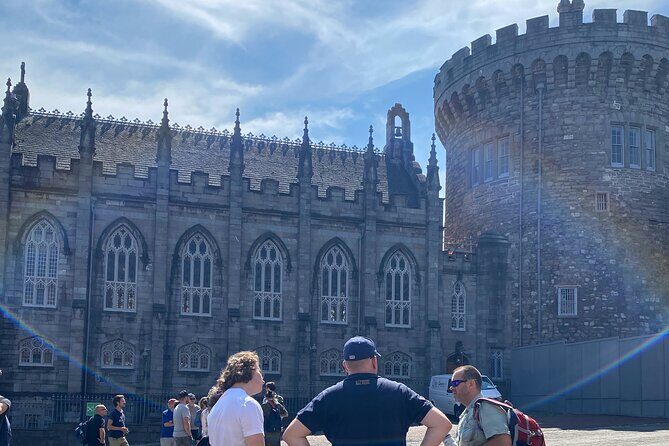
The final major attraction is Dublin Castle, described as the centre of government administration while Ireland was under British rule. Here, the big win is the layered architecture: you get a juxtaposition of 18th- and 12th-century elements, with remnants of early Norman rule.
You’ll also hear about the 16th-century escape of the last of the Gaelic chiefs from the Record Tower, which is described as still fully intact. It’s one of those stories that turns “castle walls” into a sense of personal drama. You’re not only looking at stone; you’re hearing about who moved through these places and why.
The tour moves through the courtyard and exits by City Hall to complete the walk, bringing you back to your starting point. That loop-around structure is practical: it helps you avoid ending your trip with a long scramble across town.
Price and value: $200.62 per group makes sense when you split and slow down
The price is $200.62 per group for up to 15 people, with a duration of about 2 hours 20 minutes to 3 hours 30 minutes. Because it’s priced per group (not per person), the value improves when you travel with friends or family and you can share the cost.
For solo travelers, it can still be worth it if you want a private route and direct Q&A rather than competing with a busload. You’re paying for time with a local guide and for the structure that keeps you from missing key details—like why Essex Gate matters or what the Viking longboat is doing there.
Also, snacks and refreshments are not included, so think of this as a history-and-stops experience, not a food tour. If you’re out all day, it’s smart to eat before you start, or plan a meal right after you finish back at the meeting point.
Finally, there’s a weather requirement. If it’s cancelled due to poor weather, you’ll be offered a different date or a full refund. Dublin weather can change fast, so check forecasts and dress for walking.
Who this tour fits best (and who may want a different option)
This private walking tour fits you best if you want Dublin’s central story told in order: civic beginnings, medieval city walls, Viking traces, cathedral rivalry, and then governance under British rule—all connected by street-level explanation.
It also suits you if you like flexibility. The guide is described as willing to answer questions and adjust to the group’s interests, and Ben in particular comes up often in the feedback as friendly, humorous, and attentive.
If you want a purely casual stroll with almost no interpretation, you might find this more structured than you expected. Likewise, if you’re hunting for a long list of interior museum time, note that the medieval church visitor centre is included only subject to opening times, and the walk includes multiple stops with set time windows rather than a single museum deep dive.
Should you book this private Dublin walking tour?
I’d book it if you want a guided walk that actually teaches you how Dublin formed, not just where the landmarks are. The combination of medieval walls, major cathedrals, a very specific Viking-linked stop at Wood Quay, and a short visit to the Brazen Head makes the route feel cohesive.
Book it especially if you’ll enjoy a guide like Ben—someone who answers questions, adds humor, and can point you toward a good plan for after the tour. And if your group can split the cost up to the maximum group size, the value gets even stronger.
If the medieval church visitor centre is a top must-see for you, be flexible with your expectations on days when opening times don’t line up. Otherwise, this is a smart way to see Dublin’s core in a single, well-paced afternoon.
FAQ
How long is the private guided walking tour in Dublin?
The tour runs for about 2 hours 20 minutes to 3 hours 30 minutes, including walking time for the attractions.
Is this tour private?
Yes. It’s a private tour, and only your group participates.
What group size can I book for?
The price is listed per group for up to 15 people.
What’s included in the experience?
You get live commentary with a qualified local guide. Entrance to the medieval church and its visitor centre is included, subject to opening times.
Are snacks or drinks included?
No. Snacks, refreshments, and drinks are not included.
Which stops are included on the walk?
You’ll pass or visit Dublin City Hall, the Parliament Street area, Temple Bar area, Christchurch Cathedral, St. Audoen’s Church, the Brazen Head, Saint Patrick’s Cathedral, Dubh Linn Gardens, and Dublin Castle, plus other historic streets and landmarks along the way.
Is the medieval church entrance guaranteed?
It depends on opening times. The entrance to the medieval church and visitor centre is included subject to opening times.
Where do I meet for the tour, and where does it end?
You start at Dublin Tourist Information Centre, Barnardo Square, 3 Palace St, Dublin 2 (D02 T277, Ireland) and the tour ends back at the same meeting point.
Is a service animal allowed?
Yes. Service animals are allowed.
Do you cancel for bad weather?
The experience requires good weather. If it’s cancelled due to poor weather, you’ll be offered a different date or a full refund.