REVIEW · DUBLIN
Full-Day Irelands Ancient Boyne Valley Private Guided Tour
Book on Viator →Operated by Boyne Valley Tours · Bookable on Viator
A whole day of ancient Ireland, without the crowds. This private tour strings together four key passage tomb and ceremonial sites in the Boyne Valley region, with a guide to translate the big ideas behind the stones. I like how the day balances big, king-making lore at Hill of Tara with the quieter, more human-feeling Stone Age mystery of Loughcrew and the tombs at Dowth and Fourknocks. One thing to weigh: there’s no lunch included, so plan for food stops on your own.
What makes it especially workable is the private pace. You get pickup (share your full address with the Eircode if you’re in an apartment or AirBnB), bottled water, and an air-conditioned vehicle for the drive between sites. I also really like that admissions are listed as free for each stop, which helps keep the day from turning into an expensive add-on. The possible drawback is that you’re fitting a lot into one day—so you’ll want a moderate fitness level and comfortable shoes for uneven ground.
In This Review
- Key Highlights You’ll Feel Immediately
- Entering the Boyne Valley Without the Headache
- Hill of Tara: Kingship, the Fort of the Kings, and the Stone of Destiny
- Loughcrew Cairns: Slieve na Caillaigh and the Hag-Legend Stones
- Dowth Passage Tomb: A Bigger Name Than Its Fame
- Fourknocks Passage Tomb: Cold Hills, Cassiopeia, and Winter Sun Logic
- The Private Setup: Transport, Timing, and Why It Feels Less Rushed
- Price and Value for Up to 3 People
- What to Expect on the Ground (and How to Prepare)
- Who This Tour Suits Best
- Should You Book This Boyne Valley Private Tour?
- FAQ
- What’s the duration of the Full-Day Ireland’s Ancient Boyne Valley Private Guided Tour?
- How many people is the tour for?
- What stops are included?
- Is admission included for the sites?
- Is lunch included?
- Do I get pickup from my accommodation?
- What’s included in the tour price?
- Is this tour suitable if I’m not very mobile?
Key Highlights You’ll Feel Immediately
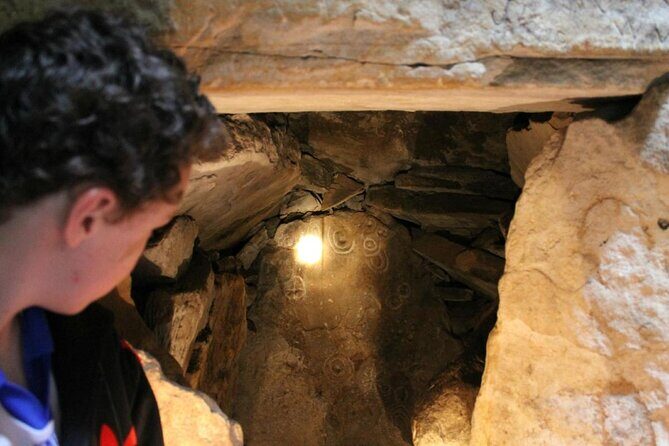
- Private, guided pacing: one group, one guide, and time to ask questions without waiting for a bus crowd
- Hill of Tara’s kingship story: the Fort of the Kings and the Lia Fáil (Stone of Destiny) legend
- Loughcrew Cairns’ 5,000-year scale: Slieve na Caillaigh (mountain of the hag) and five-cairn hilltop vibes
- Dowth’s winter solstice alignment: the way setting sun reaches stones in the central chamber
- Fourknocks as a quieter cousin: helical rising story linked to Cassiopeia and zig-zag engravings
Entering the Boyne Valley Without the Headache
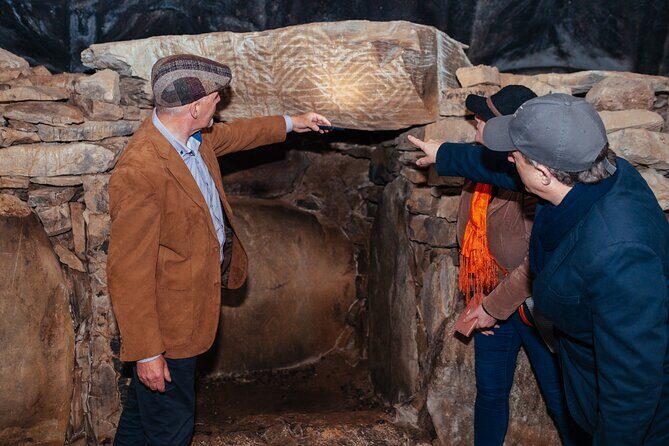
If you’ve ever tried to see the Boyne Valley on your own, you’ve probably run into the same problem: the sites are spread out, the best viewing windows depend on season and light, and the crowds can eat your time fast. This tour is built to solve that. You start in the morning (8:30 am), ride in a comfortable air-conditioned vehicle, and hit four sites in a smooth sequence—each with a private guide briefing so you know what you’re looking at.
The private format matters more than you’d think. At places like these, the difference between a good visit and a great one is context: what’s ceremonial, what’s aligned, and what legends might mean. With a guide, you get the story behind the layout, not just a signboard and a quick photo.
Also, this is a value-friendly setup in one important way: the tour lists admission tickets as free for each stop. That doesn’t remove the need for a ticket or timing on the ground, but it keeps your day from inflating with entry fees the way some Ireland heritage tours can.
You can also read our reviews of more guided tours in Dublin

Hill of Tara: Kingship, the Fort of the Kings, and the Stone of Destiny
Hill of Tara is the kind of place where the landscape feels symbolic even before you fully understand the symbolism. It’s associated with Celtic ceremonial life and kingship rituals, and the tour gives you the structures to look for as you walk up.
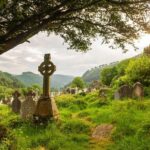
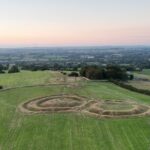
Your guide focuses on the summit enclosure called the Fort of the Kings, an Iron Age royal enclosure that contains two interlinked earthworks: Cormac’s House and the Royal Seat. That’s the core of why Tara works as a start to the day. Instead of jumping straight to tombs, you begin with the idea of authority—where power was performed, not just held.
At the middle of the Royal Seat is a standing stone known as the Lia Fáil. The legend is dramatic: when the true King stood at the stone, it was said to let out a screech heard across Ireland. Even if you keep your feet firmly in reality, it’s a useful mental lens. You start to notice how these sites are built for ceremony—sound, sight lines, and the drama of a central object.
Practical note: Tara involves walking up to the summit and moving around the enclosure. Plan for uneven ground. This is doable, but it’s not a sit-everywhere kind of visit.
What I’d tell you to do here: slow down. Spend a little time just standing in the Royal Seat area and letting the enclosure layout make sense before you move on. The story lands better when you can see how the spaces relate.
Loughcrew Cairns: Slieve na Caillaigh and the Hag-Legend Stones
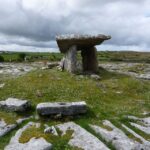
Next up is Loughcrew Cairns, a site that feels more “out in the hills” than the famous showpieces. The tour frames it as a 5000-year-old Stone Age landscape of cairns scattered across the hills. That phrasing matters, because it changes how you experience it: you’re not just visiting one monument. You’re walking through an older, wider ritual zone.
The Irish name for the site is Slieve na Caillaigh, meaning mountain of the hag. Local legend says a giant hag crossed the land and dropped large stones from her apron while striding. It’s a strange image—in a good way—and it gives you permission to see myth alongside archaeology. Not every stone age structure needs a single, literal explanation to feel meaningful.
The tour keeps the emphasis on how the cairns sit on the hill terrain. That helps you understand why the site has always lived in the imagination of locals: the monument placement isn’t hidden. It’s visible from slopes and paths, like someone intended you to notice it as part of the wider geography.
Practical note: this stop can involve some uneven walking over hilly ground. Bring shoes with grip and treat this as a steady stroll, not a quick dash.
Dowth Passage Tomb: A Bigger Name Than Its Fame
Dowth is one of the three principal tombs in the Brú na Bóinne World Heritage Site, but it doesn’t get the same spotlight as Newgrange and Knowth. That’s exactly why it’s a strong stop on a private itinerary. When a site is less crowded, you can actually take your time with how it feels and what the guide is pointing out.
Dowth is presented as a megalithic passage tomb and, importantly, it’s framed as comparable in size to both Newgrange and Knowth. So if you’ve heard Dowth described as lesser-known, this tour’s approach corrects that. You come expecting something big, not something small.
A key detail here is alignment. Like Newgrange, Dowth is aligned with the winter solstice. During December, setting sunlight is said to penetrate the passage tomb and illuminate three stones in the central chamber. You don’t need to be there during solstice to appreciate what the alignment means. It’s evidence that the builders thought far ahead—designing the architecture around a seasonal event.
That makes Dowth more than a photo stop. It’s a lesson in how time and stone were tied together, and how much intention sits in the geometry.
Practical note: passage tomb areas often involve looking in and around entrances, plus walking on ground near the mound. Take it slow, especially if it’s damp or windy.
Fourknocks Passage Tomb: Cold Hills, Cassiopeia, and Winter Sun Logic
Fourknocks is described as a hidden gem, and the reason it’s worth your attention is simple: it adds variety. You still get the passage tomb structure and the 5,000-year timeframe, but the alignment story is different.
The tour explains its Irish name: Fuair Cnoic, meaning cold hills. That naming detail is more than trivia. It supports the feeling of Fourknocks as a place set slightly apart from the most famous sites—more quiet, more rural, more “let the stone speak.”
As for astronomy, the tour notes that Fourknocks is too far north for the kind of solar alignment you hear about at Newgrange. Instead, it’s aligned with the path of the winter solstice sunrise toward Newgrange. Then comes a fascinating idea: during Stone Age times, the passage tomb may have been aligned with the helical rising of a W-shaped constellation of Cassiopeia. The tour also connects that to the dominance of W-shaped zig-zag engravings.
You don’t have to be an amateur astronomer to enjoy that. What you’ll likely appreciate is the way the guide ties art, markings, and layout into one thinking system. Even if you treat the Cassiopeia piece as a theory (many ancient alignment ideas are), it still gives you a richer way to look at the carvings.
And again, private pacing helps. You’re not rushed through this like an item on a list. You can sit with questions and compare what you’re seeing to the earlier sites in the day.
You can also read our reviews of more private tours in Dublin



The Private Setup: Transport, Timing, and Why It Feels Less Rushed
This tour runs for about 8 hours and is private for your group (up to 3). That’s a big part of why the day works. You’re not stuck behind other people’s photo plans, and you can adjust your walking pace if someone wants more time at Tara or less time at the hill paths.
Transport is handled in an air-conditioned vehicle, plus you get bottled water. In Ireland, that water detail sounds small—until you’re out walking under changing weather. It’s one of those comfort choices that makes a long day easier to handle.
Each stop is timed at about 1 hour, which gives you a comfortable rhythm: you see the site, hear the story, ask a question, then move on. If you’ve tried to do these places self-guided, you know how easy it is to lose track of time and end up underestimating how long the walking and reading takes.
What about admission and tickets? This tour uses a mobile ticket, and the information provided lists admission tickets as free for each stop. Practically, that means the day is simpler to budget for: you’re paying for the guide and transportation rather than stacking multiple ticket fees on top.
Price and Value for Up to 3 People
At $898.70 per group (up to 3), you’re paying as a single unit. That price can look steep at first glance, but here’s how I think about value for a day like this:
- You’re paying for private transport across multiple sites, not a shared shuttle model.
- You’re paying for a dedicated guide throughout the day, with multiple stops that each need explanation.
- Admissions are listed as free at each location, so you’re not getting hit with entry fees that raise the true cost of the experience.
If you’re traveling solo, it’s a premium day. If you’re traveling as two or three, it starts to feel more reasonable because the cost spreads across shared transportation and private guiding time.
One more value angle: this itinerary picks sites that don’t just repeat the same famous circuit. You get Tara plus three major tomb/cairn stops that add variety. That reduces the risk of paying for a day that feels like you bought a ticket to see the internet’s most popular hits only.
What to Expect on the Ground (and How to Prepare)
This day is a heritage tour, but it’s still a walking day. The tour notes moderate physical fitness is required. That likely means: expect some uneven terrain, some uphill moments, and time spent moving around mounded or outdoor sites.
Here are the preparation tips that actually matter:
- Wear shoes with grip. Cairns and hill paths don’t care about fashion.
- Dress for Irish weather changes. Even in calm conditions, a breeze on a hilltop can feel colder than you expect.
- Bring a plan for lunch. Lunch is not included, so either pack something or plan where you’d like to eat during breaks (your guide may help you think about the timing, but lunch itself isn’t part of the provided bundle).
- If you need pickup, send your address clearly, including the Eircode for apartments and AirBnBs. That’s the difference between a smooth start and a frustrating morning hunt.
Also, the tour is in English, and confirmation is provided at booking time. If you’re juggling travel schedules, that clarity helps.
Who This Tour Suits Best
This is a great fit if you want one focused day and you don’t want to fight for time at major sites. It’s also a strong choice if you like ancient culture but want it explained in a way that connects the stones to the people who built them.
You’ll probably enjoy it most if:
- you prefer a private experience over large group tours
- you’re interested in ceremonial sites and alignment stories, not just quick views
- you want to see more than one monument type in a single day (hill enclosure, cairns, and passage tombs)
It might not be the best match if you’re looking for a low-walking day or if you need long, free browsing time at each spot without a structured guide.
Should You Book This Boyne Valley Private Tour?
If your goal is to see Tara and the less-crowded side of the Boyne Valley with clear guidance, I think this is an easy yes—especially for small groups. The combination of private guiding, an efficient route, free admission listed at each stop, and a guide who can connect legends to layout is exactly the kind of value that makes heritage tours feel worth the money.
If you’re on a tight budget and you’re fine planning on your own, you can do part of this independently. But this is the day that removes friction: transport, pacing, and the story thread that ties each site together.
Bottom line: book it if you want a smart, guided, single-day circuit of Ireland’s ancient ritual world—and you’re happy to handle lunch on your own.
FAQ
What’s the duration of the Full-Day Ireland’s Ancient Boyne Valley Private Guided Tour?
It runs for about 8 hours.
How many people is the tour for?
It’s a private tour for your group, up to 3 people.
What stops are included?
The tour includes Hill of Tara, Loughcrew Cairns, Dowth Passage Tomb, and Fourknocks Passage Tomb.
Is admission included for the sites?
Admission tickets are listed as free for each stop.
Is lunch included?
No. Lunch is not included.
Do I get pickup from my accommodation?
Pickup is offered. If you’re staying in an apartment or AirBnB, you’ll need to provide your full address including the Eircode.
What’s included in the tour price?
Included items are bottled water, private transportation, and an air-conditioned vehicle.
Is this tour suitable if I’m not very mobile?
It’s noted that you should have a moderate physical fitness level.