REVIEW · DUBLIN
Turtle Bunbury’s Dublin: A Self-Guided Audio Tour from a Celebrated Author
Book on Viator →Bookable on Viator
A one-hour Dublin walk with serious stories. Turtle Bunbury’s Dublin is a self-guided audio tour that keeps you moving through a compact slice of the city, linking landmarks to characters and political twists you might never notice on your own. I like the VoiceMap setup and the fact you get offline audio and maps, so you’re not stuck when signal drops.
Two big wins for me: the route feels convenient (you can do it in about an hour to an hour 15 minutes) and the narration is organized—stories arrive in the right order as you pass each spot. The one drawback to plan around is timing: at the time this tour info was published, Trinity College (and the Book of Kells area outside it) was listed as closed until August 10, 2020, and it could reopen sooner or later.
So you’re mainly touring sights from the sidewalk and pathways. If Trinity is shut when you go, you’ll want a simple Plan B for the extra time it might take to regroup—like ducking into a nearby pub to finish the audio in comfort.
In This Review
- Key highlights you’ll feel fast
- Why this audio tour works: St Stephen’s Green to Parliament Square
- Price and value: what $7.99 buys (and what it doesn’t)
- Your setup: VoiceMap, offline audio, and simple success rules
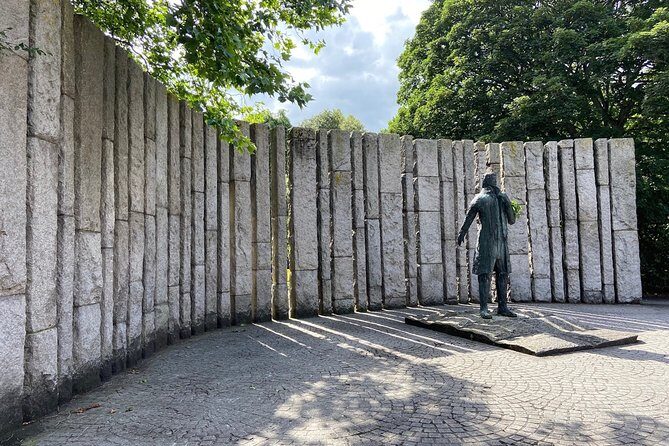
- Start at Edward Delaney’s Famine Memorial: setting the tone
- Hugenot Cemetery and O’Donoghue’s: quiet corners with big backstories
- Government Dublin: Department of the Taoiseach, National Museum, and Leinster House
- Merrion Square and Oscar Wilde: literature in the street
- Kennedy’s Pub and the on-your-way rhythm of Dublin
- Approaching Trinity College grounds: what you’ll see and what you might miss
- Ending at Parliament Square: wrap-up with perspective
- How long it really takes, and how to pace your day
- Who this tour suits best
- Should you book Turtle Bunbury’s Dublin audio tour?
- FAQ
- Where does this tour start and end?
- How long is the audio tour?
- How much does the tour cost?
- Is it self-guided or a live guide?
- Can I download the audio and maps for offline use?
- Do I need museum tickets to do the stops?
- What do I need to bring?
- Is Trinity College open during the tour?
- Can I cancel after booking?
Key highlights you’ll feel fast

- Offline VoiceMap access means audio, maps, and geodata work without roaming charges.
- A tight route from St Stephen’s Green through Merrion Square to Trinity area and on to Parliament Square.
- Sharp character threads connect Dublin street corners to people like Wolfe Tone and Oscar Wilde.
- Convenient landmarks along the way, including O’Donoghue’s, Leinster House, and Kennedy’s Pub.
- Literary Dublin moments with quick stops for the Oscar Wilde Statue and Oscar Wilde House area.
- Logical navigation that matches what you see on the ground, not just some random dot on a map.
Why this audio tour works: St Stephen’s Green to Parliament Square
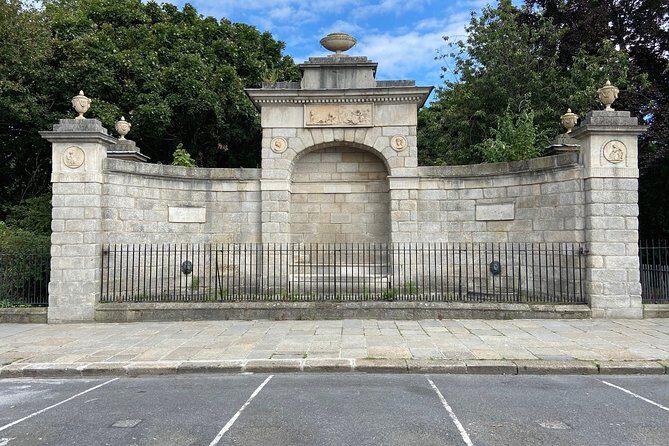
This is the kind of Dublin experience that saves your legs and sharpens your eyes at the same time. You start near St Stephen’s Green at Edward Delaney’s Famine Memorial, then you’re guided step-by-step through a cluster of neighborhoods that already feel like an easy day on foot. The route is short enough that you don’t have to “tour all day” to get good payoff.
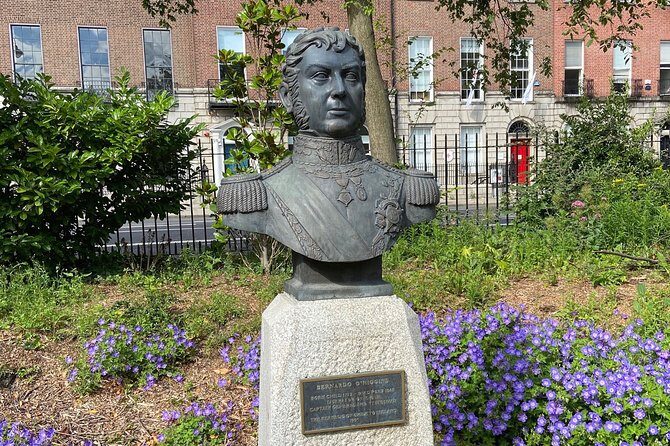
The real value is that the tour doesn’t treat Dublin like a list of plaques. It links places to people and events—politics, wars, migration, and the strange ways history repeats. You’ll hear about figures such as Bernardo O’Higgins, Maurice Fitzgerald, Wolfe Tone, and Paddy Hitler, and you’ll get story threads that include Vikings who became Normans, Frenchmen who fought for Ireland, and Irishmen who fought for Mexico. Even if you already know the headline names, the connections to street-level locations give the city a sense of cause-and-effect.
And because it’s self-guided, you control the pace. If a story lands with you, you can linger. If you’re fast, you’ll clear the route quickly and still feel like you got the point.
You can also read our reviews of more guided tours in Dublin



Price and value: what $7.99 buys (and what it doesn’t)
At $7.99 per person, this is priced like a coffee-plus experience—especially because you’re not buying a ticket to one museum and hoping you like it. Instead, you’re buying narration that travels with you for roughly 1 to 1 hour 15 minutes, plus lifetime access to the English version.
That lifetime access part matters. Dublin is busy, weather changes, and schedules get messy. If you want to revisit the same route later—maybe after you learn a bit more about Irish history—you can. You also get offline access to audio, maps, and geodata through the VoiceMap app, which can reduce the usual “I hope my phone holds up” anxiety.
What you should expect not to include: smartphone and headphones (you bring those), plus transportation and food/drink. You also won’t have museum entry fees baked in. That’s not a negative; it just means you’re doing street-level history walking. If you want museum ticket time too, plan to add it separately.
Your setup: VoiceMap, offline audio, and simple success rules

This tour runs through the VoiceMap app on Android and iOS. The big practical advantage is offline access: audio, maps, and geodata are available without relying on cell coverage. In Dublin, that’s a relief, since you can still move through shaded streets, busy blocks, and areas where signal can be spotty.
Here’s how to make it go smoothly:
- Bring a charged phone and comfortable headphones. The tour doesn’t supply them.
- Download or load the tour so the offline files are ready before you start walking.
- Use the app’s map guidance as your primary navigation, and let your eyes confirm the landmark.
From the experience side, the best part is the way it keeps you oriented. The directions line up with what you’re seeing, and the information rolls in a logical order instead of random storytelling. You’re not hunting for the next clue—your next stop comes when you arrive.
Start at Edward Delaney’s Famine Memorial: setting the tone
You kick off near St Stephen’s Green, starting at Edward Delaney’s Famine Memorial. Starting there is smart, because Dublin’s history doesn’t begin with one battle or one century. It’s layered, and this opening spot ties your walk to the kind of hardship and displacement that shapes everything that comes after.
Once you’re by the memorial, the audio tour immediately frames how you’ll read the streets: not as background, but as evidence. That matters, because later the tour bounces across different eras and even different countries—so you’re prepared for the idea that Dublin can connect to global stories.
If you want a small tip: take 30 seconds before you begin walking to locate the exact memorial area so your first narration lines up cleanly with your position.
Hugenot Cemetery and O’Donoghue’s: quiet corners with big backstories

After you’re moving, the route passes by the Hugenot Cemetery. Even without stepping inside any attractions, the cemetery stop gives a feeling for how Dublin has hosted different communities across time. It’s a calmer pause than some of the more public government-facing buildings you’ll see later.
Then you head past O’Donoghue’s, a place that gives the tour a human heartbeat. Pub landmarks can sound like background on a map, but here they work as time anchors: Dublin isn’t just architecture. It’s where stories are told, where people gather, and where you’ll likely end up if you need a breather mid-walk.
You’ll also pass the Merrion Hotel, and that transition is useful. The tour keeps mixing civic Dublin with everyday Dublin, so you get a sense of how these worlds overlap.
A few more Dublin tours and experiences worth a look





Government Dublin: Department of the Taoiseach, National Museum, and Leinster House

Next comes a stretch that feels like the city’s decision-making center. You pass by the Department of the Taoiseach, then the National Museum of Ireland, then Leinster House.
This is one of the tour’s best “read the city differently” moments. When you’re on foot, it’s easy to see these as just grand buildings with official signs. The audio tour uses them to highlight themes: power, policy, and political change. That’s where characters like Wolfe Tone fit naturally—because Dublin’s streets carry the physical reminders of who argued for what, and why.
At this point, the narration also reinforces how far-reaching Irish political history can be. The tour’s threads about French fighters for Ireland and Irish fighters connected to Mexico start to make more sense once you’re physically in the layer of Dublin where national identity and political debate happened.
Merrion Square and Oscar Wilde: literature in the street
Now the route slides into Merrion Square, and this is where Dublin’s “elegant walking” side shows up. The park-like geometry and the open sightlines make it easier to focus on the story beats. You’ll pass through the square and get quick stops that feel like stepping stones.
Two highlights here:
- a brief stop at the Oscar Wilde Statue
- a brief stop at the Oscar Wilde House area
The Oscar Wilde stops are short by design. You’re not standing in one place for a long guided lecture. Instead, the audio gives you just enough context to notice why these locations matter, then it moves you on. That’s a good fit for this tour’s overall pace.
If you’re traveling with anyone who likes literature, this section is a win. You don’t just learn the name—you get a sense of why Wilde belongs on this walking route from St Stephen’s Green toward Trinity.
Kennedy’s Pub and the on-your-way rhythm of Dublin
Between the square and the Trinity approach, the route passes by a pharmacy and Kennedy’s Pub. That may sound random until you realize it does something practical: it gives you natural reset points.
This kind of audio tour works best when your body stays matched to your ears. If you’ve been walking for 30–40 minutes, the option to pause—without feeling like you’ve “left” the tour—helps. You can step aside, take a sip of water, adjust your headphones, and then rejoin the next story segment with less friction.
Also, this is a reminder that the walking route covers an everyday Dublin corridor, not just the “postcard view” areas.
Approaching Trinity College grounds: what you’ll see and what you might miss
Near the end, the tour goes through the college grounds and passes by the Museum Building and Berkeley Library. Then you get a brief stop outside the Book of Kells area.
But there’s a key planning detail: at the time this tour description was published, Trinity College Dublin was listed as closed until August 10, 2020, and the Book of Kells was also listed as closed until that same date. It might reopen sooner or later, and it could close again after reopening.
So what does that mean for you in real life? You should plan on viewing and listening from the outside or from accessible paths. If Trinity is open when you go, great—you can build your day around that. If it’s shut, you still get the narration beats, and you can finish the audio while staying flexible.
This is where self-guided pays off. A fixed group tour would be stuck improvising. Here, you can pause longer in the spots that are accessible, then keep going at your own pace.
Ending at Parliament Square: wrap-up with perspective
Your tour ends at Parliament Square. That finish point is a nice way to land your stories. After walking past government buildings, major institutions, and literary locations, you’re pulled back into a public civic space—one that works like a mental period at the end of a long sentence.
By the time you reach the end, the tour’s historical juggling act should feel coherent. You started with a memorial tied to famine-era hardship. You moved through cemeteries and pubs. You walked past national-level institutions. Then you reached the academic center tied to book history. Even if you don’t remember every detail, you’ll remember the pattern: Dublin’s past shows up in the present on purpose.
How long it really takes, and how to pace your day
The tour duration is listed as about 1 hour to 1 hour 15 minutes. That’s a solid window for a half-day travel plan, especially if you’re mixing it with a longer stop somewhere else later.
My pacing advice:
- Treat it as a walking tour first, listening tour second.
- If you plan to stop for photos at Oscar Wilde spots or around the Trinity area, give yourself a few extra minutes.
- If Trinity is closed, don’t force a sprint to hit every story beat. Finish what you can, then regroup nearby.
Because it’s self-guided, a slower pace isn’t a failure. It’s the point.
Who this tour suits best
This audio tour is a great match for you if you:
- want a compact Dublin route that fits into a busy schedule
- prefer self-guided control over group timing
- like history told through people, not just dates and plaques
- want something that works even if you skip museum ticket time
It’s also useful if you’re traveling with someone who gets bored by long guided speeches. Short stops, street-level context, and story surprises keep it moving.
If you’re the type who wants to spend hours inside major sights, this won’t replace that. Think of it as the front door to your bigger Dublin day, not the whole house.
Should you book Turtle Bunbury’s Dublin audio tour?
Yes—if you want a high-value, low-cost way to connect Dublin’s landmarks to the kinds of characters and events you’ll remember. The best reasons to book are the lifetime access, the offline VoiceMap support, and the way the narration feels organized and easy to follow while you walk.
Skip it or adjust expectations if you’re specifically hoping to enter Trinity College or the Book of Kells as part of the plan, because the tour info notes closures during the coronavirus period. Even then, you’ll still have a strong sidewalk-to-parks-and-institutions walk.
If you want one “make it work” move: bring your headphones, download for offline use, and give yourself enough time near Trinity to absorb the stories even if the main sites are closed.
FAQ
Where does this tour start and end?
It starts at Edward Delaney’s Famine Memorial at St Stephen’s Green in Dublin 2 and ends at Parliament Square in Dublin.
How long is the audio tour?
The duration is listed as approximately 1 hour to 1 hour 15 minutes.
How much does the tour cost?
It costs $7.99 per person.
Is it self-guided or a live guide?
It’s a self-guided audio tour. You use the VoiceMap app on your phone to listen as you walk.
Can I download the audio and maps for offline use?
Yes. The tour includes offline access to audio, maps, and geodata.
Do I need museum tickets to do the stops?
Tickets or entrance fees are not included for any museums or other attractions. This tour mainly supports en-route viewing and listening.
What do I need to bring?
You’ll need your own smartphone and headphones. Transportation, food, and drink are not included.
Is Trinity College open during the tour?
At the time this tour information was published, Trinity College and the Book of Kells area were listed as closed until August 10, 2020, and reopening timing could vary. You may still listen as the route passes through accessible areas.
Can I cancel after booking?
No. The experience is non-refundable and cannot be changed for any reason.