A hill you can almost hear. The Hill of Tara is one of Ireland’s most famous archaeological places, and this self-guided GPS audio tour turns it into an easy walk with stories you can follow at your own pace. You’ll hear about High Kings of Ireland, Celtic spirituality, and local folk traditions, plus you’ll pass a Stone Age passage tomb while you go.
I like that you get to explore without timing pressure, because the tour is built for a comfortable 1 hour to 1 hour 15 minutes. I also really enjoy the way the route is practical: the app uses GPS, and you get offline audio, maps, and geodata, so you’re not constantly hunting for signal.
One thing to consider: this is very phone-and-audio dependent. You’ll need your smartphone and headphones, and I’d plan to download everything ahead of time, since I’ve seen the tour fail to start when Wi‑Fi was unavailable.
In This Review
- Quick hits you’ll feel in your feet
- Hill of Tara is the kind of place that gets better with a rhythm
- Price and what $9.99 buys you (and what it doesn’t)
- VoiceMap setup: the practical step that prevents headaches
- The Hill of Heroes start: easing into Tara without rushing
- On the ancient Hill of Tara: High Kings, spirituality, and the passage tomb
- Saint Patrick’s Church: one more layer of Ireland’s long story
- What the audio really does for you (beyond facts)
- Timing: 60 to 75 minutes is just right if you plan your stops
- What to bring and what to avoid bringing
- Is this worth your time? Who this self-guided tour fits best
- Should you book the Hill of Tara Mystical audio tour?
- FAQ
- How long is the Hill of Tara self-guided audio tour?
- Where does the tour start and end?
- How does the audio navigation work?
- Do I need internet to use the tour?
- What app do I need to use this tour?
- Is the price $9.99 per person, and what’s included?
- Are tickets to museums or attractions included?
- Is this tour refundable if I cancel?
- Are headphones and a smartphone included?
Quick hits you’ll feel in your feet
- GPS-based walking directions that help you keep moving without a guide
- Offline audio and maps via the VoiceMap app (smart for patchy coverage)
- A route that includes Hill of Tara plus Hill of Heroes
- You’ll get context on High Kings, Celtic spirituality, and local folk traditions
- The tour passes Saint Patrick’s Church, adding a different historical layer
- You’ll see a Stone Age passage tomb during your walk
Hill of Tara is the kind of place that gets better with a rhythm
Hill of Tara isn’t just a viewpoint with ruins nearby. It’s the kind of Irish site where the ground itself feels “charged,” because so many stories, legends, and historical claims have collected here over time. The clever part of this tour is that it doesn’t ask you to absorb everything in one rigid sweep. Instead, you walk, you listen, and you choose how long you linger at each spot.
This works especially well at Tara because the site is spread out enough that you’ll naturally want to wander. A self-guided format helps you match your pace—slow for questions, faster when you’re just chasing the next viewpoint. And since the audio is GPS-triggered, it’s less like reading random plaques and more like having a story that follows your steps.
The audio also gives you hooks that make the physical remains easier to understand. When you hear about High Kings and how Tara was imagined as a place of power, the hills feel less like scenery and more like a setting. When the audio turns toward spirituality and folk traditions, you start noticing how the myths connect to the way people talk about this place even today. That blend—archaeology plus storytelling—can make the experience feel more human, not just academic.
You can also read our reviews of more guided tours in Dublin



Price and what $9.99 buys you (and what it doesn’t)
At $9.99 per person, this is priced like an inexpensive “do it yourself” add-on—because it is. You’re not paying for a guide with conversation time. You’re paying for an app-based narrative that’s accessible on your own schedule.
Here’s what you do get:
- Lifetime access to the tour in English
- Offline access to audio, maps, and geodata
- The VoiceMap app for Android and iOS
Here’s what you don’t get:
- No included tickets to museums or other attractions
- No food or drink
- You’ll need your own smartphone and headphones
- No transportation
So the value question becomes simple: if you already have a phone, you’re happy to bring headphones, and you want an easy, guided-feeling walk without paying for a live tour, this is a decent deal. If you’re hoping for a “hands held through the site” experience with a person, you might feel under-served.
Also keep expectations realistic: 1 hour to 1 hour 15 minutes is enough time to understand the story beats, but it’s not enough time to become a full-time archaeologist of Tara. Think of this as a guided intro that helps you appreciate what you’re seeing.
VoiceMap setup: the practical step that prevents headaches
This tour runs through the VoiceMap app on Android and iOS. Because offline access is included, you should be able to keep going even if coverage is weak. Still, don’t wing it at the last second.
Before you arrive, make sure:
- Your headphones work
- Your phone battery is healthy
- You’ve loaded the tour content so it’s ready offline
Here’s why I’m picky about this: one of the key frustrations with audio tours is a tour that won’t start at the moment you want it to. The good news is your setup is within your control, and the tour includes offline audio and maps. The bad news is that apps sometimes behave differently when you’re standing without connectivity—so take the safe route and prepare ahead.
On-site, the audio is GPS-based, so you don’t need to constantly press buttons. Your main job is to walk the route and listen when the story cues come in.
The Hill of Heroes start: easing into Tara without rushing
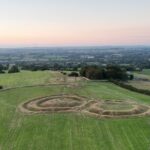
The experience begins on Hill of Heroes. That matters, because starting here gives you a “warm-up” sense of place. Instead of jumping straight to the headline structures, the audio helps you settle into the site’s meaning and scale.
What you can expect at the opening stage is a feeling of orientation: you’re not just wandering; you’re moving along a marked walking experience with audio that matches where you are. In practice, this is the part of the tour where you’ll benefit most from slowing down for a minute if the route feels unclear—because once you’re in motion, the GPS cues do the heavy lifting.
One practical detail: the audio may note access conditions. I’ve seen mention of the gate being closed at the time of a visit, and that kind of heads-up is genuinely helpful. If you run into any access restrictions, follow what the audio says and adjust your route calmly. Audio tours don’t need you to solve the site on hard mode.
On the ancient Hill of Tara: High Kings, spirituality, and the passage tomb
Next, the tour takes you onto the ancient Hill of Tara itself. This is where Tara stops feeling like a walking path and starts feeling like a story world.
The audio is built around big themes:
- High Kings of Ireland
- Celtic spirituality
- local folk traditions
Those themes are useful because they give you interpretive lenses. When you’re standing on a historic Irish site, it can be easy to miss why people cared. The audio answers that by explaining how Tara was understood as a seat of power and meaning—not just a collection of older stones.
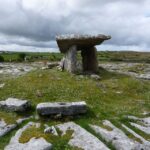
Most importantly for your eyes: the tour passes a Stone Age passage tomb. That’s a highlight because it anchors the myths and the later traditions to something older than the stories themselves. Seeing a tomb while the audio discusses later belief systems can be surprisingly grounding. It’s a reminder that people have been using this ground in different ways for a very long time.
Drawback to note here: because this is a self-guided walk, you’re responsible for your attention. If you’re chatting nonstop, you’ll miss the connections between what you’re hearing and what you’re seeing. If you can handle 10–20 minutes of quieter focus, this section is where the tour feels strongest.
A few more Dublin tours and experiences worth a look





Saint Patrick’s Church: one more layer of Ireland’s long story
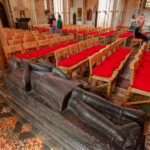
After you’ve spent time on the core hill area, the route passes by Saint Patrick’s Church. This stop is valuable because it shifts the tone. Tara is often framed through kings and myth. The church adds a different kind of time depth—religious history in the same space where older traditions echo.
Even if you don’t know anything about early Christian Ireland, passing a church within the tour gives your brain a new reference point. You start to understand Tara not as a single era, but as a place where different ages have left their marks, both physical and cultural.
One downside is that this pass-by is part of the walking flow, not a long, sit-and-talk stop. If you’re hoping for a deep architectural walkthrough, the audio format here may not match that wish. But as a practical “more to see” moment, it works.
What the audio really does for you (beyond facts)
A good audio tour doesn’t just tell you what something is. It tells you why it matters and how to look at it.
This one focuses on meaning. The High Kings theme helps you see Tara as a power center in Ireland’s imagination. The spirituality and folk traditions bring in the human side—how people explain places through belief, ritual memory, and storytelling. And when those themes run while you walk past the physical remains, you start to connect the “why” to the “where.”
Also, because the tour is GPS-based, the narration can stay tied to your position. That’s a big quality-of-life difference from downloading a few tracks and guessing where you are. You can trust that you’ll get the next part of the story at the next part of the route.
The best part is pacing. If you want 30 minutes and done, you can probably manage that. If you want to linger for views or to re-listen to a section, you can. You’re not stuck waiting for a group to move together.
Timing: 60 to 75 minutes is just right if you plan your stops
The tour duration is listed at about 1 hour to 1 hour 15 minutes. That’s a realistic window for Tara because it balances three things:
1) enough time to walk the route,
2) enough time to take in key story points,
3) enough time to look around without feeling like you’re missing the next cue.
If you’re visiting during busy hours, you might want to treat the first half like orientation and the second half like your “view and listen” time. If the site feels crowded or noisy, use headphones to block it out—not in a rude way, just in a focus way. Tara rewards calm attention.
One more timing tip: bring water, even though food and drink aren’t included. The tour itself won’t slow you down, so you’ll want to be comfortable.
What to bring and what to avoid bringing
This is the part people often forget.
Bring:
- Smartphone
- Headphones
- Charged phone (and ideally a backup battery if you have one)
- Water
Avoid relying on:
- Food stops along the route (none are included)
- Assuming Wi‑Fi is available (offline is included, but app start-ups can still be picky)
Also, this tour is open for long hours in the listing data (it shows 12:00 AM to 11:59 PM during the stated date range). Even with that, access can still be affected by on-site conditions like gates. If you show up and the route isn’t exactly as expected, don’t panic—follow the audio cues and adjust.
Is this worth your time? Who this self-guided tour fits best
This is a strong match if you:
- like to explore at your own pace
- want historical and myth-based context without booking a live guide
- prefer walking + audio over reading plaques
- can handle a phone-based experience (GPS + audio)
It’s not a great fit if you:
- hate troubleshooting apps or tech
- expect everything to be provided (headphones and phone are not included)
- want a long, in-depth guided explanation with Q and A
If you’re doing Tara as part of a day with other stops, this fits neatly. It’s short enough to pair with other sights, but rich enough to feel like you gained real understanding while you were walking.
Should you book the Hill of Tara Mystical audio tour?
I’d book this if you want a low-cost, story-driven way to experience Tara that doesn’t lock you into a group schedule. The biggest strengths are the offline-capable VoiceMap setup, the GPS-guided flow, and the way the narration connects High Kings, spirituality, folk traditions, and a Stone Age passage tomb into something you can actually follow on your feet.
I’d hesitate only if you’re likely to show up with low battery, no headphones, or zero patience for app start-up issues. Because when audio tours work, they’re great. When they don’t start, they’re frustrating.
If you can do the small prep steps—download ahead, charge up, pack headphones—this is one of those experiences that can feel like a personal guide, without the cost.
FAQ
How long is the Hill of Tara self-guided audio tour?
The tour is listed at about 1 hour to 1 hour 15 minutes.
Where does the tour start and end?
It starts at an Unnamed Road, Co. Meath, Ireland and ends at the same Unnamed Road, Co. Meath, Ireland.
How does the audio navigation work?
It’s a GPS-based self-guided walking tour, and you follow the route while listening through the VoiceMap app.
Do I need internet to use the tour?
Offline access is included for the audio, maps, and geodata.
What app do I need to use this tour?
You use the VoiceMap app on Android or iOS.
Is the price $9.99 per person, and what’s included?
Yes, the price is $9.99 per person. Included are lifetime access to the tour in English, offline access to audio/maps/geodata, and the VoiceMap app.
Are tickets to museums or attractions included?
No. Tickets or entrance fees to museums or other attractions en route are not included.
Is this tour refundable if I cancel?
No. The experience is non-refundable and cannot be changed for any reason.
Are headphones and a smartphone included?
No. A smartphone and headphones are not included, so you’ll need to bring your own.