REVIEW · DUBLIN
Glendalough Night Hike and History Tour
Book on Viator →Operated by Wild Summits · Bookable on Viator
Glendalough at night sounds spooky. It’s actually a calm, guided walk where the sunset turns into stargazing and the history keeps moving as your path darkens. You’ll meet your guide in County Wicklow and head toward the lakes for that long, quiet change in light.
I like how the tour pairs great scenery with practical storytelling. You hike the Vale of Glendalough at golden hour, and it’s built around real moments like Sika deer grazing as dusk arrives.
One thing to consider: this is a dark, nighttime hike. You should plan on moderate physical fitness and watch your footing on uneven ground in low light, even with head lamps provided.
In This Review
- Key things I’d watch for on this tour
- Glendalough at night: why this works better than a daytime hike
- Meeting in County Wicklow and what to expect from the first stretch
- Vale of Glendalough at sunset: the views come with a story
- Sika deer and night wildlife: how to spot animals without getting in the way
- The 6th-century monastic site in darkness: history you can feel
- Miners village and stargazing: looking up while you’re still moving
- Pace, fitness, and group reality on a 4 to 5 hour night hike
- Guides, storytelling, and the Elena effect
- Price and value: what $44.12 buys you (and what it doesn’t)
- What to pack and how to dress for a dark Glendalough night
- Should you book the Glendalough Night Hike and History Tour?
- FAQ
- How long does the Glendalough Night Hike and History Tour take?
- What does the tour cost?
- Where does the tour start, and do you return to the same place?
- Are head lamps provided for the night hiking portion?
- Is this tour ticketed, and do I use a mobile ticket?
- What fitness level do I need?
- Are children allowed, and are service animals permitted?
- What happens if I need to cancel or if the weather is poor?
Key things I’d watch for on this tour
- Sunset lakes, then darkness: you get the best light first, then continue into the night.
- Head lamps provided: safety comes from actual gear, not wishful thinking.
- Wildlife timing: dusk is when you’re most likely to spot animals moving around.
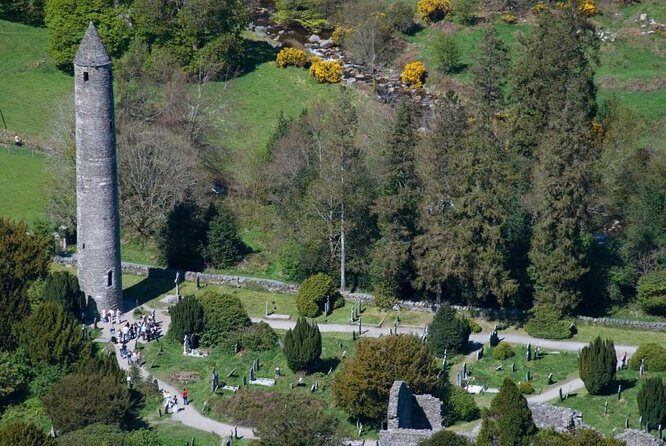
- 6th-century monastic site after dark: history is part of the walking, not a lecture.
- Stargazing as you travel: you don’t just stop—you look up at the sky during the route.
- Small group size (max 20): easier to hear your guide and keep a steady pace.
Glendalough at night: why this works better than a daytime hike
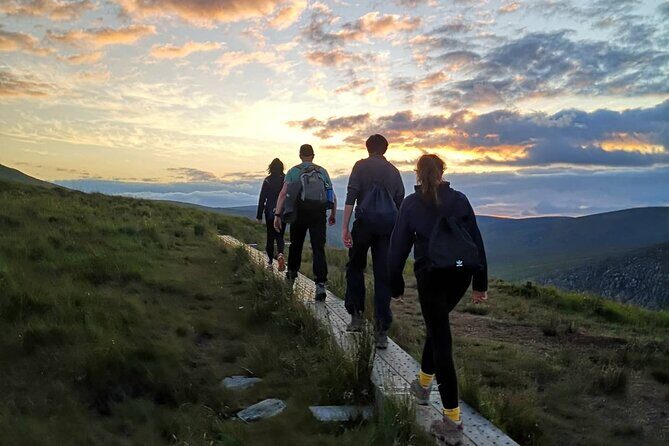
A daytime Glendalough hike is lovely. This one adds a second experience on top: the same valleys, but with night sounds, darker paths, and a sky that feels closer. The tour is built around an actual timeline—sunset, then full darkness, then stargazing—so you’re not just walking somewhere scenic. You’re experiencing a place changing hour by hour.
The other big win is the way the guide handles history while you’re still moving. Instead of treating the ruins like a museum stop, you connect the stories to the physical route—passing by key areas and learning why they mattered. That makes the place click faster, especially if you’re only visiting for a few hours total.
It’s also a solid value setup. At $44.12 per person for a roughly 4 to 5 hour guided outing, you’re paying for the guide, the night safety (head lamps), and the guided stargaring moment—not just scenery. The itinerary notes an admission ticket that’s free, which matters for value.
You can also read our reviews of more historical tours in Dublin


Meeting in County Wicklow and what to expect from the first stretch
You start at Glendalough Brockagh, Co. Wicklow, Ireland, and the tour ends back at the meeting point. That’s practical. You don’t have to solve a transportation puzzle at the end of a dark walk.
The timing matters too. The experience is designed to reach Glendalough around sunset and then continue in darkness. That means the early part of your hike is light enough to see the lakes and understand the setting. Later, you’ll feel the shift from “I’m hiking” to “I’m listening and looking.”
Plan for a group of up to 20 people, which keeps things manageable, but you’ll still be part of a walking line. If you like slow photo stops, keep expectations realistic. A night hike isn’t the time to do a leisurely stroll; you’ll want to move with the group and use short stops for pictures.
Vale of Glendalough at sunset: the views come with a story
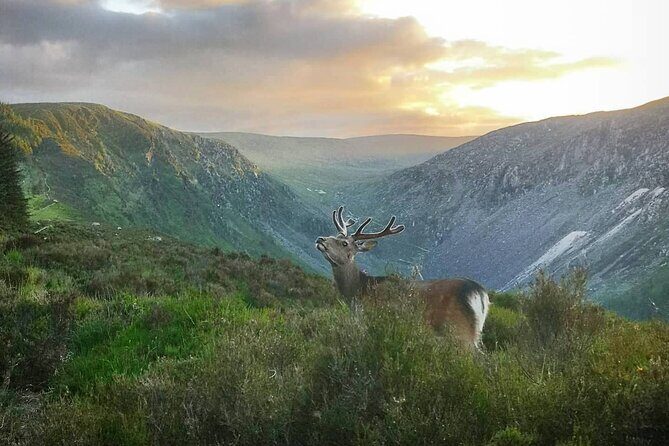
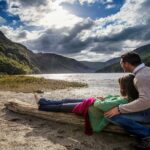
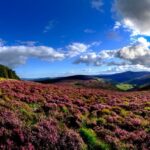
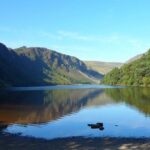
The tour’s first main phase is the Vale of Glendalough. This is where you hike the lakes as the light softens, and where the guide starts layering in context about what you’re seeing. In plain terms: you’re not just collecting photos. You’re learning how the valley shaped life here.
A key detail is the plan to watch wildlife as sunset approaches. Dusk is active time for animals, and the tour specifically mentions Sika deer grazing. If you see deer, don’t rush toward them. Let your guide set the pace, and give them room to do their own thing. The best wildlife moments often happen when you hold still for a minute and let the valley settle.
What I like about this structure is that it protects your best-light time. You get the “pretty first” portion before the darker stretch. It’s much easier to orient yourself in daylight, so once head lamps go on, you’re not wondering where you are.
Sika deer and night wildlife: how to spot animals without getting in the way
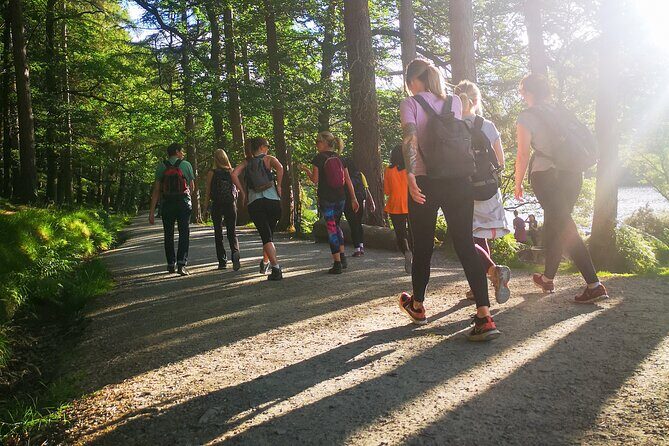
Wildlife viewing is one of the most praised parts of the experience, and the tour is clearly built for it. The mention of Sika deer matters because it tells you what kind of sighting they’re aiming for—not just “maybe you’ll see something.”
When you’re hunting for a deer moment, your job is mostly patience and quiet. Keep your voice down, avoid sudden movements, and let the group regroup if your guide pauses. If you’re in a line of hikers, it’s easy to block each other’s view. Stay aware of what’s happening ahead of you, not just what’s in your own spotlight.
Also, remember the night shift changes animal behavior. Once you move deeper into darkness, animals may still be around, but you’ll spot them more by motion and sound than by perfect visibility. That’s where having a knowledgeable guide helps—you’re walking with someone who understands how to read the timing and the ground.
The 6th-century monastic site in darkness: history you can feel
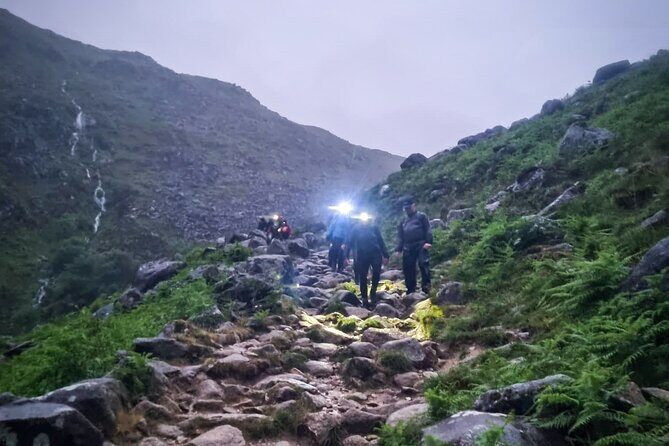
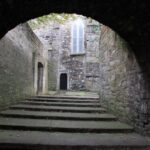
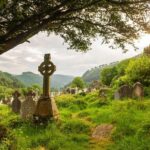
This is the part that turns a pretty walk into something more memorable. The route includes travel through the 6th-century Monastic site in darkness, which means you’re experiencing the ruins in a way most people never see—dim, quiet, and close to the pace of ancient life.
The value here isn’t just the date on a plaque. It’s the way darkness changes your perception. In low light, your attention goes to outlines, stone texture, and the sense of scale. You naturally slow down because your footing demands it. That’s when stories land better.
I also like that the guide doesn’t make it sound like a distant academic topic. The tour sets you up to learn the historical site while you’re walking into night conditions, so the place becomes more than scenery.
One small practical note: nighttime history ruins tend to be harder to photograph well. If you’re trying for dramatic shots, don’t expect daylight-quality results. Focus on understanding what your guide points out, then snap a few photos if the light allows.
You can also read our reviews of more evening experiences in Dublin

Miners village and stargazing: looking up while you’re still moving
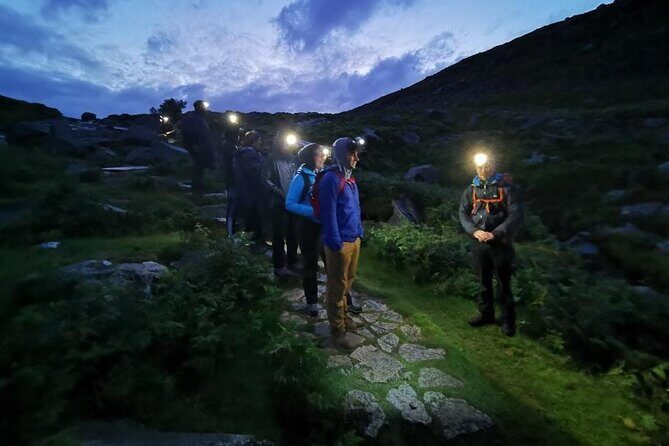
The itinerary includes stargazing after dark, and it even places stargazing as you pass through the miners village. That’s a clever setup. Instead of asking you to stop for a long time in the cold and dark, the tour builds stargazing into the route and keeps it connected to what you’re walking through.
Stargazing in County Wicklow can feel instantly rewarding because there’s less to compete with your view than in a city. But the tour’s approach is also realistic: you’re not likely to get lost in a technical astronomy session. You’re there to look up, enjoy the sky, and share the moment with your guide’s timing and cues.
If you wear glasses, keep them clean. Night viewing can be sensitive to smudges, and you’ll likely look up often. If you prefer warm hands, plan a simple layer system too—night hikes can feel cooler than you expect, especially after sunset.
Pace, fitness, and group reality on a 4 to 5 hour night hike
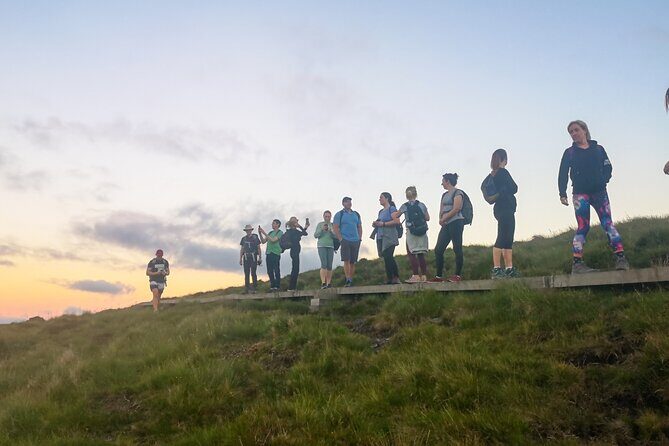
The total duration is about 4 to 5 hours, and the itinerary notes a five-hour run time. That tells you something important: you should expect steady hiking, not endless stops. The tour also calls for moderate physical fitness, which is a fair match for uneven ground plus low visibility.
The experience can feel like a bit of a workout at night. One of the most direct takeaways from the feedback is that you’ll want to be in shape for the conditions. That doesn’t mean it’s a marathon. It does mean you shouldn’t show up expecting a stroll where you can stop every two minutes and take your time.
Head lamps help a lot, but they don’t erase terrain. You still need to watch where you place your feet and avoid stepping on rocks or roots. If you’re prone to slipping on trails in the dark, treat this as a reason to bring your best traction footwear and keep your movements smooth.
Guides, storytelling, and the Elena effect
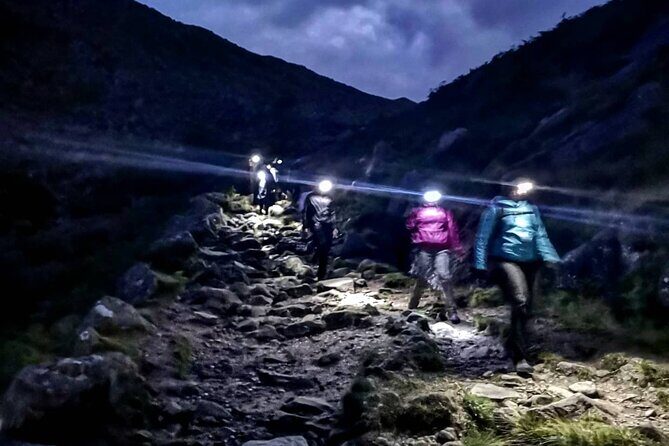
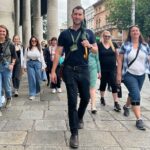
Guides matter on a night tour. You’re relying on them for pace, safety, and context when it’s hardest to see. This tour has two guide teams, and one guide in particular, Elena, stands out in the way she connects history and culture to what you’re doing on the path.
That’s a big deal because “history tour” can sometimes turn into a lecture. Here, the guide’s role is more active: they’re entertaining you and teaching you while you hike through sunset into darkness. When the guide is strong, the entire experience feels like one continuous narrative.
If you learn best by listening while you walk, you’ll probably love this format. If you prefer silent walking with only written plaques, you might find the narration less your style. But if you want to leave with a clearer picture of Glendalough, the guide-led approach is the whole point.
Price and value: what $44.12 buys you (and what it doesn’t)
At $44.12 per person, you’re paying for a guided nighttime hike with history, head lamps, and stargazing. The itinerary also notes admission ticket free, which helps the math.
Is it “cheap”? No. But it’s not just a scenic walk either. You’re getting:
- a guide who manages a sunset-to-night timeline
- night hiking equipment (head lamps provided)
- structured stops around wildlife, a miners village, and a 6th-century monastic site
- a stargazing component after dark
For many visitors, the value comes from saving time. If you’re basing yourself in Dublin, doing an organized guided outing can be the easiest way to experience Glendalough after sunset without spending extra time planning logistics.
One more point: the tour is booked on average 46 days in advance. That’s not a guarantee, but it’s a hint that popular night slots can fill. If you have a fixed travel date, it’s smart to lock it in early.
What to pack and how to dress for a dark Glendalough night
The tour requires good weather, so you’ll likely be hiking outdoors in real conditions. Dress for a night walk that starts around sunset and continues into darkness. Bring layers you can adjust, plus something warm for the stargazing portion.
You don’t need to bring a head lamp since the tour provides them. Still, I’d suggest wearing footwear you trust on trails. Head lamps light up the path, but they don’t fix slippery ground.
Also, if you’re bringing a phone or camera, remember you’ll be looking down and up. Keep things secure in pockets or a small daypack so you’re not fumbling in the dark. The smoother you move, the more you’ll enjoy the hike.
Should you book the Glendalough Night Hike and History Tour?
I’d book it if you want Glendalough in a way most people skip: after sunset, with wildlife timing and history tied directly to the route. The combination of lakes at dusk, a nighttime walk through the monastic site, and guided stargazing is a strong formula for visitors who love atmosphere as much as sightseeing.
You might skip it if night hiking doesn’t suit you. This isn’t built for fragile balance or for a super-slow, low-effort outing. You’ll do best if you can handle uneven terrain in darkness and keep moving with the group for about 4 to 5 hours.
If you go, go prepared for real trail conditions and appreciate the guide-led pace. With the head lamps and a guide who can tell the story while you walk, it’s an efficient, memorable way to see Glendalough from the inside—once the day is gone.
FAQ
How long does the Glendalough Night Hike and History Tour take?
The tour lasts about 4 to 5 hours (approximately).
What does the tour cost?
The price is $44.12 per person.
Where does the tour start, and do you return to the same place?
You start at Glendalough Brockagh, Co. Wicklow, Ireland, and the activity ends back at the meeting point.
Are head lamps provided for the night hiking portion?
Yes. Head lamps are provided for safe hiking in the dark.
Is this tour ticketed, and do I use a mobile ticket?
Yes. The tour includes a mobile ticket.
What fitness level do I need?
You should have a moderate physical fitness level.
Are children allowed, and are service animals permitted?
No children under 12 are allowed, and service animals are allowed.
What happens if I need to cancel or if the weather is poor?
You can cancel for free up to 24 hours in advance for a full refund. The tour requires good weather; if it’s canceled due to poor weather, you’ll be offered a different date or a full refund.