REVIEW · DUBLIN
Dublin Jewellery Forge a Hammered Silver Ring: Drury Street
Book on Viator →Operated by Silver Works · Bookable on Viator
A hammered silver ring workshop in Dublin is oddly relaxing. You’ll cut, shape, solder, file, and hammer your own band, with close coaching in a small studio on Drury Street. What makes it really interesting is that you get to make the look personal at the texture and polish stages, so your souvenir isn’t generic.
I especially love the hands-on instruction and the fact that the process is explained as it happens, from cutting to soldering to filing. I also like the practical extras included in the price, especially the coffee/tea and lots of chocolate, which makes the whole thing feel more like a fun class than a rushed demo.
One drawback to plan around: the studio is in old period buildings with plenty of stairs and no lift, and if you’re late by more than 10 minutes, you won’t be allowed in (and there’s no refund or reschedule).
In This Review
- Key things to know before you go
- Hammered Silver Ring Making in Dublin: What You Actually Make
- Tool Time: Cutting, Shaping, and Soldering Your Band
- Filing and Fit Tweaks: Making It Feel Right in Your Hand
- Texture Choices with the Planishing Hammer
- Polish Options: Rustic Inside-Only or Full Sparkle
- Dublin Location on Drury Street and Studio Practicalities
- Value and Price: Why $104.05 Can Make Sense
- Who Should Book This Ring Workshop (and Who Might Want a Different Plan)
- Should You Book Dublin Jewellery Forge a Hammered Silver Ring?
- FAQ
- How long does the ring workshop take?
- How many people are in the group?
- Is sterling silver included?
- What refreshments are included?
- What can I customize on the ring?
- Do I get to keep the ring?
- Is the workshop offered in English?
- Is the studio wheelchair accessible?
- Are children allowed?
- What happens if I arrive late?
Key things to know before you go
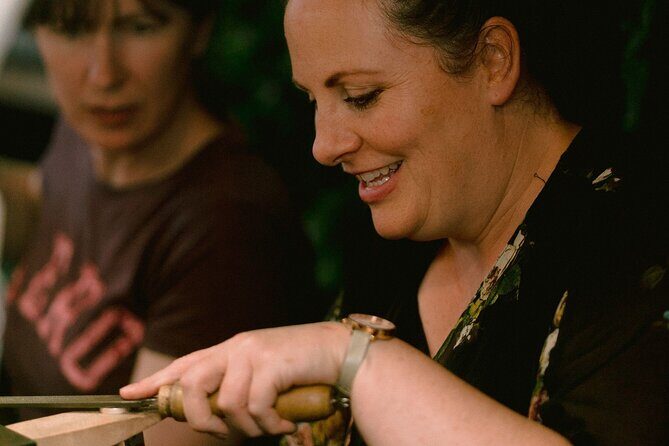
- Max 6 hands-on coaching time inside a small group format (the overall cap is higher, but your work time stays intimate).
- Sterling silver + tools are included, so you’re not paying extra to use the workshop equipment.
- You choose your ring character with three texture options and a polish choice (inside-only rustic vs fully polished).
- Hammering is the creative centerpiece, and that’s where people usually feel the ring really becomes theirs.
- You keep your ring, turning the workshop into a wear-it-home souvenir you can enjoy daily.
- Arrive early for the best experience, since a strict late arrival cutoff is enforced.
Hammered Silver Ring Making in Dublin: What You Actually Make
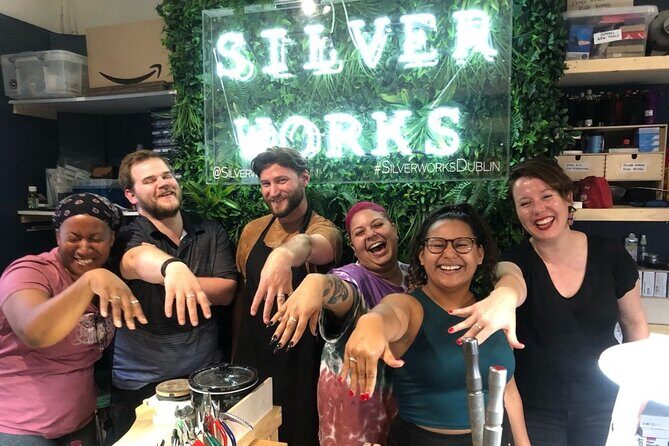
This experience is all about turning a flat piece of sterling silver into a ring you’ll be happy wearing later. You start by deciding which finger you want the ring for, then you mark the silver to the right length before anything gets cut. That matters because fit is one of the few things you can’t fix at the end, and the workshop builds the ring size into the process right from the start.
Then you move through the main stages of traditional hand-jewelry making, at a pace that works for beginners. You’ll do the physical steps yourself using the workshop tools, while your tutor shows what’s happening and why it’s done that way. In recent sessions, instructors included people like Lucy and Luke, Kate and Luke, and tutors such as Trish and Holly, and the consistent theme is clear, patient guidance at each stage.
If you like crafts where the results look better the more personal you make them, this is a great fit. By the end, you’re not just buying a ring in a shop window. You made it, and the finish reflects your choices.
You can also read our reviews of more tours and experiences in Dublin.



Tool Time: Cutting, Shaping, and Soldering Your Band
The workshop kicks off with measuring and marking. You’ll choose the finger size, then mark the silver to match. After that, you cut the silver to length using a handsaw. It’s a step that feels simple until you realize small differences matter for a snug band, so you’ll appreciate having a tutor watching as you go.
Next comes forming. You’ll use a mallet to shape the ring to a ring mandrel, so the band moves from a cut strip into something that actually resembles a ring. This part is usually one of the first moments you can see the transformation. If you’ve ever worked with metal, you know it can be stubborn at first; here, the process is broken down into manageable movements so it feels doable.
Then you’ll see the soldering stage up close. Your tutor solderes the ring in front of you and explains what she’s doing during the process. This is valuable because soldering isn’t just a step you can rush without consequences. It affects strength and the long-term feel of the band, so it’s reassuring to watch and understand what’s happening.
Even if your hands are still learning the motions, the flow stays steady: cut, form, solder, and then you shift into finishing and personalization. You’re not stuck waiting while someone else does all the real work. The workshop is built for you to participate.
Filing and Fit Tweaks: Making It Feel Right in Your Hand
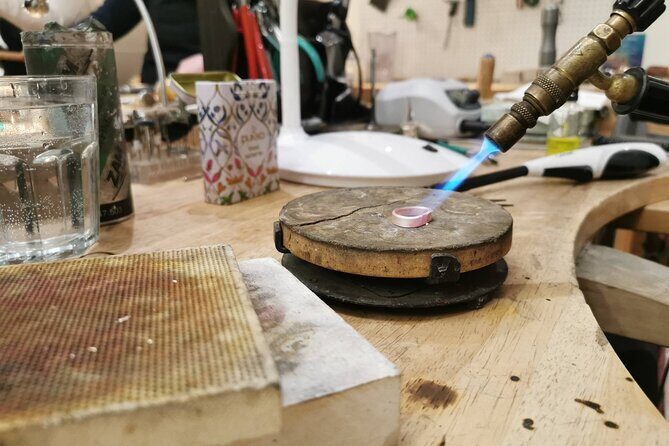
After soldering, you’ll file the ring using different hand files. Filing is where the ring starts to feel truly smooth. It also lets you refine the shape so it sits more comfortably on your finger instead of just being a perfect circle on paper.
This is also where personalization kicks in beyond size. You can decide what curve you want the ring to have, which can change the overall feel and look when it’s worn. A slight shift in curve affects how light catches the surface and how the band sits naturally. It’s one of those craft details that can separate a ring that looks fine from one that feels right.
One reason this part works well for a vacation activity is that filing gives you an immediate feedback loop. You can see and feel the progress as you work, and your tutor can guide you if you’re taking too much off or not enough. That keeps it from becoming frustrating.
Texture Choices with the Planishing Hammer

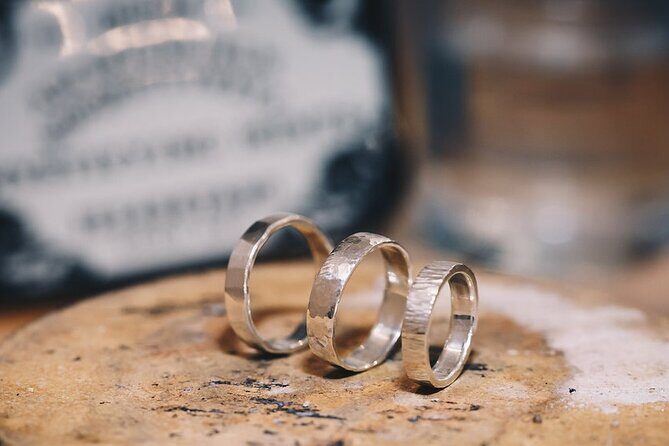
If you’re even a little excited by the idea of a hammered texture, this is the part you’ll talk about later. After shaping and filing, you’ll choose from three different textures. Those texture choices affect the final surface pattern, so you’re not just picking a vibe. You’re selecting a look that changes the ring’s character.
Then you use a planishing hammer to create that texture. This is hands-on, rhythmic work, and it tends to be the moment where the ring stops feeling like an assignment and starts feeling like something you own. A hammered look is popular for a reason: it’s forgiving compared with very detailed engraving, yet it still looks distinctive.
You can also expect your tutor to guide you on pressure and technique. Hammering takes practice, but you don’t need prior metalworking experience. The workshop structure is built around getting you to a satisfying, wearable result with real coaching.
A final polish choice follows, and that’s where your texture can shift from artistic and rustic to shiny and dramatic. The workshop doesn’t treat style as an afterthought; it builds in the choices at the exact moments that affect how the ring will look when it’s done.
Polish Options: Rustic Inside-Only or Full Sparkle
You’ll get to choose how polished your ring is. The key choice is whether it’s polished only on the inside for an artistic, rustic look, or fully polished for a more glittery sparkle. This is a smart option set because it balances comfort and aesthetics.
Inside-only polishing can be a nice compromise if you like the texture on the outside but want a smoother feel against your skin. Full polishing, on the other hand, highlights your hammered work by making the surface reflect more strongly. Either way, you’re choosing the final personality of the ring, not leaving it to chance.
One of the reasons this stage feels worth the money is that it turns your earlier work into a finished product with a clear purpose. Your hammering and your filing aren’t hidden under a one-size-fits-all finish. Your choices show.
And yes, you get to keep the ring at the end. That matters. A lot of activities create memories but not objects. This one gives you something you can wear, which makes the souvenir last longer than your photos folder.



Dublin Location on Drury Street and Studio Practicalities
Your meeting point is at Silver Works, 24 Drury St in Dublin (D02 V658). The activity ends back at the same location. It’s near public transportation, so you shouldn’t have to make this your entire day’s mission. Still, give yourself time. The studio is in old period buildings with plenty of stairs and no lift, so you’ll want to plan around that.
The studio space is described as small, and there’s no luggage storage. If you’re traveling light, that’s no problem. If you’re coming straight from a busy sightseeing schedule, you’ll want to keep your bag situation simple before you arrive.
Also note the workshop has a strict late cutoff. If you arrive more than 10 minutes late, you won’t be permitted entry and you’re not entitled to a refund or reschedule. Some people have compared this harshness to other experiences, but the practical takeaway is straightforward: show up early. If your day runs tight, build in buffer time.
Value and Price: Why $104.05 Can Make Sense
At $104.05 per person for about two hours, this isn’t a bargain craft class. It also isn’t an overpriced souvenir grab, because the price includes sterling silver for your ring, plus coffee and/or tea and lots of chocolate. You’re paying for:
- tool access,
- real instruction during the metalworking steps,
- and a take-home item made from included materials.
In other words, you’re paying for a guided process that would be hard to replicate casually on your own. And because you keep the ring, you’re converting tuition into a wearable object. That tends to make the math easier than experiences where you just watch something or leave with only a photo.
Group size also influences value. The highlights emphasize intimate instruction (max 6). When you’re actively using tools and shaping metal, one instructor helping many people can slow the pace and reduce feedback. Here, the small format is part of the reason people come away feeling proud of what they made.
Duration is approximately two hours, and in at least one recent session the group finished early at around an hour and 30 minutes at a relaxed pace. That suggests you should plan for two hours, but you’re not necessarily tied up all day.
Who Should Book This Ring Workshop (and Who Might Want a Different Plan)
This is a great pick if you want a hands-on Dublin experience that’s different from the usual walking tours. It’s also a strong choice for couples, since you can make matching souvenirs without needing to coordinate complicated plans. It even works well as a special occasion idea, like a 30th wedding anniversary, because the activity naturally creates something meaningful you’ll still have years later.
If you’re traveling with family, note the age rule: children under 10 aren’t suitable. Under 16 need to be accompanied by a paying adult. If you have a teen or older child who likes crafts, the class can be a fun shared project.
The biggest caution is physical logistics. The studio isn’t wheelchair accessible because of stairs and no lift. If stairs are a challenge for you, it may not be the right activity.
Finally, this works best if you can show up on time and enjoy a guided, step-by-step workshop. If you’re the type who gets stressed by learning something new, you’ll probably still be okay, because the instructions are structured and the tutors help at each stage. The experience is designed for beginners, not experts.
Should You Book Dublin Jewellery Forge a Hammered Silver Ring?
Yes, I’d book it if you want a practical souvenir with real craftsmanship behind it. The combination of step-by-step coaching, the included sterling silver, and the fact that you finish by making choices at texture and polish is what makes it feel like value instead of a ticket to a quick demo.
Book it if you:
- want something more personal than a store-bought ring,
- enjoy hands-on crafts,
- and can arrive early so the 10-minute rule doesn’t cut your experience short.
Skip it or look for an alternative if:
- stairs are a problem for you,
- you travel with a lot of luggage you need stored on-site,
- or you might be late due to tight connections.
FAQ
How long does the ring workshop take?
It runs for about 2 hours.
How many people are in the group?
The class is described as intimate (max 6). The overall experience has a maximum of 12 travelers.
Is sterling silver included?
Yes. Sterling silver for your ring is included.
What refreshments are included?
Coffee and/or tea are included, plus lots of chocolate.
What can I customize on the ring?
You choose the finger/size at the start, pick from three texture options, and choose either inside-only polishing for a rustic look or fully polished for sparkle.
Do I get to keep the ring?
Yes. You keep your handmade ring.
Is the workshop offered in English?
Yes, the experience is offered in English.
Is the studio wheelchair accessible?
No. The buildings are not wheelchair accessible and there is no lift, with plenty of stairs.
Are children allowed?
Children under 10 aren’t suitable. Under 16 must be accompanied by a paying adult.
What happens if I arrive late?
If you arrive more than 10 minutes late, you won’t be permitted entry to the workshop, and you’re not entitled to a refund or reschedule.
If you want, tell me your travel dates and whether you’re thinking of going solo or as a couple, and I’ll help you slot this into a sensible day around central Dublin.