REVIEW · DUBLIN
Complete tour of Dublin in Italian
Book on Viator →Operated by Senza Meta - La Dublino dei Dublinesi Tour in Italiano/inside Dublin walking tour · Bookable on Viator
Three hours, one Italian guide, zero language stress. Dublin is easy to enjoy when you can actually follow the story, and this tour is built for Italian speakers with clear, guide-led explanations at every stop. You also get short, punchy background pieces—legends, odd facts, and social context—so the city doesn’t just look like a photo wall.
I particularly love the Italian-language guidance, because it turns “I’m looking at a building” into “I know what happened here and why it matters.” I also like the pacing: photo time and frequent breaks, plus a route that mixes famous sights with lesser-known corners that feel more like local Dublin than a highlight reel.
One possible drawback: a lot of the biggest monuments here are seen from the outside, so if you’re hoping for long interior visits, plan for a walking-and-looking tour rather than a museum marathon.
In This Review
- Key highlights you’ll feel right away
- A 3-hour Italian walk that keeps Dublin readable
- Starting at the Molly Malone Statue and ending at Temple Bar
- Temple Bar: nightlife district, but with context
- Christ Church Cathedral outside: the Protestant roots and the odd stories
- Dublin Castle and Victoria Gardens: Vikings and Normans from street level
- Molly Malone Statue: Ireland’s most famous girl, explained properly
- Dublinia: where Viking-era Dublin becomes easier to picture
- Saint Patrick’s Cathedral: legend meets place
- Ha’penny Bridge: a five-minute Dublin quirk worth knowing
- Trinity College Dublin: the oldest university and the truth-vs-legend mood
- Price, value, and what’s actually included
- How to get the most from the route (without rushing)
- Who should book this Dublin tour in Italian?
- Should you book it?
- FAQ
- FAQ
- What language is the guide?
- How long is the tour?
- Where does the tour start and end?
- Is the ticket mobile?
- Are there admission fees included for the stops?
- Is there time for photos and breaks?
- What is not included in the price?
- How many people are in the group?
- Can I get a refund if I cancel?
Key highlights you’ll feel right away
- Italian explanations that you can actually understand at street level, not from a headset you can’t interpret
- Story-forward stops where legends and anecdotes help you remember what you’re seeing
- Free-entry photo moments at each scheduled landmark along the route
- A guide who keeps the group together, with time set aside for photos and an easy bathroom break
- Smart local recommendations for music, food, and drinks without getting marked up
A 3-hour Italian walk that keeps Dublin readable
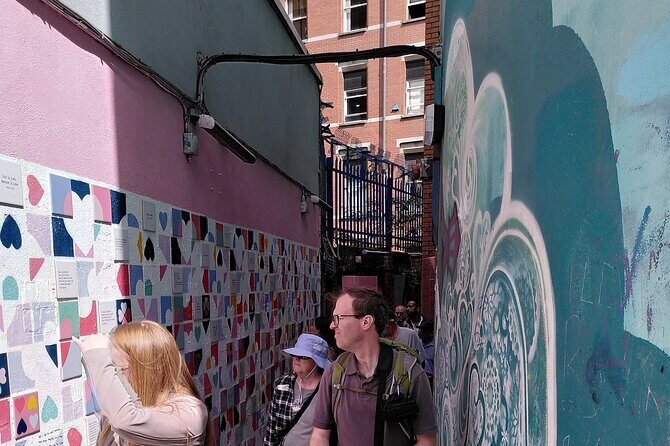
Dublin can feel both intimate and complicated. The streets are walkable, but the history shows up in layers—politics, religion, trade, and waves of people—often in places you’d overlook if you didn’t know what to look for. This tour solves the language problem first, using an Italian-speaking guide so you can follow the details without translating in your head.
What makes it work is the “small-unit” format. Each stop is short, which keeps energy up, and each explanation is tied to something memorable—like a legend, a social quirk, or a turning point in the city’s identity. If you’ve ever left a sightseeing day with only vague impressions, I think this format will give you more hooks to hang on to.
The group size also matters. With a maximum of 30 people, it stays manageable enough for interaction, and you don’t end up at the mercy of a giant crowd stampede.
You can also read our reviews of more tours and experiences in Dublin.



Starting at the Molly Malone Statue and ending at Temple Bar
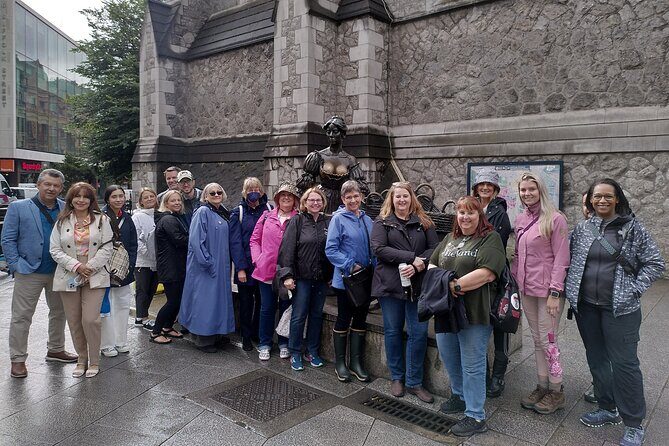
The tour starts at the Molly Malone Statue on Suffolk St (Dublin 2), then finishes in Temple Bar. That arc is practical: you begin with an easy landmark to find, then you end in the most famous nightlife district, where you can keep the evening going if you want.
Having a clear start and end also helps you plan your day. You’re not wandering at both ends trying to figure out what’s next; you get a defined route and a built-in place to regroup with your own plans after the tour.
Another small but helpful detail: you get a mobile ticket, which cuts down on friction. No hunting for printed confirmations, no last-minute desk stops.
Temple Bar: nightlife district, but with context
Stop one takes you into the nightlife area around Temple Bar. Even if you’re not planning to party, this is a smart first stop because it sets the tone for what Dublin is often like after dark: social, loud in places, and full of identity.
The guide doesn’t just point out bars. The point is understanding why this area became the magnet it is—how people gather, how the city’s mood shifts, and what you should expect from the streets here. You get about 20 minutes, which is enough for bearings and photos without turning it into a night out on day one.
If you’re visiting outside peak nightlife hours, you’ll still get value. You can look at the architecture, street layout, and atmosphere, then understand what the guide means when the story comes to life later.
Christ Church Cathedral outside: the Protestant roots and the odd stories
Next is Christ Church Cathedral, with a focus on the oldest Protestant cathedral in Dublin—this visit is from the outside. That matters because it keeps the tour moving and helps you see the building as part of the city’s public story, not just as an interior attraction.
You’ll also hear legends and strange anecdotes tied to the cathedral’s identity. This is one of those stops where the facts plus the weird bits are what make it stick. Even if you don’t remember every date, you’ll remember the vibe of the place and the kind of history it represents.
The scheduled time is about 20 minutes, and for an exterior-focused stop, that’s a good amount. It gives you enough time to look, ask questions, and get the main “why this exists” explanation before you move on.
Dublin Castle and Victoria Gardens: Vikings and Normans from street level
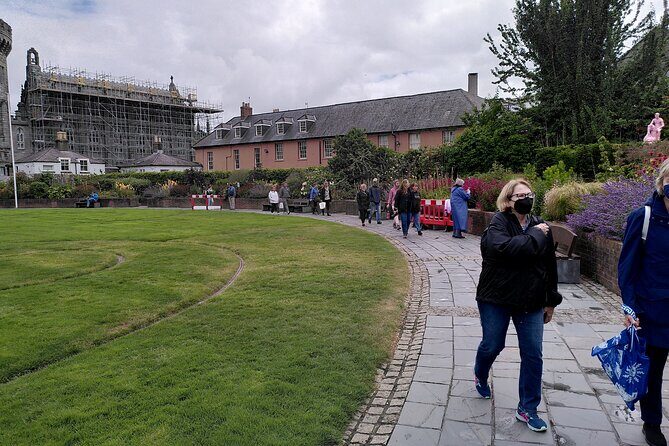
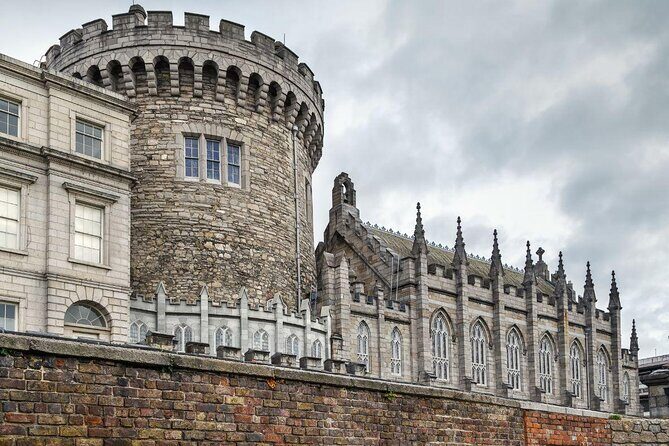
Then you’ll head to Dublin Castle and the Victoria Gardens, again viewed from the outside. The highlight here is connecting two big chapters of the city’s past—the Normans and the Vikings—without trying to force museum-style detail into a short walk.
From a practical standpoint, this stop is valuable because it shows how power and history sit right in the center of everyday streets. You get an easy way to understand why Dublin grew where it did and how different groups shaped the city over time.
The tour gives about 20 minutes here. Since the visit is exterior, you’ll want to slow down a little while you look. Take in the surroundings, not just the main façade, because the “why here” story often lives in the surrounding space.



Molly Malone Statue: Ireland’s most famous girl, explained properly
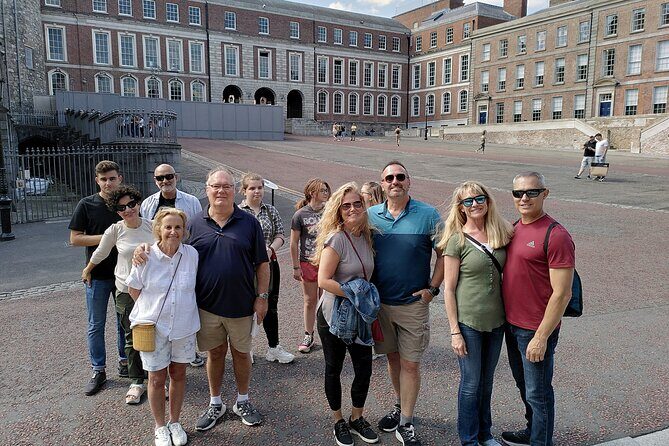
One of the most fun parts is the Molly Malone Statue segment, about 10 minutes. Molly Malone is one of those figures everyone recognizes at least by name, but people often know only the song-level version.
This stop leans into the legend and history around Molly Malone, so you can see how a character becomes a symbol—and why she’s tied to Dublin’s image. If you’ve ever wondered how a local story turns into something that travels, this is the kind of mini-lesson you’ll appreciate.
I like this stop because it’s quick, but it doesn’t feel empty. It gives you a human thread you can connect to the city’s larger story.
Dublinia: where Viking-era Dublin becomes easier to picture
Next is Dublinia, a site that connects Dublin’s history to that of the Vikings who founded it. The stop is short—about 10 minutes—but it’s designed to help you frame what you’re seeing around the city.
This is especially useful if you plan to keep exploring after the tour. A lot of Dublin’s meaning is hidden in plain sight, and when you have a Viking-era context, street names and older districts start to feel less random.
Because the stop is brief, keep your expectations aligned. You’re not getting hours of museum time; you’re getting the storyline that makes museum visits later (if you choose them) feel more meaningful.
Saint Patrick’s Cathedral: legend meets place
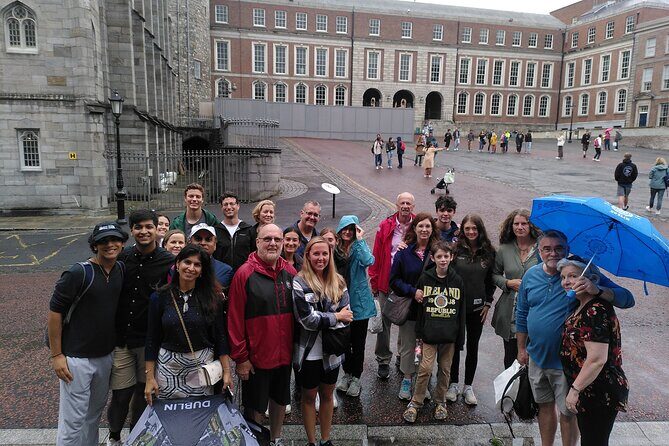
You’ll then reach Saint Patrick’s Cathedral, with a focus on the history and legends tied to the saint it’s dedicated to. Like other major monuments on the route, this is a short 10-minute stop, and the real value is how the guide ties the building to the figure and the broader story.
This is a good time to listen for the way legends work in Ireland: not as random fairy tales, but as part of how communities explain themselves. Even if you’re someone who prefers facts, the legends can still make sense as cultural history—stories people kept repeating because they carried meaning.
If you want to ask questions, this is a great stop to do it. With shorter stops, you’ll often get the most interesting back-and-forth here, before the pace moves you along.
Ha’penny Bridge: a five-minute Dublin quirk worth knowing
The route includes Ha’penny Bridge for about 5 minutes. This is one of those stops that feels small on paper but pays off in memory.
The guide explains what makes Dublin’s most fascinating bridge unique. You’ll walk away not just with a photo, but with an idea of what makes this bridge important beyond being a crossing. If you like cities where details matter, you’ll enjoy how the tour finds “meaning” in short moments.
Because it’s so quick, it’s also a good reset point. You’ll get a small breath between the bigger monuments.
Trinity College Dublin: the oldest university and the truth-vs-legend mood
Finally, the tour heads to Trinity College Dublin for about 10 minutes. This stop is framed around discovering Ireland’s oldest university—or at least, getting close to that feeling of age and authority—and it leans into the idea that some parts of Ireland live on the border between truth and legend.
This is where the tour’s tone really shows. The guide isn’t just listing facts; they’re teaching you how Dublin keeps stories alive, even when the exact version isn’t carved in stone. It’s a playful way to see why the city can feel both historical and mythic at the same time.
If you’re the kind of visitor who wants a guided “lens” for later reading, this is your lens. You’ll know what to look for when you pass Trinity again or when you see references to it around town.
Price, value, and what’s actually included
The price is $29.03 per person for about 3 hours. That sounds modest because the tour is designed as a walking experience with free entry at the scheduled stops, not a ticketed museum marathon.
Here’s what you should expect for your money:
- A professional Italian-speaking guide who answers questions in your language
- Time for photos and videos, so you’re not sprinting nonstop
- A bathroom break if you need it
- Local recommendations for where to listen to music and where to eat and drink, with an emphasis on not getting overcharged
What’s not included is simple: coffee and/or tea. That’s normal for a walking tour, but it’s worth remembering so you don’t plan to rely on it to keep you fueled.
One thing I also value here is the human side of guiding. In past experiences with guides like Elisa, the focus is described as patient, prepared, and easy to follow on a city-walk level. Another guide experience with Giulio highlights the same theme—history plus stories—and even a sweet stop in the Liberties area after the main route. I can’t promise every guide will add a snack, but it signals the style: personable, not robotic.
How to get the most from the route (without rushing)
This is a guided walking tour, so your main job is to move with the group and show up present. Wear shoes that handle cobblestones and uneven sidewalks, and bring layers because Dublin weather can change its mind.
For the best experience:
- Decide in advance if you want to ask questions. Short stops mean you’ll get more out of listening plus one or two good questions.
- Take photos during the scheduled photo time, not by stopping dead in the lane. You’ll keep the pace and the guide can stay on track.
- After the tour ends in Temple Bar, use your guide’s suggestions for music and food rather than picking randomly from the loudest menu.
If you’re planning the rest of your day, remember that you’ll finish in the nightlife district. That’s a good base for dinner, but if you want something quieter right afterward, you may need to plan a quick ride or short walk away.
Who should book this Dublin tour in Italian?
I think this tour is a strong fit if you:
- Want a language-friendly way to understand Dublin’s sights and stories
- Prefer walking and explanation over long museum time
- Like legends, anecdotes, and the social context behind famous places
- Want a route that ends with options for your evening plans in Temple Bar
It’s also a good choice if you’re traveling with friends and want everyone to follow the same narrative. The format is built for interaction and shared attention, not a one-way lecture.
The one caveat is interior expectations. Several major stops are described as outside views, so it’s not the best match if your top priority is long time inside landmark buildings.
Should you book it?
Yes—if you want Dublin you can actually understand. The big selling point isn’t just that the tour is in Italian; it’s that the stories are organized, the pace is workable, and the guide is set up to make the city feel coherent in a short window.
Book it if you like a guided walk where you leave with names, legends, and context, plus recommendations for where to eat and listen without getting steered into tourist traps.
Skip it if you need long interior access at every stop. This is about street-level history and legend, not hours of galleries.
FAQ
FAQ
What language is the guide?
The tour is in Italian with an Italian-speaking guide.
How long is the tour?
It lasts about 3 hours.
Where does the tour start and end?
It starts at the Molly Malone Statue on Suffolk St, Dublin 2, and ends in Temple Bar.
Is the ticket mobile?
Yes, the tour uses a mobile ticket.
Are there admission fees included for the stops?
Each scheduled stop is listed as admission ticket free.
Is there time for photos and breaks?
Yes. The tour includes time for photos and videos, and there is a break for a bathroom stop if needed.
What is not included in the price?
Coffee and/or tea are not included.
How many people are in the group?
The tour has a maximum of 30 travelers.
Can I get a refund if I cancel?
This experience is non-refundable and cannot be changed. If it’s canceled because the minimum number of travelers isn’t met, you’ll be offered a different date or a full refund.