REVIEW · DUBLIN
A Self-Guided Stroll Along Dún Laoghaire’s East Pier
Book on Viator →Operated by VoiceMap Audio Tours · Bookable on Viator
A pier stroll can feel like just walking—until it comes with a story. This self-guided walk along Dún Laoghaire’s East Pier turns a simple route into a string of real places, from St Michael’s Church to the East Pier Lighthouse, all narrated in English.
I especially like the way this tour paces itself for an easy win: about one to one hour fifteen minutes to cover maritime landmarks, monuments, and memorials without feeling rushed. I also like the offline VoiceMap setup (audio, maps, and geodata), so you’re not wrestling with signal while you’re by the water.
One thing to consider: you’ll need to bring your own smartphone and headphones to hear the audio, and you’ll be doing the walking on your own schedule.
In This Review
- Key highlights you’ll notice on the East Pier
- How this self-guided pier walk actually feels (and why it’s worth your time)
- Before you go: what you need for VoiceMap to work
- The walk begins at St Michael’s Church on Marine Road
- Pavilion Theatre: a modern cultural breather on the way to the bay
- King George IV Monument and the RMS Leinster Memorial: power, empire, and loss
- The Metals promenade: where old tracks become a public walkway
- East Pier Lighthouse: panoramic bay views with a construction story
- Carlisle Pier, the Forgotten Irish Memorial, and the Bandstand Sun Shelter
- The Crimean War cannon with Romanov eagle motifs: the international twist
- Finishing near the Roger Casement Statue: history with a rebellious edge
- Price and value: what $8.99 buys you here
- Who should do this East Pier walk?
- Quick heads-up: hours and where it starts/ends
- Should you book this Dún Laoghaire East Pier stroll?
- FAQ
- How long is the Dún Laoghaire East Pier self-guided stroll?
- What does it cost?
- What language is the audio available in?
- Where do I start and where does it end?
- What’s included with the tour?
- What do I need to bring?
- Is transportation included?
- Are service animals allowed?
- What are the listed opening hours?
Key highlights you’ll notice on the East Pier
- St Michael’s Church (1820s) gives the walk a proper starting anchor before you hit the shoreline.
- Pavilion Theatre adds a modern cultural stop, so the town isn’t just frozen in old postcards.
- The RMS Leinster and Forgotten Irish Memorials make the waterfront feel emotional and personal.
- The Metals turns old railway remnants into a working promenade you can actually follow.
- A Russian Crimean War cannon with the Romanov eagle motif adds a surprising international twist.
- You’ll finish near the Roger Casement Statue, with plenty of places to eat nearby.
How this self-guided pier walk actually feels (and why it’s worth your time)
I like tours that respect your attention span. This one runs roughly an hour to an hour and fifteen minutes, which means you can fit it into a Dublin day without rearranging everything. You start at St Michael’s Church on Marine Road, then you work your way along Dún Laoghaire’s waterfront toward the East Pier area and back out again.
The best part is how the story stays tied to what you can see. Instead of generic “here’s history” narration, you get a sequence of monuments, memorials, and architectural details that line up with your route. You’ll learn why these spots matter right where you’re standing.
And because this is self-guided with VoiceMap, you control the pace. Want a few extra minutes near the views? Take them. Want to keep moving? You can.
You can also read our reviews of more guided tours in Dublin



Before you go: what you need for VoiceMap to work
This experience is offered in English and uses the VoiceMap app on Android or iOS. The tour includes lifetime access, plus offline access to audio, maps, and geodata, which is a big deal when you’re near the sea where signal can be spotty.
Here’s the practical checklist I’d follow:
- Bring your smartphone
- Pack headphones (required since they’re not included)
- If you can, download before you start—offline means you don’t have to think about reception
You’re also walking a route that’s near public transportation, which helps if you’re combining it with other plans in Dublin. And it’s listed as a private tour/activity, meaning only your group participates.
The walk begins at St Michael’s Church on Marine Road
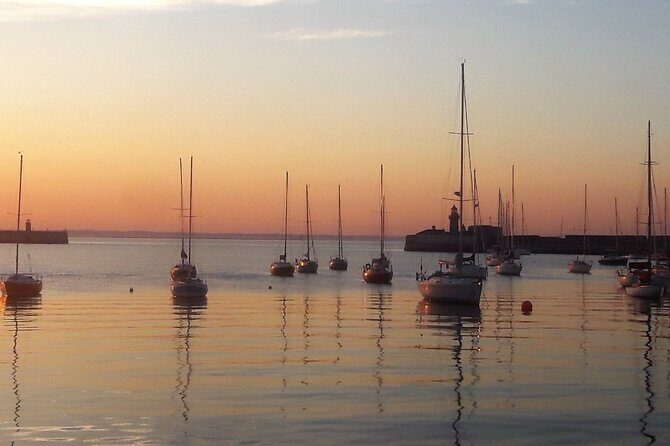
Start at St Michael’s Church, established in the 1820s. I like church starts because they give you a timeline hook immediately. Before you hit the pier, you’re reminded that Dún Laoghaire didn’t become a “spot to visit” overnight—it’s a community with long continuity.
From here, you’re set up for a route that mixes eras. The audio doesn’t treat the town as one mood. It moves from older civic identity to later cultural life, and then into the maritime story that dominates the shoreline.
Practical tip: take a minute here to orient yourself. Once you start down toward the water, the route becomes easier when you already know which direction the coast lies.
Pavilion Theatre: a modern cultural breather on the way to the bay
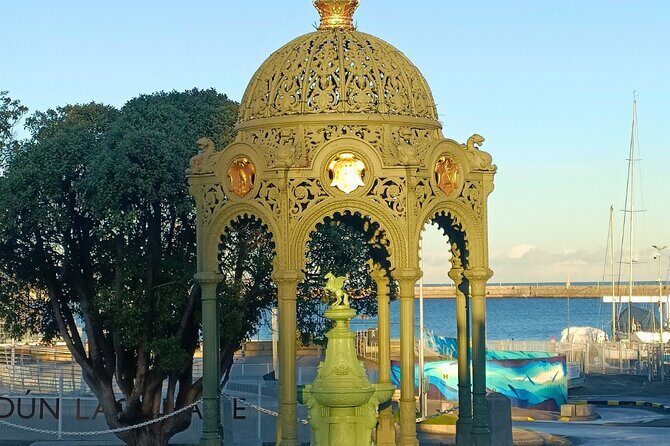
Next, you pass the Pavilion Theatre, described as a cultural hub for Dún Laoghaire. This stop matters because it breaks the pattern of “everything old equals everything important.” You’re seeing how contemporary public spaces sit right beside historic places.
I find this helps the walk feel more grounded. You’re not just touring a museum-like district. You’re walking through a town that still functions—just with history in the background.
If you pause anywhere, I’d rather it be at a place like this. It gives your legs a rest before the more emotionally heavy memorial segments.
King George IV Monument and the RMS Leinster Memorial: power, empire, and loss
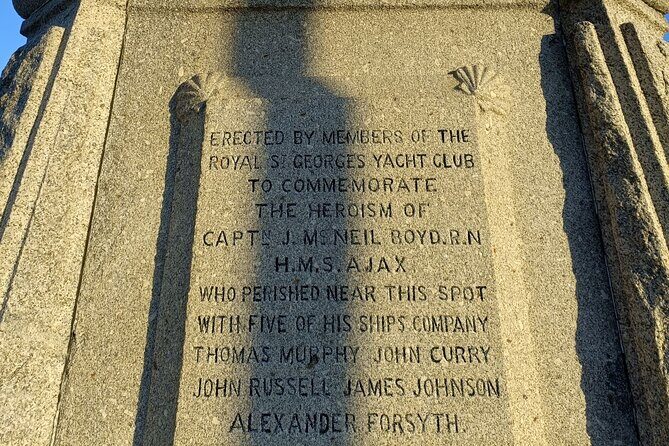
Then the tour shifts gears with the King George IV Monument and the RMS Leinster Memorial. These monuments connect the area to bigger political and maritime forces, and the narration helps you connect the dots between who ruled, who traveled, and what disasters changed local life.
At this stage, it’s good to keep expectations realistic. You’re not going to “feel one thing” all the way through. The route intentionally layers meaning: imperial-era commemoration, then the tragic reminder of the RMS Leinster sinking during World War I.
What I like here is that the memorials aren’t just names and dates. They’re tied to place. When you’re walking a coastline, it hits harder because the sea is right there.
A few more Dublin tours and experiences worth a look





The Metals promenade: where old tracks become a public walkway
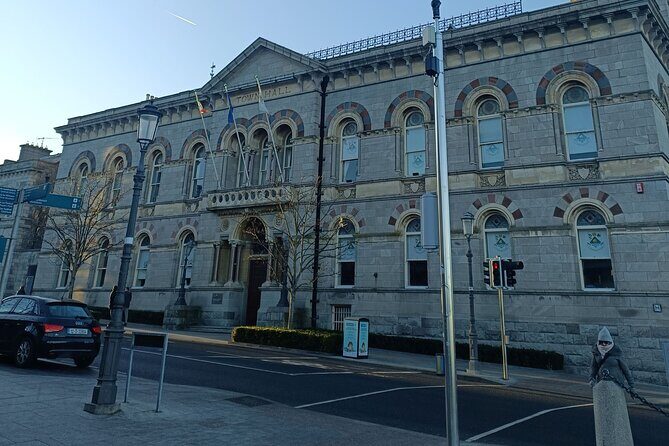
One of the most interesting segments is the Metals, described as remnants of an old railway track turned into a promenade. This is the kind of transformation that makes walking tours genuinely rewarding—you get to see how a space evolves, not just how it looked.
As you follow the path, the audio tells the story behind the shift from fishing village to a bustling port. Even if you’re not a history fanatic, the layout helps you understand the logic: where movement happened, where work happened, and how the town grew around transport.
This part is also a smart “breather.” After memorials, the promenade gives you a steady rhythm and a clearer sense of where the shoreline story is heading next.
East Pier Lighthouse: panoramic bay views with a construction story
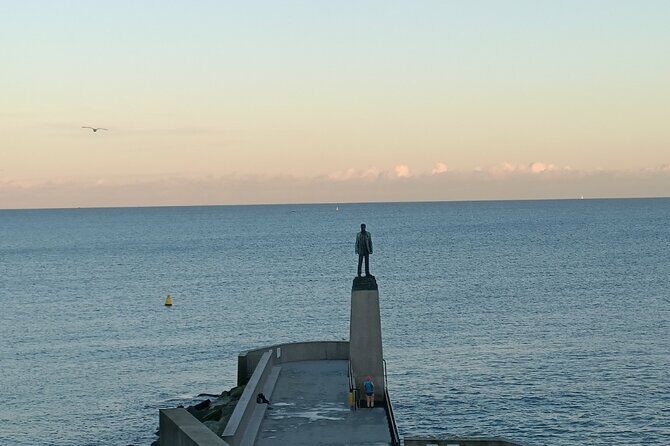
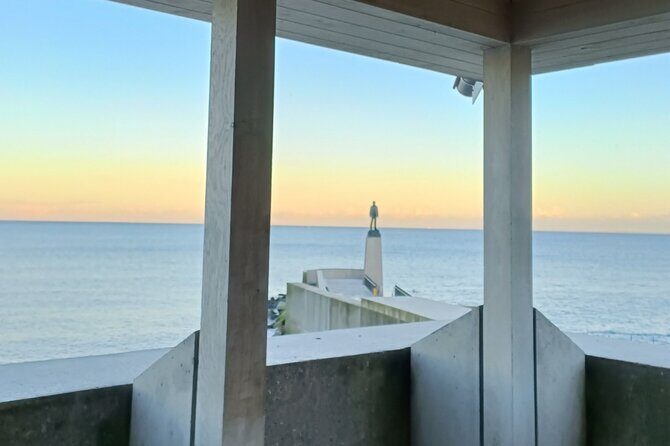
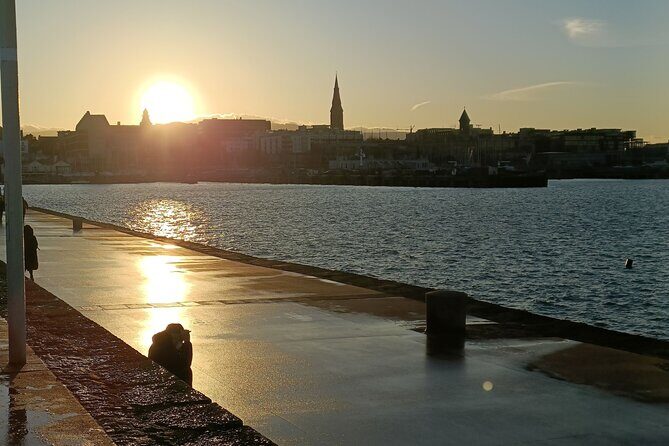
Now you’re in the best mood zone for photos and wide breaths. The walk brings you out along the Dún Laoghaire Pier to the East Pier Lighthouse, where you’ll enjoy panoramic views of Dublin Bay and the city.
The narration here isn’t only about views. You’ll also hear how the harbor’s construction and its role shaped Ireland’s destiny. I appreciate that the audio ties engineering and geography to human consequences. The sea isn’t just scenery—it’s a system that directed routes, trade, and history.
Practical advice: if it’s bright, your phone screen might be hard to read. Consider saving battery by lowering screen brightness while you listen.
Carlisle Pier, the Forgotten Irish Memorial, and the Bandstand Sun Shelter
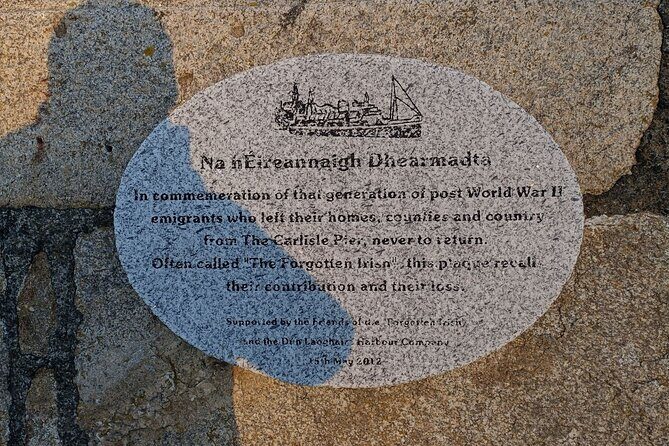
As you continue, you’ll reach Carlisle Pier, dating back to the 1820s. This is a maritime witness spot—you can feel the tone shift from “monuments and stories” into “work and movement” along the water.
Then comes the Forgotten Irish Memorial, which honors the resilience of Irish emigrants—people who left home for new opportunities and faced the hard reality of building lives far away. This is one of the most emotionally direct parts of the route, and it’s timed well: you’ve already absorbed maritime meaning, so the emigrant story lands with weight.
Right around here you’ll also encounter the East Pier Bandstand Sun Shelter, noted for its unique architecture. That detail is more important than it sounds. It shows how public leisure and community life also lived at the edge of the harbor—not only shipping and tragedy.
My “value lens” on this section: you don’t pay extra for museum tickets, but you get a similar effect—different rooms of meaning—just spread across the promenade.
The Crimean War cannon with Romanov eagle motifs: the international twist
One of the more surprising stops is spotting the eagle motif of the Romanov family on a Crimean War cannon. The tour explains the intriguing tale of a Russian cannon finding its place in Dublin.
I love moments like this because they prevent the walk from becoming predictable. You start the route with local landmarks, then you realize the waterfront connects to international events and objects. That makes the whole peninsula story feel larger than you expected.
When you reach the cannon, slow down for a moment before you move on. The whole point of self-guided walking is that you can take time at the exact object that caught your eye.
Finishing near the Roger Casement Statue: history with a rebellious edge
The tour ends near the Roger Casement Statue, honoring the Irish revolutionary. This ending point gives a different kind of historical note—more personal, more political, and less about ship schedules or battlefield memorials.
From there, you’re back near your start area, and the route structure makes it practical to grab food afterward. You’re not dropped into the middle of nowhere. You’re finishing in a town where you can keep the day going without planning a long return.
Price and value: what $8.99 buys you here
At $8.99 per person, the value is mainly in the format. You’re paying for:
- a structured walking route
- English audio guidance
- offline access to the audio and maps
- lifetime access, so you can repeat it without buying again
This isn’t a “drive-by audio blur.” You’re spending about an hour focused on a defined shoreline area, which tends to make the cost feel reasonable. If you were paying for a guided tour, the “you get the story exactly when you need it” benefit would cost more.
The only cost you add yourself is convenience: bringing a smartphone and headphones. If you already travel with both, you’re set.
Who should do this East Pier walk?
I think this is a great fit if you:
- want a short, self-guided experience instead of a long group tour
- enjoy learning through real places you can see as you walk
- like maritime history mixed with memorials and monuments
- prefer the control of going at your own pace
It may be less ideal if you dislike walking or if you strongly prefer a live guide. This is an audio-led stroll, so you’re the one timing pauses, and you’ll miss the back-and-forth questions you’d get from a person.
Quick heads-up: hours and where it starts/ends
The activity is listed as open daily, 12:00 AM to 11:59 PM for the date range shown. The meeting point is St Michael’s Church, Marine Rd, Dún Laoghaire, and the activity ends back at the meeting point.
Should you book this Dún Laoghaire East Pier stroll?
If you want an hour of meaningful waterfront walking without extra scheduling, I’d say yes. The route covers the major emotional and historical landmarks you’d hope to hit—church origins, royal commemoration, the RMS Leinster tragedy, Irish emigrant remembrance, and even the Romanov-tied Crimean War cannon—while still giving you bay views at East Pier.
Book it if you like structure but want freedom. Book it if you’re okay using your phone and headphones as part of the experience. With a 4.5 rating from 6 reviews, there’s also enough positive momentum to trust it won’t feel like a throwaway audio download.
If you tell me your travel dates and what else you’re doing that day in Dublin, I can suggest a smart order for pairing this walk with nearby stops.
FAQ
How long is the Dún Laoghaire East Pier self-guided stroll?
It’s listed at about 1 hour to 1 hour 15 minutes.
What does it cost?
The price is $8.99 per person.
What language is the audio available in?
The tour is offered in English.
Where do I start and where does it end?
You start at St Michael’s Church on Marine Road in Dún Laoghaire. It ends back at the meeting point.
What’s included with the tour?
You get lifetime access to the tour in English, plus the VoiceMap app for Android and iOS. Offline access to audio, maps, and geodata is included.
What do I need to bring?
You’ll need your own smartphone and headphones.
Is transportation included?
No, transportation is not included.
Are service animals allowed?
Yes, service animals are allowed.
What are the listed opening hours?
It’s listed as open daily from 12:00 AM to 11:59 PM for the dates shown.