REVIEW · DUBLIN
2-Day Cork and Blarney Castle Rail Tour from Dublin
Book on Viator →Operated by Railtours Ireland First Class · Bookable on Viator
Cork and Blarney feel close on rails. This two-day loop from Dublin mixes Blarney Stone folklore with real port-town detail at Cobh’s Queenstown Story Heritage Centre, plus you get big window views of Ireland’s countryside. I also like that the tour handles the getting-there parts for you, so you can spend your energy on stops that actually matter. One thing to consider: the Cobh/Titanic angle and cathedral visits are the focus on Day 2, so if you want mostly Cork city time, this itinerary can feel a bit history-heavy.
On the comfort side, you’ll sleep at the Cork Metropole Hotel with breakfast included, which makes the second day easier. The pacing also benefits from the human touch—on this kind of trip, I’ve found the driver and guide really set the tone, and names like Tom Cronin (driver) and Brendan (guide) are exactly the sort of on-the-ground help that keeps the day from feeling rushed. With a group capped at 53, it’s large enough to run smoothly, but still small enough that you’re not lost in the crowd.
In This Review
- Key things to love about this Cork and Blarney Castle rail tour
- Rail + coach from Dublin: how this 2-day loop actually works
- Day 1 in Cork: English Market plus a guided city glance
- Cork Metropole Hotel: a real base for Day 2
- Cobh and Queenstown Story: emigrant history at Victoria Station
- St Colman’s Cathedral: the quick stop with a view
- Blarney Castle and Gardens: making your Blarney Stone moment count
- Price and value: what you’re paying for at $451.16
- Who should book this tour, and who should think twice
- Should you book the Cork and Blarney Castle rail tour from Dublin?
- FAQ
- FAQ
- What time does the tour start in Dublin?
- Where does the tour end?
- How long is the tour?
- What hotel do we stay at overnight?
- Is breakfast included?
- Which major attractions are included on the tour?
- Do we visit English Market?
- Is St Colman’s Cathedral included?
- What is the group size limit?
- Are children allowed?
Key things to love about this Cork and Blarney Castle rail tour
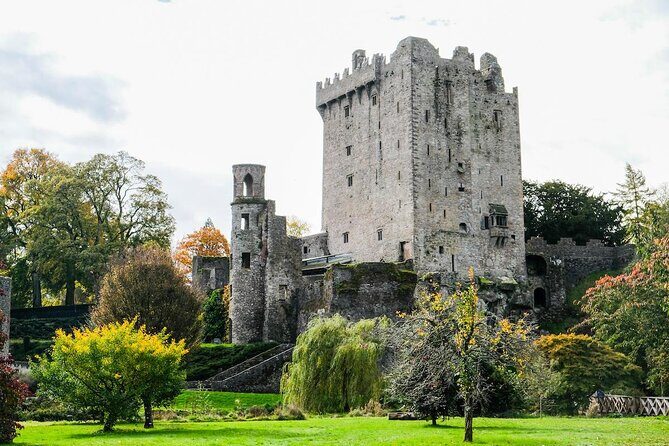
- Blarney Stone time built in: you get a real chance to kiss it and still have time for Blarney shops and lunch
- Cobh’s Victoria Station becomes Queenstown Story: you walk through the same building the emigrants and transatlantic travelers used
- Cathedral stops with viewpoint payoff: St Colman’s Cathedral keeps popping up, and it’s the kind of quick stop that actually gives you context
- English Market in Cork: an easy win for food lovers without needing a car
- 4-star overnight plus breakfast: you’re not trying to power through Day 2 on empty stomach energy
- Rail + coach touring: you see more than if you just sprint between attractions on your own
Rail + coach from Dublin: how this 2-day loop actually works
The tour starts at Dublin Heuston Station (Saint John’s Road West) at 11:00am and returns you back to the same area at the end. You’re not driving yourself, and that’s the main point. For a lot of visitors, the hard part isn’t seeing Cork—it’s the logistics of getting there and getting around once you arrive.
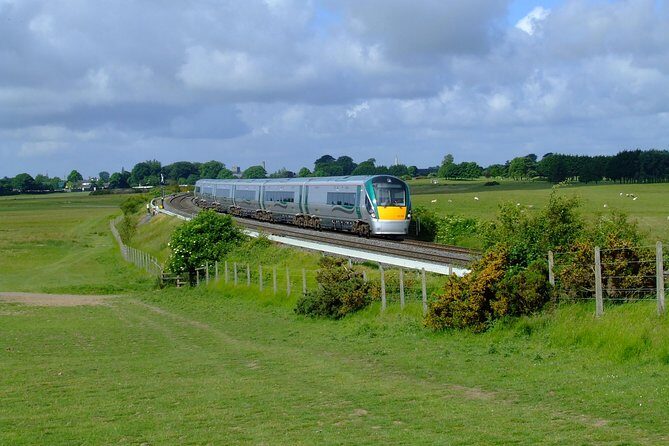
This is a 2-day experience built around moving efficiently between regions. You travel through Ireland’s countryside on rail and coach, which is a quiet but underrated benefit: you get constant scene changes without the stress of maps, parking, or timing a rental car. On a trip like this, window time matters because Ireland’s small towns and patchwork fields are part of the reward.
Also note the group size: it runs with a maximum of 53 travelers. That usually means good organization (buses, guides, admissions), but it also means you’ll experience the “group flow” on popular stops. Expect queues at the most in-demand sights, especially anything with a legendary photo moment like Blarney Castle.
A few more Dublin tours and experiences worth a look
Day 1 in Cork: English Market plus a guided city glance
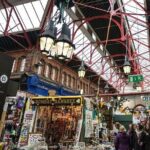
Day 1 is built around Cork, with a city tour led by a guide and a trip to the English Market, a covered food market with roots dating to the 18th century. This is one of the best ways to experience Cork without doing a scavenger hunt.
Here’s why English Market works so well on a structured tour:
- You get a concentrated place to sample Irish food and specialties without hunting for “the right” stalls.
- The covered layout makes it easier to keep going even if the weather turns.
- It’s a local scene, not just a tourist set piece.
The rest of Day 1 is a guided city tour, which is useful even if you’ve seen photos. Cork has a distinct street rhythm and waterfront orientation, and a guide helps you connect the dots fast—where to look, why certain areas matter, and how the city fits into the broader “Ireland’s Ancient East” story line the tour is following.
Practical tip: if you’re the type who wants to linger, do it strategically. Pick one or two stops for a slower pace and treat the rest like a fast orientation lap. Day 2 is where the scenery and the “wow” factor really stack up.
Cork Metropole Hotel: a real base for Day 2
Overnight is at the Cork Metropole Hotel, with breakfast included. You’ll check in on Day 1 and wake up ready to go on Day 2, which is a huge value element in an itinerary like this.
Why this matters: tours that squeeze multiple major sights in one day often drain you by mid-afternoon. By contrast, this one gives you a built-in reset. A comfortable room and a proper breakfast mean you’re less likely to burn through your energy on buses, stairs, and waiting around.
It’s also a practical move for travelers who don’t want to constantly question transportation. When your lodging is handled, you spend less time thinking about schedules and more time enjoying the actual locations.
Cobh and Queenstown Story: emigrant history at Victoria Station
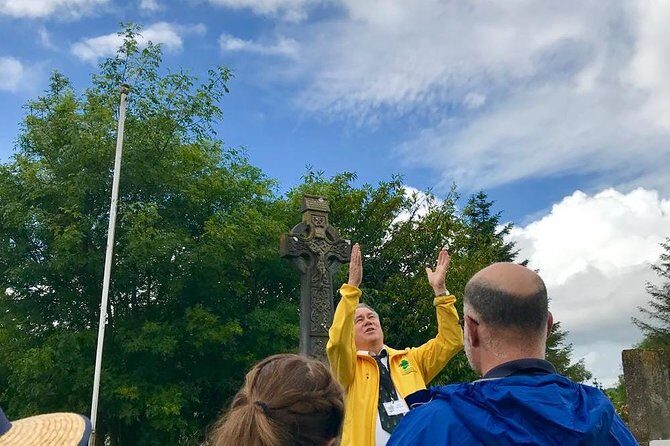
On Day 2, the first major stop is Cóbh Heritage Centre: The Queenstown Story, connected to the restored Victorian railway station/transatlantic terminal. The tour frames Cóbh (pronounced like Cove) as the setting where generations of Irish emigrants set off for new lands.
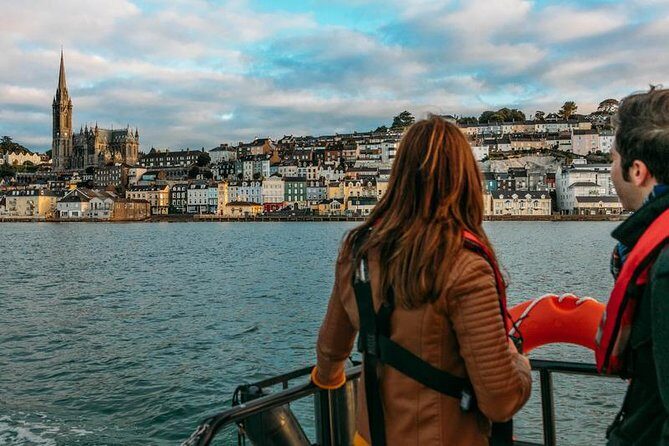
You’ll start with St Colman’s Cathedral, then move along the seafront passing former White Star Line offices before arriving at the heritage centre. That sequence matters. It turns what could be a single museum visit into a walk-through of context—town, port, company history, then the building itself.
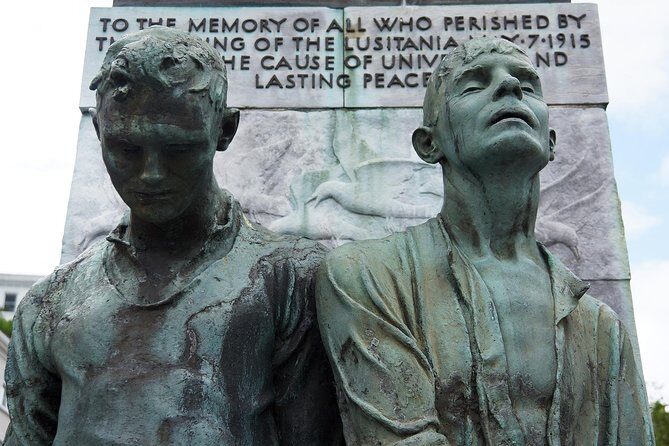
At Queenstown Story, you’ll learn how the town was renamed Queenstown in 1849 after Queen Victoria visited, and how it reverted to Cóbh after Irish independence in 1922. The Titanic connection is also part of what the centre explains, since Cóbh was the final port of call for RMS Titanic.
One more point that’s easy to miss until you’re there: this isn’t just a big-name ship story. It’s about travel as a human turning point—farewells, paperwork, and the weight of leaving. If you like history you can picture, this stop tends to stick.
Time on this part is listed as 1 hour 20 minutes, and that’s about right for reading the key displays without feeling like you’re on museum overtime.
St Colman’s Cathedral: the quick stop with a view
St Colman’s Cathedral shows up more than once in the flow, and it’s worth treating as more than a photo break. The tour includes a visit when you arrive in Cóbh, then later lists another stop at St Colman’s Cathedral as a 15-minute free admission stop.
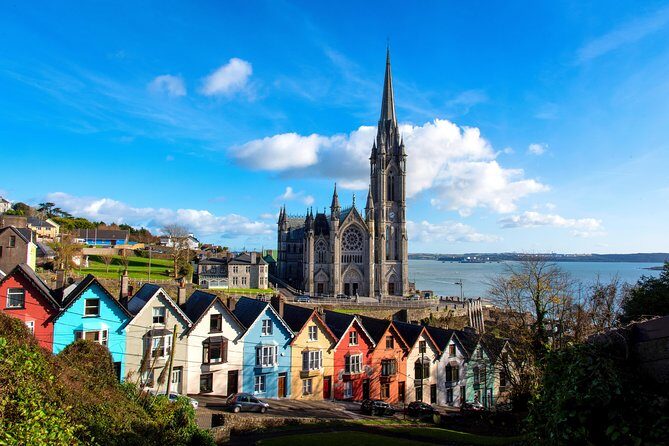
Even in a short window, St Colman’s makes sense because it overlooks Cóbh. You get a sense of how the town sits with the harbour and sea in view, which helps you understand why the port mattered so much.
The tour content also highlights who St Colman was: he founded the diocese in 560 A.D., and the information notes him as a poet bard connected to the King of Munster’s court, plus his links to Cloyne on Cork Harbour’s eastern shore. Even if you only catch a few lines, it gives you a base layer for what you’re looking at.
Practical tip: with only a short window, plan your photos, then spend a minute inside or at the entrances to actually read the key plaques. It turns a stop from scenery into meaning.


Blarney Castle and Gardens: making your Blarney Stone moment count
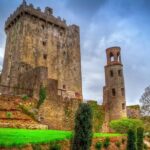
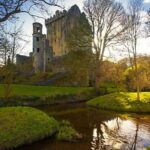
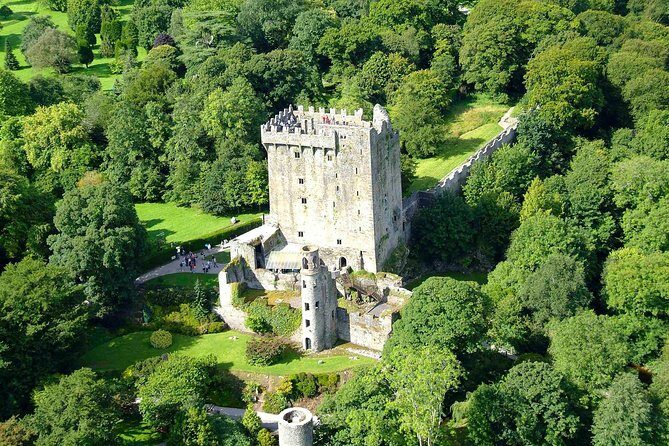
The big second-day highlight is Blarney Castle and Gardens, built in 1446 by Dermot McCarthy. Yes, the headline is the Blarney Stone—the stone said to grant “the gift of eternal eloquence”—but the best part of this stop is having time around it.
You’ll spend about 3 hours total at Blarney, with an included chance to kiss the Blarney Stone. That’s important: on some tours, the stone is rushed. Here, you have enough time not only to do the act, but also to breathe between it and the rest of the visit.
The tour also builds in practical reality: you’ll have time for shopping and lunch at Blarney. It specifically recommends lunch at Blarney because it’s described as the only opportunity to have a substantial meal during the day. That’s a smart cue—plan for food here rather than hoping you’ll find something later.
Also, you depart Blarney around 13:30 (approximately). So if you want extra photos in the gardens or want to browse shops, don’t leave it to the very end. Do your Blarney Stone moment first, then work outward.
Quick comfort note: the stone moment can take a bit of concentration and body positioning. Wear clothes you can move in easily and shoes you trust on stone surfaces. You don’t need to be an athlete—just be comfortable.
Price and value: what you’re paying for at $451.16
At $451.16 per person, this isn’t a cheap day trip. But it’s also not just “you pay for a bus.” The price is covering a stack of real costs that add up fast if you do it yourself.
What’s included (and why it matters):
- Round-trip transport by rail and coach between Dublin and the Cork/Cobh area
- 4-star accommodation with breakfast included
- Admission tickets for key stops like the heritage centre and Blarney Castle
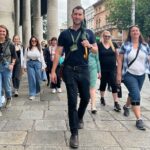
- A local guide to keep the story coherent and help you get the best timing at each place
- Meals as per the itinerary (the plan lists breakfast and other meals as included, while food and drinks beyond that aren’t covered)
Value comes from the balance: you’re paying for convenience and organization, plus you’re not spending your day buying tickets one by one and trying to line up transport connections. Group discounts are also mentioned, which usually helps make the overall cost more reasonable.
The biggest “value check” question for you is this: do you want Cork and Cobh without a car? If yes, this kind of rail/coach structure is often the most time-efficient way to do it. If you already have a plan to rent a vehicle and you want total freedom, then you might compare ticket-by-ticket costs. But if your priority is seeing multiple anchor sites in a short window, the package pricing starts to look fair.
Who should book this tour, and who should think twice
This tour fits best if:
- You’re visiting Ireland for a short time and don’t want to manage transport between cities and towns
- You care about Cork plus a port-town story (Cóbh’s emigrant/Queenstown Story focus is a core part of the itinerary)
- You want a guided English Market experience without wandering around cold or wet, map-checking your way into the wrong street
- You like the combination of big-name highlights and “why this place matters” context
You might think twice if:
- You mainly want Cork’s city life and would rather spend more hours there than in the Cóbh/Titanic-themed heritage setting
- You dislike history-based attractions and prefer scenery with less reading
- You’re the type who wants long, unstructured free time. This schedule is efficient, not slow.
A useful signal from the way the day is set up: it’s designed so you’re not just ticking attractions. You’ll move through port history and then through a castle/folklore stop within one day. That rhythm suits people who like variety.
Should you book the Cork and Blarney Castle rail tour from Dublin?
If you want the easiest route from Dublin to Cork and Cóbh with anchor stops handled, I’d lean yes. The mix of Blarney Stone, Queenstown Story at Victoria Station, and time at the English Market gives you a balanced travel day: one part legend, one part emigrant reality, and one part food-and-streets Cork.
Book it especially if you’re worried about getting around without a car. The overnight at a 4-star hotel with breakfast is a practical win, and the guide/driver team (including names like Tom Cronin and Brendan) makes the schedule feel less like logistics and more like a well-run route.
Just go in with the right expectation: Day 2 is heavy on Cóbh’s story. If that’s not your thing, you may feel like you’re spending more time than you wanted there. But if you enjoy learning how and why places connect—ports, travel, and Irish identity—this is a strong, efficient way to see a lot without feeling frantic.
FAQ
FAQ
What time does the tour start in Dublin?
The tour starts at 11:00am at Dublin Heuston Station (Saint John’s Road West, Saint James, Dublin).
Where does the tour end?
This activity ends back at the meeting point in Dublin Heuston Station.
How long is the tour?
It runs for approximately 2 days.
What hotel do we stay at overnight?
You stay overnight at the Cork Metropole Hotel.
Is breakfast included?
Yes. Breakfast is included with the overnight accommodation.
Which major attractions are included on the tour?
The tour includes Blarney Castle and its Gardens (with time to kiss the Blarney Stone) and the Cóbh Heritage Centre: The Queenstown Story at Cobh’s Victoria Station.
Do we visit English Market?
Yes. The tour includes a trip to the English Market in Cork.
Is St Colman’s Cathedral included?
Yes. St Colman’s Cathedral is included as part of the Cobh visit, with a short stop listed with free admission.
What is the group size limit?
The tour has a maximum of 53 travelers.
Are children allowed?
Children under 16 can’t book independently. They must be accompanied by a parent or guardian at all times.