REVIEW · DUBLIN
Women Of Ireland: Trailblazers & Pioneers
Book on Viator →Operated by Unearthed Tours · Bookable on Viator
Dublin gets a female makeover. This 90-minute, guide-led walk turns familiar streets into a map of forgotten female history. You follow women’s footprints across landmarks near St Stephen’s Green, Mercer Street Upper, and the Dubh Linn Gardens area.
I love the 14-person limit because the guide can keep things moving while still answering questions. I also like how the tour anchors big themes to real places, like the bust linked to Countess Markievicz and the connection to the 1916 Rising at Royal College of Surgeons.
One consideration: you don’t go inside every famous building. The route skips interiors at Royal College of Surgeons and Dublin Castle, so it’s more about street-level storytelling than museum wandering.
In This Review
- Key things to know before you go
- How this Dublin walk reframes Irish fame around women
- Your 11:00 am start at St Stephen’s Green (and why that matters)
- Countess Markievicz at St Stephen’s Green: independence, not trivia
- Royal College of Surgeons stop: Margaret Skinneder and the 1916 link
- Mercer Street Upper and Ship Street Great: Cusack and the suffragettes
- Dubh Linn Gardens and Veronica Guerin: a stop with real atmosphere
- Dublin Castle finish: Anne Devlin and the thread to modern Ireland
- Guide style, group size, and what makes it feel fun
- Price and value: what $17.35 really buys you
- Practical tips for making the most of a 90-minute walking route
- Who should book this tour, and who might want something else
- Should you book Women of Ireland: Trailblazers & Pioneers?
- FAQ
- How long is the Women Of Ireland: Trailblazers & Pioneers tour?
- Where do I meet the guide?
- Where does the tour end?
- How big is the group?
- Does the tour enter the Royal College of Surgeons or Dublin Castle?
- Is Dubh Linn Gardens included, and is there an admission fee?
- What is the cancellation policy for a full refund?
Key things to know before you go
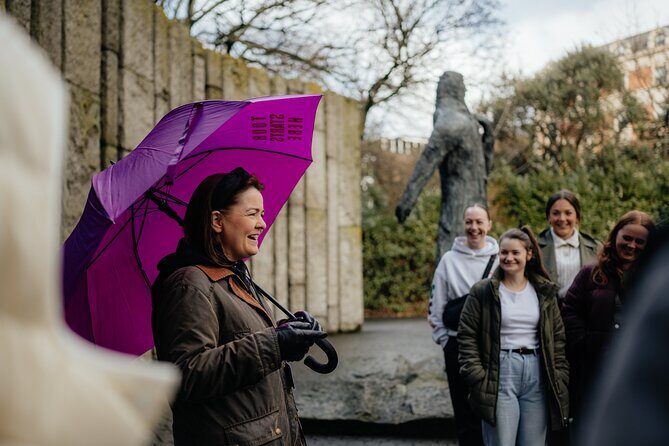
- Small-group size (max 14): better pacing, easier conversation, and less waiting around.
- Women-led themes, tied to specific Dublin stops: each location connects to a different name and storyline.
- Dubh Linn Gardens is included: you actually enter the gardens, not just walk past them.
- Most stops are quick and free to view: St Stephen’s Green and the gardens don’t require admission on your end.
- A clear route from St Stephen’s Green to Dublin Castle gardens: easy to picture once you start.
- Guide storytelling is a big part of the fun: names like Ciarán and Tara show up in feedback for keeping it lively and well paced.
How this Dublin walk reframes Irish fame around women
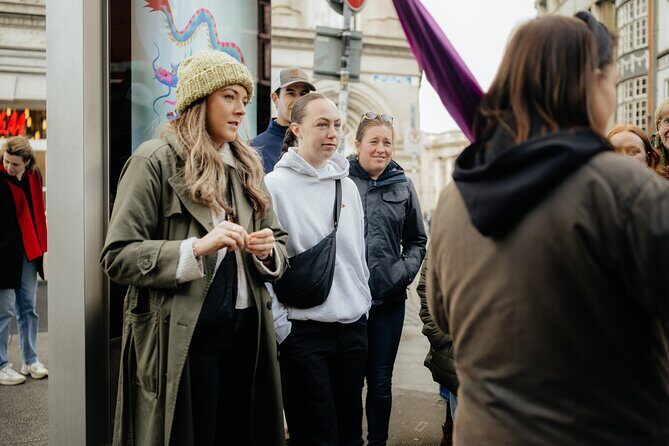
Most Dublin tours hit the usual big names first. This one flips the script. You’re not just hearing a list of famous people; you’re tracking how women shaped Ireland through independence, rebellion, and public life. The vibe is part history lesson, part city walk where the streets do the teaching.
What makes it feel worthwhile is the way the tour uses very specific reference points. You start with a bust in a park. You move to a major Dublin institution linked to the 1916 Rising, then keep going to streets tied to activism and later public life. By the end, you’ve gone from independence-era struggle to a conversation that lands on modern Ireland.
I also like that it doesn’t pretend the story is simple. Ireland’s women aren’t treated as footnotes. They’re presented as fearless, creative, inventive, and rebellious—the kind of people who pushed events forward even when the spotlight wasn’t on them.
You can also read our reviews of more tours and experiences in Dublin.



Your 11:00 am start at St Stephen’s Green (and why that matters)
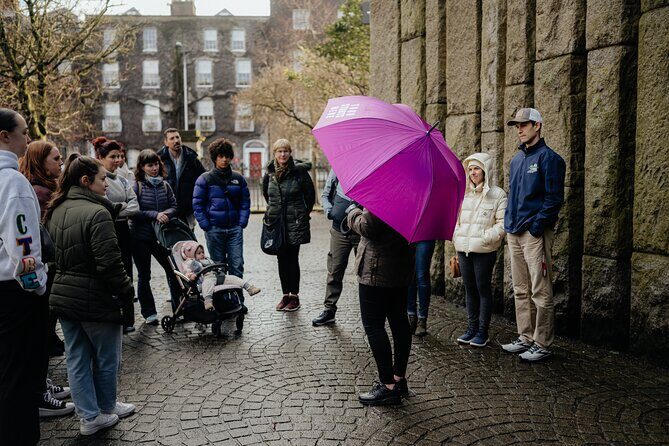
You meet at the Wolfe Tone Sculpture in St Stephen’s Green at 11:00 am. This is a handy starting point because it’s central and easy to orient yourself. If you like tours that help you get your bearings fast, this works well: you’re starting in a park area where the city feels walkable.
The tour runs about 1 hour 30 minutes, and each stop is roughly 15 minutes. That timing matters. It means the guide can cover a full mini-story at each location without turning the experience into a long lecture. You’ll move at a steady walking pace, and the schedule keeps the energy from dragging.
Also, you get a mobile ticket, so you’re not juggling paper vouchers. Service animals are allowed, and the meeting area is near public transportation, which helps if you’re timing your day around other plans.
Countess Markievicz at St Stephen’s Green: independence, not trivia
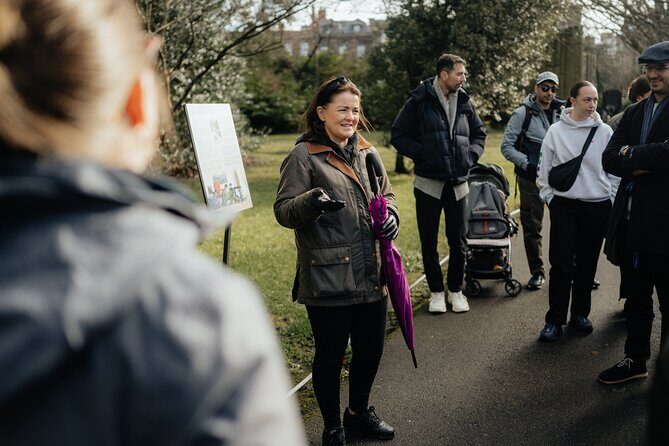
The first stop is St Stephen’s Green, where the guide introduces a bust connected to Countess Markievicz. This is a smart way to start because it makes independence feel immediate, not abstract. You’re literally looking at a public marker in a public space, and the guide frames her role in the fight for independence right where you can see it.
This opening also sets the tone for the whole walk. The tour isn’t about memorizing dates. It’s about understanding how these women fit into the bigger Irish story—and how Dublin itself preserves those threads in everyday places.
What to do here: take a minute to look at your surroundings before the explanation starts. Parks and monuments can make more sense once you connect the name to the setting.
Possible drawback: if you’re expecting a long stop with extra background, the time is short. You’ll get the core story, then you’re off to the next name.
Royal College of Surgeons stop: Margaret Skinneder and the 1916 link
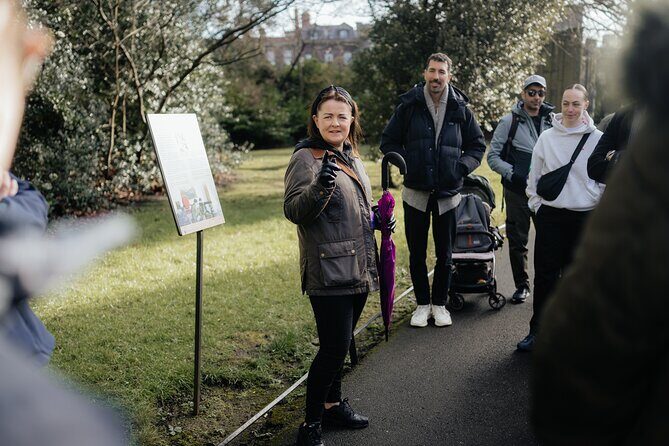
Next, you head to the Royal College of Surgeons area. Important detail: the tour does not enter the RCSI building. You’re there for the guide’s talk from outside, and you’ll focus on the women who held RCSI during the 1916 Rising, including Margaret Skinneder.
This is one of those stops that can surprise people—in a good way. The building is famous as an institution, but the tour reframes it by asking: who was in charge on the ground during the uprising, and how did women fit into that moment? It’s a reminder that history isn’t only told by generals and politicians; institutions also tell stories through the people inside them.
Why I like this stop: it connects a well-known Dublin landmark to a specific theme—women during the 1916 Rising—rather than treating it like a photo-op.
Plan tip: since you won’t go inside, wear shoes that are comfortable for standing and walking in city streets. You’ll need a little mobility patience for street-level listening.
Mercer Street Upper and Ship Street Great: Cusack and the suffragettes
After RCSI, the walk shifts into activism and lived experience. At Mercer Street Upper, the guide shares the story of Margaret Anne Cusack, nicknamed The Nun of Kenmare. This stop is less about a monument and more about character and narrative—what she stood for, and why her story belongs in Dublin’s public conversation.
Then you move to Ship Street Great, where the focus turns to the suffragette movement and Hannah Sheehy-Skeffington. This pairing works because it gives the tour more range than one political theme. You don’t only hear about independence-era fighting. You also see the continuity: women pushing for visibility and rights across different waves of Irish history.
What makes these two stops valuable: they broaden the idea of what “trailblazer” means. Some women are tied to street-level organizing. Some are tied to institutions and war-era roles. Some are remembered through activism and public pressure. In a short walk, you start to feel the pattern.
Possible consideration: these segments are story-heavy in a compact time window. If you have a strong interest in one particular figure, give yourself permission to listen closely at that stop. Don’t multitask. Your understanding will snap into place faster that way.



Dubh Linn Gardens and Veronica Guerin: a stop with real atmosphere
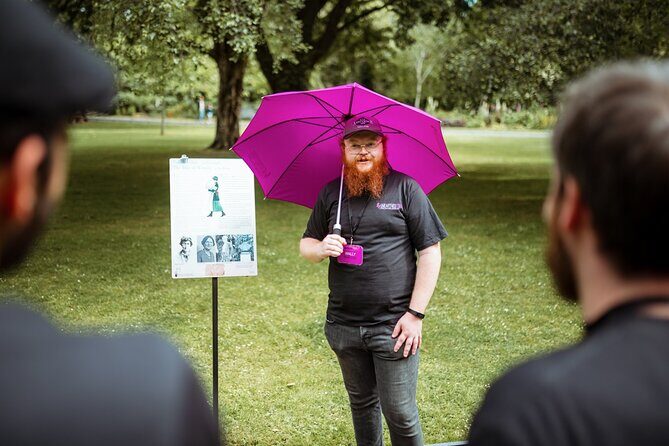
Then you step into Dubh Linn Gardens. This is the part of the tour where the pacing and setting change. The tour actually enters the gardens, and the guide explores the life of Veronica Guerin during your time inside.
Gardens can do something walking tours sometimes miss: they give you a small pocket of quiet, and that makes the story feel more personal. You’re not just looking at a plaque. You’re moving through a space that changes the mood—then the guide lands the narrative of Guerin’s life there.
This stop is also practical. The time is still around 15 minutes, but entering the gardens often helps you reset mentally after city streets. If you’re someone who needs that sort of break to keep your attention steady, this is a nice rhythm point.
What to expect: you’ll spend part of your tour in a more enclosed, garden-like area. That’s a good moment to slow down, listen, and take in details without battling traffic and noise.
Dublin Castle finish: Anne Devlin and the thread to modern Ireland
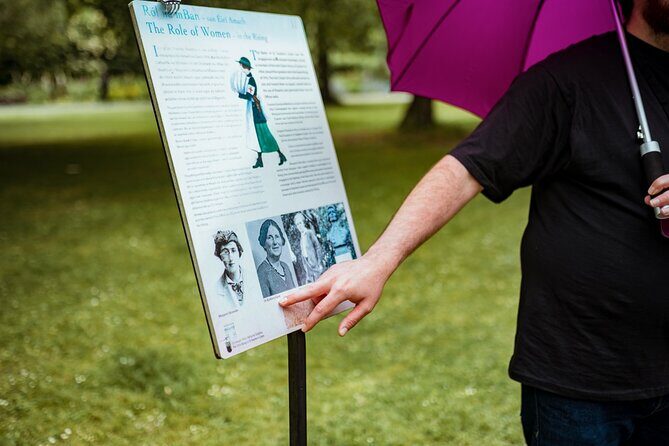
The tour wraps up near Dublin Castle, ending in the gardens of Dublin Castle on Dame St. The guide doesn’t enter Dublin Castle, but you still get a finish that links Anne Devlin to a broader conversation about modern Ireland.
This ending works because it’s not only a “last name” moment. You’re guided to connect past struggle to present-day identity—how Ireland’s story keeps moving, even after the people in the spotlight from earlier eras are gone.
If you like tours that end with reflection instead of rushing you out the door, this is a good setup. You finish in a landmark garden setting, which also makes it easy to continue your day nearby—grab a coffee, wander, or connect to your next plan.
Guide style, group size, and what makes it feel fun
Small-group tours can either feel cozy or feel chaotic. This one aims for the cozy lane. With up to 14 travelers, the guide can adjust on the fly—answering questions, steering the group back together, and keeping the story flow intact.
From the feedback, guides like Ciarán and Tara are praised for pacing and for tailoring to the mix of backgrounds in the group. In plain terms: if you’re a first-timer to Irish history, you’ll get enough context to follow. If you already know the basics, you’ll still find new angles through the women-centric lens.
Also, there’s a “lighter” feel to the storytelling style. The guide isn’t only reciting. They’re building scenes with anecdotes and momentum, so you’re not stuck in stiff lecture mode for the full 90 minutes.
One practical tip: if you’re traveling with someone who doesn’t usually love history tours, this format is still a strong bet. The tour’s focus on vivid people and fast stop-to-stop movement keeps it from becoming heavy.
Price and value: what $17.35 really buys you
At $17.35 per person for about 1 hour 30 minutes, the price is less about paying for admissions and more about paying for guide-led interpretation.
Here’s why it can feel like good value:
- The guide is included and it’s doing the heavy lifting of turning locations into a story.
- St Stephen’s Green is free to view for your stop.
- Dubh Linn Gardens is also marked free, and you do enter.
- You don’t go inside places like Royal College of Surgeons or Dublin Castle, so you’re not hunting down multiple separate ticket types while the clock ticks.
So you’re paying primarily for a focused, themed walk with a small-group dynamic. And since it’s booked about 24 days in advance on average, it’s smart to lock in a date early if Dublin is busy during your travel window.
If you want to spend money on experiences that make the city make sense—without adding a long bus or museum day—this is that kind of option.
Practical tips for making the most of a 90-minute walking route
This tour is short, so your “success” mostly depends on being ready to walk and listen.
- Wear comfortable shoes. You’re moving between several street locations in city terrain.
- Arrive a few minutes early. Meeting at St Stephen’s Green is straightforward, but you’ll want time to find the Wolfe Tone Sculpture spot and get oriented.
- Charge your phone and check your mobile ticket. The tour uses a mobile ticket, so last-minute tech hassle is avoidable.
- Use the stop breaks. Each segment is about 15 minutes. If something sparks your interest, take a quick note so you can follow up later after the tour ends.
- Keep your expectations right. This is a guided walk with strong storytelling. It’s not a deep research project or a full museum day.
One more small thought: if you plan other activities right after, save the “big ticket” stuff for later. The tour ends in Dublin Castle gardens, which is a nice place to decompress before you jump into your next plan.
Who should book this tour, and who might want something else
I’d book this if you want:
- a Dublin walking tour that spotlights women (not just men with famous surnames),
- a small-group experience where you can actually hear the guide and ask questions,
- a route that mixes independence-era themes, activism, and later public life into one coherent walk.
I might skip it if:
- you’re mainly looking for interiors, museum-style exhibits, or long time in one building,
- you’re the type who wants full-on dates and deep background for every figure. This tour gives the core story quickly, then moves on.
Also, it’s a good pick for anyone who loves guided storytelling. If you enjoy hearing why a place matters—rather than just what it is—this tour’s structure matches that style.
Should you book Women of Ireland: Trailblazers & Pioneers?
Yes, you should book it if you want Dublin to feel personal and surprising. The women-focused lens makes the city hit differently, and the small-group format helps the guide keep the pace and tone right. You’ll get clear stop-to-stop themes, a real garden visit at Dubh Linn Gardens, and a finish near Dublin Castle gardens that lands on modern Ireland.
If your dream tour includes going inside big institutions, you might feel a bit limited since the route stays outside at Royal College of Surgeons and Dublin Castle. But for most people, the street-level storytelling plus the variety of names makes up for it fast.
FAQ
How long is the Women Of Ireland: Trailblazers & Pioneers tour?
The tour is approximately 1 hour 30 minutes.
Where do I meet the guide?
You start at Wolfe Tone Sculpture in St Stephen’s Green, Dublin, Ireland.
Where does the tour end?
You finish at Dublin Castle gardens on Dame St, Dublin 2, Co. Dublin, Ireland.
How big is the group?
The tour is limited to a maximum of 14 travelers.
Does the tour enter the Royal College of Surgeons or Dublin Castle?
No. The tour does not enter Royal College of Surgeons and does not enter Dublin Castle.
Is Dubh Linn Gardens included, and is there an admission fee?
Yes. The tour enters Dubh Linn Gardens, and admission is listed as free.
What is the cancellation policy for a full refund?
You can cancel for a full refund up to 24 hours before the experience’s start time.