REVIEW · LIMERICK
Private Walking Tour of Limerick City
Book on Viator →Operated by Limerick City Walking Tour · Bookable on Viator
Limerick hides stories in plain sight. On this private walking tour, I loved how a real local guide (Joe, in my case) connects landmarks like King John’s Castle to big events—like the Crimean War and the American Civil War—without turning it into a lecture. You’ll also get the luxury of going your own pace and dodging the crush that forms around the most famous sights. One thing to consider: this is a steady city walk, and you’ll want moderate physical fitness.
This route covers the kind of Limerick you feel more than you read about—architecture, river life, and Irish political history. The walk is described as pretty flat and should work out to roughly 3–4 miles total, so it’s not a slog, but you’re still on your feet for about two hours.
The ending includes a helpful option: after the WWI memorial stop, you can keep chatting and grab refreshments at the Glen Tavern. That’s a nice bonus if you want follow-up questions, but don’t assume it’s a sit-down lunch included in the price.
In This Review
- Key things you’ll notice on this Limerick private walk
- Private walking tour in Limerick’s center: why it works
- Where the tour begins at the City Gallery of Art (Carnegie Building)
- Crimean War, American Civil War, and political threads you can see
- Angela’s Ashes and the pub stop that puts culture first
- Maritime Limerick by the river: traditions, monuments, and everyday life
- A bridge moment that nods to Paris
- Siege of Limerick and the world-outside- Ireland angle
- Crossing the Shannon on an ancient route to medieval Limerick
- Bard of Thomond, King John’s Castle, and Dolores O’Riordan
- Exchange Wall, oldest building in Limerick, and the Abbey River chapter
- Irishtown walls, Ireland’s tallest church spire, and the Georgian city edge
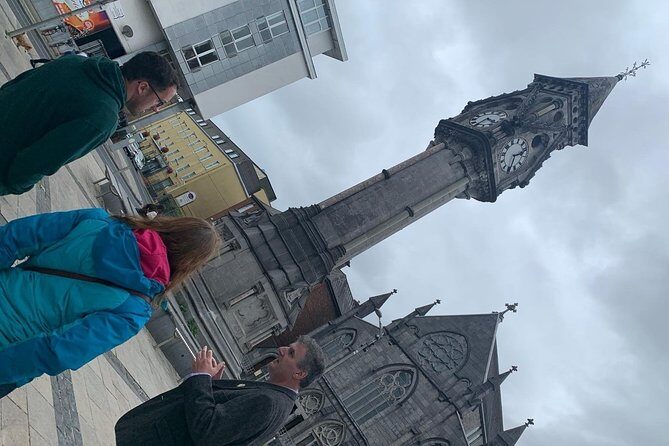
- Markets, Victorian rail station, and the Tait Clock links to war
- First World War monument and the Glen Tavern finish
- Price and value for a private group of up to 7
- Who should book this Limerick private walking tour
- Should you book? My take
- FAQ
- How long is the Private Walking Tour of Limerick City?
- What does the tour cost, and how many people can go?
- Is the tour private, and what language is it in?
- What’s included in the tour price?
- Do I need to buy tickets for entrances?
- Where do we meet, and do we end at the same place?
- What if the weather is bad or I need to cancel?
Key things you’ll notice on this Limerick private walk
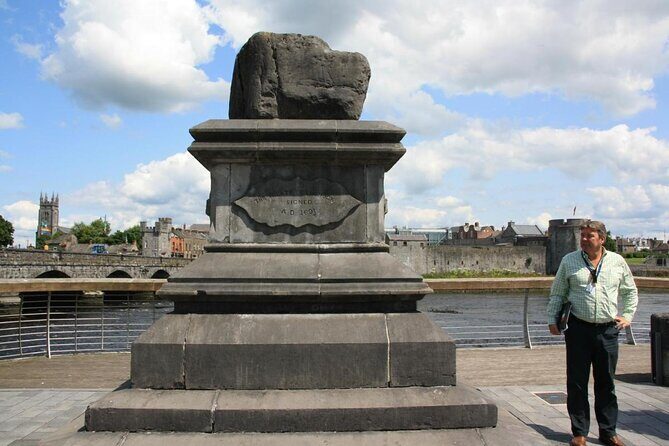
- Wartime stories tied to real places, including Crimean War and American Civil War connections you can point to on the street
- A personal guide named Joe (at least on recent tours), plus the occasional ghost story tone to keep it fun
- Shannon River moments, including an older crossing and river traditions tied to maritime life
- Literary Limerick stop, with a look at the famous pub linked to Angela’s Ashes
- Big memory at the end, with a First World War monument and the scale of Irish loss
- All on foot for about two hours, designed so you can see a lot without rushing
Private walking tour in Limerick’s center: why it works
Limerick’s historic core is walkable, but it’s not a “checklist” city. The streets and buildings are close enough that a guide can connect the dots—politics to architecture, literature to local identity, and river geography to maritime culture—without you losing the thread.
What you’re buying here is time and attention. For a group of up to seven, you can ask questions as you go, stop when something catches your eye, and keep moving at the pace your feet set. In practice, that makes the difference between seeing landmarks and understanding why they matter.
The tour is also structured to reduce stress. You return to the starting area, and there are no entrance fees required, which helps you avoid the “we’re running late and everyone’s scrambling” feeling that can happen on sightseeing days.
You can also read our reviews of more walking tours in Limerick

Where the tour begins at the City Gallery of Art (Carnegie Building)
You meet at the Limerick City Gallery of Art, in the Carnegie Building at Pery Square (Prior’s-Land). This is a smart anchor point: it puts you near the city’s central arteries, so the first stretch feels like you’re getting oriented fast.
From there, the walk naturally flows through historic streets and river-adjacent areas. That matters because Limerick’s highlights aren’t all in one single “tourist square.” They’re spread out along the layers of the medieval and Georgian city plan.
If you’re trying to build a day around this, plan to start with an easy morning. You’ll want comfortable shoes and a light layer, since Irish weather can shift, and the tour is described as requiring good weather.
Crimean War, American Civil War, and political threads you can see
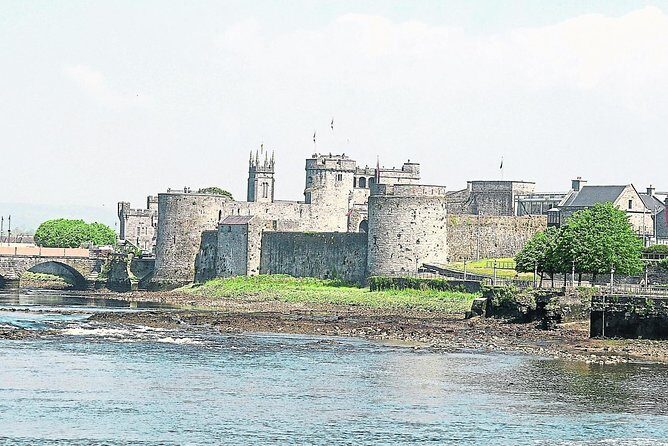
Early on, you’ll hear about how Limerick ties into major wartime history—especially the Crimean War and the American Civil War. What I liked about this approach is that it doesn’t treat war as a distant headline. It frames the connection in ways you can link to specific civic references as you walk.
Then you move into Irish political history through Daniel O’Connell’s links to Limerick. O’Connell is one of those names that sounds big on paper, but the real value here is place-based storytelling. You’re not just memorizing facts. You’re connecting them to a townscape that helped shape public life.
If you like history that feels local—history that has names, street corners, and visible reminders—this is the part that hooks you.
Angela’s Ashes and the pub stop that puts culture first
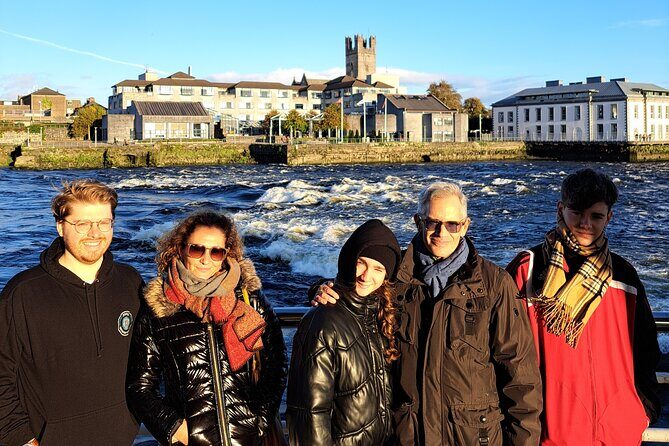
At one point you’ll view the famous pub from Angela’s Ashes. This is the stop where literary Limerick gets physical. Instead of abstract “inspiration,” you’re standing in a real setting tied to a story that many people associate with the feeling of growing up in Limerick.
This section works especially well in a private format. You can take a few minutes to soak in the mood, listen to the guide’s framing, and then move on without the pressure of matching a group schedule.
The only caution: don’t expect this to be a formal sit-down event as part of the tour. It’s a view stop, built to keep momentum while still giving you a meaningful cultural moment.
Maritime Limerick by the river: traditions, monuments, and everyday life
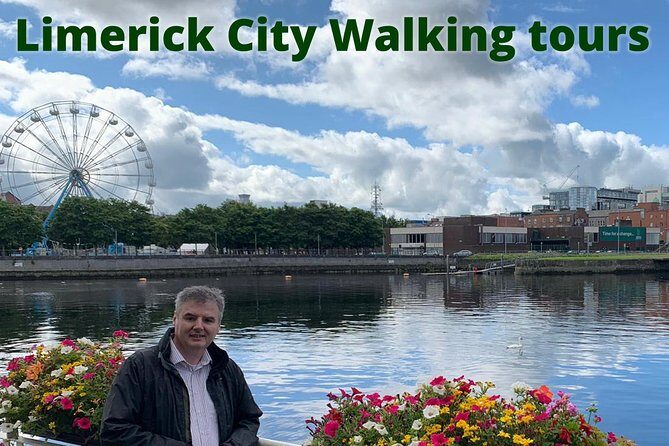
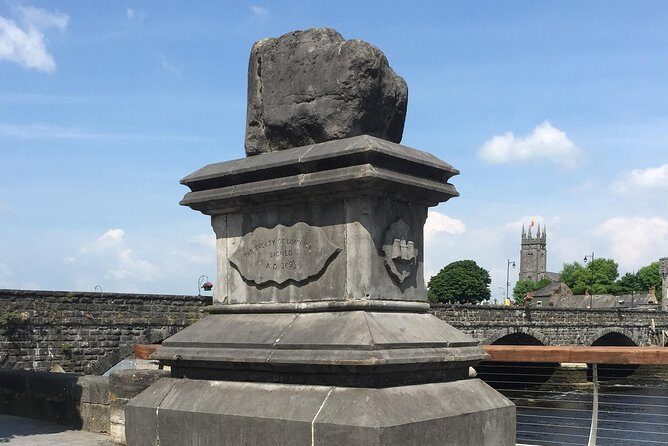
Next comes the river world. You’ll learn about the maritime tradition of Limerick, and you’ll see several monuments close to this area. This is where the tour starts feeling less like “old buildings” and more like how people lived—work, trade, and local customs tied to the water.
Limerick’s identity is strongly shaped by what happens at the river edge, and this part gives you that practical context. You’ll also hear about local traditions at this point by the river, including the kind of “people and place” detail that makes a city feel lived-in rather than museum-like.
One practical tip: bring your phone camera, but also look up. Riverfront areas can be visually busy, and the best views often include both the waterline and the skyline elements behind it.
You can also read our reviews of more city tours in Limerick


A bridge moment that nods to Paris
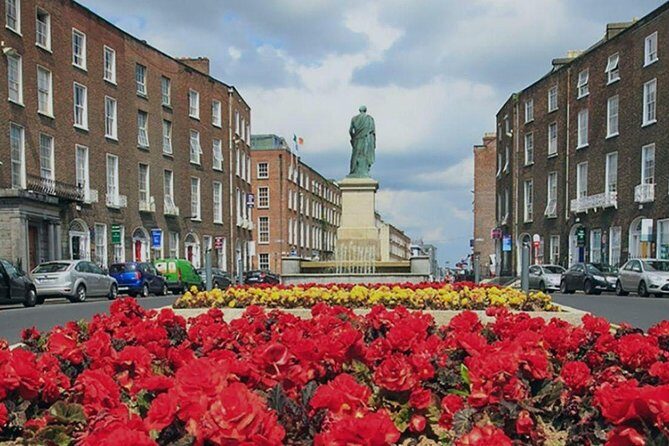
You’ll view an elegant bridge that’s described as similar to ones in Paris from the same period. That’s a fun stop because it gives you a comparative lens. You’ll start noticing how different European cities used similar design ideas, then adapted them to local rivers and traffic needs.
Even if bridges aren’t your main interest, this is worth paying attention to. It’s a good “reset” stop—break up the walking, get a photo or two, and let the guide’s story tie back into what you’ll see around the Shannon next.
Siege of Limerick and the world-outside- Ireland angle
Then comes a heavier, more global perspective: the siege of Limerick, and how it had implications beyond Ireland and even touched Britain as the closest neighbor.
What makes this section valuable is scale. It explains that Limerick’s story isn’t only internal. This was a place that could matter to larger power struggles—so the architecture and monuments you’re seeing weren’t built in isolation from Europe’s political climate.
If you prefer history that gives cause-and-effect, this is a solid moment. It turns your “tour photos” into “story photos.”
Crossing the Shannon on an ancient route to medieval Limerick

One of the key physical moments is crossing the Shannon on one of the oldest crossing points. This is one of those rare tours where your steps match the theme: you’re literally moving across the same kind of geography that shaped the city’s medieval development.
After the crossing, you’ll learn about medieval Limerick. This part helps you understand why certain neighborhoods and landmarks sit where they do. It also makes it easier to visualize how people traveled, traded, and defended the city before modern roads reshaped everything.
This is also where your shoes matter. The route is described as pretty flat, but street surfaces vary, and you’ll be walking continuously for about two hours total.
Bard of Thomond, King John’s Castle, and Dolores O’Riordan
A standout cultural stretch follows: you’ll discover the Bard of Thomond and see the Dolores O’Riordan mural. For many visitors, that name will connect to music; for you, it becomes another way to see how Limerick keeps its identity visible across generations.
Then there’s King John’s Castle, described as ancient, and you’ll learn about it. This stop is one of the big ones for the tour. Castles can become background scenery fast, but with a guide who connects the site to local meaning, the castle turns into an anchor for the entire story of the city.
If you’re a person who likes your city sightseeing to include culture as well as stonework, this section is the “yes, this is why I booked” part.
Exchange Wall, oldest building in Limerick, and the Abbey River chapter
As the tour continues, you’ll see the old Exchange Wall and visit a viewpoint tied to the oldest building in Limerick. These are the kinds of stops that quietly impress. The details can be small, but the symbolism is big: trade, governance, and continuity across centuries.
Next comes the Abbey River and the Old Christian Brother School. You’ll also learn about the Abbey river fishermen and their traditions. This is a good shift from high politics and stone monuments to more everyday local life.
It’s also a helpful teaching moment for you as a visitor. When you hear about fishermen and tradition in the same area you’re viewing historic educational or civic structures, the city stops feeling like separate time periods. It starts feeling like one layered community.
Irishtown walls, Ireland’s tallest church spire, and the Georgian city edge
You’ll move into the Irishtown section of the medieval city, with views of the remains of old walls and the next layer of development. This is where Limerick’s physical story changes from medieval defense to later shaping of urban space.
You’ll also view Ireland’s tallest church spire and see the first section of the Georgian city. That pairing is clever. It shows you the shift in architecture and civic priorities—how the city’s identity evolved from survival and fortification toward planned streets and formal building styles.
If you’re the kind of traveler who likes to “read” a city visually, this is one of the most satisfying segments.
Markets, Victorian rail station, and the Tait Clock links to war
On the walking route, you’ll reach one of the great Limerick markets still active on weekends. Even if you don’t stop for shopping, standing near a working market gives you a sense of continuity—Limerick’s historic patterns of gathering and trade still matter.
Then you’ll see a historical street and the Victorian Rail Station. Rail architecture and streets help you understand how cities expanded and modernized. It’s also a nice “in-between” zone: you’re still in old Limerick, but you’re seeing the momentum toward the 1800s.
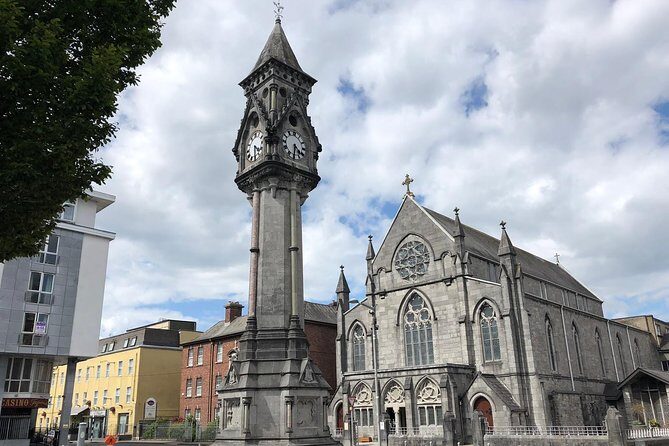
After that, there’s the Tait Clock, tied to Limerick’s connection to the American Civil War as well as the Crimean War. This is one of those “small object, big meaning” stops. The story sticks because the guide ties it to specific commemorations you can point to.
First World War monument and the Glen Tavern finish
The final major stop is the First World War monument, with the note that thousands of Irish soldiers perished. This isn’t a quick “photo and move on” moment. It’s designed as a reflective ending that gives weight to the war connections mentioned earlier in the tour.
After that, you’ll end back where you started for the tour logistics. But you’ll also have a chance for refreshments at the Glen Tavern—about 30 minutes, with admission ticket free for the time indicated.
This part is useful in two ways. One, the food there is described as excellent, and two, it’s a chance to keep the conversation going with your guide. If you’re the type who wants to ask follow-ups—what neighborhoods to explore next, what other stories fit your interests—that chat can be genuinely valuable.
Price and value for a private group of up to 7
The price is $343.05 per group for up to seven people. That’s not cheap if you’re traveling solo—but private tours rarely are. Where it gets interesting is the math: if you fill the group size, you’re roughly around $49 per person (based on the top end of seven).
More importantly, you’re not paying for “coverage” only. You’re paying for direction: a guide who connects King John’s Castle, the Shannon crossing, war memorial references, and cultural stops like the Angela’s Ashes pub and the Dolores O’Riordan mural into one walking story.
Also note what’s not required: entrances aren’t included because none are required for this orientation-style walk. That keeps the day smoother and helps you avoid surprise add-ons.
Who should book this Limerick private walking tour
Book it if you want history that feels rooted in place, not just timelines. This is especially good for you if you care about Limerick’s connections to larger events like the Crimean War and the American Civil War, and you like the mix of politics, architecture, and local culture.
You’ll also enjoy it if your travel style is: slow down, ask questions, and let the guide steer. Private format matters here because the route is designed for narrative, and you’ll get more out of it when you can pause and talk.
It might not be the best fit if you want a very short sightseeing sprint. The duration is about two hours, and it’s a walking tour with a moderate fitness expectation.
Should you book? My take
If your goal is to understand Limerick in a couple hours—how the city thinks, remembers, and relates its landmarks to real events—this is a smart booking. The tour’s strongest points are the story-driven stops (King John’s Castle, Shannon crossing, wartime links) and the way the private format keeps the pace comfortable.
I’d book it if you have a small group (or can share the cost) and you appreciate a guide who brings the city’s personality into the walk, not just dates and facts. Skip it only if you’re dealing with limited walking ability or you hate walking tours in general.
FAQ
How long is the Private Walking Tour of Limerick City?
It runs for about 2 hours (approx.).
What does the tour cost, and how many people can go?
The price is $343.05 per group, up to 7 people.
Is the tour private, and what language is it in?
Yes, it’s a private tour/activity with only your group participating, and it’s offered in English.
What’s included in the tour price?
An escorted guide is included.
Do I need to buy tickets for entrances?
No. No entrances are required on this orientation tour.
Where do we meet, and do we end at the same place?
You start at the Limerick City Gallery of Art (Carnegie Building) at Pery Square, Prior’s-Land, Limerick. The tour ends back at the meeting point.
What if the weather is bad or I need to cancel?
The experience requires good weather. If it’s canceled due to poor weather, you’ll be offered a different date or a full refund. You can cancel for a full refund if you cancel up to 24 hours in advance of the experience start time.