REVIEW · ENNIS
Private Ennis Essential History Tour with Dr Jane O’Brien
Book on Viator →Operated by Jane O'Brien · Bookable on Viator
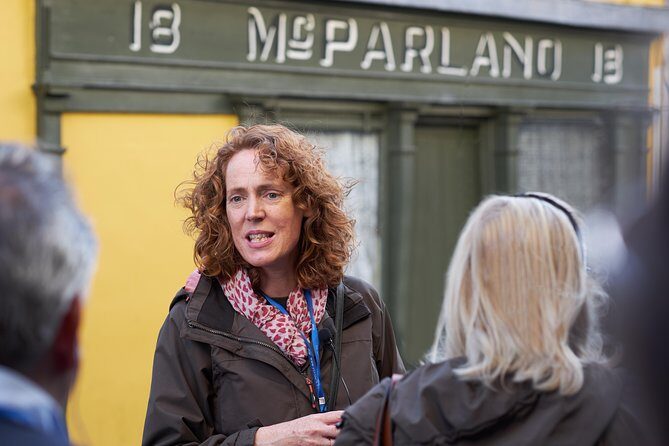
Ennis has layers, and this walk peels them back. The Private Ennis Essential History Tour with Dr Jane O’Brien turns quick town corners into real-life scenes, using historical sources to bring Ennis’s drama and daily life to the surface. Two things I really like: the storytelling style from Dr Jane O’Brien, and the option for an amplification device so you can follow every detail without craning your neck.
This is a tight route with lots of short stops, so the only real catch is pacing. If you want long museum-style lingering, 70 minutes with around eleven points on the map can feel a bit brisk.
In This Review
- Quick reasons you might love this Ennis history tour
- Ennis in 70 minutes with Dr Jane O’Brien
- Price and time: what you’re paying for (and what you’re not)
- Your route through Ennis: the story arc in eleven stops
- From Clare Museum to medieval Ennis origins
- Daniel O’Connell Monument: politics made local
- Abbey Street bow-ways: the lanes that tell the truth
- Ennis Friary and Old Ennis Abbey: religion, river views, and 1916 memory
- Francis Street and the Friary stained glass: power, art, and quiet corners
- Arthur’s Row and the old convent site: orphanage and industrial school stories
- Parnell Street and McParland House: a rare survivor in timber
- Chapel Lane: penal times, 1735 church, and the Great Famine pressure
- Market Place: where trade, matchmaking, and faction fights happened
- Barrack Street and Gallows Green: punishment as public record
- Cathedral of Saints Peter and Paul: a strong finish near O’Connell Street
- Listening comfort: amplification device and how to use it
- Who this Ennis Essential History Tour is best for
- What to wear and bring for an easy walking hour
- Should you book this tour?
- FAQ
- How long is the Ennis Essential History tour?
- Is this a private tour?
- Where does the tour start?
- Does the tour use a mobile ticket?
- What language is the tour offered in?
- Can the guide help with listening during the tour?
- Is admission included for the places you visit?
- Is there food or snack tasting included?
- Are service animals allowed?
- What is the cancellation policy?
Quick reasons you might love this Ennis history tour
- Dr Jane O’Brien’s source-based storytelling that connects buildings to people and events
- Amplification device option for easy listening during the walk
- A smart Ennis highlights route that mixes medieval lanes, 1600s houses, and 1800s institutions
- Photo-friendly variety: river views, stained glass, market spaces, and historic street façades
- Private group up to 6 means you’re not competing with a crowd for attention
- End-point flexibility near the Cathedral so you can choose to continue on foot or head back via O’Connell Street
Ennis in 70 minutes with Dr Jane O’Brien
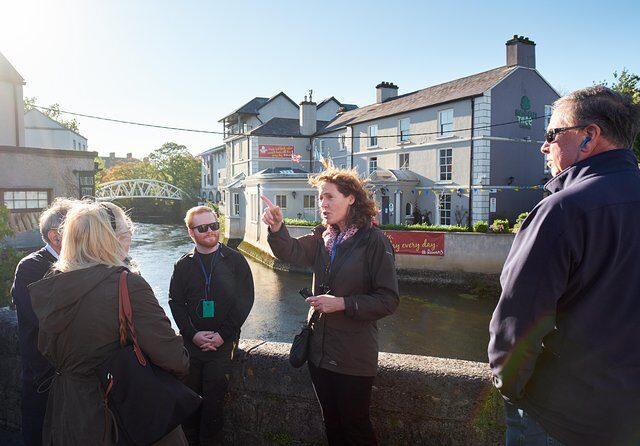
This is the kind of tour that helps you see a town you thought you already understood. Ennis is compact, walkable, and full of clues—old lanes that hint at overcrowding, monuments tied to political turning points, and buildings that still show what life was like when the rules of Ireland were different.
Dr Jane O’Brien guides you through Ennis with a clear purpose: you get context, not just a list of dates. She focuses on how Ennis formed, who shaped it, and what ordinary people faced—market days, religious life, famine-era pressure, punishment and power, plus the town’s memory of major uprisings.
Because it’s private (only your group), the tour can feel conversational. If something catches your eye—an old façade, a lane that suddenly narrows, the view toward the river Fergus—you’re better positioned to ask for clarification than you would on a larger group tour.
You can also read our reviews of more private tours in Ennis

Price and time: what you’re paying for (and what you’re not)
At $270.32 per group (up to 6), you’re not paying per person in the usual “per seat” way. For a small group of friends, that matters. The value comes from getting a specialist guide for the full hour plus, not a crowded walkthrough.
Also, the route is built for efficiency. Each stop is short (the plan is roughly five minutes at most points), so you can fit it between meals or before you wander independently through town afterward. You’re getting a “get your bearings fast” kind of history, designed to make your later self-guided exploration sharper.
One thing to note: the itinerary shows site admissions as free at each listed stop. That’s a helpful detail for planning your day and budget.
Your route through Ennis: the story arc in eleven stops
The tour starts at the Ennis Tourist Information Centre on Arthur’s Row (off O’Connell Street) and returns there at the end. Most of the time you’ll be walking through the town center and side streets, and yes—you’ll likely get your step count up while you’re learning.
Here’s how the route builds from medieval origins into a more modern Ennis.
From Clare Museum to medieval Ennis origins
Your first stop is beside the Clare Museum, at the site of the old Convent building for the Sisters of Mercy. It’s a strong opener because it immediately frames Ennis as a place where religion and education shaped everyday life, not just a town of landmarks.
You’re also introduced to Ennis as a medieval market town that originated in the 13th century. That matters because the rest of your walk makes more sense when you understand the town’s engine: markets, trades, and social life built around where people met and exchanged goods.
Practical note: this is a quick orientation stop. You won’t be stuck reading plaques—you’re mostly learning the “why” behind where you’re about to walk next.
Daniel O’Connell Monument: politics made local
Next you reach the Daniel O’Connell Monument in central Ennis. O’Connell is a big name in Irish history, and this stop helps you understand why: this location connects to major moments around Catholic Emancipation.
Even if you don’t memorize dates on vacation, it’s useful to see how national movements echoed right here in town life. The monument also acts like a navigation anchor: you’re now in the central zone where Ennis’s public events and civic energy show up.
This is another short stop, but it sets a tone—Ennis isn’t just medieval charm; it also carries political weight.

Abbey Street bow-ways: the lanes that tell the truth
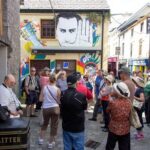
Then you slip into Abbey Street, described as one of Ennis’s atmospheric bow-ways—small lanes connecting main streets to areas that were once poorer tenements.
This is one of my favorite kinds of tour segments: you don’t just see history; you feel it through the street pattern. Narrow lanes like this often reflect where people were pushed—close to work, close to overcrowded housing, and not always close to comfort.
If you like walking tours that explain how design affects daily life, you’ll appreciate the focus here.
Ennis Friary and Old Ennis Abbey: religion, river views, and 1916 memory
At the Old Ennis Abbey (circa 1280s), you explore the role of the Franciscan Friars in the development of Ennis town. This part works well because it ties religious influence to town growth—where monasteries and friaries were positioned, and how they helped shape local community rhythms.
You also get a pretty view of the river Fergus, which breaks up the town-street feel with something more open and calming. And then, the tour brings you back to memory: there are memorials here linked to the famous Irish 1916 uprising against British rule.
So you get both atmosphere and gravity. You’re learning how Ennis carries reminders of national identity while still living as a town with daily routes and scenery.
Francis Street and the Friary stained glass: power, art, and quiet corners
Now you move to Francis Street, described as the oldest street in Ennis, leading toward what was once the palace of the O’Brien Kings, founders of the town.
This stop gives you a sense of origin stories—who founded the place, and why certain roads became key. It also keeps you oriented: streets stop being random names and start acting like historical timelines.
You’ll also visit a friary originally built in the 1850s, and the main highlight is the peaceful atmosphere and the stained glass windows. Even if you’re not a stained-glass expert, it’s a strong moment to slow down for a second. A short pause inside a historic space can do more than another ten minutes on the street.
Arthur’s Row and the old convent site: orphanage and industrial school stories
At Arthur’s Row, the tour shifts to something heavier. You explore archived experiences of children from the orphanage and industrial school that once stood on this site.
This is where a history tour becomes more than scenery. The details are meant to give you a fuller picture of what happened behind walls—systems of care and control, and how children’s lives were shaped by institutions.
It’s still handled in a tour-appropriate way—short, focused, and connected to the place you’re standing. But it’s also not meant to be purely pleasant. If you’d rather keep your vacation light, just know this segment leans emotional.
Parnell Street and McParland House: a rare survivor in timber
Next stop: Parnell Street and the McParland House (circa 1620). The standout fact here is its rarity: it’s described as the only known surviving timber framed house in Ireland and also the oldest house in the town in continuous use without major structural alterations.
You’ll get a good look at features like the quaint shopfront and the half-door, and that kind of detail helps you picture daily life at a time when shop fronts and houses weren’t separate worlds.
This is the kind of stop where you may want extra time for photos, but the tour plan keeps it moving. If you love architecture, this is the place to linger a moment on your way out.
Chapel Lane: penal times, 1735 church, and the Great Famine pressure
At Chapel Lane, the tour stops beside the building housing the Chapel Lane market. The story here is that it was once a church built in 1735 during the penal times.
Lane spaces like this are also discussed in relation to the Great Famine. The key idea is overcrowding—people packed into areas like these, and the town absorbed devastating strain.
This isn’t presented as abstract tragedy. It’s tied to the street itself, so you understand how physical spaces shaped suffering during the famine years. If you like tours that connect the past to how a town actually functions, this is a smart and grounded segment.
Market Place: where trade, matchmaking, and faction fights happened
Now you arrive at the Market Place, Ennis’s main market town role for hundreds of years as a center for markets across County Clare.
What makes this stop interesting is that markets aren’t only about buying and selling. You learn that market days were social events—meeting up, matchmaking, and yes, sometimes faction fighting.
There’s also a discussion of the meaning behind the market day sculpture that stands on the site today. That’s a nice touch because it brings the story into the present: you can look at something you see today and understand why it was placed there.
If you’re visiting Ennis while events are happening, this stop can help you interpret what you’re seeing with a historical lens.
Barrack Street and Gallows Green: punishment as public record
Next: Barrack Street, formerly the old Gallows Green. This is the tour’s warning label moment—your guide looks at crimes and punishments documented in the Ennis corporation manuscript (1660).
The focus is on how shocking some of the records can feel in modern eyes. It’s a reminder that law wasn’t gentle, and public punishment was part of how towns controlled behavior and power.
It’s also an important balancing point. A “town history” that only covers beautiful churches and charming streets wouldn’t tell you what kind of society lived here. This stop gives you the harder context.
Cathedral of Saints Peter and Paul: a strong finish near O’Connell Street
Your final stop is the Cathedral of Saints Peter and Paul, built between 1830 and 1870 and described as the main Catholic Church of the region. It stands opposite the Old Ground Hotel, which was once the site of the old town jail.
There’s also a spooky detail built into the cathedral’s story: it incorporates a haunted towerhouse dating to the 1500s. Even if you don’t run toward ghost stories, it adds a layer of atmosphere and explains why the building feels so storied.
After this, the tour typically ends with a choice: you can visit the cathedral or return at your leisure via the main pedestrianised shopping street, O’Connell Street.
This is a good finish because it positions you for an easy onward plan—meal, shopping, or a slow wander back through the center with your new mental map.
Listening comfort: amplification device and how to use it
One small detail that matters on a walking tour: you can’t always hear well when you’re outdoors and moving. This tour includes the option for the guide to use an amplification device for ease of listening.
If you know you struggle with hearing on noisy streets, ask about it at the start. It’s also worth noting that this is a private setting with only your group, so you’re less likely to have the guide’s microphone fighting with a crowd’s volume.
Who this Ennis Essential History Tour is best for
This tour fits best if you want:
- A tight, guided overview of Ennis that helps you understand what you’re seeing later
- A guide who connects locations to people, institutions, and events
- A private format with a small group up to 6, so the experience feels controlled and personal
It may be less ideal if you want a long sit-down museum experience, because the tour is built around short stops and movement.
What to wear and bring for an easy walking hour
The duration is around 1 hour 10 minutes, and you’ll be moving through lanes and streets. Wear comfortable walking shoes. Bring a light layer if the weather shifts—Ennis can be changeable, and you’ll be outside enough for it to matter.
Other than that, the big advantage is mental: you won’t feel lost. This tour gives you a clear route and a story thread that sticks.
Should you book this tour?
Yes—if you want a high-impact introduction to Ennis without spending half a day hunting down history on your own. The combination of Dr Jane O’Brien’s guiding style, the small private group up to 6, and the way the itinerary connects street names and buildings to real events makes it a strong use of your time.
Book it especially if you’re the type of visitor who enjoys understanding why a place looks the way it does. You’ll leave with more than photos. You’ll leave with reasons.
If you’d rather take history slowly and sit in one place for a long time, consider that the pacing is designed to cover lots of ground. In that case, you might pair this with a longer independent stop afterward—maybe at the cathedral area or along O’Connell Street—so your favorite moments get the time they deserve.
FAQ
How long is the Ennis Essential History tour?
It lasts about 1 hour 10 minutes.
Is this a private tour?
Yes. It’s private, so only your group participates, up to 6 people.
Where does the tour start?
The meeting point is the Ennis Tourist Information Centre on Arthur’s Row, O’Connell Street, in Ennis, County Clare.
Does the tour use a mobile ticket?
Yes, you receive a mobile ticket.
What language is the tour offered in?
The tour is offered in English.
Can the guide help with listening during the tour?
Yes. There is an option for the guide to use an amplification device for ease of listening.
Is admission included for the places you visit?
The itinerary lists the stops with admission ticket free for each location.
Is there food or snack tasting included?
Snacks and local food tastings are mentioned as part of the Gourmet History Tour option.
Are service animals allowed?
Yes, service animals are allowed.
What is the cancellation policy?
Free cancellation is available up to 24 hours in advance for a full refund.