REVIEW · SOUTH EAST IRELAND
Guided Walking Tour in stunning county Waterford Ireland
Book on Viator →Operated by StepsBackThruTime walking tours · Bookable on Viator
Time in Kilmacthomas moves at walking speed. This guided stroll blends hard-history stops with airy breaks along the Waterford Greenway and River Mahon, all told by local guide-storyteller Stíofán. You’ll cover workhouse buildings, railway structures, mill life, and even a few moments of calm built right into the route.
I especially love the way the tour mixes big-picture history with close-up details you can actually see—like the curved viaduct view over Flahavan’s Mill and the outside look at the railway station and signal house. I also like the guide’s pacing: it feels relaxed, and the stories keep your attention without rushing you along.
One consideration: a couple of stops deal with poverty and death connected to the workhouse era, so this isn’t the kind of tour that treats history like a theme park. If that topic might feel heavy for you, go in knowing it’s part of the experience.
In This Review
- Highlights You Shouldn’t Miss
- Kilmacthomas Is a Perfect Small-Town Walking Stage
- Workhouse Beginnings: What the Buildings Still Say
- The Paupers Mass Grave View and the Limits of Access
- New Bridge: The 4000 BC Story (Yes, Really)
- Mindfulness Break #1: Flora and Fauna on the Greenway
- Railway Station and Signal House: The Local Economy in Plain Sight
- The Village Main Street: Famous and Infamous Characters
- Flahavan’s Mill from the Curved Viaduct
- Curved Viaduct Bridge and Public Park: Engineering + Moments in Time
- Woollen Mill: The Job Engine Behind Daily Life
- Mindfulness Break #2: The River Mahon Sounds
- Mindfulness Break #3: Country Lane Views Back Toward the Greenway
- Coachhouse Finale: Characters and the Coffee Story
- Price and Time: Why $21 Feels Fair
- Who This Walk Suits Best (and Who Might Skip)
- Should You Book This Kilmacthomas Walking Tour?
- FAQ
- FAQ
- How long is the guided walking tour?
- Where does the tour start and where does it end?
- What is the price?
- What’s included, and are snacks provided?
- Do I need to pay for entry at the stops?
- What group size should I expect?
- What if the weather is poor?
Highlights You Shouldn’t Miss
- Kilmacthomas Workhouse grounds with buildings like the isolation house and mortuary, plus a walk toward the paupers graveyard
- A 4000 BC claim at New Bridge, explained with on-the-spot flip cards about recent archaeological finds
- Three structured mindfulness breaks (Greenway, riverbanks, and a country lane) with prompts for what to listen for and notice
- Viaduct-and-mill views from multiple angles, including Flahavan’s Mill and the public park area below the bridge
- Railway architecture outside stops—station and signal house—tied to the local economy
- Small-group feel with a maximum of 15 people, so questions and conversation can actually happen
Kilmacthomas Is a Perfect Small-Town Walking Stage
Kilmacthomas doesn’t try to compete with big tourist draws. That’s why it works so well on foot. You get a walk that’s built for noticing: old stone, old transport routes, and countryside paths that connect all the dots between the village and the Waterford Greenway.
What makes this tour especially good value is the mix of categories that rarely meet in one package. You’re not just looking at ruins. You’re also learning how the area worked—economically—through railways and mills. And then, after the heavier moments, the route gives you pauses to slow down again. That rhythm matters.
The tour starts and ends at the same place near the Workhouse area, on the Greenway car park (Carrignanonshagh, Kilmacthomas). The start time is 10:00 am, and the duration is typically 2 to 3 hours. In practice, it’s a leisurely walk that most people can handle comfortably, with a group cap of 15.
You can also read our reviews of more tours and experiences in South East Ireland.

Workhouse Beginnings: What the Buildings Still Say
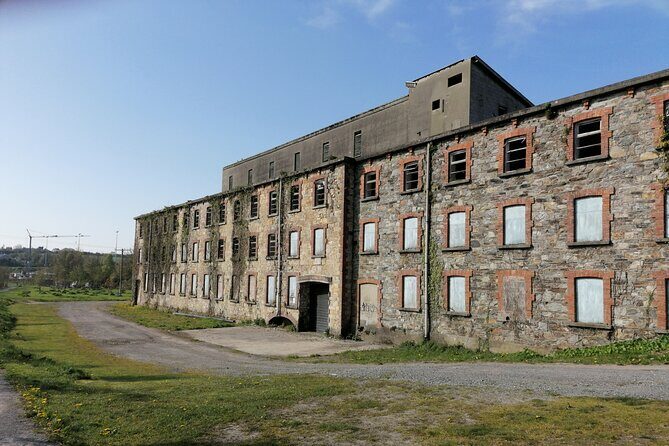
Your day opens at the Kilmacthomas Workhouse area. This place matters because it opened in 1851 to house local poor residents during severe hardship. Standing in and around these grounds, you get a sense of how institutional life was arranged—where people lived, where the sick or isolated were separated, and how death was handled.
You’ll walk through the Poorhouse buildings and also see the isolation house and mortuary. Even without a formal museum feel, this is a powerful start because it’s concrete. You’re not hearing history as a vague story; you’re seeing how the site is laid out and thinking about what those spaces meant.
Then you continue along a path toward the paupers graveyard. The tour doesn’t rush the emotion here. The pacing gives you time to register what you’re looking at, and it sets the tone for the rest of the walk: respectful, local, and grounded.
If you like your history with specifics—names of structures, clear context, and on-the-ground explanation—this opening section is a standout.
The Paupers Mass Grave View and the Limits of Access
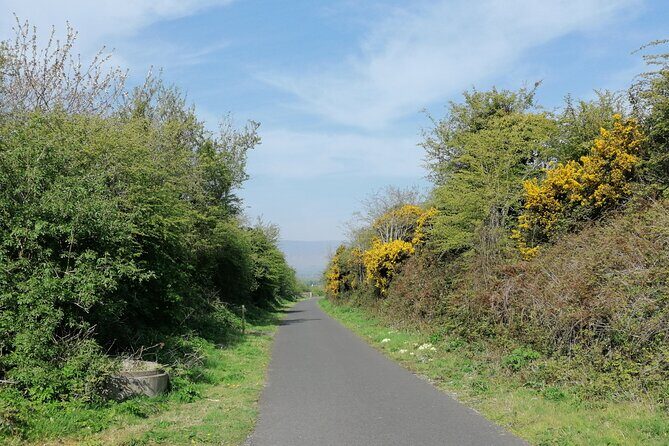
Next comes a look at the paupers gravesite. You view the paupers mass grave from a gateway, and it’s described as a stark reminder of the conditions faced by workhouse residents.
A practical note: access is limited because the gravesite area is described as privately owned, so you won’t be able to wander in. That can feel a little frustrating if you were expecting a full viewing experience, but it’s also part of the reality of how these places are protected and managed.
What the tour does well is handle this without pretending it’s something else. You get a clear viewpoint, context via the guide’s explanations and the flip cards, and then you move on—carrying the weight of what you just learned into the lighter, more scenic parts of the loop.
New Bridge: The 4000 BC Story (Yes, Really)
After the workhouse chapter, you shift to New Bridge. This stop centers on local archaeological digs and a timeline claim: the Kilmacthomas area is described as dating to 4000 BC, which the tour compares as older than the pyramids of Egypt.
Now, you should treat that framing as the tour’s storytelling hook, not as something you’d file away like a scientific paper. But the bigger point is solid: the area has layers, and the guide uses flip cards on the spot to explain what archaeologists found and why it changes how you see the landscape.
I like this stop because it turns the day from “old buildings” into “deep time.” You start thinking beyond the 1800s. You notice how a place can host people in completely different eras, long before railways, mills, or even the workhouse era came into view.
Mindfulness Break #1: Flora and Fauna on the Greenway
One thing that surprised me—in a good way—is how the tour builds in calm moments instead of treating them as an afterthought. The first mindfulness section happens while you’re on the Greenway walk toward the village railway station.
You pause to take breath and “open the senses,” guided by flip-card explanations about flora and fauna you might notice along the Waterford Greenway corridor. It’s not yoga class. It’s more like guided attention: look, listen, and slow your brain down enough to catch what’s happening in front of you.
This is also where the practical side shows up. Even if you’re not a “nature person,” the prompts help. You’re encouraged to connect the plants and small wildlife to the route you’re already walking. And when the weather is good, the Greenway section feels like a reward.
Railway Station and Signal House: The Local Economy in Plain Sight
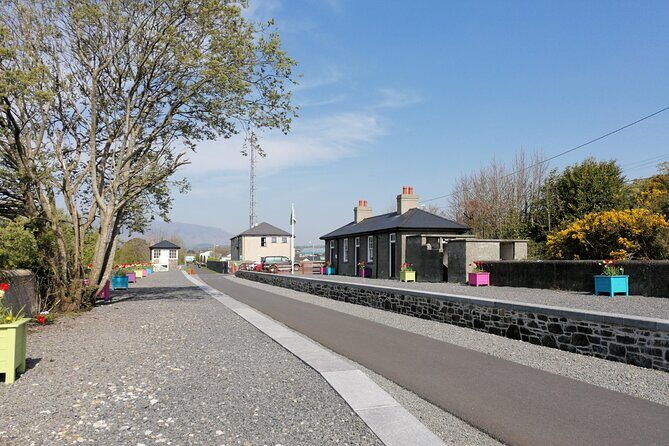
Then you step into the railway era—literally, from the outside. You’ll explore the Kilmacthomas Railway Station and Signal House. The guide explains how these buildings were vital to the local economy during the heyday of Ireland’s railway network.
This stop is ideal if you like everyday infrastructure stories. Rail wasn’t just about passenger travel. It shaped jobs, movement of goods, and where industry could operate efficiently. By seeing the station and signal house exterior, you get a feel for how the area moved people and products.
If your brain likes to connect dots, this stop sets you up for what comes next: the viaduct views and the mills that depended on transport and distribution.
The Village Main Street: Famous and Infamous Characters
In the village, you get a different kind of local history—people history. You’ll view the main street and hear stories about characters associated with Kilmacthomas, including those described as famous and infamous.
Flip cards help with what the people looked like and how they affected local history. This kind of stop can go two ways on tours: it can turn into vague name-dropping, or it can feel like social history with human stakes. Here, the tour’s strength is that the guide keeps it tied to the place—characters are presented as part of the village’s ongoing story, not random trivia.
I found this section especially enjoyable if you like Ireland’s history as a living thing. When the guide points out how personalities shaped events, it makes the whole walk feel more personal.
Flahavan’s Mill from the Curved Viaduct
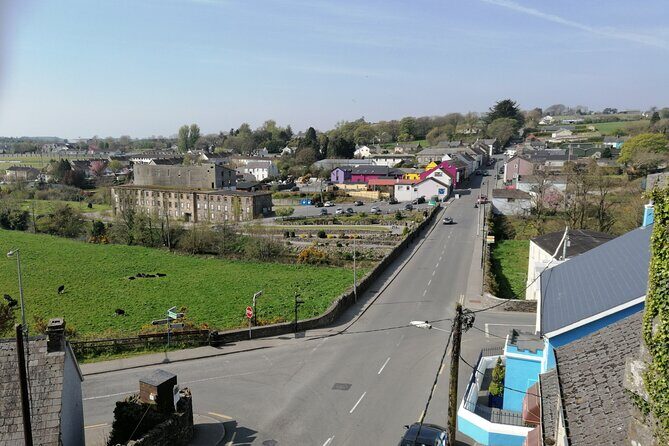
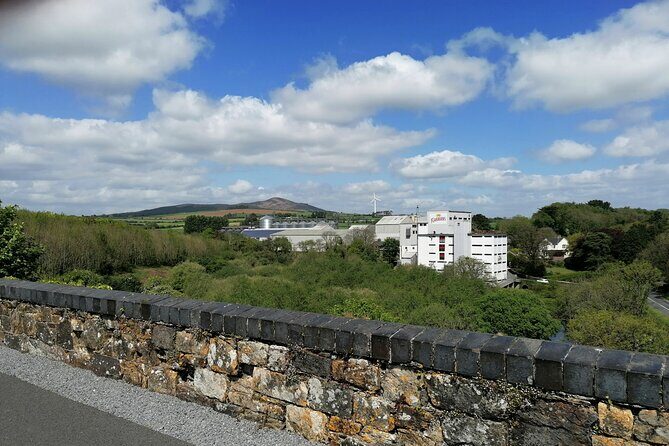
Now the scenery pulls its weight. You move to the Kilmacthomas Railway Viaduct area and see Flahavan’s Mill from above on top of the curved bridge.
This is one of those “wait—look at that” moments. From the curved viaduct, you get perspective that you simply wouldn’t get from street level. The tour ties it to industry history: Flahavan’s Mills has been producing high-quality oatmeal products since the 18th century.
Even if oatmeal is your only association with the name, you start understanding why a mill would belong here—water, transport links, and the local workforce. The guide’s explanations help the view make sense, turning a photo opportunity into a story you’ll remember.
Curved Viaduct Bridge and Public Park: Engineering + Moments in Time
Staying near the viaduct, you’ll admire the bridge from multiple angles and also look at the base footings—another engineering-focused moment. You’ll also walk the grounds of the public park tied to historic moments in this location.
This part of the tour works because it doesn’t treat engineering as cold. You see the structure, then you hear what happened around it. That’s what turns concrete and stone into lived history.
If you like dramatic angles, this is your moment. The bridge geometry gives you options for photos, but more importantly, it helps you understand how rail lines and industry shaped how people could live and work in the area.
Woollen Mill: The Job Engine Behind Daily Life
Next up is the Woollen Mill, where you learn about its history as a major employer for locals during the 18th and 19th centuries.
This is the kind of stop that might sound dry in a brochure. On this tour, it lands better because you’ve already met the workhouse, seen the railway structures, and stared at the viaduct. Suddenly, “employment” isn’t abstract. It’s the counterpoint to hardship: people weren’t only surviving institutions; many were working in local industry that depended on a functioning transport network.
The guide keeps the story grounded in place, so it feels like part of one continuous local system rather than separate facts.
Mindfulness Break #2: The River Mahon Sounds
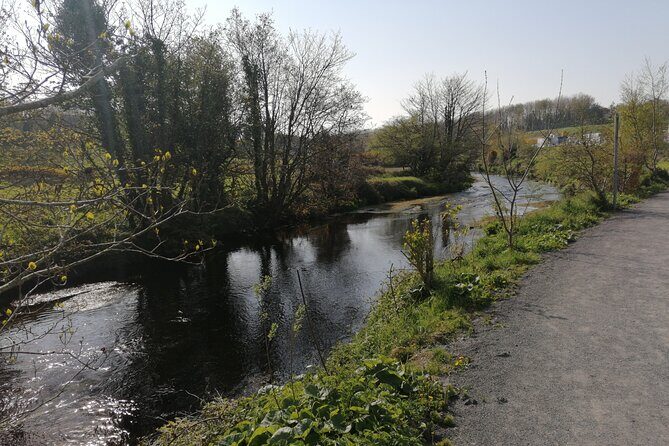
After all that history, the second mindfulness stop slows you down again, this time along the banks of the River Mahon.
You’ll take a brief walk and enjoy tranquil scenery while the guide uses flip cards to talk about wildlife and nature there. The audio and sensory prompts are specific: sounds of ducks, fish leaping, water flowing, pollinators, and plenty of bird song.
I like this approach because it encourages you to be present without forcing you to pretend you’re in a silent retreat. The river does the work. You notice movement. You notice birds. You notice the way sound changes as the group pauses.
If you’re visiting in colder months, bring a layer. Wind off a river can feel sharper than the forecast suggests. But even then, this stop can be a morale boost.
Mindfulness Break #3: Country Lane Views Back Toward the Greenway
The third mindfulness moment happens on a country lane leading back onto the Waterford Greenway. Again, you pause to open the senses, guided by flip-card explanations about the types of flora and fauna you might find.
This stop leans into the quiet side of rural living. You’ll get views into open pastures and hear bird song. It’s a gentle landing before the final walk back along the Greenway toward the coachhouse.
This three-part structure—history, calm, history, calm—helps the full tour feel balanced instead of heavy all the way through.
Coachhouse Finale: Characters and the Coffee Story
To wrap up, you walk back along the Waterford Greenway toward the coachhouse on the grounds connected to the workhouse area.
The guide shares stories about characters connected to the building and includes a specific tale: a story about coffee and how it all began in the 16th century.
I enjoy this ending because it gives your day a little lift. You started with deprivation and institutional life. You end with something more cultural and surprising. It’s a reminder that places hold more than one kind of story, even when parts of them are connected to painful history.
As you walk the last stretch, the group is also invited to ask questions about anything you saw or heard. On a small-group tour, those last questions can make the difference between “I learned a few things” and “I understand why it all fits together.”
Price and Time: Why $21 Feels Fair
At $21, this tour is priced for real value rather than “pay extra for the privilege of walking.” You’re paying for a local guide-storyteller, a route that connects multiple eras and industries, and three mindfulness pauses that actually structure your attention.
You also get a tour length that suits both vacation schedules and energy levels. Two to three hours is long enough for a full arc—workhouse to railways to mills to river calm—without burning half your day.
The small-group limit of 15 helps with pacing and questions. In other words, you’re not stuck listening from the back while the guide talks to one person.
One more plus: snacks aren’t included, but that’s normal for a morning walk. You’ll have plenty of options in and around Kilmacthomas village once the tour ends.
Who This Walk Suits Best (and Who Might Skip)
This tour is a great match if you:
- Want local stories with real place details, not generic sightseeing
- Like history that includes industry—railways and mills—not just monuments
- Appreciate a balanced rhythm with mindfulness breaks built into the route
- Prefer a small group and a guide who makes time for questions
It might be less ideal if:
- You want only upbeat or light topics. There are stops tied to poverty and death connected to the workhouse era.
- You need a fully inside-the-building museum experience. This is a walking tour with viewpoint-based stops and flip cards.
Should You Book This Kilmacthomas Walking Tour?
If you’re spending time in South East Ireland and you want something that feels authentic, this is an easy yes. The combination is what sells it: workhouse history, railway and viaduct architecture, mill life, plus three guided pauses to notice plants, birds, and river sounds.
Book it if you like tours where the guide makes the place feel lived-in—especially with the local storyteller approach used by Stíofán. Bring a good walking shoe, dress for the weather, and give yourself permission to slow down during the mindfulness stops. You’ll leave with more than photos. You’ll understand how Kilmacthomas worked, suffered, built, and breathed.
FAQ
FAQ
How long is the guided walking tour?
The tour lasts about 2 to 3 hours.
Where does the tour start and where does it end?
It starts at the Greenway Carpark at the Workhouse (Carrignanonshagh, Kilmacthomas) and ends back at the same meeting point.
What is the price?
The price is $21.
What’s included, and are snacks provided?
The tour includes a local guide-storyteller. Snacks are not included, so you can buy food and beverages in Kilmacthomas village after the tour.
Do I need to pay for entry at the stops?
The listed stops are shown as admission ticket free. One stop—the paupers graveyard viewing—is from a gateway due to private land.
What group size should I expect?
The tour has a maximum of 15 travelers.
What if the weather is poor?
This experience requires good weather. If it’s canceled due to poor weather, you’ll be offered a different date or a full refund.