REVIEW · GALWAY
Galway Private Walking Tour
Book on Viator →Operated by Travelling Ireland · Bookable on Viator
A walk can teach you a city fast. This private Galway tour threads together Eyre Square, medieval lanes, the Claddagh ring makers, and even a university stop, all with a guide who can answer your questions on the spot. I especially like the tight route (about 2.5 hours) and how the stops are chosen for both storytelling and easy sightseeing. One thing to consider: it is mostly walking, and a couple of major church/cathedral stops do not include admission.
You’ll end in a different part of town (near University of Galway), so you finish with a fresh view and a natural “next step” for lunch or a stroll. I also like that it’s offered in English and described as easy to locate start and end points, which matters in a city where streets can feel twisty.
In This Review
- Highlights You’ll Actually Feel on the Walk
- The Big Idea: Why This Private Galway Walk Works
- Getting Oriented at Eyre Square and the Kennedy Memorial Park
- Lynch’s Castle: Spot the Fortified House Details Up Close
- St. Nicholas’ Collegiate Church and What “Continuous Use” Means
- Kirwan’s Lane in the Latin Quarter: The Street That Feels Like a Time Machine
- Thomas Dillon’s Claddagh Gold: The Meaning Behind the Ring
- Hall of the Red Earl: Archaeology Where You Can Look Up
- The Spanish Arch: Old Watchmen and Cannons on the Roof
- Galway’s Westend: A Different Side of Town
- Galway Cathedral and the Skyline Dome
- Ending at University of Galway: From Medieval to Modern Streets
- Price and Value: What You’re Paying For
- Who This Tour Fits Best (and Who Might Want Another Option)
- Should You Book the Galway Private Walking Tour?
- FAQ
- How long is the Galway Private Walking Tour?
- Where does the tour start and end?
- Is this a private tour?
- What language is the tour offered in?
- Are admission tickets included for the stops?
- Is there a mobile ticket?
- Are service animals allowed?
- What is the cancellation policy?
- How far in advance should I book?
Highlights You’ll Actually Feel on the Walk
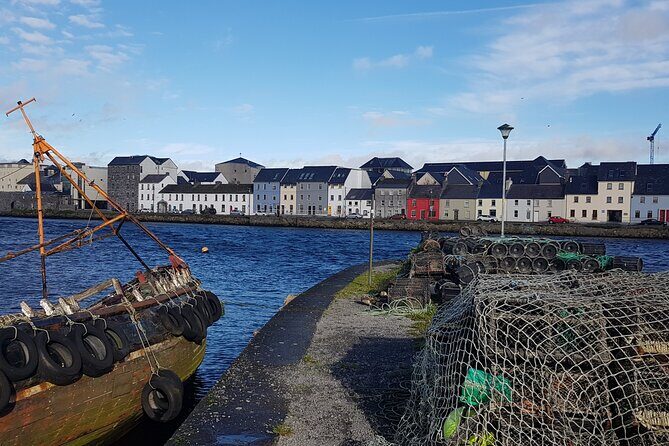
- Eyre Square through the Kennedy Memorial Park story, with a link to his 1963 visit
- Lynch’s Castle stop, a fortified house with details you’ll learn to spot
- Kirwan’s Lane in the Latin Quarter, right where the old city walls shaped daily life
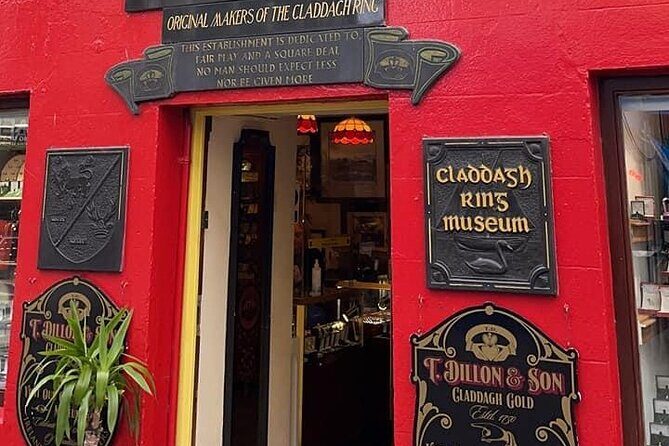
- Thomas Dillon’s Claddagh Gold, still making Claddagh rings since 1750
- Spanish Arch and old defenses, including what soldiers did from the roof
- Westend and Galway Cathedral dome views, plus an ending near UCG’s Quadrangle area
The Big Idea: Why This Private Galway Walk Works
This tour is built around one simple goal: help you look at Galway closely. Instead of hopping from attraction to attraction, you move at a steady pace through the medieval core, then gradually shift outward to places most people don’t linger on.
You’ll get more than a list of landmarks. You’ll learn how Galway’s past shows up in the street layout, building styles, and even small details like carved windows, street names, and where watchmen once stood. That matters, because Galway doesn’t announce its layers loudly. You have to be taught where to look, and that’s where a good local guide changes everything.
You can also read our reviews of more walking tours in Galway



Getting Oriented at Eyre Square and the Kennedy Memorial Park
You start at the John Fitzgerald Kennedy Memorial in Eyre Square, the heart of Galway City. The square goes back to medieval times when markets operated on the green in front of the town gates, so you’re standing in a place that has hosted crowd life for centuries.
The Kennedy connection is specific: Kennedy was made a Freeman of the city, and the memorial marks where he delivered a speech in 1963 to an estimated 100,000 Galway people—his last trip before his assassination. Even if you know the headline-level facts, the way your guide explains why this spot matters gives you a new lens.
Time here is short (about 10 minutes), so you won’t feel dragged. It’s more like a strong opening “chapter title” that sets up the rest of the walk.
Practical tip: Eyre Square is busy. Arrive a few minutes early so you can find your guide without stress.
Lynch’s Castle: Spot the Fortified House Details Up Close
Next is Lynch’s Castle, a medieval fortified house built and expanded by the powerful Lynch family, one of the famous “14 tribes” who shaped Galway’s rule. This stop is about visual reading—what you see, what it likely meant, and what age different parts of the building might be.
The architecture description alone tells you it isn’t just a photo-op: it’s a four-storey structure with embellished carved windows, gargoyles, and ornamental mouldings and cornices. Parts of the limestone building may date back to the 14th century, but the bulk was built in the 16th century—so you’re looking at layers of defense and status.
Why it’s a good stop on a walking tour:
- It teaches you how to interpret details you’d otherwise ignore.
- It connects the city’s power history to real stonework, not abstract dates.
Time is roughly 15 minutes, usually enough to absorb the guide’s pointers and still keep the pace comfortable.
St. Nicholas’ Collegiate Church and What “Continuous Use” Means
Then you head to Saint Nicholas’ Collegiate Church, described as the largest medieval parish church in Ireland in continuous use as a place of worship. That phrase—continuous use—changes how you view the building. You’re not just looking at something old; you’re looking at something that kept a role for generations.
Your time here is about 10 minutes. Admission is not included, so you’ll likely spend time outside and around the entrance unless you choose to pay for interior access separately (depending on how it’s handled on the day).
This is one of the stops where the guide’s context helps the most. Even without going inside, you’ll understand how Galway’s religious life ties into the city’s constant churn of people, trade, and defense.
Kirwan’s Lane in the Latin Quarter: The Street That Feels Like a Time Machine
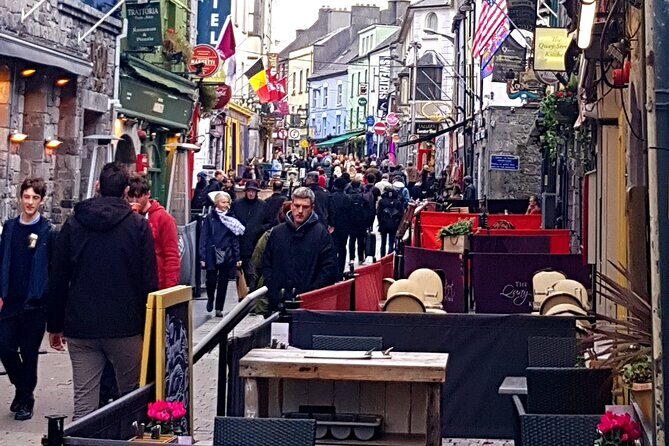
Kirwan’s Lane is where Galway starts to feel extra medieval—because the street sits in the part of town once within the city walls, in what’s now called the Latin Quarter.
The lane is named after the Kirwan family, another of the 14 tribes. And the area has been restored over time, so it’s not just archaeology-in-theory. You can see the restoration’s effect in how the lane functions today.
What I like about this stop for first-timers:
- It’s a quick way to understand how walls shaped where people lived.
- It gives you a sense of Galway’s “old center” that still feels walkable.
Time is around 15 minutes, and you’ll likely pause for photos and street-level observations, not just a quick glance.
You can also read our reviews of more private tours in Galway






Thomas Dillon’s Claddagh Gold: The Meaning Behind the Ring
At Thomas Dillon’s Claddagh Gold, you get to browse Claddagh rings at the oldest purveyor of the original ring, with production in silver and gold since 1750. This is a shop stop, but it’s not the usual salesy version. It works because your guide can connect the jewelry to the city’s identity and the symbolism people carry with them.
Time is about 15 minutes. Since admission is listed as free, you can usually treat it as a relaxed break in the walk—worth it even if you’re not buying.
Practical advice: If you’re thinking about a ring, ask questions about materials and design differences. The value here is less about a bargain and more about understanding what you’re looking at.
Hall of the Red Earl: Archaeology Where You Can Look Up
Next comes the Hall of the Red Earl, with 13th-century archaeological remains. It’s described as the oldest building to be excavated within Galway’s medieval walls.
This stop is short (about 15 minutes), and it can be easy to miss if you don’t know what you’re seeing. That’s why a guide matters here. You’re not just walking by stone remnants; you’re learning how they connect to Galway’s medieval footprint and to what “within the walls” really meant.
If you like history that you can see at street level, this is a great midpoint moment—like a pause button between heavier landmarks.
The Spanish Arch: Old Watchmen and Cannons on the Roof
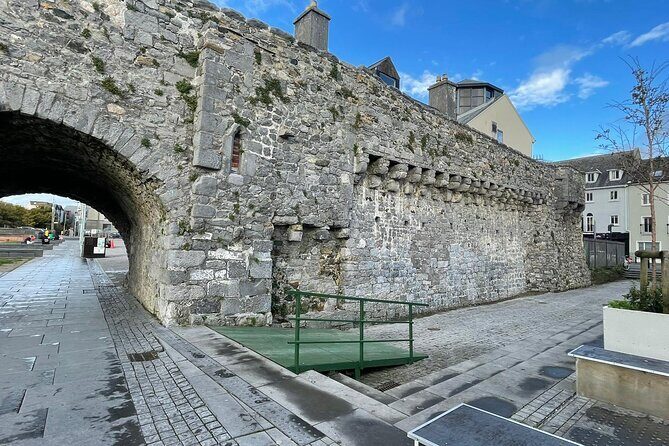
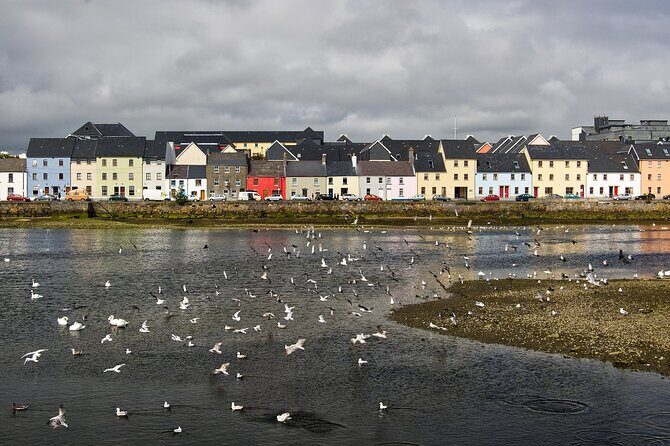
The Spanish Arch is one of Galway’s best-known historical structures, and it’s described as dating back to pre-medieval times. It also had military use: soldiers manned cannons and kept watch from the roof.
Your time is about 15 minutes. This is a strong stop for anyone who likes military history or urban legends that have a grounding in real geography. The guide’s job here is to show you the “how and why” of the defenses—how the structure’s position tied to the city’s needs.
If the weather turns (Galway does that often), this can still be a rewarding stop because you’re largely observing a fixed landmark.
Galway’s Westend: A Different Side of Town
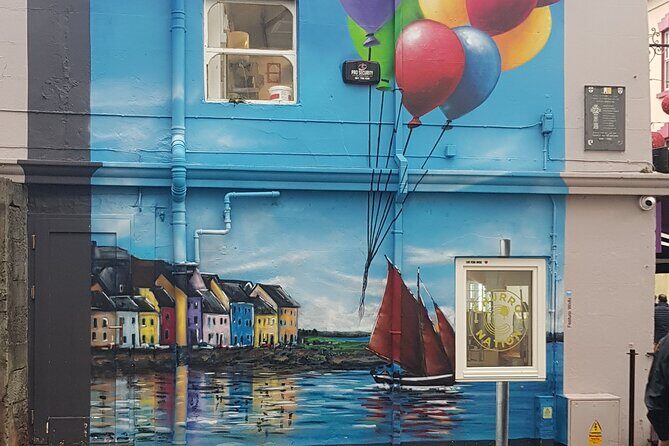
Then you shift to Galway’s Westend, about 25 minutes. This is where many visitors start to feel Galway’s character more personally—off the beaten track, a little further from the center, and known for a bohemian and eccentric feel with friendly locals.
The point of adding Westend isn’t to claim it’s cooler than the rest of Galway. It’s to widen your sense of what Galway is beyond the medieval postcard corridor. Your guide’s local perspective helps you see the area’s rhythm instead of treating it like a side trip.
Consideration: This is still part of a walking tour. If you’re hoping for lots of indoor breaks, plan for weather. You can always ask your guide for a nearby coffee or pub suggestion as you go.
Galway Cathedral and the Skyline Dome
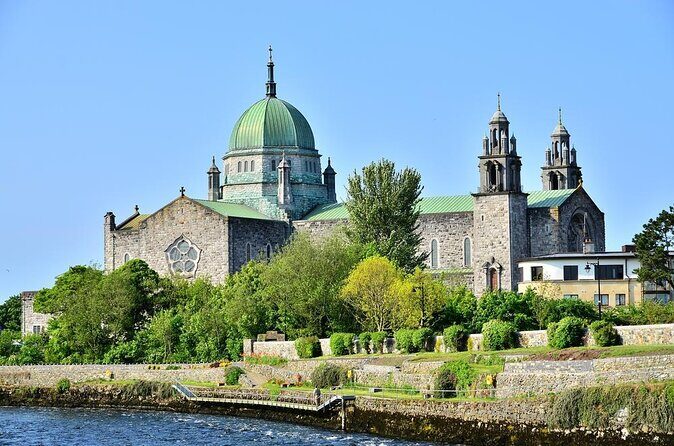
Next is Galway Cathedral, a Roman Catholic cathedral and one of the largest and most impressive buildings in the city. The dome is a key landmark feature, listed at 44.2 metres (145 ft)—high enough to shape the skyline you’ll notice from parts of town.
Admission is not included, so you may spend most of your time outside or around the areas you can access without entry. Still, the dome makes a great “look up” moment, and your guide can explain how such a building fits into the city’s evolution.
This stop is about 15 minutes, and it’s a nice change of pace from the more compact medieval lanes.
Ending at University of Galway: From Medieval to Modern Streets
The tour finishes near University of Galway (UCG) at University Rd. This gives you a modern ending after centuries of older Galway.
Here’s the anchor fact: the university traces to 1845, when Queen’s College Galway was founded. After construction of the iconic Quadrangle building, the university opened its doors to its first cohort of 68 students four years later.
Time on this stop is about 15 minutes. It’s not a long campus tour, but it helps you connect Galway’s story to education and civic growth.
Why this ending is practical: once you’re here, you can easily pivot to food, downtime, or an easy onward walk in a calmer setting than the city center.
Price and Value: What You’re Paying For
At $162.92 per person for a private 2.5-hour walking tour, the price isn’t “cheap,” but it can be smart value if you care about context and you’re traveling in a way that makes private time worthwhile.
Here’s how the value stacks up:
- You get a guide who can answer your specific questions as you walk, instead of following a scripted group pattern.
- The route is efficient: key landmarks, then a distinct change of vibe in Westend, then a modern civic stop at UCG.
- Some stops are explicitly listed as free admissions, and you get at least a couple of “pay only if you choose” moments (church/cathedral) rather than a tour that forces paid entry everywhere.
If you’re two or more people traveling together, it can feel more reasonable because private time is shared across your group rather than diluted across strangers.
My suggestion: if you’re a first-time Galway visitor and want your bearings fast, this tour pays for itself in saved effort. You’ll leave knowing what to revisit on your own.
Who This Tour Fits Best (and Who Might Want Another Option)
This private walking tour is ideal if you:
- want a fast introduction that still feels detailed,
- like architecture and street-level history,
- enjoy asking questions rather than just listening,
- care about Galway identity elements like the Claddagh ring makers.
It also seems especially good for families and mixed groups where patience matters. In the kinds of situations this tour handles well, a guide can keep the pace relaxed while still covering the planned sights.
A consideration if you’re not into walking: the total time is about 2 hours 30 minutes, and the route spans multiple areas. You might find you need breaks on a slow or rainy day.
Should You Book the Galway Private Walking Tour?
Yes—book this if you want Galway to make sense quickly. The route hits the main historical anchors (Eyre Square, Spanish Arch, medieval lanes), adds a distinctive identity stop (Claddagh rings at Thomas Dillon’s), and then gives you a taste of Galway’s personality beyond the center (Westend). The private format also means the guide can steer the conversation to what you care about, whether that’s buildings, legends, or how Galway grew.
If you’re the type who prefers to wander without structure, you might feel boxed in. But if you want your first day—or first full afternoon—to turn into real understanding, this is one of the most efficient ways to do it.
FAQ
How long is the Galway Private Walking Tour?
The tour is about 2 hours 30 minutes.
Where does the tour start and end?
It starts at the John Fitzgerald Kennedy Memorial on Eyre Square, Galway, Co. Galway, and it ends near University of Galway on University Rd, Galway.
Is this a private tour?
Yes. It’s listed as private, so only your group participates.
What language is the tour offered in?
The tour is offered in English.
Are admission tickets included for the stops?
Some stops are listed with admission ticket free, while others are not included. In particular, Saint Nicholas’ Collegiate Church and Galway Cathedral list admission as not included.
Is there a mobile ticket?
Yes. A mobile ticket is included.
Are service animals allowed?
Yes, service animals are allowed.
What is the cancellation policy?
Free cancellation is available. You can cancel up to 24 hours in advance for a full refund.
How far in advance should I book?
It’s commonly booked about 67 days in advance on average, so booking earlier can help if you’re visiting during a busy season.