REVIEW · GALWAY
Galway City on Foot with Seán: Stories, History, Local Tips, Chat and More..
Book on Viator →Operated by Galway on Foot - Walking Tours of Galway City · Bookable on Viator
Galway’s best stories walk beside you. On this walking tour with Seán, I like how you move through Galway’s old streets in about 90 minutes, with history told as chatty lore—starting at the Spanish Arch and ending in a traditional pub.
Two things I really like: you get fast orientation to Galway’s layout, and you also pick up practical pointers on where to eat and drink (and what to skip) as you go.
One possible drawback: the experience depends on good weather, and the stops are intentionally brief—so don’t expect long museum-style visits or deep dives inside every building.
In This Review
- Key highlights to look for
- 90 minutes of medieval Galway, told street-by-street
- Starting at the Spanish Arch: where Galway’s big story begins
- Across the Corrib: the Claddagh tale and how it shapes identity
- Quay Street and Kirwan’s Lane: medieval streets that still work
- St Nicholas Collegiate Church: rise, fall, and Saturday market magic
- The Lynch Memorial and Lynch’s Castle: power, fire, and family drama
- Finishing at Tigh Neachtáin: Humanity Dick and a good place to land
- Price and value: what you’re really paying for
- Who should book this walk (and who might want a different plan)
- Practical tips to get the most from Seán’s route
- Should you book Galway City on Foot with Seán?
- FAQ
- How long is the Galway City on Foot with Seán tour?
- Where does the tour start and where does it end?
- What are some of the main stops during the walk?
- Is this a small group tour?
- Are admission fees included for the sights?
- Do I get a mobile ticket?
- What if the weather is poor?
Key highlights to look for

- Seán’s story-first approach that turns landmarks into people, drama, and local legend
- A tight route that covers the medieval center without wasting time backtracking
- River Corrib views and the Claddagh origin story across the water
- Alleys and lanes like Kirwan’s Lane, where Galway feels like it did centuries ago
- Big-name history at St Nicholas Church and the Lynch sites nearby Shop St.
- A natural pub finish at Tigh Neachtáin to keep the conversation going
90 minutes of medieval Galway, told street-by-street
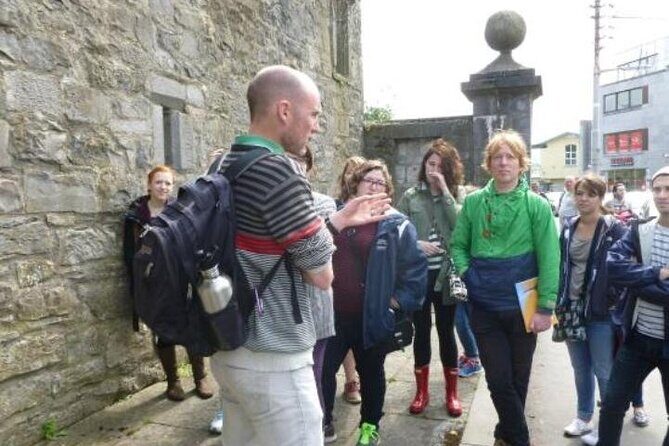
This is the kind of tour that gives you traction on day one. You don’t just see sights—you learn how Galway grew, why it fought, and how its families and characters shaped what you still walk past today. Seán’s style is the big reason it works: he keeps the pace light, but the facts have weight, and your questions get answered as you go.
The group size matters. With a small maximum group (listed as up to 10 in the details), you’re not stuck listening from the back row. That makes it easier to ask about what you’re seeing, and it keeps the whole thing from feeling like a mass-produced city lecture.
The route is also practical. You hit major landmarks across the medieval core, and each stop is short enough that you still feel energized rather than dragged. If Galway is your first stop on a trip, this walk helps you decide what to do next—especially if you plan to chase live music, seafood, or late-night pub energy later.
You can also read our reviews of more city tours in Galway



Starting at the Spanish Arch: where Galway’s big story begins
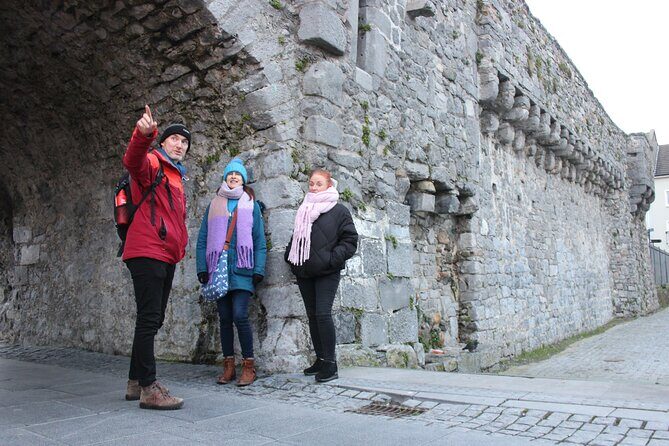
You begin at the Spanish Arch on the River Corrib. Even though it’s an outdoor starting point, it’s not just a pretty photo stop. The arch is part of what’s left of the medieval city walls, and it frames Galway’s early personality: a place that grew up facing the surrounding Gaelic world.
Seán sets the scene with Galway’s shift from a Gaelic settlement to a wealthy Anglo-Norman walled city state. A key idea here is how the city’s ruling families—known as the Tribes, fourteen of them—were loyal to the Crown while still being suspicious of the Gaels beyond the walls. That tension comes up again and again later, so starting here pays off.
Since the Spanish Arch stop is free and brief, you’ll likely cover it quickly. My advice: use the first couple minutes to line up your photos and then listen closely, because the story you get here becomes a “map in your head” for the rest of the walk.
Across the Corrib: the Claddagh tale and how it shapes identity
Right from the start area, you’re also given a view of where the Claddagh sits across the river. Even if you don’t spend time walking through the fishing village itself, the story matters because it explains why the name became famous worldwide.
The Claddagh origin story is all 17th-century drama: galleons, pirates, slave markets, a loyalty test, and a love story that refuses to quit. When you hear it in the same stretch of landscape where the Claddagh begins, it stops being a random romantic legend. It becomes part of Galway’s identity—grounded in hardship, seafaring life, and family bonds.
If you like folklore, this is the moment that usually clicks. You’ll start looking at Galway as a place where people remember stories the way other cities remember dates.
Quay Street and Kirwan’s Lane: medieval streets that still work
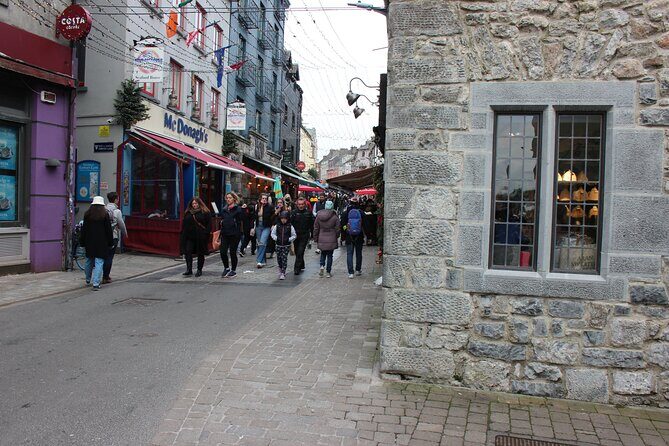
From the river you step into the medieval city proper via Quay Street. This is where Galway’s everyday life shows up. It’s packed with pubs, restaurants, cafés, music, and a few specific attractions like a toy shop and a Claddagh ring museum—and yes, there’s also a medieval castle in the mix.
What I appreciate is how Seán ties “what’s here now” to “what was here long ago.” Quay Street has been the center of Galway’s life for nearly 800 years, and the tour helps you feel how continuity is possible even when shops and styles change.
Another useful detail: you get frank, practical advice about where to eat and drink. That’s big value because it saves you from experimenting blindly after a long day. The tour makes it clear that some spots are better choices than others, and you get the guidance without having to ask half the internet.
Then you duck off Quay Street into Kirwan’s Lane, a secluded medieval laneway. It’s named after one of Galway’s merchant tribes, and it gives you a quick lesson in what wealth and power looked like at street level. This stop is short, but the payoff is atmosphere: the lane feels like a time capsule, and it also gives you a break from crowds.
Quick consideration: lanes like this can be narrow and uneven. Wear shoes that handle cobbles, and you’ll be comfortable.
St Nicholas Collegiate Church: rise, fall, and Saturday market magic
Next comes Saint Nicholas’ Collegiate Church, a 700-year-old landmark tied to sailors—and a few other professional types too. This stop is history as story, not a dry timeline. Seán explains Galway’s rise and tragic fall with characters you can picture: merchants with too much money and too few morals, and English soldiers with a serious grudge against art.
You also hear about slow sieges and fast plagues, then the long decline—about 300 years—that left Galway ready to rise again later into the city it is today. Listening to this right by the church makes the “why” feel personal. It’s not abstract; it’s connected to the street you’re standing on.
Here’s another reason this stop is worth it: if your timing lines up, Saturday can add extra fun. Seán notes that when it’s a Saturday, the Saturday Market may be on offer nearby—with things like doughnuts, fresh oysters, and even air plants. That’s the kind of detail that turns history into a live, edible experience.
Two practical tips for this stop. First, keep your phone handy, because you’ll want photos. Second, ask questions if you have them; this is one of those moments where Seán’s humor doesn’t block the facts, it makes them easier to remember.
You can also read our reviews of more historical tours in Galway



The Lynch Memorial and Lynch’s Castle: power, fire, and family drama
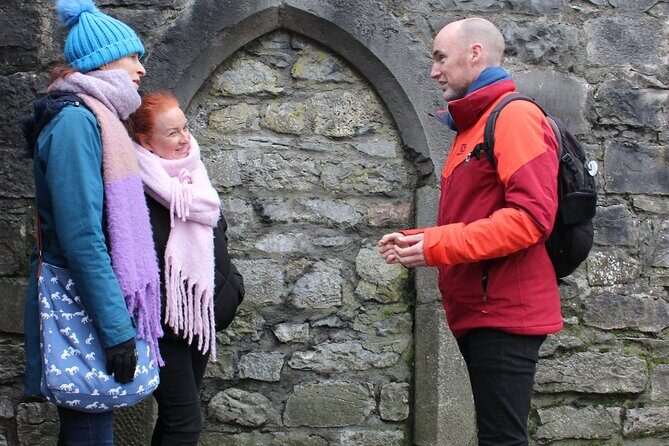
After St Nicholas, the tour shifts into one of Galway’s darker and more entertaining stories. You’ll reach the Lynch Memorial, tied to a 15th-century tale about Mayor James Lynch Fitzstephen and his son, Walter. The story has the full mix: rivalry, a young woman in the middle of it, violence in the streets, and an unbending father.
Seán also adds a cheeky note about it being Ireland’s oldest tourist trap, which helps the stop feel less like a somber history lesson and more like local storytelling. If you enjoy human drama—who did what, who got punished, who survived it—this is a highlight.
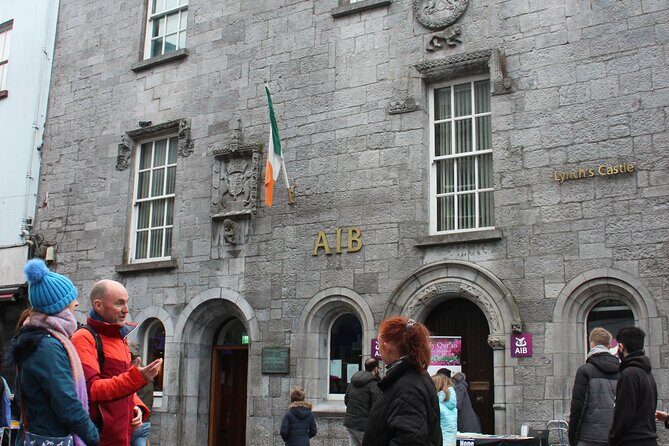
Then you walk to Lynch’s Castle on Shop St., Galway’s central thoroughfare. This building has been the home of the Lynch family for centuries and now functions as a bank. Even if you don’t go inside, the carvings and crests give you a sense that the place is meant to show power, not just hold it.
Seán points out a carving that ties to a terrible fire and an unlikely rescue. It’s a classic “wait, really?” moment that keeps you listening. You’ll also get a recommendation for whiskey pubs—again, practical rather than theoretical—and there’s an anecdote about a lavatorial encounter in the 1980s involving a tourist and a smart alec barman. Seán even flags that there may be a mild swear word at some point, so if that matters to you, keep it in mind.
If you’re the type who likes a city tour with story momentum, this mid-to-late stretch is where the pace stays fun.
Finishing at Tigh Neachtáin: Humanity Dick and a good place to land
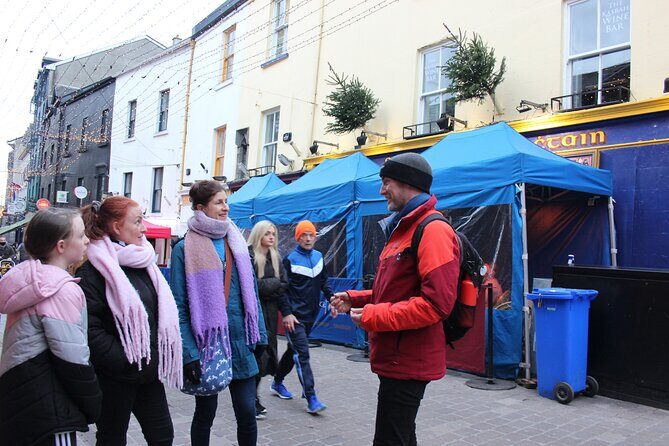
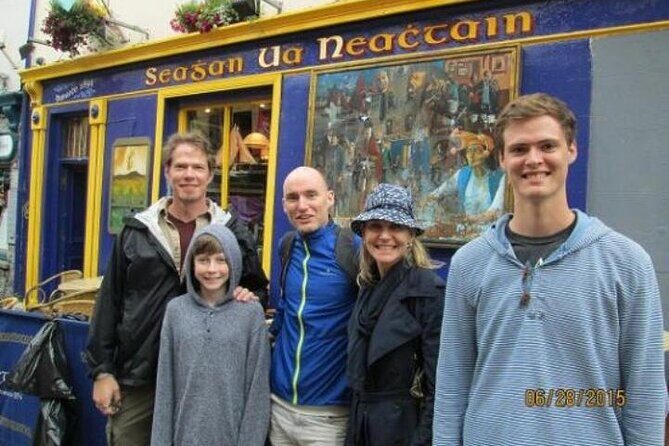
You close at Naughton’s Pub (Tigh Neachtáin), right back on Quay Street in the medieval quarter. The way the tour ends here is smart. It turns the last 15 minutes into a natural reset, where you can ask more questions and order a drink or a snack without needing to plan your next move.
Seán’s final story focuses on Humanity Dick, a remarkable Galway-born figure. In the 18th century, the building wasn’t always a pub; it was the townhouse of this celebrity. The tour highlights how he lived in ways that defy belief: a famous duelist in his youth (earning the nickname Hairtrigger Dick) and a pioneer of animal rights in the London Parliament.
That’s an unusual choice for a walking tour ending, and it works. Instead of ending with a generic toast, you end with a character story that feels distinctly Galway: clever, a little chaotic, and oddly progressive for the time.
When you step into the pub at the end, you’ll likely feel like you understand the city more than you did at the start—not because you memorized dates, but because you know how Galway’s people thought and what they cared about.
Price and value: what you’re really paying for
At $161.34 per group, this tour can feel pricey if you think in per-person terms. But it’s priced per group, and the format is efficient: you’re paying mainly for Seán’s time, the story structure, and the route design that links key sites together.
Because the tour focuses on outdoor landmarks and free viewing points (the itinerary lists admission as free at stops), you’re not paying extra for entry tickets. Instead, your money goes toward interpretation and guidance—the part you can’t get from a map alone.
The best value comes when you split the group cost with friends or family. Even if you’re solo, the small-group size helps keep it worth it, because it’s easier to ask questions and get specific tips rather than listening to a script you can’t interact with.
Also, the tour gives you a fast “local radar.” The advice on where to eat and drink is the kind of thing that can save you money later. One good pub recommendation can offset a large chunk of the tour cost if you’re choosing poorly on your own.
Who should book this walk (and who might want a different plan)
This tour fits best if you:
- want a first-time orientation to Galway’s medieval center
- like stories and folklore as much as facts
- prefer a light, humorous guide style over a lecture
- appreciate practical city tips, especially on food and drink
- are working within a short timeframe and want a lot of “why” in 90 minutes
It’s less ideal if you:
- want long stays inside churches or museums
- hate walking on uneven cobbles
- are traveling during unsettled weather and can’t be flexible (the experience requires good weather)
If you’re here on a Saturday, it’s also a good pick because the tour calls out Saturday Market energy near St Nicholas.
Practical tips to get the most from Seán’s route
A few small choices will make the tour smoother.
- Wear comfortable walking shoes for cobblestones and lanes like Kirwan’s Lane.
- Bring a phone for photos, but also be ready to listen—key details matter at Spanish Arch and St Nicholas.
- If you care about food or nightlife, save your most important questions for the Quay Street and Lynch Castle sections, where Seán’s recommendations are most relevant.
- Plan your day so you’re not rushing right before or right after. Finishing in a pub works best when you have room to linger.
Also, it’s near public transportation, and service animals are allowed. Most travelers can participate, which usually means the pace is manageable, but you still should expect a steady walk through central Galway streets.
Should you book Galway City on Foot with Seán?
If you want Galway to feel understandable fast, I’d book this. Seán turns major landmarks—Spanish Arch, St Nicholas, Lynch sites, and Tigh Neachtáin—into a connected story about power, conflict, trade, and local characters. The small-group feel and the practical guidance on where to eat and drink add real everyday value.
Book it especially if you like a tour that’s funny and human, not just informational. And if your timing includes Saturday, check that day’s market plans, since the tour itself points you toward that extra layer of Galway life.
FAQ
How long is the Galway City on Foot with Seán tour?
It runs for about 1 hour 30 minutes.
Where does the tour start and where does it end?
The tour starts at the Spanish Arch in Galway and finishes at Tigh Neachtáin on 17 Cross Street Upper, Galway (H91 F9F7).
What are some of the main stops during the walk?
You’ll see the Spanish Arch, Quay Street, Kirwan’s Lane, Saint Nicholas’ Collegiate Church, the Lynch Memorial, Lynch’s Castle, and you finish outside Tigh Neachtáin.
Is this a small group tour?
Yes. The maximum group size is listed as 10 travelers.
Are admission fees included for the sights?
The itinerary lists admission as free at the stops.
Do I get a mobile ticket?
Yes, the tour uses a mobile ticket.
What if the weather is poor?
This experience requires good weather. If it’s canceled due to poor weather, you’ll be offered a different date or a full refund.