REVIEW · DONEGAL
Donegal Electric Bike Tour with Local Guide: Half-Day Adventure
Book on Viator →Operated by WeWheel · Bookable on Viator
At Donegal speed, the stories come fast. This half-day electric bike tour strings together sea and lake views with Irish legends and real-life landmarks, all on fat-tyre eBikes that handle rough ground without turning the trip into a slog. I like the practical mix of surfaces you’ll ride (pavement, gravel, and beach/sand-style stretches) and the way the route gives you frequent moments to stop and look instead of just grinding forward.
What I especially like is the guided pacing: you get to see Bunbeg Harbour, the abandoned stone cottages tied to the Great Famine, and viewpoint time at Poisoned Glen, plus the lake crossing moment at the dam between Lough Nacung and Dunlewy Lough. One consideration: it’s weather-dependent and there’s no built-in food stop, so you’ll want to come prepared if rain shows up (and Donegal can absolutely do that).
In This Review
- Key highlights you’ll care about
- A 3-hour Donegal eBike loop built for variety (and real stops)
- Fat-tyre eBikes, safety gear, and mechanical peace of mind
- Bunbeg Harbour: a fishing town built in the late 1830s
- Abandoned stone cottages tied to the Great Famine
- Poisoned Glen: Balor’s eye and a viewpoint you’ll remember
- The James Russell and Jane memorial: love story in stone
- Pedaling over the dam between Lough Nacung and Dunlewy Lough
- The Bád Eddie shipwreck: Eddie’s Boat from a 1977 storm
- What the ride is like: paved roads, gravel, and rain readiness
- Guide style that keeps things safe and informative
- Price and value: why $78.31 can make sense here
- Who this is best for (and the one or two reasons to pass)
- Should you book this Donegal Electric Bike Tour?
- FAQ
- How long is the Donegal Electric Bike Tour?
- Where do I meet for the tour?
- What is included in the price?
- Is food or drink included?
- What route stops can I expect?
- How many people are on the tour?
Key highlights you’ll care about
- Max group size of 10 means you’re not stuck in a long conga line of bikes
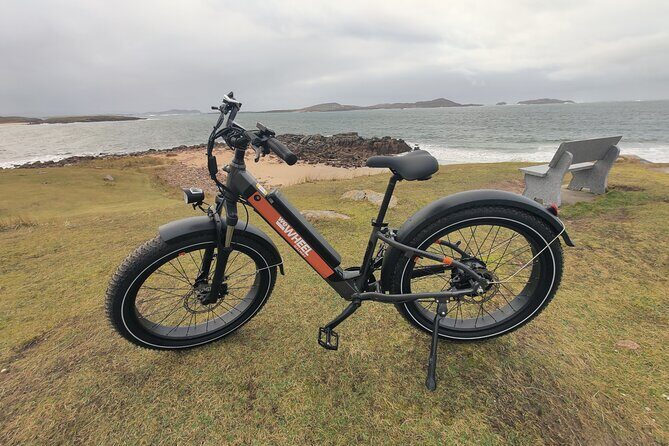
- Top-quality fat tyre eBikes + safety gear make hills and mixed ground feel manageable
- Multiple story stops: Bunbeg Harbour, Poisoned Glen (Balor’s eye), and the James Russell and Jane memorial
- Lake and coast variety with a dam crossing and a shipwreck site tied to a 1977 storm
- Helmet microphones exist, but you might not hear them clearly depending on conditions
A 3-hour Donegal eBike loop built for variety (and real stops)
This tour clocks in at about 3 hours, and that total already includes the cycling time from stop to stop. You’ll meet at Teac Campbell Guesthouse in Magheraclogher, Bunbeg, Co. Donegal, and you’ll return to that same meeting point at the end. It’s designed as a true half-day outing, not a long commitment, which matters if you’re doing other Donegal sights the same trip.
The price is $78.31 per person, which feels fair when you remember what’s included: an eBike, safety gear, and support. You’re also paying for time efficiency. A bike with electric help lets you cover more ground than a walking-only plan, while still giving you actual pauses to take photos, read the mood, and soak in the setting.
You’ll be riding in a group that’s capped at 10 travelers, and the tour runs in English. That small-group size is one of the best parts of the whole experience. You’ll feel the guide can actually manage spacing and keep everyone together, especially on mixed surfaces like gravel and beach-adjacent areas.
You can also read our reviews of more cycling tours in Donegal
Fat-tyre eBikes, safety gear, and mechanical peace of mind
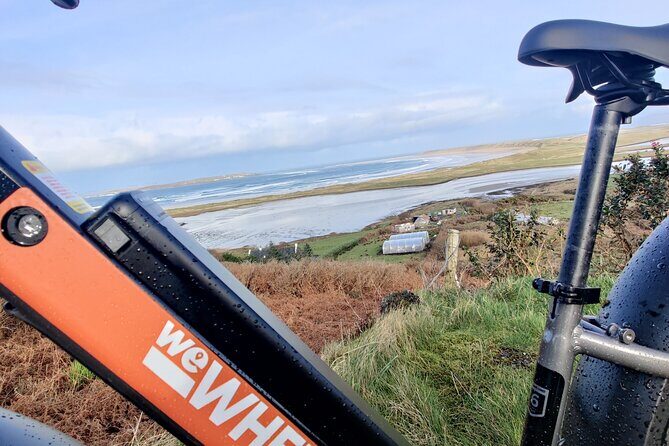
The setup is geared toward comfort and control. You get top-quality fat tyre eBikes along with safety gear, and the tour includes stress-free tech & mechanical support. Translation: if something tech-related acts up or a bike needs attention, you’re not stuck improvising in the Irish countryside.
Fat tires matter more than people expect. They help with traction when the route turns from paved roads to dirt/gravel paths and the kind of sandy or beach-area terrain that can make a normal bike feel squirrely. On hills, the electric assist helps you keep a steady effort. That’s great if you want to enjoy the views and the stories without arriving at each stop drenched and exhausted.
One neat detail: the helmets come with microphones. But in real life, those microphones may not work well enough for clear audio. The good news is you don’t have to rely on them. The guide’s communication is part of the experience, and you can always follow along by watching and listening up close.
Bunbeg Harbour: a fishing town built in the late 1830s
You start at Bunbeg Harbour, created in the late 1830s to encourage local fishing. That sets the tone right away: this isn’t just a scenic ride. It’s a route through a working coast, shaped by ordinary livelihoods and the tough economics of coastal life.
At this first stop, you’re likely to feel the scale of the harbor area and the way the coast frames everything around it. Even if you don’t know Donegal history by heart, the physical setting tells you what mattered to people here—wind, water, boats, and seasonal rhythms.
The harbor also gives you an easy mental warm-up before the deeper story stops. It’s a good start for the whole group because you can get your bearings, settle into the pace, and make sure you’re comfortable on the bike before the route turns into a more varied ride.
Abandoned stone cottages tied to the Great Famine
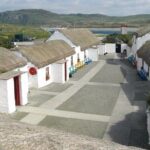
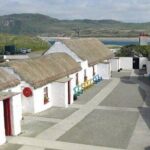
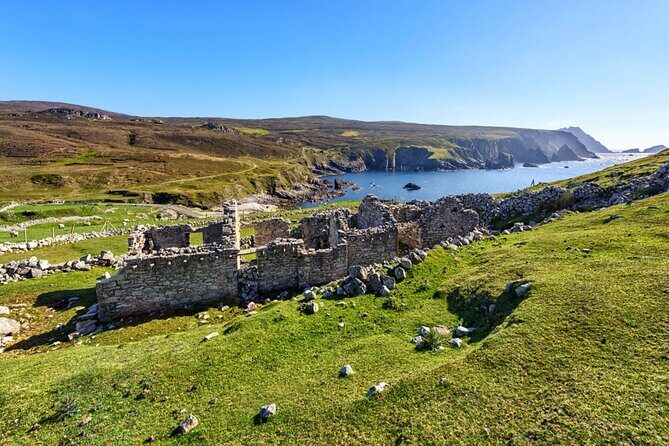
Next up is an abandoned village of stone cottages that once housed families during the Great Famine in Ireland in the 19th century. This is one of those moments where the ride slows down inside your head. You’re looking at structures that were meant for people, and then emptied by one of the hardest periods in Irish history.
What works well here is the contrast. You’ve got an active bike tour, but you end up at a place that asks you to look longer. The stone cottages aren’t presented like a checklist item. They come with atmosphere, and you’ll likely find yourself thinking about what daily life must have looked like for families who lived through famine conditions and then watched communities break apart.
A small caution: if you’re traveling with younger kids or anyone who prefers purely light and funny stops, this section may feel heavy. It’s still brief enough to fit the half-day format, but it’s the most emotionally serious stop on the route.
Poisoned Glen: Balor’s eye and a viewpoint you’ll remember
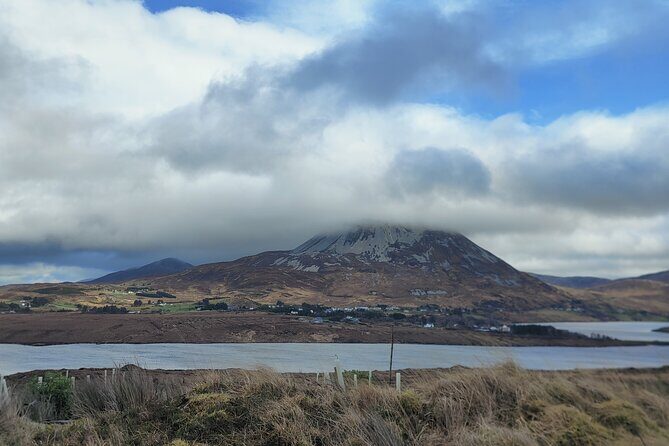
Then you reach the viewpoint of Poisoned Glen. At the entrance, there’s a stone said to be the poisoned eye of Balor. That bit of myth turns this section into something more than a scenic look. You’re standing at a place layered with storytelling—myth used as a way to explain a landscape.
Viewpoints are always valuable on a bike tour because they reward the effort. You get a wider view without needing to hike for hours. And Poisoned Glen’s connection to Balor gives you a hook for the mind: you’re not just staring at scenery, you’re relating what you see to an old legend.
If the weather is clear, this is also one of the easiest places to take photos and actually see the lines of the land and water. If it’s wet and foggy, the mood can shift. Either way, it’s a stop that makes the route feel distinctly Donegal, not generic countryside biking.
You can also read our reviews of more guided tours in Donegal
The James Russell and Jane memorial: love story in stone
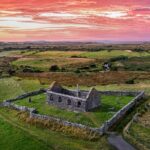
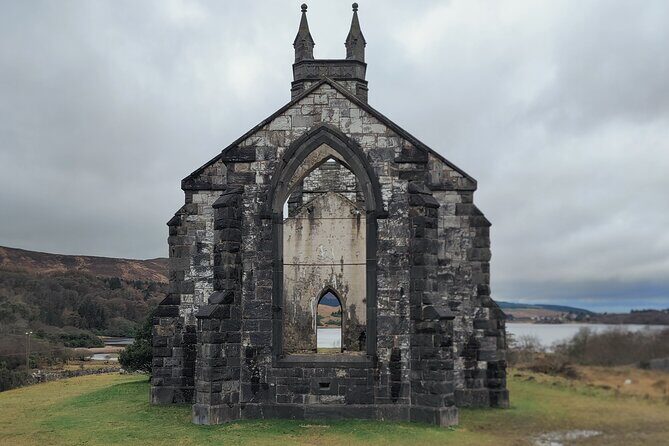
A beautiful building appears next, described as a lasting memorial to a love affair between James Russell, landlord of the Dunlewey estate, and his wife Jane. This is one of those surprises that makes the whole tour feel more personal. You go from famine-era hardship to myth, then into a human story about love and loss—within a single loop.
What to do here: slow down, look at the building, and take a moment before you move on. This kind of memorial doesn’t require you to know every detail to appreciate what it’s doing. It marks a story people cared enough about to remember.
The best part is that it gives your ride variety. Not every stop is a legend, not every stop is solemn, and not every stop is purely scenic. You get a balance, and that makes a half-day feel more complete.
Pedaling over the dam between Lough Nacung and Dunlewy Lough
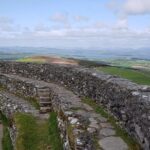
One of the more action-filled moments is cycling over a dam that separates Lough Nacung and Dunlewy Lough. This kind of crossing is fun in the simple way: you’re moving while the scenery changes, and the bike makes you a participant in the setting rather than a spectator.
Dams also create strong visual cues—lines of water meeting land, different angles on the lakes, and a natural sense of direction. Even if you’re not a geology person, you’ll understand it fast because the bike route physically guides you through the geography.
This stop is also practical for energy management. You get a defined segment to focus on (cross, look, ride on), then you’re back to cruising between story points. With the e-assist, you’re more likely to enjoy the crossing than white-knuckle it.
The Bád Eddie shipwreck: Eddie’s Boat from a 1977 storm
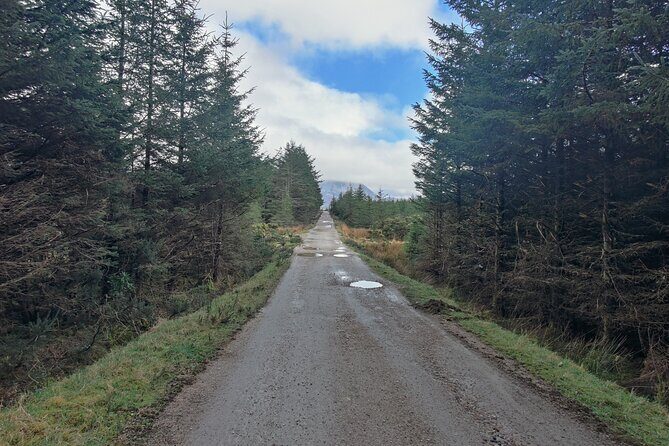
Toward the later part of the route, you reach the shipwreck of Bád Eddie, which means Eddie’s Boat. It ran aground in 1977 during a storm. This is another stop where the environment feels connected to human events, like weather had consequences that lasted decades.
Shipwreck sites can be eerie, but they’re also fascinating. On a bike tour, you get a rare blend: the guide’s framing gives the story meaning, and your own eyes give you scale. You’re not reading about it on a screen—you’re seeing how the coastline and water settings relate to the wreck.
One thing to keep in mind: coastal weather can shift fast. If you’re riding in light rain or wind, dress for that. The tour can run even in the rain, and a shipwreck area is the kind of place where you’ll want decent outer layers so you don’t get cold while you look around.
What the ride is like: paved roads, gravel, and rain readiness
The route includes paved roads, dirt/gravel trails, and some beach-area terrain. That’s a big deal because Donegal is not a single-surface destination. One minute you’re on smoother paths, the next you’re feeling the texture of the ground through the tires.
The electric assist helps you keep a consistent effort. That matters for enjoyment. If you have to constantly throttle hard and worry about your breathing, you’ll miss the little moments—like a lake view appearing between turns or the feeling of wind off the coast.
I also think it’s worth calling out that the tour can be enjoyable even in rain. You’ll likely see people arrive with rain gear and still have a good time. So if you see light showers in the forecast, don’t automatically assume the day is ruined.
Still, there’s a real practical consideration: you don’t get food and drink included. You’ll want to plan a snack or plan to eat after. If you start hungry, the ride can feel longer than it is.
Guide style that keeps things safe and informative
This is the kind of tour where the guide’s role matters a lot. You’re on a bike. You’re moving across mixed ground. You want clear guidance and good safety habits. The ride is set up so you can stay comfortable and confident while still learning what you’re seeing.
The guide’s information is also part of the value. You don’t just get place names; you get story threads: fishing roots at Bunbeg Harbour, the famine-era cottages, Balor’s eye at Poisoned Glen, the love memorial for James Russell and Jane, and the Bád Eddie shipwreck from 1977. That turns the ride into a narrative, which is why it feels like more than a casual bike outing.
There’s also a realistic point here: you may not hear helmet microphones clearly if the system doesn’t cooperate. Don’t panic. I’d plan on listening normally from the guide and letting the group chat and body language do part of the work.
Price and value: why $78.31 can make sense here
Let’s talk value in plain terms. At $78.31 per person for roughly 3 hours, you’re paying for three things at once:
- The eBike and gear, which you’d otherwise have to rent and figure out
- A structured route, which saves you from stitching together stops yourself
- Support, including mechanical/tech help so you’re not stuck troubleshooting
You also get a small group experience (up to 10 people). That’s part of why the price feels reasonable. When groups are larger, guides have less control, and the tour tends to feel more like logistics than experience.
The trade-off is that there’s no included food or drink. If you’re expecting a full afternoon with snacks, you’ll need to adjust. Bring something small if you can, then treat the tour as the activity block and plan a proper meal afterward.
Who this is best for (and the one or two reasons to pass)
This tour is a strong fit if you want a mix of coast, lake, and story stops without spending an entire day driving or hiking. Most travelers can participate, and the eBike plus safety gear help you tackle hills and uneven terrain more comfortably than a standard bike.
You’d especially enjoy it if you like:
- real places with specific stories (not generic scenery)
- frequent viewpoints and short walk-and-look moments
- active travel that still feels relaxed thanks to electric assist
You might think twice if you:
- hate weather uncertainty and don’t like planning around forecasts (the tour requires good weather)
- want a tour that includes food stops or an extended sit-down break
- want a deep, museum-style experience instead of a fast, story-driven route
Should you book this Donegal Electric Bike Tour?
If you want a half-day that feels like Donegal—myth, memory, coast, and lake in one loop—this is a smart choice. The combination of fat tyre eBikes, small group size, and multiple story stops makes the $78.31 feel like you’re paying for time and access, not just wheels.
I’d book it if your main goal is seeing more than you could on foot, while still getting those stop-and-stare moments that make travel feel real. If rain is in the mix, pack accordingly, bring a snack for energy, and treat the day as a lively outdoors outing.
FAQ
How long is the Donegal Electric Bike Tour?
The tour lasts about 3 hours total, and that includes cycling time to and from each listed attraction.
Where do I meet for the tour?
You meet at Teac Campbell Guesthouse, Magheraclogher, Bunbeg, Co. Donegal, Ireland. The tour ends back at the same meeting point.
What is included in the price?
The tour includes a top-quality fat tyre eBike, safety gear, and stress-free tech & mechanical support.
Is food or drink included?
No. Food and drink are not included.
What route stops can I expect?
You’ll start at Bunbeg Harbour, then visit an abandoned village of stone cottages connected to the Great Famine, stop at the Poisoned Glen viewpoint, see a memorial building linked to James Russell and Jane, cycle over a dam between Lough Nacung and Dunlewy Lough, and visit the Bád Eddie shipwreck site.
How many people are on the tour?
The experience has a maximum of 10 travelers.