REVIEW · SHANNON
Craggaunowen Admission Ticket
Book on Viator →Operated by Shannon Heritage · Bookable on Viator
Bronze Age Ireland feels right in front of you. Craggaunowen near Shannon turns a single visit into a walk through self-guided prehistoric and medieval scenes, with a crannóg on the lake, ring fort life, and a 16th-century castle perched above the water.
Two things I really like: the chance to see a crannóg (an artificial island dwelling) with a defensive layout that includes a hidden water pathway, and the story of the Brendan Boat, a leather-hulled re-creation tied to Tim Severin’s mid-Atlantic voyage and the legend of St Brendan. You get real variety in a compact time window of about 1 to 2 hours.
One possible drawback: because it’s self-guided, you’ll depend on the displays and what staff/re-enactors share on-site, so plan to pause and read as you go (and wear shoes for outdoor stretches).
In This Review
- Key highlights worth planning around
- Getting there from Shannon: quick, rural, and easy to fit in
- Admission value: what your $15.38 ticket covers
- The Bronze Age centerpiece: crannóg and the logic of defense
- What to watch for while you’re walking
- Ring Fort life: everyday work, tools, and fires that tell a story
- Ireland’s ancient roadway and the souterrain: below ground, safe for a reason
- The togher roadway dating to 148 BC
- The souterrain escape spaces
- Brendan Boat: Tim Severin’s leather-hulled reenactment, explained on-site
- Craggaunowen Castle (built 1550): views that make the walk feel worth it
- Why this stop is more than a photo break
- Re-enactors, tips, and the farmhouse tea-room
- Practical tips to plan your 1 to 2 hour self-guided loop
- Who should book Craggaunowen tickets
- Should you book Craggaunowen admission?
- FAQ
- How long does the Craggaunowen admission visit take?
- What is included with the ticket price?
- Is the experience self-guided?
- Where does the visit start?
- When is the site open?
- Do I need to buy food separately?
- Is the ticket mobile?
- Can children visit?
- Are service animals allowed?
- What if my plans change?
Key highlights worth planning around
- A self-guided visit with everything included: admission gets you access to the site’s exhibits and displays.
- Crannóg life on display: learn how the artificial island dwelling was defended with a hidden approach.
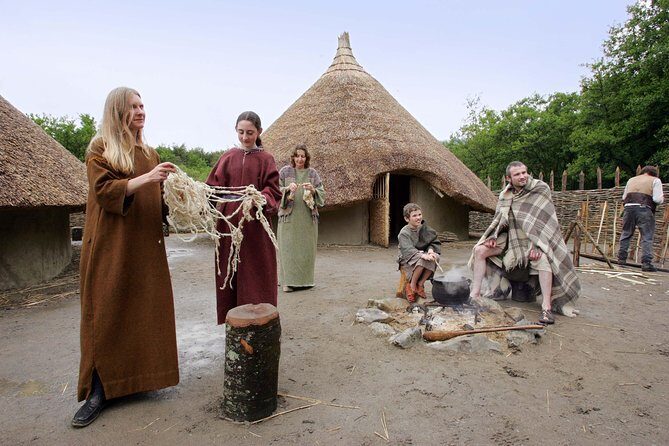
- Celts at work, not just posed scenes: hunting with pit-cooking methods, daily tasks in the ring fort, and practical tools like querns.
- Ireland’s very old road (togher): a roadway dating to 148 BC plus the fun, underground souterrain spaces.
- Brendan Boat meets medieval storytelling: a leather-hulled boat built for reenactment of the St Brendan voyage link.
- Castle views and animal breeds: a restored 1550 castle on a crag, plus specimens like wild boar and soay sheep.
Getting there from Shannon: quick, rural, and easy to fit in
Craggaunowen sits in County Clare, just outside Shannon, so it works well as a break during a longer driving day. If you’re planning a Shannon-to-somewhere-else day, this is the kind of stop that adds meaning without eating your whole schedule. Expect about 1 to 2 hours for a comfortable walk-through.
The opening window is seasonal: from 10:00 AM to 5:00 PM, with the posted dates running 05/05/2026 through 09/03/2026. If you’re traveling in the summer months, that helps you time it around daylight. If you’re visiting earlier or later in the year, you’ll want to double-check the site’s status before committing.
Also, you start and end right at the same place: Craggaunowen Castle & Crannóg in Kilmurry (V95 AD7E). That simplicity matters. You don’t need to solve a transit puzzle or coordinate a pickup point—your feet do the work.
You can also read our reviews of more tours and experiences in Shannon.

Admission value: what your $15.38 ticket covers
The price shown is $15.38 per person, and admission includes all taxes, fees, and handling charges. In practical terms, that’s what you’re paying for: entry access to the exhibits and displays across the site.
Food is the main extra cost you might want to plan for. The farmhouse tea-room is part of the experience setup, but the ticket itself does not include food or drinks. If you like a snack after walking around, you can time it for the end. You’ll also want a simple plan for water, especially if you’re visiting on a warm day.
You’ll get a mobile ticket, which is convenient if you travel light and don’t want to worry about printed paperwork. Service animals are allowed, and the site is marked as near public transportation—helpful if you’re not driving the whole route.
One more practical detail: the experience is set up for independent pacing. That’s good if you hate rushing through exhibits, but it means you should slow down at the interpretive points.
The Bronze Age centerpiece: crannóg and the logic of defense
The first stop area is the heart of the site: the Crannóg and the surrounding prehistoric village setup. The big idea here is not just that people lived on water, but how they kept it workable day-to-day and how they protected themselves.
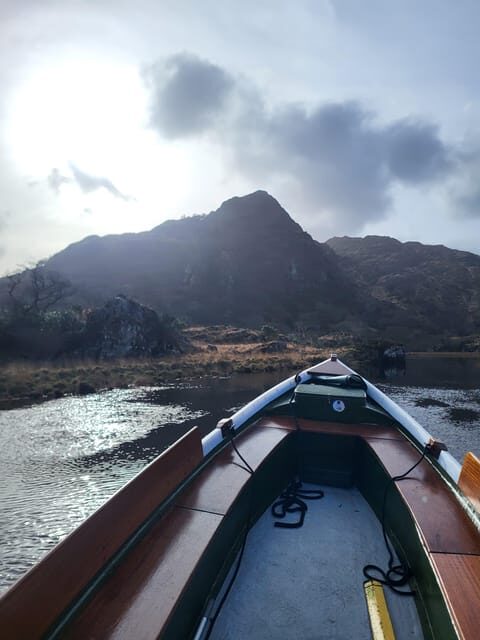
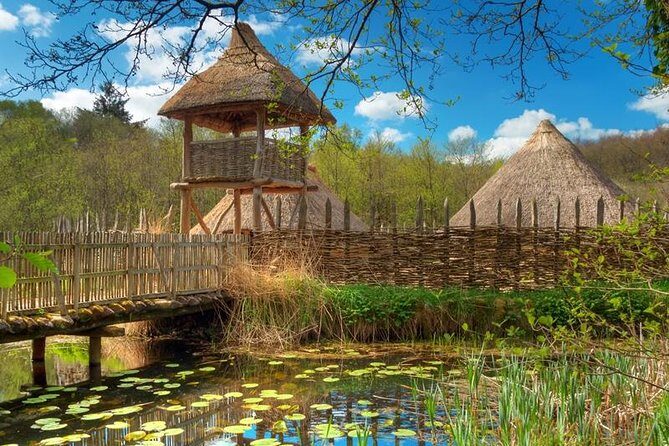
A crannóg is an artificial island dwelling, and Craggaunowen shows it with a defensive twist: there’s a hidden pathway in the water. Standing in the right viewing areas makes the whole concept easier to grasp. It’s a reminder that the question wasn’t only where to live—it was how to survive.
From there, the focus shifts toward how people fed themselves and how hunting worked. You’ll encounter scenes about skilled hunters and a cooking method that uses a large pit, a length of rope, and fresh meat. Even if you don’t memorize every element, the takeaway is clear: technology in the Bronze Age wasn’t about fancy gadgets. It was about practical solutions that let people turn effort into calories.
What to watch for while you’re walking
- Look for how the crannóg layout communicates protection, not just scenery.
- Pause at the hunting/cooking descriptions. The pit-and-rope style is easy to overlook if you treat it like background.
- Take advantage of the outdoor-to-indoor rhythm. You’ll likely move between lake views and display areas without realizing how fast time goes.
Ring Fort life: everyday work, tools, and fires that tell a story
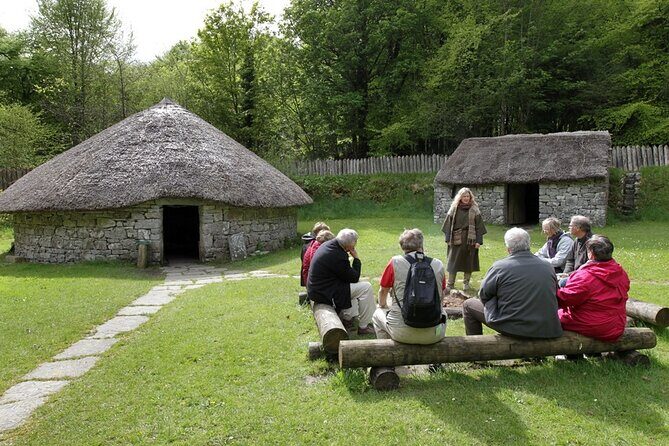
After the crannóg area, the experience carries you to the ring fort, where the emphasis moves from defense to daily routine. This is where the displays work best if you can picture the same tasks repeating season after season: cooking over fires, grinding grain, making containers, and producing food.
You’ll see how people handled everyday work such as:
- cooking over open fires or in pits
- grinding corn for bread or porridge using hand-powered querns
- making pottery and wooden bowls, goblets, and platters
This part feels especially useful if you’re tired of museums that only show artifacts in glass cases. Here, the tools and food prep are connected to how people lived, not just what they owned. It’s an education through routine rather than a lecture.
One small consideration: because it’s self-guided, your experience depends on how willing you are to read the signage. If you’re the type who skims, you’ll still enjoy the walking and visuals, but you’ll miss some of the practical “how they did it” details.


Ireland’s ancient roadway and the souterrain: below ground, safe for a reason
Two of the most memorable elements on the site are tied to what’s under and through the ground.
The togher roadway dating to 148 BC
You can visit one of Ireland’s earliest roadways, a togher dating to 148 BC. The word itself might be unfamiliar, but the idea is straightforward: it’s an engineered way to travel in difficult conditions. It’s the kind of detail that makes you think differently about “old” places. Travel wasn’t always roads the way we picture them now—it often meant adapting the ground you had.
The souterrain escape spaces
Next comes the souterrain, which is designed to store food but could also function as an escape route during attacks. It’s built for the practical problem of survival, not for comfort. The displays describe it in a way that makes the spaces feel usable in the imagination—especially because it’s also the kind of place where kids can turn learning into hide-and-seek.
If you’re visiting with children, this is often the section that keeps attention the longest, since it’s one thing to read about underground storage, and another to experience the scale and layout.
Brendan Boat: Tim Severin’s leather-hulled reenactment, explained on-site
One of the most distinctive stops is the Brendan Boat. The display ties together adventure reenactment and early Christian legend by featuring a leather-hulled boat built by Tim Severin, who sailed across the mid-Atlantic to re-enact the voyage of St Brendan and the stories around early monastic travel.
This section is a good change of pace. Up to now you’re living in Bronze Age and Celtic practicalities—food, tools, dwellings. Then the site swings to navigation, belief, and the idea that seafaring stories can be tested.
Even if you’re skeptical of legends, the display’s value is how it invites you to think about what’s plausible, what’s symbolic, and what questions people have asked for centuries. It’s not only a boat in a yard; it’s a story framework.
Craggaunowen Castle (built 1550): views that make the walk feel worth it
After prehistoric spaces, you reach the castle area: a restored Medieval castle built in 1550 and sitting on a crag overlooking the lake. The setting matters here. Higher ground gives you better sightlines, and the views add a sense of scale to everything you’ve seen earlier.
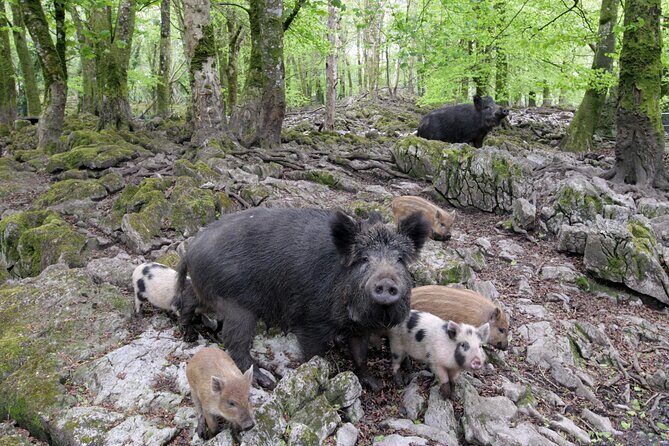
You’ll also see rare animal breeds on-site, including wild boar and soay sheep. This can be a nice bonus if you like seeing the living side of the place rather than only models and artifacts. In the entrance area and surrounding grounds, you may also spot farm animals like sheep along with donkeys and ponies in-season (and seasonal flowers like yellow irises can make the approach pretty memorable).
Why this stop is more than a photo break
The castle is useful because it links two worlds:
- earlier survival and work (food prep, tools, protection)
- later power, architecture, and control of space
Even if you don’t read every panel, the contrast helps you build a timeline in your head.
Re-enactors, tips, and the farmhouse tea-room
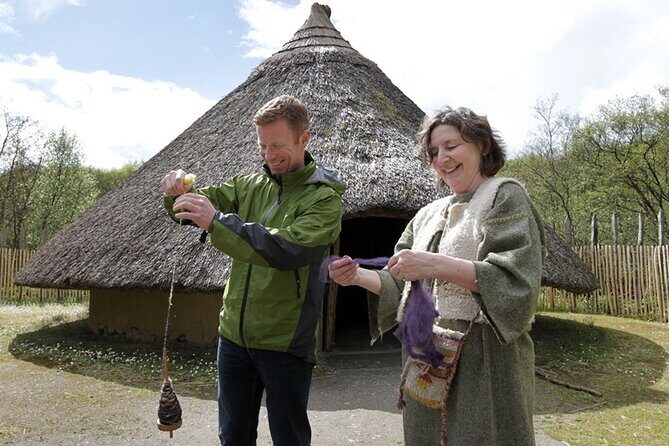
Part of what makes Craggaunowen feel friendly is the human layer. Staff and village re-enactors are set up to help you connect the dots between displays. When you arrive, take a minute to chat at the front desk. I’d treat it like a quick briefing: get orientation, then use it while you walk. That’s the difference between wandering and learning efficiently.
One detail that stands out from on-site performances: a re-enactor played the ilhan pipes during one visit. Even if you don’t catch the exact same moment, you can expect re-enactors to bring extra clarity and a more personal tone to what you’re seeing.
And when your legs get tired, finish with the farmhouse tea-room. It’s there for a reason: you want a place to pause after all the outdoor walking, and the option of homemade food helps you plan a satisfying half-day without needing to hunt for lunch elsewhere.
Practical tips to plan your 1 to 2 hour self-guided loop
You’ll enjoy Craggaunowen more if you treat it like a loop with priorities, not a checklist.
- Set a pace: plan around 1 to 2 hours, and don’t rush the underground and lake-related areas.
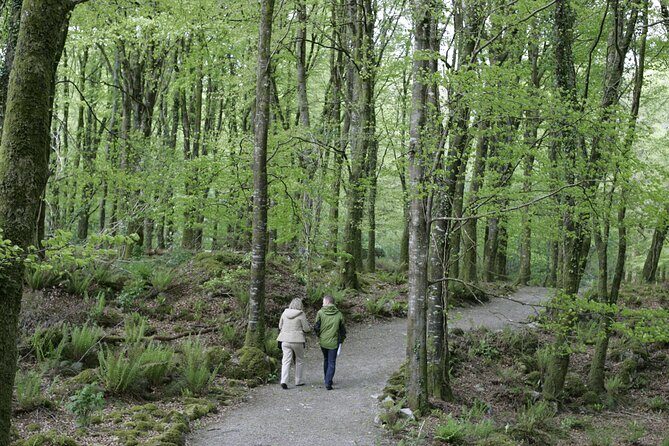
- Wear walking shoes: parts are outdoors and some routes may feel uneven.
- Stop at the interpretation points: the most memorable learning moments come when you slow down for the “how” and “why,” not just the “what.”
- Time a snack at the end: food and drinks aren’t included, but the tea-room is available.
- Bring kids with curiosity: the souterrain is fun, and the site notes that children must be accompanied by an adult.
Also note the experience is near public transportation, but if you’re day-tripping from Shannon, driving usually keeps things simple.
Who should book Craggaunowen tickets
This is a great fit if you want:
- an independent visit with your own pace
- a compact mix of prehistoric and medieval themes
- hands-on-feeling interpretation (crannóg, ring fort, pits, querns, underground souterrain)
It’s especially good for history-minded travelers who like practical detail—how people fed themselves, built structures, and moved through risky environments.
If you’re the kind of traveler who only likes formal guided tours with a continuous script, you might prefer something else. Here, you’re in charge, and the best results come when you engage with the signage and the on-site staff.
Should you book Craggaunowen admission?
Yes, if you’re in County Clare or near Shannon and you want a high-value stop that feels more like walking through scenes than staring at objects. The price covers full admission to the site’s exhibits, and you can usually complete it in about a couple hours without stress. The mix of crannóg defense, ring fort daily life, the togher roadway, the souterrain, and the Brendan Boat storyline gives you more than one “wow” moment—and the castle views add a satisfying final beat.
Skip it only if you strongly prefer a guided group talk the whole time or you hate outdoor walking and reading interpretive panels. Otherwise, this is a smart use of time and one of those places where the setting does half the teaching.
FAQ
How long does the Craggaunowen admission visit take?
Plan on about 1 to 2 hours for the self-guided visit.
What is included with the ticket price?
The ticket includes admission to Craggaunowen with access to all displays and exhibits. Taxes, fees, and handling charges are included.
Is the experience self-guided?
Yes. It’s designed as a self-guided visit for independent travelers.
Where does the visit start?
Start at Craggaunowen Castle & Crannóg, Craggaunowen, Kilmurry, Co. Clare, V95 AD7E, Ireland. It ends back at the meeting point.
When is the site open?
The posted hours are 10:00 AM to 5:00 PM, from 05/05/2026 through 09/03/2026 (Monday through Sunday).
Do I need to buy food separately?
Food and drinks are not included in the admission ticket, though there is a farmhouse tea-room where you can get homemade fare.
Is the ticket mobile?
Yes, the ticket is provided as a mobile ticket.
Can children visit?
Children are allowed, but they must be accompanied by an adult.
Are service animals allowed?
Yes, service animals are allowed.
What if my plans change?
You can cancel for a full refund with free cancellation up to 24 hours in advance of the experience start time (local time applies).