REVIEW · ST PATRICK S CATHEDRAL DUBLIN
St Patrick’s Cathedral: Self-Guided Cathedral Admission
Book on GetYourGuide →Operated by Saint Patrick's Cathedral · Bookable on GetYourGuide
One of Dublin’s most meaningful stops is also one of its most practical. St Patrick’s Cathedral pulls you into Ireland’s story with Gothic grandeur, major pilgrimage roots, and an included audio guide that lets you set the pace. It’s also right next to the famous well tied to tradition about St Patrick baptizing converts.
I especially love two parts: learning where Jonathan Swift is buried, and using the self-guided audio to connect artifacts, architecture, and stained glass into one clear narrative. A close runner-up for me is the Door of Reconciliation and how it ties into the Irish expression to chance your arm.
The main drawback to plan around is simple: this is a popular cathedral, so at busier times you may feel some crowding even though the site manages flow well.
In This Review
- Key Highlights You Shouldn’t Miss
- St Patrick’s Cathedral in Dublin: 800 Years Without the Lecture
- Your Self-Guided Plan: Audio Guides That Let You Go at Real Speed
- Begin with the Swift Story: Dean, Author, and Buried Legacy
- The Door of Reconciliation and the Irish Phrase to Chance Your Arm
- Discovery Space: Touch Screens, Choir Samples, and a Brass Rubbing
- Stained Glass at Eye Level: St Patrick in 39 Images
- Gothic Details You’ll Notice More When You Slow Down
- The Grounds and the Outside Pause That Actually Works
- Practical Timing: When Crowds Hit and How to Handle Them
- Who This Ticket Is Best For (and Who Might Want Something Else)
- Price and Value: What $12 Actually Buys You
- Should You Book This Self-Guided Admission?
- FAQ
- How much does St Patrick’s Cathedral self-guided admission cost?
- How long is the ticket valid?
- What’s included with the ticket?
- Are the audio guides offered in multiple languages?
- Does the ticket help you avoid the line?
- Is the venue wheelchair accessible?
- Do under-18 visitors need an adult?
- Are there guided tours available on site?
- Where do I start and end?
- Is free cancellation available?
Key Highlights You Shouldn’t Miss

- Jonathan Swift’s burial site and cathedral artifacts tied to his years as dean
- Door of Reconciliation, connected to the Irish phrase to chance your arm
- Discovery Space with iPads, touch screens, choir samples, and brass rubbing
- Stained glass story of St Patrick in 39 images
- Self-paced audio guides in English plus multiple European and Irish languages
- On-site guided tours on a schedule, with human guides available when you want them
St Patrick’s Cathedral in Dublin: 800 Years Without the Lecture
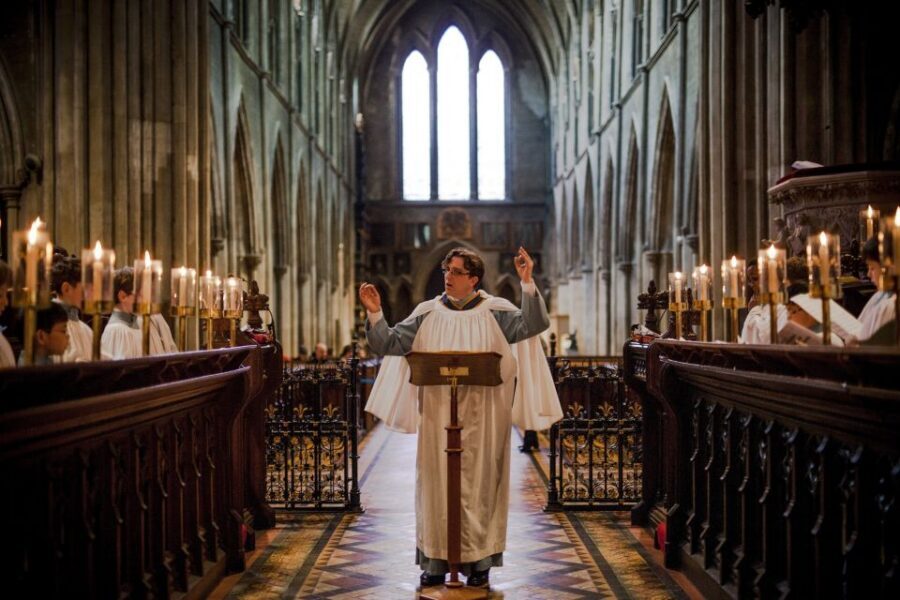
St Patrick’s Cathedral has been part of Dublin’s center for more than 800 years, and it shows. This is the largest cathedral in Ireland and one of the country’s most important pilgrimage sites, built in honor of Ireland’s patron saint. It’s also right next to the famous well where tradition says St Patrick baptized converts during his visit to Dublin—so the setting itself gives you context before you even step inside.
Today, it functions as the National Cathedral of the Church of Ireland, and you’ll also find sung services twice daily Sunday through Friday. Even if you aren’t catching a service, that regular rhythm helps explain the mood: this isn’t a museum-only building. It’s a living place with visitors coming in alongside worship and music.
The architecture is Gothic, with stained glass windows that make the interior feel built for reflection rather than speed. If you like religious history and real-world atmosphere—stone underfoot, light changing as you walk—you’ll get more out of this than you might expect from an average “cathedral visit.”
Your Self-Guided Plan: Audio Guides That Let You Go at Real Speed
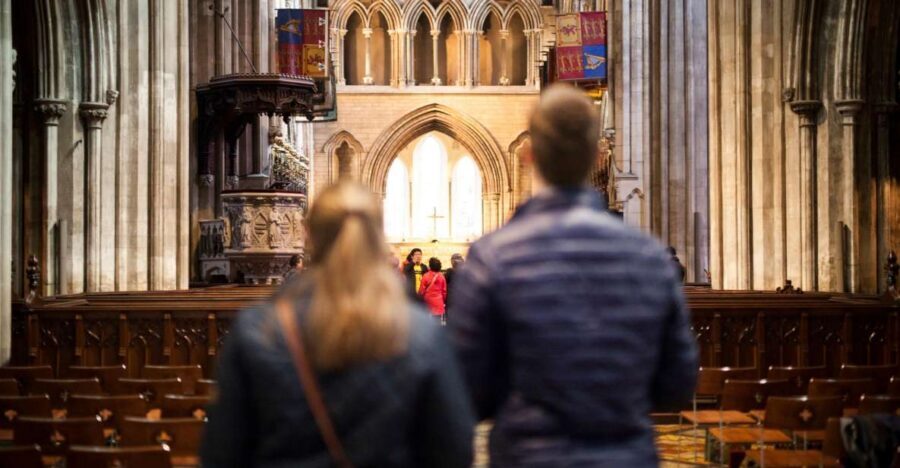
This ticket is self-guided, which matters. You’re not locked into a strict route. Instead, you get audio guides included with your admission, plus the option to skip the ticket line. That combination is ideal for travelers who want to wander a little, double back when something catches their eye, and take breaks when the room gets busy.
The audio is available in English, French, German, Italian, Spanish, and Irish, which is a big deal if you want the details without reading every plaque. It’s also the kind of program that can help you understand what you’re seeing. Cathedral interiors can feel like “pretty windows and old walls” if you don’t get the story behind them, and this setup is designed to connect the dots.
A practical tip: if you have your own headphones, bring them. Some people find it easier to listen using their own wired setup, and others mention connecting through their phone when possible. Either way, plan to use the audio stations rather than treating the visit like a checklist.
If you do want a guide voice, you can. There are guided tours offered on site on a schedule, and you can sometimes join a group if you’re in the right window. On at least one visit experience, guides were friendly and quick to answer questions—so you’re not stuck with only audio.
Begin with the Swift Story: Dean, Author, and Buried Legacy
One of the best reasons to pick this cathedral is the chance to stand where Jonathan Swift is buried. Swift is known worldwide for Gulliver’s Travels, but inside the cathedral his name becomes local and specific—tied to his role as dean from 1713 to 1745.
You’ll also find artifacts connected to him and to the cathedral’s longer timeline. That matters because it turns a famous author into something grounded. Instead of treating Swift as a distant name from a textbook, you connect him to a particular place in Dublin.
I find this section especially useful if you’re not deeply into Irish ecclesiastical history. The Swift connection gives you a human entry point, and the audio helps you expand from there: who he was, what his connection to the cathedral meant, and how the cathedral fit into Dublin life long after medieval roots.
The Door of Reconciliation and the Irish Phrase to Chance Your Arm
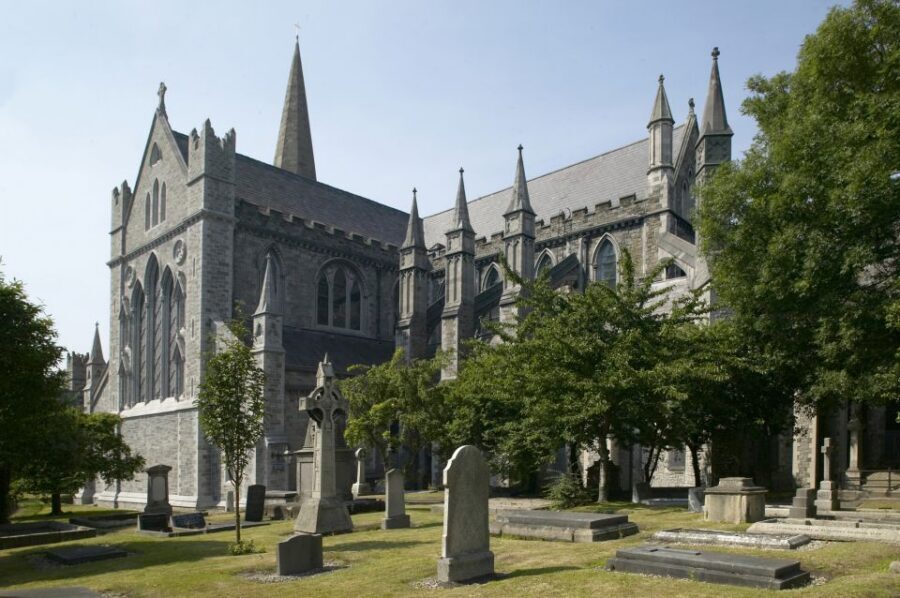
The Door of Reconciliation is one of those small details that can completely change how you read a building. It’s tied to the Irish expression to chance your arm. That link may sound like wordplay at first, but it gives you a window into how language, culture, and tradition live right in the architecture.
When you’re inside, slow down for this part. Don’t rush past it. The cathedral is full of visuals, but the Door of Reconciliation functions like a “story hinge”—a place where the site shifts from being visually impressive to emotionally meaningful.
This is also where audio helps. The explanation makes it easier to see that the cathedral isn’t just a collection of stones. It reflects social life and moral imagination, not only religion.
Discovery Space: Touch Screens, Choir Samples, and a Brass Rubbing
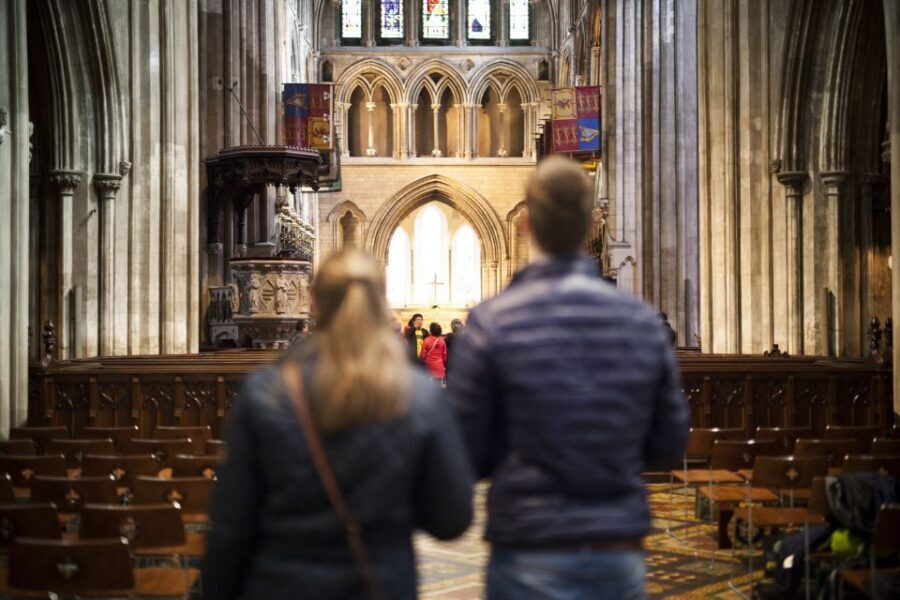
If you’re the type who learns by interacting, the Discovery Space is a smart add-on. This is the cathedral’s more modern layer: iPads with samples of the choir and touch-screen technology that illuminates the cathedral’s long history. It’s a good break from “reading and looking,” especially if you’re traveling with kids or you just want your brain to switch gears for a few minutes.
You can also do a brass rubbing in the Discovery Space. That’s one of the rare activities in a cathedral that feels hands-on without disrespecting the setting. It also gives you something tangible to take away—at the very least, a reminder that the past is meant to be handled and understood, not just observed.
One more detail worth noting: the Discovery Space approach is designed to connect multiple eras. The cathedral has artifacts and interpretive points throughout, and this room helps you tie them together before you continue deeper into the interior.
Stained Glass at Eye Level: St Patrick in 39 Images
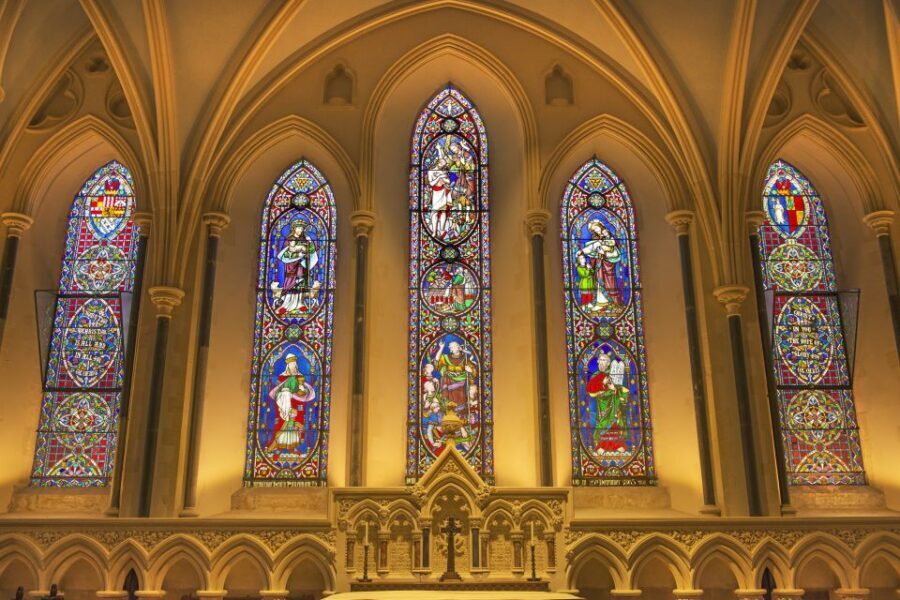
Make time for the stained glass, especially the window showing the life of St Patrick in 39 images. This is the kind of artwork that rewards patience. Instead of one scene, you’re getting a visual timeline, and it can feel surprisingly readable once you have a guide telling you what to look for.
If you’re the “I only take in a cathedral’s highlights” type, let this window be your anchor. Everything else can be a bonus. The St Patrick sequence is the moment that turns stained glass from decoration into storytelling.
For best results, don’t let the room’s crowds dictate your pace. Use the audio to orient yourself, then stand where you can actually see the scenes clearly. If the light is harsh or you feel rushed, reposition. This is one of the few places in the cathedral where you’ll naturally want to stop, look closely, and take a few breaths.
Gothic Details You’ll Notice More When You Slow Down
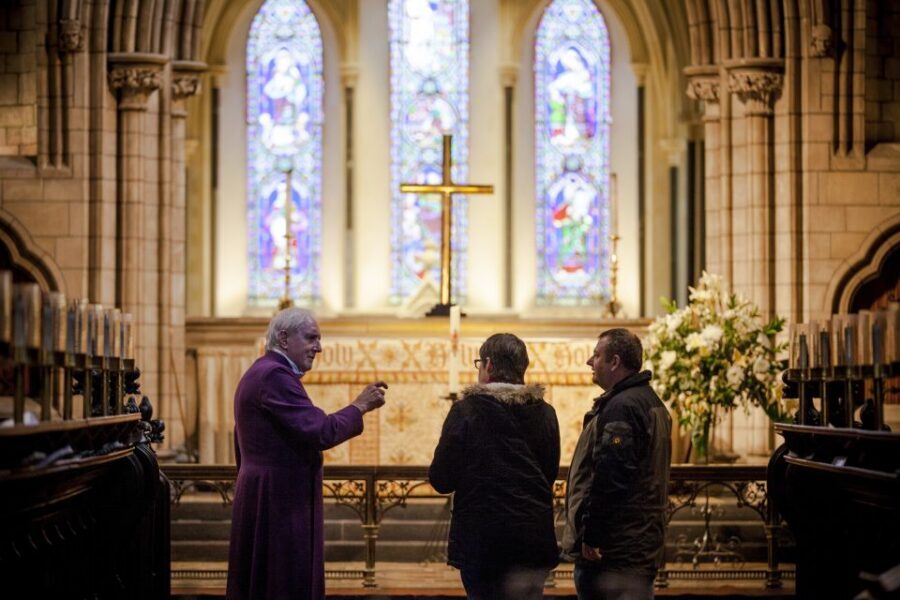
Gothic architecture is often described in big terms—arches, height, stonework—but the cathedral’s real payoff is in the specifics. You’ll notice the craftsmanship in how light moves across the interior and how the stained glass shapes the color of the whole space.
Also keep an eye out for how the cathedral balances solemnity and public access. You’re visiting a pilgrimage site, but it’s also a visitor attraction with audio guides, on-site staff, and a setup that helps you learn without turning it into a chaotic rush.
Some visitors also mention things like choir performances happening during their visit, which can add extra atmosphere if you’re lucky with timing. Even when you don’t catch music, the cathedral has a calm geometry that encourages quiet focus.
The Grounds and the Outside Pause That Actually Works
Your visit doesn’t have to end at the doors. The area outside the cathedral gives you breathing room, and there’s often a pretty park-like space around it. That matters when you’re dealing with crowds, because you can step out, reset, and come back with fresher attention.
It’s also possible to see life around the grounds beyond normal sightseeing—one visit included film activity nearby. You can’t plan on that happening, but it’s a reminder that this is a real Dublin landmark with daily city energy around it, not just an isolated historic bubble.
At the end, there’s usually a small shop where you can pick up something simple as a souvenir—good if you want a bookmark-sized recap after your brain is full of history.
Practical Timing: When Crowds Hit and How to Handle Them

Even with good crowd management, St Patrick’s Cathedral is popular. You might hit a busier spell around midday or during peak travel months. The good news is that the flow is managed well enough that you’re still able to enjoy the space.
My advice: don’t treat it like a sprint. Build in enough time for your audio to actually work. If you’re rushing, you’ll lose the value of the included explanations, and that’s where the ticket becomes worth it.
If the cathedral is crowded, you’ll still benefit from focusing on three anchors:
- Jonathan Swift’s burial and the artifacts connected to his dean years
- Door of Reconciliation
- St Patrick stained glass story in 39 images
Once those are done, the rest becomes easier and less stressful.
Who This Ticket Is Best For (and Who Might Want Something Else)
This self-guided admission is a strong fit if you:
- Want to explore a major Dublin landmark at your own pace
- Like audio interpretation and don’t want to commit to a full guided tour
- Appreciate connections between famous people and place—Swift is a major hook
- Enjoy stained glass and can slow down for a visual sequence
It’s also a good option for people who value learning tech. The Discovery Space’s iPads and touch screens keep things modern without turning the visit into a “gadgets only” experience.
If you’re traveling with kids, the hands-on brass rubbing and interactive components can help. And if you need it, the ticket is wheelchair accessible.
If you’re going with anyone under 18, note that they must be accompanied by a parent or guardian. Plan for that from the start so you don’t get stuck at the entrance.
Price and Value: What $12 Actually Buys You
At $12 per person, you’re paying for more than entry. You get self-guided admission plus audio guides, and the site also supports the skip-the-ticket-line experience. That means you don’t have to spend extra just to make sense of what you’re looking at.
The best value here is the flexibility. With included audio in multiple languages and multiple interpretive stops, you’re effectively buying time—and the ability to slow down. If your travel style is “hit the main sights but don’t let them hit you back,” this is a fair price.
As always, it helps to match your expectations: you won’t get a long sit-down lecture, and it’s not a guided-only experience. But if you use the audio and take your time, the ticket becomes a straightforward win.
Should You Book This Self-Guided Admission?
Book it if you want a cathedral visit that’s simple to manage and easy to learn from. The combination of audio guides, the Discovery Space tech stops, and top-tier highlights like Jonathan Swift’s burial, the Door of Reconciliation, and the St Patrick stained glass window makes this feel like more than a quick “look and leave.”
Skip booking only if you know you strongly prefer a live guide for every minute and you don’t want any self-paced exploring. Even then, you can still often join on-site guided tours during scheduled windows, but this ticket’s whole strength is choosing your own pace.
FAQ
How much does St Patrick’s Cathedral self-guided admission cost?
It’s listed at $12 per person.
How long is the ticket valid?
The admission is valid for 1 day. You’ll want to check availability for the starting times.
What’s included with the ticket?
You get self-guided admission and audio guides.
Are the audio guides offered in multiple languages?
Yes. Audio guides are available in English, French, German, Italian, Spanish, and Irish.
Does the ticket help you avoid the line?
Yes. Skip the ticket line is included.
Is the venue wheelchair accessible?
Yes, the activity is wheelchair accessible.
Do under-18 visitors need an adult?
Yes. Under 18s must be accompanied by a parent or guardian.
Are there guided tours available on site?
Yes. There are guided tours offered at designated times in addition to the self-guided option.
Where do I start and end?
You start at Saint Patrick’s Cathedral and the activity ends back at the meeting point.
Is free cancellation available?
Yes. You can cancel up to 24 hours in advance for a full refund, and you can also reserve now and pay later.
If you want, tell me when you’re going (month and approximate day/time). I can suggest a smart order for your highlights so you spend time where it counts most.