REVIEW · GALWAY
Galway: Medieval Galway Tour
Book on GetYourGuide →Operated by Marteen Lane · Bookable on GetYourGuide
Medieval Galway is hiding in plain sight. On this guided walking tour, you connect dots between ruins you can almost miss and big, dramatic stories that shaped the city. You’ll walk a compact route that starts at Eyre Square and ends at the Spanish Arch, with stops that mix surviving stone, vanished buildings, and the kind of legends people still repeat in Galway.
What I like most is how the tour turns landmarks into meaning. You’ll see the remains of the city walls tucked inside the Eyre Square Shopping Centre area, then learn why those walls mattered to everyday life. Second, the guide leans hard into the human side of the past, including a chilling 1493 tale tied to the Lynch family and one unforgettable name: James Lynch Fitzstephen.
One thing to consider: the tour includes many sights, but entry to St. Nicholas’ Collegiate Church isn’t included (adults €5, concession €4). If you want to go inside, plan a little extra time and budget.
In This Review
- Key Things You’ll Notice on This Medieval Galway Tour
- Starting at Browne Doorway, Eyre Square
- Eyre Square City Walls: Medieval Defenses in a Shopping Center
- Lynch’s Castle: The 14 Tribes, a Bank, and a Scary Family Legend
- St. Nicholas’ Collegiate Church: 700 Years at the Heart of Galway
- The King’s Head Pub Connection to Charles I
- Quay Street: Thomas Dillon’s Jewellers and the Claddagh Ring Story
- The Hall of the Red Earl: Archaeology You Can Walk Into
- Kirwan’s Lane: One of Galway’s Surviving Medieval Lanes
- Blake’s Castle and the Jail-Style Reality of Crime
- The Spanish Arch: Galway’s Icon, the Claddagh, and the Tsunami Detail
- Value Check: What $23 Buys You in 90 Minutes
- Who Should Book This Medieval Galway Tour
- Quick Practical Tips Before You Go
- Should You Book the Galway Medieval Tour?
- FAQ
- FAQ
- Where does the Galway Medieval Tour start?
- How early should I arrive at the meeting point?
- How long is the tour?
- How much does the tour cost?
- What sights will we see during the tour?
- Is entrance to St. Nicholas’ Church included?
- Is the tour wheelchair accessible?
- Does the tour run in bad weather?
- What should I bring with me?
- Are audio recordings allowed?
Key Things You’ll Notice on This Medieval Galway Tour
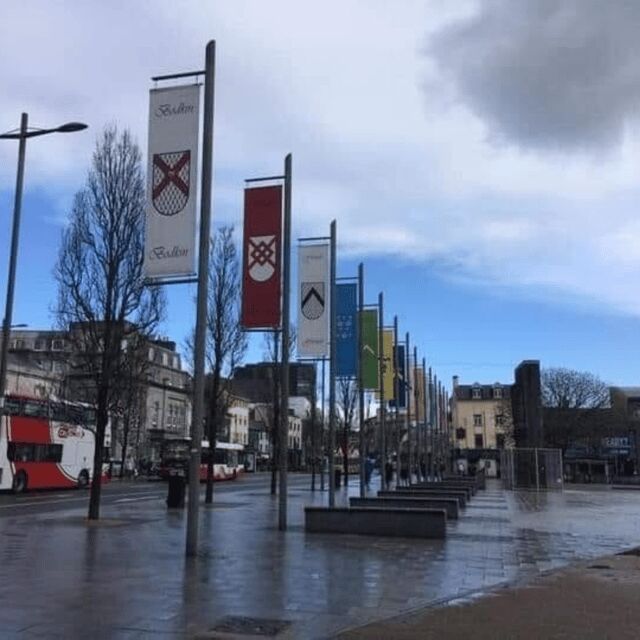
- Eyre Square’s city walls: medieval defenses you wouldn’t expect to find in a shopping area
- Lynch’s Castle in use today: history still standing, now an AIB bank
- 1493 Lynch family story: a dark legend that explains the stakes of power in Galway
- St. Nicholas’ 700+ year role: from the heart of the city to Cromwell-era uses
- Quay Street details: the Claddagh ring legacy connected to Thomas Dillon’s Jewellers
- Spanish Arch finale: the iconic arch plus the story of the tsunami that damaged arches
Starting at Browne Doorway, Eyre Square
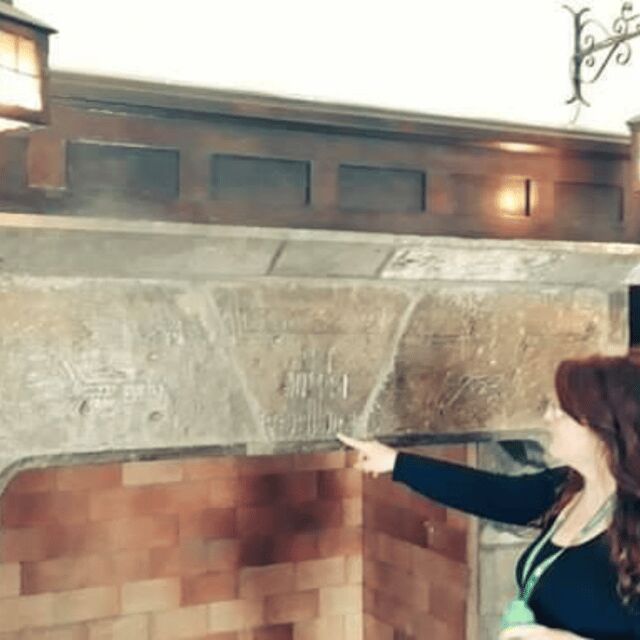
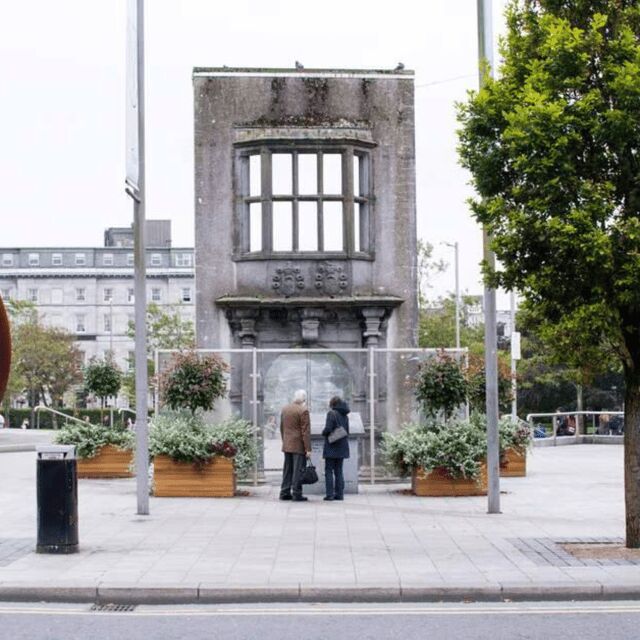
Your tour meets at the Browne Doorway in Eyre Square. It’s a free-standing stone doorway with perspex glass around it on the north side of the square, and you’ll want to arrive 15 minutes early so the group can start on time.
From the start, this tour makes a smart choice: it places you in the middle of where Galway’s medieval life would have felt close and immediate. You’re not driving out to viewpoints. You’re learning to look at what’s already around you—streets, stone, and buildings that still shape the layout today.
The guiding style is also a big part of the value. Your guide, Marteen Lane, is a Fáilte Ireland Regional Guide with 11 years of guiding experience and a BA (Hons) in Heritage Studies. That combination matters because you get both story and context, not just dates.
You can also read our reviews of more tours and experiences in Galway.

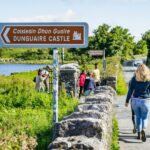

Eyre Square City Walls: Medieval Defenses in a Shopping Center
The first “wait, what is that?” moment comes when you see the remains of the city walls hidden in the Eyre Square Shopping Centre area. It’s the kind of sight that can feel accidental on your own, but on the tour it becomes obvious: these were not decorations. They were the physical boundary between inside Galway and everything outside it.
The walls were important because Galway wasn’t just a town; it was a place people wanted to control. Walls shaped movement, safety, trade, and power. When you’re told that, you start noticing the city’s rhythm: where streets lead, where people likely gathered, and why certain buildings gained influence.
Practical tip: wear shoes you can walk in comfortably. Even though this is a relatively short tour, you’ll be moving steadily around compact streets and open areas.
Lynch’s Castle: The 14 Tribes, a Bank, and a Scary Family Legend
Next up is Lynch’s Castle. Today it’s the AIB bank, and the tour notes it as the oldest commercial building in Ireland. That alone is a strong reason to stop. It’s a rare chance to see medieval-era commerce become modern-day commerce without the whole thing vanishing into museum walls.
You’ll also connect Lynch’s Castle to the Lynch family, one of the 14 Tribes of Galway. The 14 Tribes were major merchant families, and the point of the stop isn’t just genealogy. It’s power—who could influence the city, who had wealth, and how that shaped events.
Then the guide brings in the story that people remember: the legend of James Lynch Fitzstephen, who in 1493 allegedly hung his own son, Walter. It’s dark, even by medieval standards, and the tour uses it to show how authority and family pressure could turn into tragedy. You may not know why a story like that persists until you hear how it fits into the city’s struggles and loyalties.
One small consideration: stories like this are part of the experience. If you prefer lighter content, you’ll still get plenty of variety, but the tour does include heavy legends.
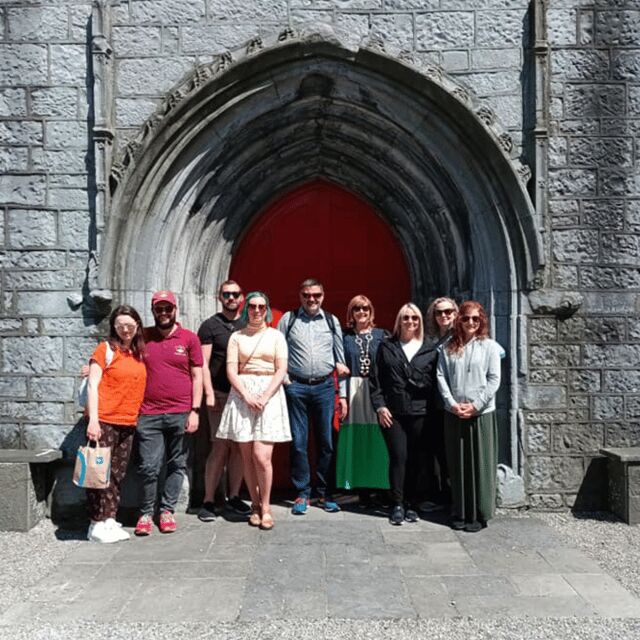
St. Nicholas’ Collegiate Church: 700 Years at the Heart of Galway
After Lynch’s Castle, the tour focuses on St. Nicholas’ Collegiate Church. The guide frames it as being at the heart of Galway city for over 700 years, and that longevity changes how you look at it. Instead of seeing one building, you start seeing Galway’s continuity—faith, community, and repeated conflict.
Here’s where planning helps: entrance is not included. Adults pay €5 and concession €4 if you want to go inside. If you’re tight on budget, you can still enjoy the story and exterior context, but the tour is clearly built for people who want the full stop.
The tour also shares two specific connections that make the church feel human rather than academic. It mentions Jane Eyre and James Kearney, then explains how Cromwell’s soldiers used the church as a stable. That detail is jarring in a way that’s useful—it shows how political and military power didn’t just change rulers, it changed the uses of sacred spaces.
The King’s Head Pub Connection to Charles I
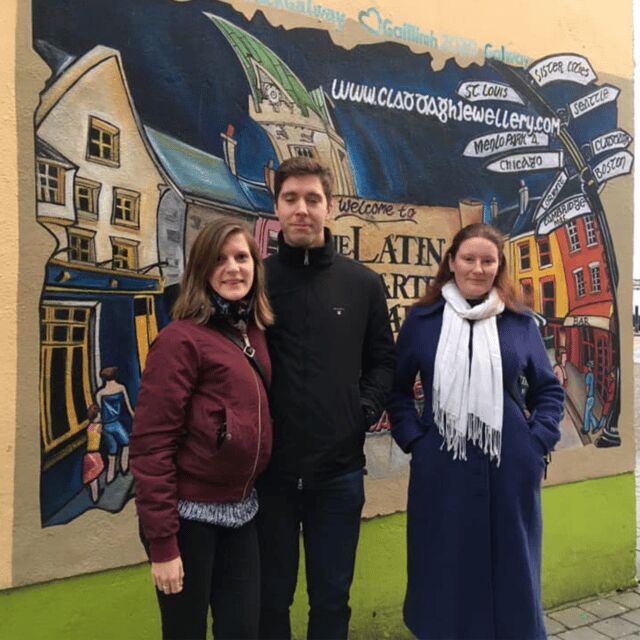
Next is a stop that links a modern pub to a brutal moment in English history. The tour explains how the building now called the King’s Head Pub connects to the beheading of King Charles I of England.
This is one of those “only in a place like Galway” moments. You’re standing in a spot that locals use for a relaxing break, and the guide ties it to something that would have been feared and discussed in its day. That contrast is exactly why walking tours work: you get the city layered in your head, not as a single timeline, but as multiple eras sharing the same street.
It’s also a good mental cue for you. When you’re walking after this, you’ll start noticing how often modern Ireland uses spaces that once served completely different roles.




Quay Street: Thomas Dillon’s Jewellers and the Claddagh Ring Story
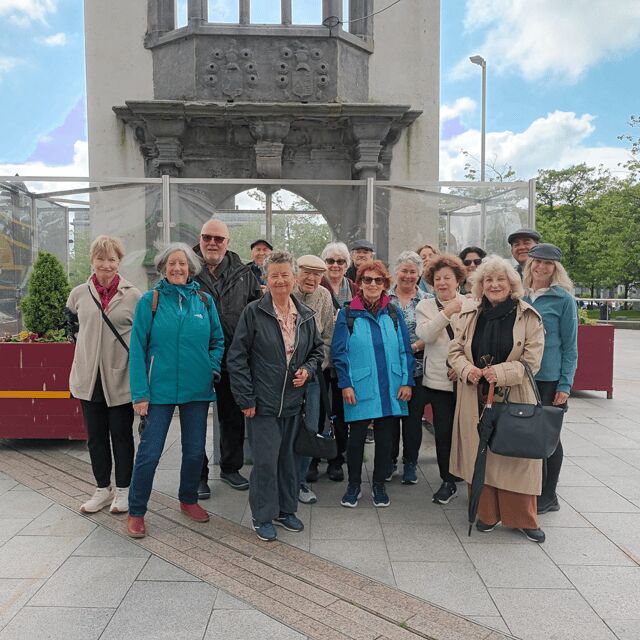
If you like craft and local identity, this section is for you. On Quay Street, the tour stops at Thomas Dillon’s Jewellers and ties it to the Claddagh ring, noting the makers have been producing them since 1750.
The value here isn’t just the fact of the shop; it’s the story the tour gives the ring. Rings are small things, but they’re carried through generations. When you learn where the Claddagh ring tradition comes from and how it connects to the identity of the Claddagh area, it feels less like souvenir shopping and more like cultural continuity.
Practical advice: bring a credit card and/or cash if you want to browse. The tour doesn’t guarantee you’ll have shop time, but it’s smart to be ready in case you decide to pick up something you’ll actually wear back home.
The Hall of the Red Earl: Archaeology You Can Walk Into
One of the most memorable parts of the tour is the Hall of the Red Earl. This archaeological site is run by Galway Civic Trust, and the tour helps you understand what you’re looking at: remains of walls, columns, and buttresses.
What makes this stop especially useful is the instruction to walk down into the site for a closer look. You get a better sense of scale—how big structures were, and how medieval design worked in real physical space. From above, it can look like ruins. Inside, it feels more like a blueprint of how the building functioned.
This is also where the guide’s heritage training shows. You’re not just told that something is old. You’re guided through what different elements likely did for the building’s stability and purpose.
Kirwan’s Lane: One of Galway’s Surviving Medieval Lanes
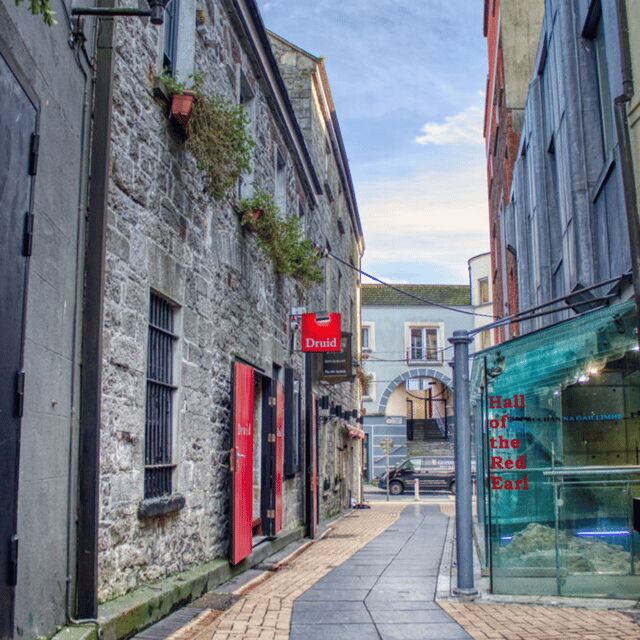
From there you head to Kirwan’s Lane, described as one of five lanes still in existence and named after the Kirwan family, another of the 14 Tribes. The tour uses the lane to show you medieval Galway at street level.
Lanes like this matter because they preserve a different kind of history than big monuments. They show how people moved between property boundaries, where shortcuts may have existed, and how neighborhoods arranged themselves around power and wealth. If you like getting a feel for how cities actually worked, this is a satisfying stop.
You’ll see remnants of medieval Galway through the buildings along the lane. Even when the structures aren’t complete, the shapes and spacing can help you imagine what life felt like.
Blake’s Castle and the Jail-Style Reality of Crime
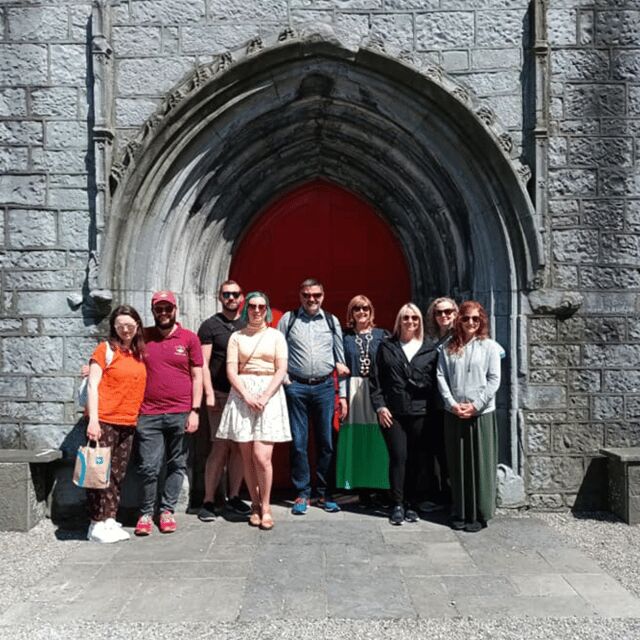
At the end of Quay Street, you’ll reach Blake’s Castle. It’s owned by the Blake family, one more of the 14 Tribes. The tour frames it as a place tied to a criminal jail story—what life was like for criminals held there.
Blake’s Castle fell into ruin but was restored around the 1980s, and that restoration date is a helpful clue. It means the building you see isn’t just a relic you stumble across; it’s something that people later chose to bring back into view.
If you’re the type of traveler who likes your legends backed by place, this section delivers. You aren’t only hearing stories in the abstract. You’re standing in a building tied to those stories, and the tour helps you connect the physical layout to the theme of punishment and power.
The Spanish Arch: Galway’s Icon, the Claddagh, and the Tsunami Detail
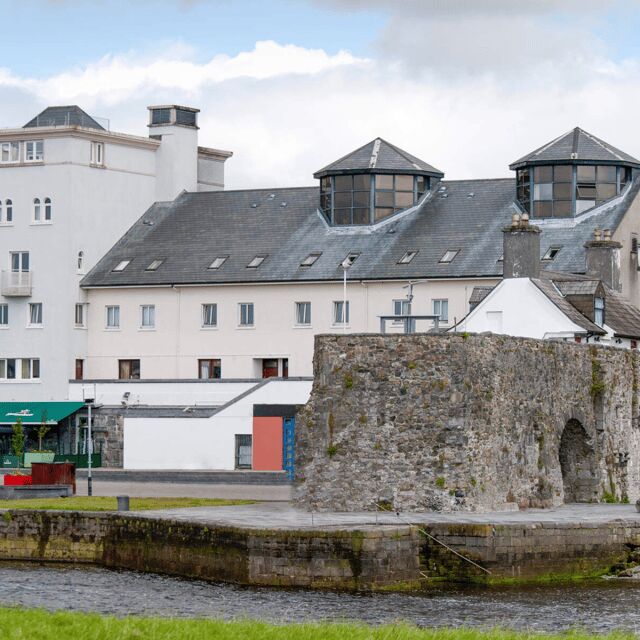
Your tour finishes at the Spanish Arch, one of Galway’s most iconic attractions. The guide uses this finale to bring together two key themes: Galway’s connection across the water and the way disasters could reshape the shoreline.
You’ll learn about the Claddagh across the river, and then about a tsunami that destroyed two of the arches. That’s not a small detail. It’s a reminder that coastal cities are always at the mercy of forces bigger than any local legend or merchant family.
The Spanish Arch makes a strong end point because it’s easy to remember later. Even if your notes are scattered, you’ll likely remember this arch, the direction of the river, and that tsunami fact.
Also, since the tour ends back at the meeting point, you don’t have to worry about a complicated last step. You come out near Eyre Square again.
Value Check: What $23 Buys You in 90 Minutes
At $23 per person for about 1.5 hours, this tour is priced like a budget-friendly way to get serious storytelling plus multiple major stops. For that time, you cover city walls, major landmark buildings tied to the 14 Tribes, a long-running church site, an archaeological hall you can physically inspect, and a signature arch.
The one obvious cost add-on is the St. Nicholas’ Church entrance fee if you want to go inside. Adults pay €5 and concession €4. If you plan to visit, factor that in so you’re not surprised at the stop.
What makes the price feel fair is the guide quality and structure. This isn’t a random walk where you get “there’s the church” and that’s it. The guide is delivering a curated chain of stories—Lynch’s Castle, Cromwell’s soldiers and the church-as-stable detail, the King Charles I connection, and the Claddagh ring legacy—so the 90 minutes feel dense in the best way.
A note for your packing list: you’ll want comfortable shoes and an umbrella. The tour runs in all weather, and you’ll be outside enough that conditions matter.
Who Should Book This Medieval Galway Tour
I think this tour is a strong fit if you like history that feels story-driven and place-based. You’ll get medieval Galway explained through real buildings and visible remains, not just through a screen.
It’s also a good pick if you enjoy local identity details, like the Claddagh ring connection and the role of the 14 Tribes. And if you appreciate archaeology you can walk into, the Hall of the Red Earl stop is a highlight.
If you’re traveling with someone who’s allergic to walking, this might be harder. It’s a walking tour, and the route is designed for you to move between sites on foot.
Quick Practical Tips Before You Go
Bring water and dress for Irish weather changes. The tour runs in all weather, and in a severe weather warning it can be canceled for safety with an alternative date or a full refund.
You’ll also want cash and/or a credit card for optional purchases and the St. Nicholas’ Church entrance fee. If you’re a student, bring your student card since the church has a concession rate.
Finally, note the rules: smoking and alcohol/drugs aren’t allowed, audio recording isn’t allowed, and bachelor or bachelorette party groups aren’t permitted. If you like taking photos, bring your camera—there are plenty of stone textures and street-level scenes to shoot.
Should You Book the Galway Medieval Tour?
Yes, if you want a short walk that covers real medieval leftovers and memorable stories in 90 minutes. The combination of Eyre Square city walls, Lynch’s Castle’s unusual continuity into modern banking, and the Spanish Arch ending gives you a clean route that’s easy to follow.
The biggest reason to book is the storytelling care you’ll feel in the way the guide connects each site to people and events. The tour doesn’t treat legends as filler. It uses them to help you understand what Galway was like when power, faith, and survival were constantly colliding.
If you’re excited to add one paid entry stop (St. Nicholas’ Church) and you’re comfortable walking in changing weather, this tour offers solid value at $23.
FAQ
FAQ
Where does the Galway Medieval Tour start?
It starts at the Browne Doorway in Eyre Square.
How early should I arrive at the meeting point?
Please arrive 15 minutes before the start time so the tour can begin on schedule.
How long is the tour?
The tour lasts about 1.5 hours.
How much does the tour cost?
The price is $23 per person.
What sights will we see during the tour?
You’ll see the remains of the city walls in the Eyre Square Shopping Centre area, Lynch’s Castle, St. Nicholas’ Collegiate Church, the King’s Head Pub connection, Thomas Dillon’s Jewellers on Quay Street, the Hall of the Red Earl, Kirwan’s Lane, Blake’s Castle, and finish at the Spanish Arch.
Is entrance to St. Nicholas’ Church included?
No. Entrance to St. Nicholas’ Collegiate Church is not included (adults €5, concession €4).
Is the tour wheelchair accessible?
Yes, the tour is wheelchair accessible.
Does the tour run in bad weather?
The tour runs in all weather. If there is a severe weather warning, the tour may be canceled for safety with an alternative date or a full refund.
What should I bring with me?
Bring comfortable shoes, an umbrella, a camera, a credit card, water, a student card (if relevant), cash, and weather-appropriate clothing.
Are audio recordings allowed?
No, audio recording is not allowed on this tour.