REVIEW · GALWAY
Discover Galway City Walking Tour
Book on Viator →Operated by Gerard's Walks · Bookable on Viator
Old Galway feels walkable and story-packed. This Galway City walking tour is led by a Fáilte Ireland-approved local guide, and the route is built to show how a small settlement grew into a city with its own voice. I like that you move fast through the core sights (so you get your bearings on day one), and I like the human feel of the storytelling, with guides such as Gerard and Kathleen praised for humor and patient answers. One thing to keep in mind: Saint Nicholas’ Collegiate Church doesn’t include admission, and street noise can make it harder to hear if you hang back.
You’ll be on your feet for about 1 hour 30 minutes to 1 hour 50 minutes. You start at the Pádraic Ó Conaire Statue (Replica) in Eyre Square and finish at the Spanish Arch by the Galway City Museum. The tour uses a mobile ticket, confirmation comes at booking, and it’s capped at 100 travelers.
There’s also a bathroom/rest stop included, which matters more than you’d think in a walking-heavy city tour. For this one, aim for moderate physical fitness, and plan to stand close to the guide so the stories land clearly.
In This Review
- Key highlights worth your time
- Starting at Eyre Square: why this route works
- Browne Doorway and the Tribes of Galway at street level
- Eyre Square: the city’s meeting point for famous visitors
- Galway Shopping Centre and the medieval wall vs. time
- Lynch’s Castle: power, mayors, and family rule
- Saint Nicholas Collegiate Church: why the ticket matters
- Naughton’s Pub and Richard Martin’s surprising legacy
- Lynch Memorial Window and James Hardiman’s legend
- Hall of the Red Earl: old ruins and 11,000 artifacts
- The Great Gate and the bell: working people at the edge of town
- Blakes Castle: jail holding cells and later uses
- The Spanish Arch: finishing at the 1588 Armada arrival point
- Price and value: $17.20 is the point
- What group size and pace feel like in practice
- Who should book this Galway City walking tour
- Should you book? My straight answer
- FAQ
- How long is the Galway City walking tour?
- Where does the tour start and where does it end?
- Is a ticket required, and is it mobile?
- What’s included during the tour?
- Do I need to pay for Saint Nicholas’ Collegiate Church?
- What if the weather is bad?
Key highlights worth your time

- A guided route through Galway’s power centers: from the Browne Doorway and Eyre Square to the Spanish Arch edge of town
- Tribes of Galway in real places: the 14 Families theme ties together multiple stops you can actually see
- Small details you’d miss on your own: doorways, ruins, windows, and wall history explained at street level
- Free entry stops for most landmarks: several stops note admission as free, keeping value strong
- Stops that include big characters: stories touch names from John F. Kennedy to Theobald Wolfe Tone, plus local figures like James Hardiman
Starting at Eyre Square: why this route works
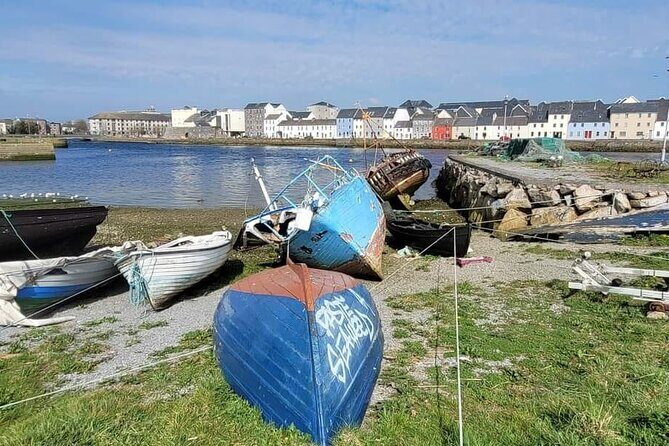
Eyre Square is an easy launch point. You meet at the Pádraic Ó Conaire Statue (Replica), right in the center of the city’s walkable action. That’s smart because it means you’re not spending your best energy hunting for a meeting place across town.
From there, you gradually stitch together the medieval layout of Galway. The walking flow matters: you go from merchant-family landmarks and civic squares, toward the old town’s walls and gates, and finally end at the Spanish Arch near the Galway City Museum.
If you’re the kind of traveler who likes order—rather than wandering until your feet protest—this route gives you both. You’ll cover a lot without feeling like you’re sprinting. The pacing is part of the appeal, and guides such as Gerard are repeatedly praised for keeping a good walking pace.
You can also read our reviews of more walking tours in Galway



Browne Doorway and the Tribes of Galway at street level
Your first major stop is the Browne Doorway. This isn’t just an old entrance to look at and move past. You’re told how the building ties into the 14 Families, also called the Tribes of Galway, who ruled from 1484 until their decline in 1651.
Why this stop matters: it sets the theme for the whole tour. Galway’s story isn’t only about kings or big events in faraway capitals. It’s also about local wealth, family dynasties, and who controlled trade and influence inside the city walls.
You’ll also hear that the doorway was once an entrance connected with Eyre Square. That detail helps you understand how the modern layout relates to the older city structure. Most people walk through Eyre Square without thinking about what used to open there. After this stop, you’ll look at the square differently.
Admission here is free per the tour notes, so you get the payoff without adding another ticket step.
Eyre Square: the city’s meeting point for famous visitors
Eyre Square isn’t only a plaza. On this tour, you get the backstory of the square itself and how Galway’s public life played out there.
You’ll hear how important visitors passed through Eyre Square over time, including names like Pádraic Ó Conaire and John F. Kennedy. That kind of detail does two useful things. First, it anchors local history to a wider world. Second, it helps you stop treating landmarks like random photos.
Even if you’re not a museum person, this part helps you understand the city’s social rhythm. Galway is a place where the past and present sit close together, and Eyre Square is one of the clearest examples of that.
The tour keeps this stop short, so use it as a way to get context before the deeper cuts later.
Galway Shopping Centre and the medieval wall vs. time
This is where the tour balances modern and medieval. The Galway Shopping Centre stop is framed as a chance to talk about the old medieval wall and how time—and conflict—changed the city.
You’ll get a comparison between what the wall represented and what’s left now. You’ll also hear about wars that affected Galway across centuries, including references to Oliver Cromwell and William of Orange.
Here’s why I think this works for you: it prevents history from feeling like abstract dates. You can stand in front of something concrete and learn how control, defense, and survival shaped the streets you’re walking.
This stop is also marked as free of admission fees on the tour notes, which keeps the value calculation simple.
Lynch’s Castle: power, mayors, and family rule
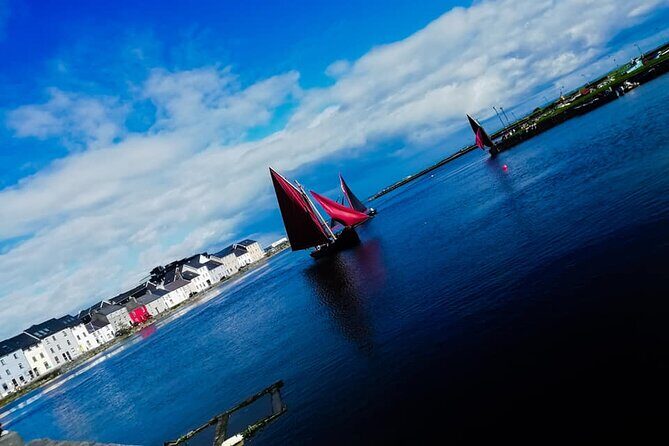
Next up is Lynch’s Castle, tied to another of the fourteen families. You’ll be told this lineage was prosperous and that the family produced a long run of civic leaders, with 80 mayors mentioned across the family’s history.
This stop helps you understand Galway’s structure. It’s not only about who owned a building. It’s about who influenced decisions year after year.
Also, it’s a quick stop, but it’s not a throwaway. You’re given the reason the place matters, rather than being handed a vague description.
Admission is free per the tour notes, and the time spent feels efficient.
You can also read our reviews of more city tours in Galway




Saint Nicholas Collegiate Church: why the ticket matters
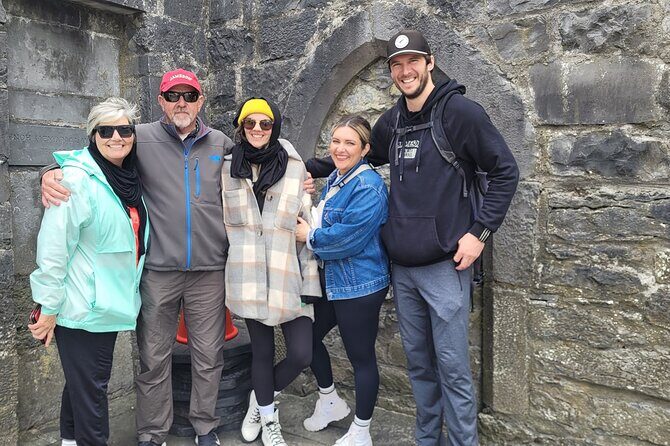
Saint Nicholas’ Collegiate Church is described as the jewel of Galway City. It’s a 700-year-old church that was transformed by the French and Lynch families.
You’ll also hear about destruction connected to Cromwell’s army. That combination—long life, family changes, and conflict—gives this stop a serious tone compared to some of the doorway and wall stories.
One practical note: the tour lists admission here as not included. So if you want the full experience inside, be ready to pay the entry fee on your own.
If you’re the type who likes to see interiors and not just exteriors, this is the one place where your planning matters most. The tour can still give you a lot from outside, but the church is the natural place to budget extra.
Naughton’s Pub and Richard Martin’s surprising legacy
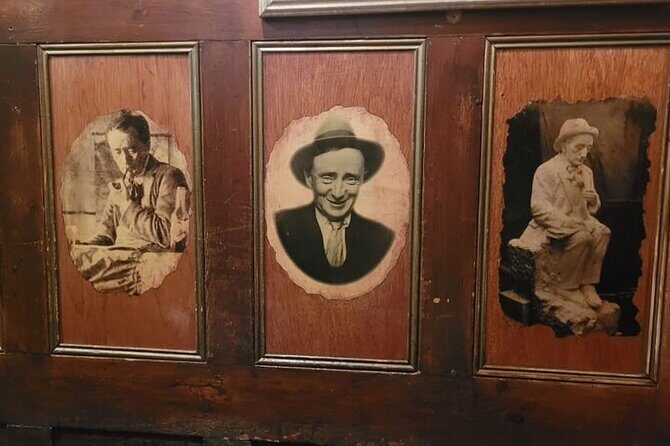
Then comes a stop at Naughton’s Pub (Tigh Neachtain). This is more than a name on a route. You’re connected to townhouse ownership and to Richard Martin, a figure tied to animal rights laws.
The tour notes also include that Martin was a duelist and owned large parts of Connemara. That’s a striking mix of occupations and influence—someone you might not associate with Galway streets unless a guide puts it together for you.
Why a pub stop works on a walking tour: it breaks the flow without making it feel like a detour. It also gives you local color right where you are, which helps the city feel lived-in.
Admission is listed as free for this stop, so there’s no extra cost built into the viewing.
Lynch Memorial Window and James Hardiman’s legend
Next is the Lynch Memorial Window, with a haunting story tied to James Hardiman, described as the first historian and antiquarian of Galway city.
You’ll also hear about distinctive features like the skull and crossbones. Whether you love ghost stories or prefer facts only, this kind of visual detail is easy to remember, and it pulls Galway’s history into something you can spot with your own eyes.
This stop is short but memorable. It also fits the tour’s theme of how certain families and figures left marks that outlasted them.
Admission is listed as free per the tour notes.
Hall of the Red Earl: old ruins and 11,000 artifacts
The Hall of the Red Earl is another quick stop with weight behind it. You’re told it’s about old ruins tied to a powerful tax system in Ireland, and that 11,000 artifacts were found here.
Even with limited time, those numbers change how you interpret what you’re looking at. You start to think about the city as an operating machine—trade, taxes, administration—rather than only a set of pretty streets.
This stop being free of admission fees helps you get a big concept without extra cost. It also pairs well after the window stop, because both are tied to how Galway stored memory in buildings and objects.
The Great Gate and the bell: working people at the edge of town
There are also stops described as covering where the Great Gate of Galway once stood and the bell that rang to call workers and people into town.
This is one of the most relatable ideas in the tour because it centers daily life. Wars and family power are important, yes. But the gate and bell story reminds you the city ran on schedules and labor.
It’s the kind of detail that makes you look at city walls as infrastructure, not just scenery.
Blakes Castle: jail holding cells and later uses
The route includes Blakes Castle, described as the old holding cell for Galway Jail. It also mentions the Aran sweater shop and its connection to the old foundation of Galway City.
This is a good stop for anyone who likes to see how one site keeps getting reused. It’s a reminder that buildings don’t only disappear. They get repurposed, and each era leaves a different layer behind.
If you’re someone who enjoys layers of history, you’ll probably enjoy how this stop ties old stone to more recent commercial use.
The tour notes list admission as free for these included viewing stops.
The Spanish Arch: finishing at the 1588 Armada arrival point
The tour ends at the Spanish Arch, near the Galway City Museum. This is a high-impact finale because you’re told about the Spanish Armada arriving in 1588 and the extension to the old city.
An end point like this works well for two reasons. First, you get a clear conclusion: a recognizable historic structure connected to a major event. Second, the museum nearby gives you an option to keep going if the tour whets your appetite.
Admission is listed as free for this stop. You finish on a landmark that’s easy to reach by foot and easy to build your next plan around.
Price and value: $17.20 is the point
At $17.20 per person, this is one of the more affordable ways to get a guided education in Galway’s core streets. The biggest reason it feels good value is the stop mix: many stops are free of admission fees, and you’re getting a guide to connect themes across several locations.
There is one clear cost exception: Saint Nicholas’ Collegiate Church admission isn’t included. That doesn’t make the tour bad value. It just means you should expect one optional add-on if you want inside the church.
Timing also supports the price. With 1 hour 30 minutes to 1 hour 50 minutes, you’re paying for concentrated walking with multiple landmarks rather than a long route that drags.
And since the tour is capped at 100 travelers, you’re less likely to feel like you’re swallowed by a huge crowd.
What group size and pace feel like in practice
The tour caps at 100 travelers. That’s not tiny, but it’s also not so large that the guide can’t manage the group. In the notes, guides are praised for pace and for handling questions, which is exactly what you want in a walking tour.
If you’re traveling with kids, it can also be a good option. The tour notes mention kids learning from the details and even picking up a little Irish, and that tells me the guide approach tends to be readable and story-driven rather than lecture-heavy.
Your own role: stand close enough to hear. One note mentions hearing could be harder if people weren’t near the guide, and street noise in Galway can be real. So treat the audio like you’re at a friendly performance. Get in the right spot.
Who should book this Galway City walking tour
This is a strong pick if:
- You want a structured introduction to Galway without spending hours planning.
- You like history tied to buildings, doorways, and street corners.
- You want a guide who can answer questions and keep the tone light.
It’s also a decent fit if you’re traveling as a couple or with friends and want a shared story walk with stops that naturally refresh the pace.
You might skip it if:
- You hate walking on cobblestones and uneven ground.
- You know you only care about a single site and don’t want a multi-stop route.
- You’re determined to see Saint Nicholas’ interior but you don’t want any extra ticket steps.
Should you book? My straight answer
Yes, you should book this tour if you’re arriving in Galway and want quick context before you wander on your own. The route makes sense, it covers the city’s power centers and major landmarks, and most stops don’t add admissions on top.
Book it on your first full day if you can. You’ll finish at the Spanish Arch with a clearer sense of where everything sits, and you’ll be better prepared to choose what to revisit.
If you’re planning to go inside Saint Nicholas’ Collegiate Church, check your expectations now: admission isn’t included, so budget that extra cost. Then treat the rest of the tour as the value part: guided stops across Galway’s medieval core, with stories you’ll remember when you’re back on the street.
FAQ
How long is the Galway City walking tour?
The tour runs about 1 hour 30 minutes to 1 hour 50 minutes.
Where does the tour start and where does it end?
It starts at the Pádraic Ó Conaire Statue (Replica) in Eyre Square and ends at the Spanish Arch near the Galway City Museum.
Is a ticket required, and is it mobile?
Yes. You get a mobile ticket, and confirmation is received at booking.
What’s included during the tour?
A bathroom/rest stop is included.
Do I need to pay for Saint Nicholas’ Collegiate Church?
Yes. Entrance to Saint Nicholas’ Collegiate Church is not included in the tour price.
What if the weather is bad?
The tour requires good weather. If it’s canceled due to poor weather, you’ll be offered a different date or a full refund.